


Filter Cartridge a Intex
In the landscape of fluid management and industrial filtration, the term "Type A" refers to a specific dimensional standard and performance profile widely recognized in small-scale water treatment and circulation systems. While often associated with residential pool maintenance, the engineering principles behind the filter cartridge a intex specification provide a useful baseline for understanding filtration efficiency, media selection, and the transition from disposable synthetic components to high-performance industrial solutions. For engineers and procurement specialists, evaluating these cartridges requires a deep dive into material science, flow dynamics, and the total cost of ownership associated with different filtration media.
Industrial applications often demand higher durability, chemical resistance, and precise micron ratings than standard consumer-grade cartridges can provide. This guide examines the technical specifications of the Type A format, compares synthetic media with stainless steel alternatives, and outlines the critical factors for selecting Filter Cartridges in demanding environments.
Understanding the Specifications of Type A Filter Cartridges
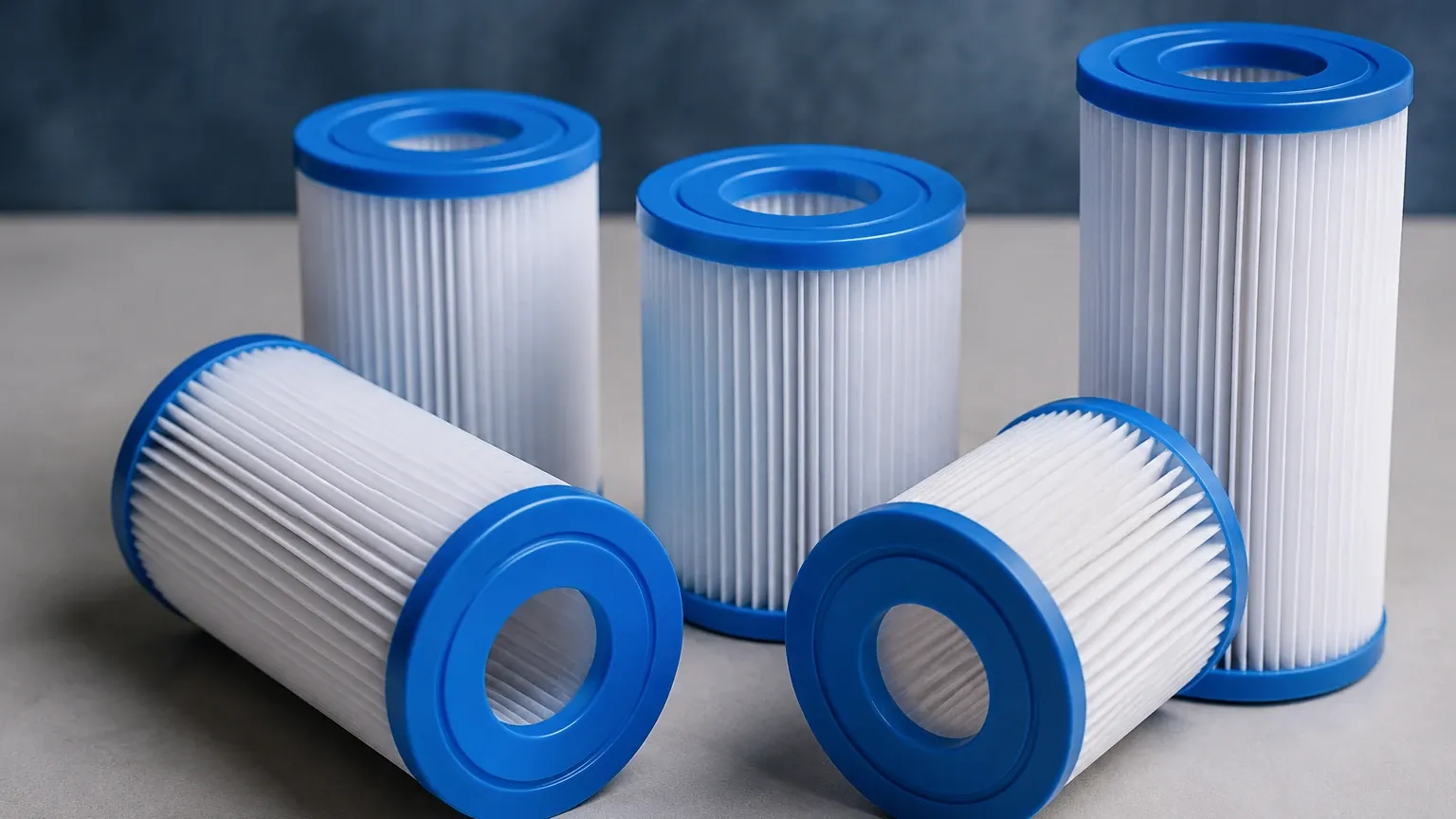
The "Type A" designation typically denotes a cartridge with standardized dimensions, approximately 8 inches (20.3 cm) in height and 4.25 inches (10.8 cm) in outer diameter, with a center hole designed to fit specific pump housings. In terms of performance, these cartridges are generally designed to capture particulates in the range of 20 to 30 microns.
From a technical perspective, the effectiveness of a filter cartridge is defined by its surface area and the porosity of the media. Standard Type A filters utilize a pleated Dacron or polyester fabric. The pleating is a deliberate engineering choice to maximize the surface area within a compact cylindrical volume. A larger surface area reduces the face velocity of the fluid passing through the media, which in turn lowers the initial pressure drop and extends the time before the filter reaches its terminal pressure differential.
However, in industrial B2B contexts, the "Type A" form factor may be integrated into specialized machinery or pre-filtration stages where the standard synthetic media is insufficient. In these cases, engineers must look toward customized metal filtration components that maintain the required dimensions while offering superior mechanical properties.
Material Selection: Synthetic vs. Stainless Steel Filter Cartridges
When evaluating a filter cartridge a intex for industrial use, the choice of material is the most significant factor influencing performance and longevity.
Synthetic Media (Polyester/Dacron)
Synthetic pleated filters are effective for basic water sediment removal. They are lightweight and have a low initial purchase price. However, they possess several limitations in industrial settings:
* Temperature Sensitivity: Most synthetic fibers begin to lose structural integrity at temperatures exceeding 60°C (140°F).
* Chemical Compatibility: They are susceptible to degradation when exposed to harsh solvents, oils, or high-acid/alkaline environments.
* Disposable Nature: These cartridges are designed for single-use cycles. Once the depth of the media is loaded with contaminants, they must be discarded, leading to ongoing replacement costs and environmental waste.
Stainless Steel Media (304/316L)
For applications in chemical processing, food and beverage, or high-pressure hydraulics, stainless steel Filter Cartridges are the preferred alternative. Kaifil specializes in manufacturing these high-durability components using wire mesh or sintered metal fibers. The advantages include:
* Thermal Stability: Stainless steel can operate in environments ranging from cryogenic temperatures to over 400°C.
* Structural Integrity: Metal filters can withstand significantly higher differential pressures without collapsing or experiencing "media migration" (where the filter material itself enters the filtrate).
* Cleanability: Unlike synthetic media, stainless steel filters can be cleaned via backwashing, ultrasonic cleaning, or chemical baths, allowing for hundreds of reuse cycles.
Engineering Considerations for Industrial Filtration Systems
When specifying a filter cartridge for an industrial system, engineers must look beyond simple dimensions. Several key parameters dictate whether a filter will succeed in a given application.
Pressure Drop ($ΔP$)
The pressure drop is the difference in pressure between the upstream and downstream sides of the filter. A high initial $ΔP$ indicates that the pump must work harder to move fluid, increasing energy consumption. Industrial-grade cartridges are engineered with optimized pleat counts and wire diameters to ensure the lowest possible resistance to flow while maintaining the required filtration accuracy.
Flow Rate and Flux
Flux refers to the flow rate per unit area of the filter media. In systems requiring high throughput, the flux must be carefully managed to prevent "blinding" (rapid clogging of the pores). If a filter cartridge a intex is being used in a system with high flow requirements, upgrading to a high-surface-area stainless steel mesh can prevent premature failure.
Micron Rating: Absolute vs. Nominal
Standard Type A filters often carry a "nominal" rating, meaning they catch a certain percentage of particles at a given size. Industrial processes typically require an "absolute" rating, which guarantees that 99.9% of particles above a specific micron size are retained. Stainless steel wire mesh allows for precise control over pore size, ensuring consistent results in pharmaceutical or fine chemical applications.
Performance Evaluation and Filtration Accuracy
To ensure that a filter cartridge meets the rigorous demands of a B2B environment, performance must be validated through standardized testing. The Beta Ratio (β) is the industry standard for expressing filtration efficiency. It is calculated by comparing the number of particles of a specific size in the influent (upstream) to the number in the effluent (downstream).
For example, a filter with a Beta ratio of 1000 for 10-micron particles (β10 = 1000) is 99.9% efficient at removing those particles. When transitioning from a standard filter cartridge a intex to a custom industrial solution, defining the required Beta ratio is critical for protecting downstream equipment like high-pressure nozzles, heat exchangers, or sensitive sensors.
Furthermore, the "dirt-holding capacity" (DHC) must be evaluated. This is the total mass of a standard test dust that a filter can collect before the pressure drop reaches a predefined limit. Industrial stainless steel cartridges often feature multi-layered mesh designs (coarse outer layers for pre-filtration and fine inner layers for final polish) to significantly increase DHC compared to single-layer synthetic filters.
Customization and OEM Solutions for Specialized Applications
Many industrial systems utilize housings that were originally designed around common consumer dimensions like the Type A cartridge, but the process fluid or environmental conditions require a more robust solution. This is where OEM customization becomes vital.
Kaifil provides tailored filtration solutions that allow customers to specify:
1. End Cap Configurations: Standard Type A filters have open ends with gaskets. Industrial versions may require threaded connections (NPT/BSP), flange mounts, or specialized O-ring seals (Viton, EPDM, or PTFE) to ensure a leak-proof fit and chemical resistance.
2. Reinforced Cores: For high-viscosity fluids or high-pressure surges, an internal perforated stainless steel core can be added to prevent the pleats from pinching or the cartridge from buckling.
3. Specific Alloys: While 304 stainless steel is suitable for many water applications, 316L is used for superior corrosion resistance in marine or acidic environments. For extreme conditions, exotic alloys like Hastelloy or Monel can be utilized.
By working with a manufacturer that understands these engineering nuances, purchasing teams can procure Filter Cartridges that are drop-in replacements for standard sizes but offer vastly superior performance characteristics.
Total Cost of Ownership and Maintenance Cycles
One of the most common misconceptions in procurement is focusing solely on the initial unit price. For a filter cartridge a intex, the low cost of a synthetic disposable unit is often offset by the frequency of replacement and the labor costs associated with maintenance.
The Disposable Cycle
In a continuous industrial process, a synthetic filter might need to be replaced every 48 to 72 hours depending on the contaminant load. This requires:
* System downtime for filter change-outs.
* Labor costs for maintenance personnel.
* Inventory management and storage space for large volumes of replacement filters.
* Waste disposal fees for contaminated media.
The Sustainable Industrial Cycle
In contrast, a high-quality stainless steel filter cartridge represents a higher initial investment but offers a much lower total cost of ownership (TCO). Because these units are cleanable and reusable, the replacement interval can be extended to years rather than days. The ability to perform in-place cleaning (CIP) further reduces downtime, making metal filtration a more cost-effective and sustainable choice for long-term operations.
Conclusion: Selecting the Right Filtration Path
Whether you are maintaining a small-scale water circulation system or managing a complex industrial chemical line, understanding the limitations and capabilities of the filter cartridge a intex format is essential. While the Type A specification serves as a common benchmark for dimensions and basic sediment removal, industrial applications often necessitate a move toward more sophisticated materials and engineered designs.
For engineers looking to optimize their filtration processes, the transition to stainless steel Filter Cartridges offers a path toward greater reliability, precise filtration accuracy, and reduced operational costs. By evaluating factors such as chemical compatibility, pressure thresholds, and cleanability, technical professionals can ensure they select a filtration solution that not only fits the housing but also exceeds the performance requirements of the application.
Kaifil remains committed to providing these high-performance, customized metal filtration components, bridging the gap between standard form factors and the rigorous demands of global industry. When selecting your next filtration solution, consider the long-term benefits of engineering-led design and durable material selection.
