


Filter Cartridge Aquaguard
In the landscape of industrial and high-end commercial water treatment, the term "filter cartridge aquaguard" often serves as a benchmark for reliable purification. While many recognize this technology in a residential context, the engineering principles behind high-performance water filtration are critical for industrial operators, chemical processors, and food and beverage manufacturers. Selecting the correct filtration component is not merely a matter of brand compatibility but an engineering decision involving material science, fluid dynamics, and micron-level precision.
Industrial filtration systems require robust components that can withstand pressure fluctuations, chemical exposure, and rigorous cleaning cycles. For engineers and purchasing managers, understanding the technical nuances of Filter Cartridges is essential to ensuring the longevity of downstream equipment, such as reverse osmosis (RO) membranes and UV sterilizers.
Understanding the Engineering Behind High-Performance Filter Cartridges
A filter cartridge aquaguard system typically utilizes a multi-stage approach to remove contaminants. In industrial applications, this process is scaled to handle higher flow rates and more aggressive particulates. The primary function of these cartridges is to provide a physical barrier against suspended solids, sediment, and organic matter.
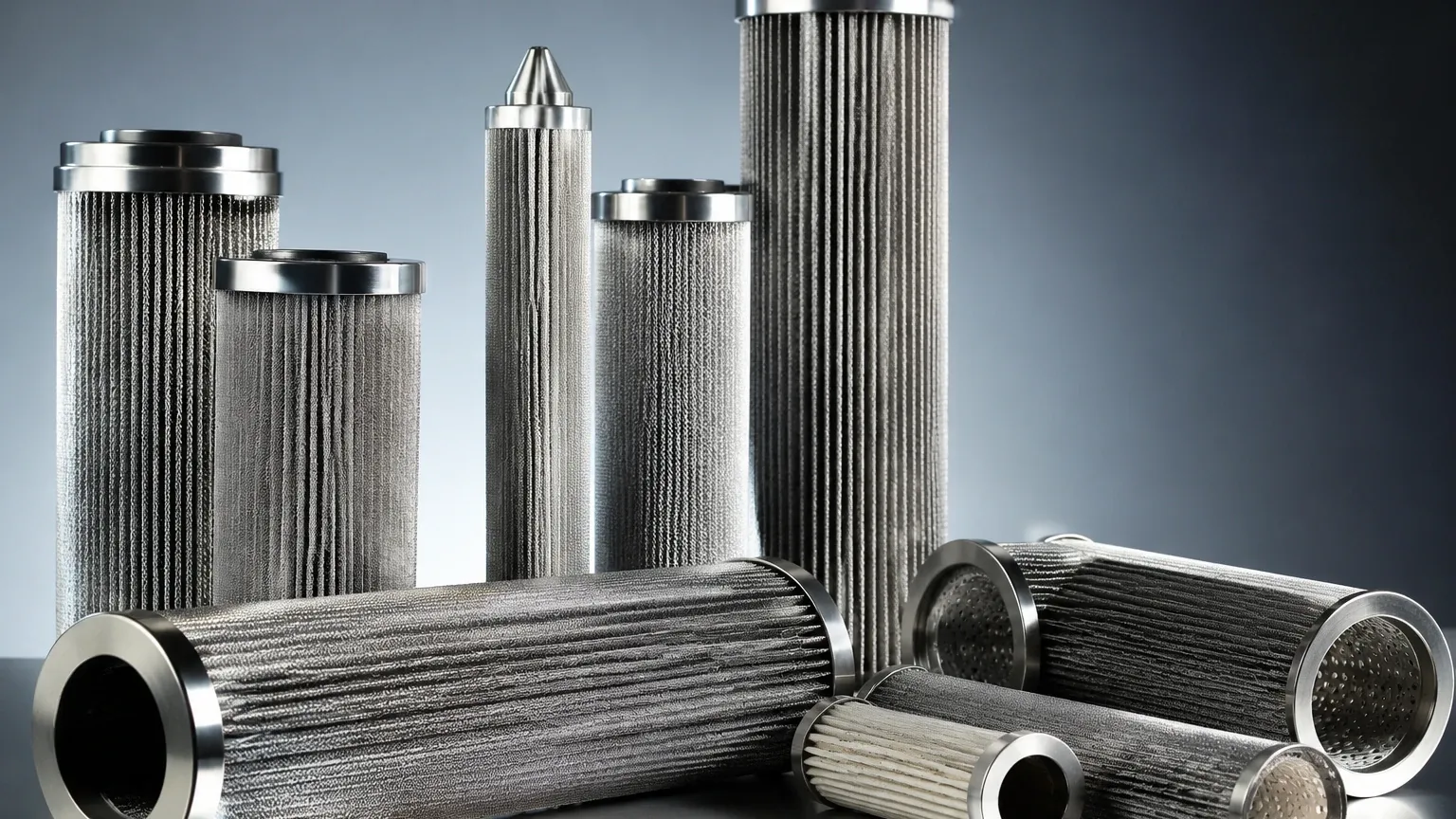
From a technical perspective, the efficiency of a filter is determined by its pore size and the geometry of the filter media. For industrial-grade solutions, manufacturers like Kaifil often utilize stainless steel wire mesh or sintered metal fibers. Unlike disposable polymer filters, these metal components offer superior mechanical strength. In high-pressure environments, a standard plastic filter may bypass or deform, leading to "breakthrough" where contaminants pass into the clean stream. Stainless steel cartridges maintain their structural integrity even under significant differential pressure (∆P).
Technical Specifications and Material Selection for Water Purification
When evaluating a filter cartridge aquaguard or its industrial equivalent, material selection is the most critical factor for chemical compatibility and durability.
Stainless Steel 304 vs. 316L
For most water treatment applications, Stainless Steel 304 provides adequate corrosion resistance. However, in environments involving high salinity, chlorides, or acidic cleaning agents, Stainless Steel 316L is the industry standard. The addition of molybdenum in 316L enhances its resistance to pitting and crevice corrosion, which is vital for maintaining the purity of the filtered water over long operational cycles.
Filtration Media Types
1. Sintered Wire Mesh: This involves multiple layers of stainless steel mesh bonded through a heat-treatment process. It provides precise pore sizes and is easily backwashed, making it ideal for reusable industrial applications.
2. Wedge Wire: Best for heavy sediment loads, wedge wire filters offer a non-clogging surface that is highly effective for pre-filtration stages.
3. Pleated Metal Mesh: To increase the surface area within a standard cartridge footprint, the mesh is pleated. This design allows for higher flow rates and lower initial pressure drops, extending the time between maintenance intervals.
Critical Performance Metrics: Flow Rate and Filtration Accuracy
Engineers must balance filtration accuracy (micron rating) with the required flow rate. A filter cartridge aquaguard designed for fine sediment removal might have a 5-micron rating. In an industrial setting, specifying a micron rating that is too fine for the application can lead to rapid clogging and frequent downtime.
Nominal vs. Absolute Ratings
It is vital to distinguish between nominal and absolute filtration ratings. A nominal rating indicates the filter's ability to retain a majority of particles of a certain size, whereas an absolute rating (often 99.9% efficiency) guarantees that no particles larger than the specified micron size will pass through. For critical applications, such as pharmaceutical water or food processing, absolute-rated Filter Cartridges are necessary to ensure safety and compliance.
Pressure Drop (∆P)
The initial pressure drop is the resistance to flow caused by the clean filter media. As the filter captures debris, the pressure drop increases. Monitoring this metric allows operators to determine the optimal time for cleaning or replacement. In industrial systems, automated sensors are often used to trigger a backwash cycle when the ∆P reaches a specific threshold, typically between 0.5 to 1.0 bar, depending on the system design.
Comparing Industrial-Grade Stainless Steel and Standard Filter Components
While standard filter cartridge aquaguard units often utilize melt-blown polypropylene or carbon blocks, industrial facilities frequently transition to stainless steel filtration for several reasons:
* Temperature Resistance: Polymer filters typically have a maximum operating temperature of 60°C to 80°C. Stainless steel cartridges can operate in excess of 250°C, making them suitable for steam filtration and hot water sanitization (CIP processes).
* Chemical Stability: Many industrial processes involve solvents or high-pH cleaning fluids that would degrade standard plastic housings and media. Metal filters remain inert in the presence of most industrial chemicals.
* Sustainability and Waste Reduction: Disposable cartridges contribute significantly to industrial waste. A stainless steel filter can be cleaned ultrasonically or through back-pulsing, allowing it to be reused for years. This reduces the total cost of ownership (TCO) by eliminating the recurring expense of purchasing and disposing of single-use filters.
Maintenance Cycles and Operational Efficiency in Industrial Water Treatment
The lifespan of a filter cartridge aquaguard depends heavily on the quality of the incoming raw water. In industrial pre-filtration, the goal is to protect expensive downstream components. For instance, if a 5-micron filter cartridge is used before an RO membrane, its failure could lead to irreversible fouling of the membrane, costing thousands of dollars in replacement parts.
Cleaning Procedures
For reusable metal cartridges, cleaning is a standardized process. Common methods include:
* Backwashing: Reversing the flow of fluid to dislodge particles from the surface of the mesh.
* Ultrasonic Cleaning: Using high-frequency sound waves in a cleaning solvent to remove fine particulates trapped deep within the sintered layers.
* Chemical Cleaning: Using specific acids or alkalis to dissolve organic or mineral scaling, followed by a thorough rinse to restore the filter to its original permeability.
Customization Options for OEM Filtration Solutions
One of the primary challenges for engineers is integrating new filtration components into existing hardware. Whether replacing a filter cartridge aquaguard in a specialized machine or designing a new water treatment plant, customization is often required.
Industrial manufacturers like Kaifil provide OEM services to match specific dimensions and connection types. Common end-cap configurations include:
* Double Open End (DOE): Flat gaskets on both ends, used in standard housings.
* Code 7 (226 O-Rings): Features a bayonet lock and two O-rings for a high-integrity seal, often used in critical pharmaceutical applications.
* Threaded Connections: NPT or BSP threads for high-pressure securement.
By customizing the length, diameter, and micron rating, engineers can optimize the filtration system for the specific viscosity and contaminant profile of their process fluid.
Total Cost Considerations for Purchasing Teams
When procuring Filter Cartridges, the purchase price is only one component of the total cost. Purchasing teams should evaluate the following:
1. Replacement Frequency: How often does the process need to stop for filter changes?
2. Labor Costs: The time required for technicians to change out disposable filters vs. cleaning a permanent metal filter.
3. Disposal Fees: Costs associated with hazardous waste disposal if the filters are used in chemical processing.
4. Energy Consumption: A filter that clogs quickly increases the load on pumps, leading to higher electricity usage.
Investing in high-quality, durable filtration components often results in a lower TCO over a 24-month period compared to low-cost disposable alternatives. For systems requiring the reliability associated with the filter cartridge aquaguard standard, moving to industrial-grade stainless steel components ensures that the water quality remains consistent while operational overhead is minimized.
Conclusion
Selecting the right filtration solution requires a deep understanding of the application's physical and chemical demands. Whether you are maintaining a high-purity water system or integrating filtration into a complex industrial process, the choice of filter cartridge impacts everything from product quality to equipment lifespan. By focusing on material integrity, precise micron ratings, and the benefits of reusable stainless steel media, engineers can achieve efficient and cost-effective filtration performance that meets the highest industry standards.
