


Filter Element Air
In industrial environments, the integrity of pneumatic systems, gas processing lines, and intake air for heavy machinery depends heavily on the performance of the filtration media used. A filter element for air applications is designed to remove contaminants such as dust, particulate matter, oil aerosols, and moisture from the air stream. Unlike standard commercial HVAC filters, industrial-grade components must withstand higher pressure differentials, temperature fluctuations, and often corrosive environments.
For engineers and procurement teams, selecting the correct Filter Cartridges involves a deep understanding of the specific demands of the application, the material properties of the filter media, and the long-term maintenance requirements of the system. This guide examines the technical aspects of air filter elements, focusing on stainless steel and precision metal solutions that offer durability and high-efficiency performance.
Understanding the Role of the Filter Element for Air Systems
The primary function of an industrial filter element for air is to protect downstream equipment. In compressed air systems, for example, the presence of fine particulates can cause abrasive wear on pneumatic cylinders, valves, and tools. In gas turbines or large compressors, intake air must be stripped of even micron-sized particles to prevent erosion of high-speed rotating components.
A filter element air system typically operates through several mechanisms:
1. Inertial Impaction: Larger particles that cannot follow the streamline of the air flow collide with the filter fibers or mesh.
2. Interception: Mid-sized particles follow the air stream but come close enough to the filter media to be captured.
3. Diffusion: Very small particles (sub-micron) move erratically due to Brownian motion and eventually strike the filter media.
For demanding industrial applications, stainless steel wire mesh is often the preferred media because it maintains structural integrity under high flow velocities where polymer or paper-based elements might collapse or shed fibers. This is particularly critical in "clean-room" or pharmaceutical air processing where media migration is a significant risk.
Material Selection and Engineering Considerations
When specifying a filter element for air, material selection is the first line of defense against premature failure. Industrial environments often present challenges such as high humidity, chemical vapors, or extreme temperatures that would degrade standard filtration materials.
Stainless Steel Alloys
Stainless steel 304 and 316L are the industry standards for metallic air filter elements. 304 stainless steel provides excellent strength and basic corrosion resistance, making it suitable for general industrial air intake. However, in environments with high salt content (coastal areas) or chemical exposure (chemical processing plants), 316L is preferred due to its higher molybdenum content, which enhances resistance to pitting and crevice corrosion.
Sintered vs. Woven Wire Mesh
For high-precision air filtration, engineers often choose between woven wire mesh and sintered metal felt. Woven wire mesh provides a precise, uniform pore size and is excellent for surface filtration, allowing for easy cleaning. Sintered metal felt, composed of non-woven stainless steel fibers, offers a higher porosity and greater dirt-holding capacity, making it ideal for removing fine aerosols and sub-micron particulates from air streams without causing an excessive pressure drop.
Technical Performance Metrics: Micron Rating and Pressure Drop
The performance of a filter element for air is measured by two primary factors: its ability to capture particles of a specific size (micron rating) and the resistance it creates in the system (pressure drop).
Nominal vs. Absolute Micron Ratings
In air filtration, it is vital to distinguish between nominal and absolute ratings. A nominal rating indicates the ability of the filter to capture a percentage of particles of a given size. An absolute rating, common in high-performance stainless steel Filter Cartridges, guarantees that 99.9% or more of particles above a certain micron size will be captured. For critical air applications, such as instrument air or breathing air, absolute-rated elements are necessary to ensure safety and equipment longevity.
Managing Pressure Drop (ΔP)
The pressure drop is the difference in air pressure between the upstream and downstream sides of the filter. A high initial pressure drop forces the compressor to work harder, increasing energy costs. Industrial air filter elements are designed to maximize the effective filtration area to keep the initial ΔP low. As the filter element for air accumulates contaminants, the ΔP will naturally increase. Monitoring this change is essential for determining the optimal time for cleaning or replacement.
Design Variations: Pleated vs. Cylindrical Filter Cartridges
The physical geometry of the filter element significantly impacts its performance in air systems. The two most common designs are cylindrical and pleated.
Cylindrical Filter Elements
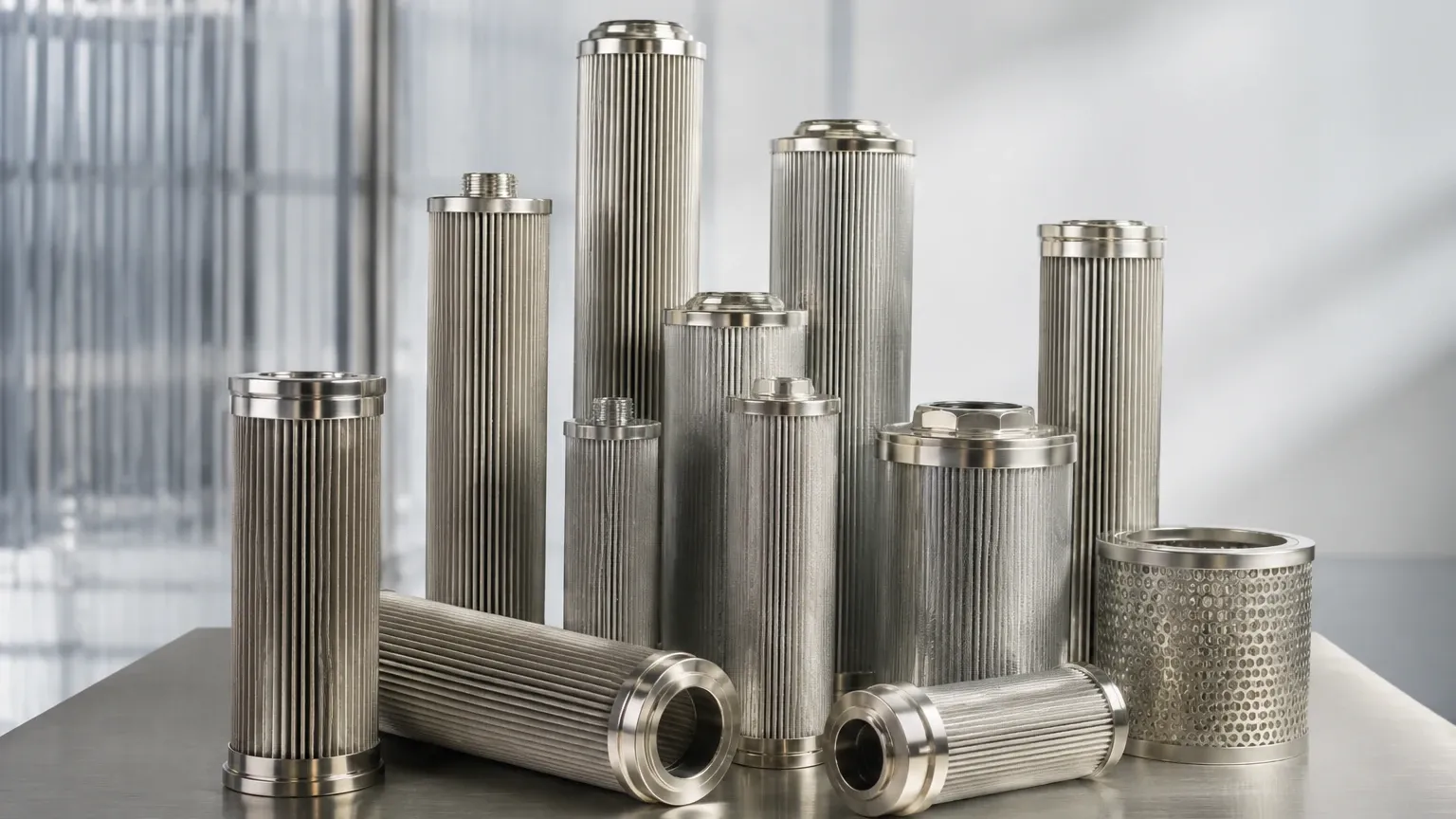
Cylindrical elements consist of a single or multi-layer mesh wrapped around a perforated support core. These are robust and easy to manufacture but have a limited surface area compared to their outer dimensions. They are best suited for applications with lower flow rates or where the air stream contains relatively large, heavy particles that can be easily dislodged during cleaning.
Pleated Filter Elements
To handle high-volume air flow, pleated designs are used. By folding the filter media into a star-shaped pattern around the center core, the surface area can be increased by 3 to 10 times compared to a cylindrical element of the same size. This increased area leads to:
* Lower Face Velocity: Air moves slower through the media, improving capture efficiency.
* Lower Pressure Drop: More paths for the air to pass through reduces resistance.
* Longer Service Life: More space to store captured dust before the filter reaches its terminal pressure drop.
For a filter element air application requiring high efficiency in a compact housing, pleated stainless steel cartridges are the engineered solution of choice.
Maintenance, Cleaning, and Replacement Cycles
One of the primary advantages of using stainless steel filter elements for air is their ability to be cleaned and reused. Unlike disposable glass fiber or paper elements, metal filters can withstand rigorous cleaning processes, significantly reducing the total cost of ownership.
Cleaning Methods
Depending on the type of contaminant, several methods can be used to restore a stainless steel air filter element:
* Backpulsing/Backwashing: Using a high-pressure air or fluid pulse in the opposite direction of normal flow to dislodge surface-loaded particles.
* Ultrasonic Cleaning: Using high-frequency sound waves in a cleaning solvent to remove deeply embedded particles from the mesh pores.
* Chemical Cleaning: Using acids or alkalis to dissolve organic or chemical deposits, followed by a thorough rinse.
Determining Replacement
While stainless steel elements are durable, they are not infinite. Factors that indicate a need for replacement include:
* Structural Deformation: If the element has been subjected to a pressure surge beyond its collapse rating.
* Irreversible Blinding: When the pressure drop remains high even after professional cleaning.
* Mechanical Wear: Thinning of the wire mesh due to abrasive particulates in high-velocity air streams.
Establishing a routine maintenance schedule based on the differential pressure across the filter is the most effective way to manage the lifecycle of a filter element for air.
Customization and OEM Solutions for Specialized Air Filtration
Off-the-shelf filtration solutions often fail to meet the specific spatial or performance constraints of specialized industrial machinery. Customization is frequently required to ensure the filter element air system integrates perfectly with existing hardware.
End Cap Configurations
Custom end caps (such as Double Open End, Single Open End with O-rings, or threaded connections) ensure a leak-proof seal within the filter housing. For air systems, the seal is critical; even a small bypass can allow significant amounts of dust to reach sensitive downstream components.
Support Structures
In high-pressure air applications, the filter media requires internal or external support to prevent pleat bunching or media collapse. Custom-engineered perforated cores or outer cages can be designed to withstand specific collapse pressures, ensuring the element remains functional even during system upsets.
Gasket and Seal Materials
The choice of seal material (Viton, EPDM, Silicone, or PTFE) must be compatible with the air temperature and any chemical vapors present. For example, in high-temperature air exhaust systems, Viton or silicone seals are often necessary to maintain a secure fit.
Conclusion: Selecting the Right Filter Element for Air
Choosing an industrial filter element for air is a technical decision that impacts the efficiency, safety, and operational costs of an entire facility. By prioritizing durable materials like stainless steel and selecting the appropriate design—whether pleated for high flow or cylindrical for robust pre-filtration—engineers can ensure their systems remain protected from the damaging effects of air-borne contaminants.
When evaluating Filter Cartridges for air applications, it is essential to confirm the absolute micron rating, the expected pressure drop at operating flow rates, and the compatibility of the materials with the specific environmental conditions of the site. Working with a manufacturer that understands these engineering nuances allows for the development of customized filtration solutions that deliver reliable performance in the most demanding industrial air and gas applications.
