


Aqua Water Filter Cartridges
In industrial water treatment and process engineering, the selection of filtration components is a critical factor in maintaining system integrity and product quality. Aqua water filter cartridges serve as the primary barrier against contaminants in diverse applications ranging from municipal water treatment to high-precision pharmaceutical manufacturing. For engineers and procurement professionals, understanding the technical nuances of these cartridges—including material compatibility, micron ratings, and structural design—is essential for optimizing filtration efficiency and minimizing operational downtime.
Industrial-grade aqua water filter cartridges are designed to handle significant flow rates while maintaining consistent particle retention. Unlike residential filtration components, industrial variants must withstand rigorous chemical cleaning cycles, high pressure differentials, and varying thermal loads. This guide examines the engineering considerations and selection criteria necessary for implementing effective filtration solutions.
Understanding the Mechanics of Aqua Water Filter Cartridges
The performance of any water filtration system is dictated by the interaction between the fluid medium and the filter media. Aqua water filter cartridges typically operate through two primary mechanisms: depth filtration and surface filtration.
Depth Filtration vs. Surface Filtration
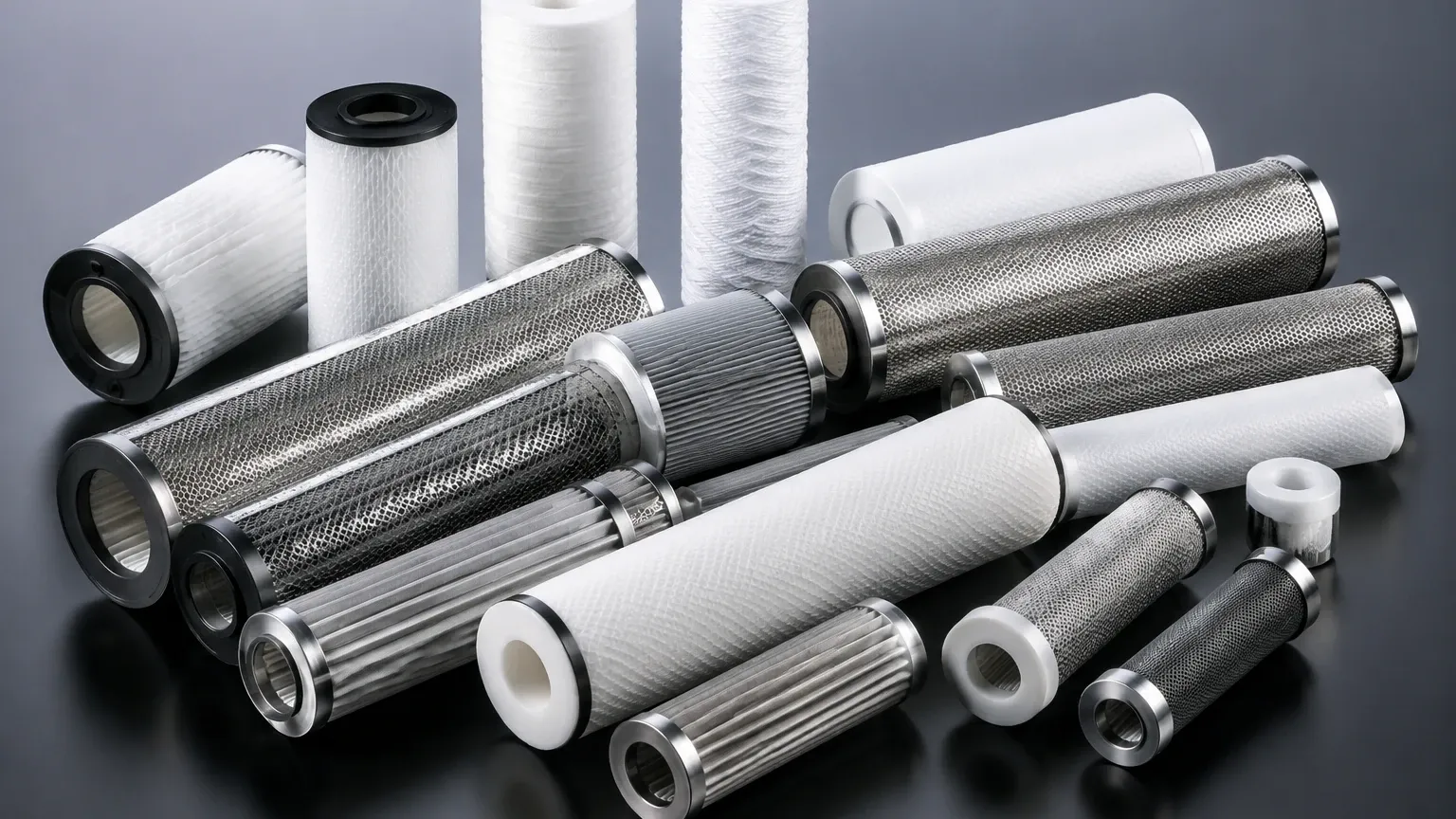
Depth filtration involves a thick medium, such as melt-blown polypropylene or wound fibers, where particles are trapped throughout the entire thickness of the material. This is highly effective for water sources with a wide distribution of particle sizes. Conversely, surface filtration—often achieved through pleated membranes or stainless steel wire mesh—captures particles on the upstream side of the media. Surface filters are generally preferred when precise micron ratings (absolute filtration) are required and when the filter media needs to be cleaned and reused.
For industrial aqua applications, the choice between these two often depends on the "dirt loading" of the incoming water. High-turbidity water may require a depth-style pre-filter to protect more expensive downstream Filter Cartridges that provide final polishing.
Technical Specifications and Evaluation Criteria
When evaluating aqua water filter cartridges for B2B procurement, several technical parameters must be scrutinized to ensure the component meets the application's specific demands.
Micron Ratings: Absolute vs. Nominal
A common point of confusion in filter selection is the distinction between nominal and absolute micron ratings. A nominal rating indicates the filter's ability to retain a majority of particles at a specific size (e.g., 90% of 5-micron particles). An absolute rating, however, implies a 99.9% or higher retention rate at that size. In critical aqua applications, such as boiler feed water or pharmaceutical process water, absolute-rated cartridges are mandatory to prevent downstream scaling or contamination.
Differential Pressure (ΔP)
Differential pressure is the difference in pressure between the upstream and downstream sides of the filter. As the aqua water filter cartridges capture debris, the ΔP increases. Engineers must design systems with clear monitoring protocols; typically, a cartridge should be replaced or cleaned once the differential pressure reaches a pre-determined limit (often between 15 to 25 psi, depending on the housing and media type). Operating beyond this limit risks "breakthrough," where pressure forces contaminants through the media, or structural failure of the cartridge itself.
Flow Rate and Flux
The flux—defined as the flow rate per unit area of filter media—determines the sizing of the filtration vessel. Lower flux rates generally lead to longer cartridge life and better filtration efficiency. When specifying aqua water filter cartridges, it is vital to balance the footprint of the filtration system with the desired service life of the internal components.
Material Science in Water Filtration
The material construction of the cartridge is perhaps the most significant factor in its longevity and chemical resistance. While polymer-based cartridges (Polypropylene, PES, PTFE) are common, stainless steel is increasingly favored in demanding industrial environments.
Stainless Steel Filter Media
For applications involving high temperatures, aggressive chemicals, or the need for high-pressure backwashing, stainless steel (typically 304 or 316L) is the superior choice. Stainless steel aqua water filter cartridges offer several advantages:
* Thermal Stability: They can operate in environments exceeding 200°C, where polymers would soften or degrade.
* Chemical Compatibility: They are resistant to a wide range of solvents and corrosive agents used in CIP (Clean-in-Place) cycles.
* Cleanability: Unlike disposable cartridges, stainless steel mesh can be ultrasonically cleaned or backwashed, significantly reducing the total cost of ownership over time.
Polymer-Based Media
In less aggressive aqua applications, such as standard deionized water loops or pre-filtration for reverse osmosis (RO) systems, polypropylene or polyethersulfone (PES) cartridges are cost-effective. However, these are typically single-use and contribute to a larger waste stream, which may be a consideration for facilities focusing on environmental impact and sustainability.
Industrial Applications of Aqua Water Filter Cartridges
The versatility of aqua water filter cartridges allows them to be deployed across various sectors, each with unique engineering requirements.
Food and Beverage Processing
In the food and beverage industry, water is both an ingredient and a cleaning agent. Filter cartridges used here must comply with FDA regulations and be capable of removing microorganisms and fine particulates that could affect the taste, clarity, or shelf life of the product. Stainless steel pleated cartridges are often used here because they can be sterilized with steam.
Pharmaceutical and Biotech
Water for Injection (WFI) and purified water systems require the highest levels of filtration. Aqua water filter cartridges in this sector often feature sub-micron ratings (0.1 to 0.22 microns) to ensure the removal of bacteria and endotoxins. The integrity of these cartridges is often verified through bubble point or pressure hold tests.
Chemical and Petrochemical
In chemical processing, water is often used for cooling or as a solvent. The presence of hydrocarbons or aggressive pH levels necessitates the use of robust filtration media. Stainless steel wire mesh filters are frequently specified due to their ability to maintain structural integrity under high-stress conditions where synthetic fibers might migrate or shed.
Selection and Customization: Engineering Considerations
Standard off-the-shelf aqua water filter cartridges may not always meet the specific requirements of a complex industrial system. Customization is often necessary to address unique flow patterns, housing dimensions, or specific contaminant profiles.
End Cap Configurations
Compatibility with existing filter housings is a primary concern. Common end cap configurations include:
* DOE (Double Open End): Requires gaskets at both ends; used in basic housings.
* Code 7: Features a finned end and double O-rings for high-security sealing in critical applications.
* Threaded Connections: Often used in stainless steel cartridges to ensure a rigid, leak-proof fit in high-pressure systems.
Custom Mesh and Weave Types
For specialized aqua filtration, the weave of the stainless steel wire mesh can be tailored. Plain weave, twilled weave, and Dutch weave each offer different characteristics regarding flow resistance and particle capture. For example, a Dutch weave provides a much finer filtration grade and higher strength than a standard plain weave, making it ideal for high-pressure water systems.
Total Cost of Ownership (TCO) in Filtration
Procurement teams often focus on the initial purchase price of aqua water filter cartridges, but the Total Cost of Ownership (TCO) is a more accurate metric for B2B decision-making. TCO includes:
1. Initial Purchase Price: The cost of the cartridge and any required adapters.
2. Replacement Frequency: How often the system must be shut down to change filters.
3. Labor Costs: The man-hours required for maintenance and replacement.
4. Disposal Costs: Expenses associated with disposing of contaminated single-use filters.
5. Energy Costs: The energy required to pump water through a partially fouled filter (higher ΔP equals higher energy consumption).
By investing in high-quality, cleanable stainless steel Filter Cartridges, many facilities find that the higher initial capital expenditure is offset by the elimination of frequent replacement costs and reduced waste.
Maintenance and Operational Best Practices
To maximize the lifespan and efficiency of aqua water filter cartridges, a proactive maintenance schedule is required.
* Monitoring Differential Pressure: Automated sensors should be used to track ΔP in real-time. Sudden drops in pressure may indicate a ruptured filter, while rapid increases suggest a spike in influent contamination.
* Proper Installation: Ensuring that O-rings and gaskets are seated correctly is vital. Even a minor bypass can compromise the entire downstream process.
* Cleaning Protocols: For reusable stainless steel cartridges, the cleaning method must be compatible with the contaminant. For example, organic fouling may require a caustic wash, while mineral scaling might require a mild acid.
Conclusion
Aqua water filter cartridges are indispensable components in the modern industrial landscape. Whether the goal is to protect sensitive RO membranes, ensure the purity of a pharmaceutical product, or maintain the efficiency of a cooling tower, the choice of filter cartridge has far-reaching implications for operational success. By focusing on technical specifications—such as absolute micron ratings, material durability, and TCO—engineers can implement filtration solutions that provide reliable performance in even the most demanding environments.
As industrial processes become more complex and regulations regarding water quality become stricter, the role of high-performance filtration will only continue to grow. Selecting the right partner for custom filtration solutions ensures that these critical components are engineered to the highest standards of precision and durability.
