


Filter Cartridge Bauer
In the landscape of high-pressure industrial filtration, the filter cartridge bauer configuration represents a critical standard for air and gas purification. These components are essential for ensuring that compressed air meets stringent purity standards, such as EN12021 for breathing air or specific ISO classes for industrial processes. For engineers and procurement specialists, understanding the technical nuances of these cartridges is vital for maintaining system integrity, protecting downstream equipment, and ensuring the safety of personnel.
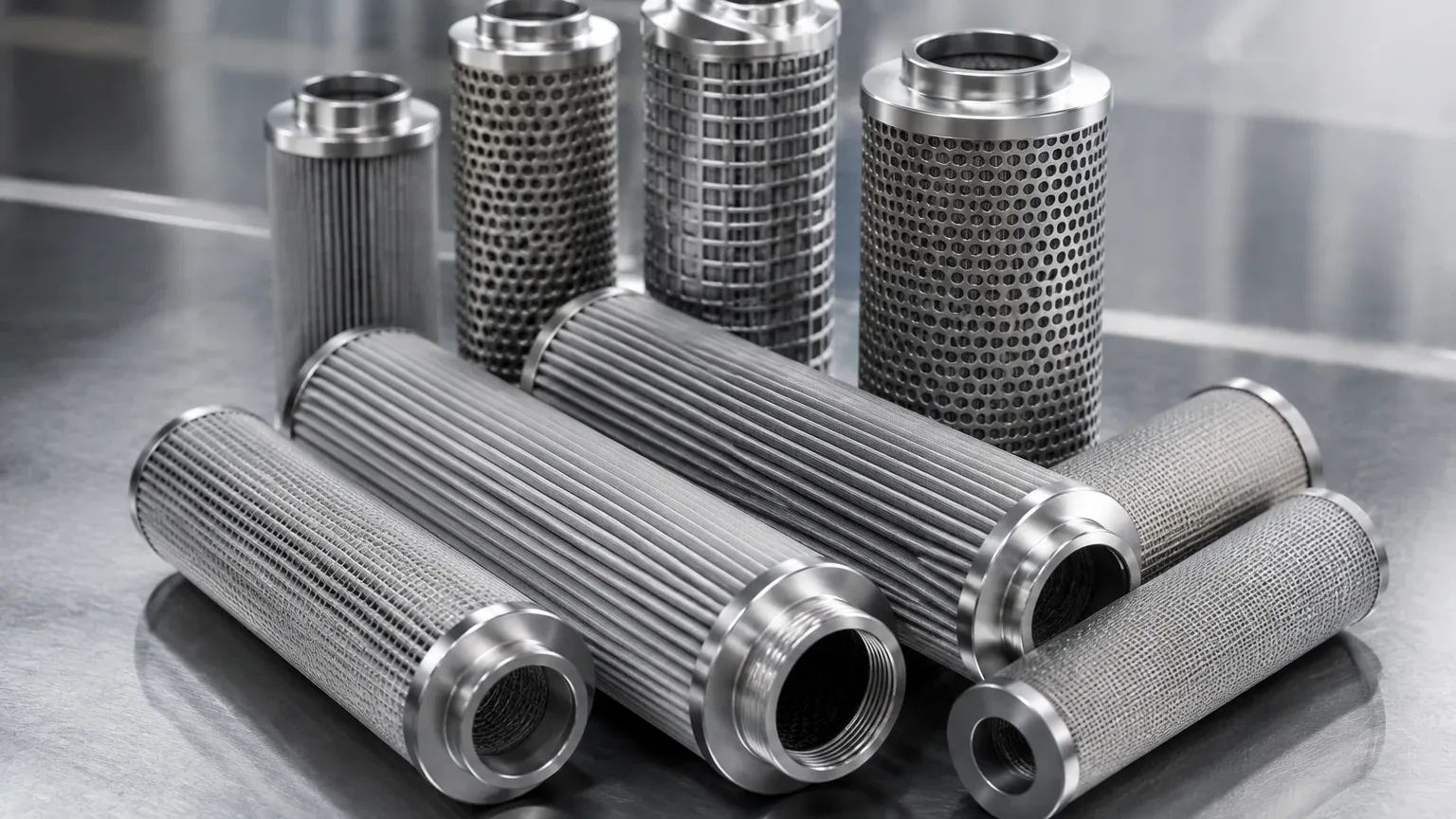
Industrial filtration requires a balance between high flow rates and the precise removal of contaminants, including moisture, oil vapors, and toxic gases like carbon monoxide. While traditional disposable options exist, the shift toward high-performance Filter Cartridges constructed from stainless steel and specialized alloys has gained momentum in heavy-duty industrial applications where durability and chemical compatibility are paramount.
The Critical Function of Filter Cartridge Bauer in Industrial High-Pressure Systems
The primary role of a filter cartridge bauer in a high-pressure compressor system is the multi-stage purification of the gas stream. High-pressure compressors, often operating at pressures between 200 and 350 bar (3,000 to 5,000 psi), generate significant heat and mechanical friction, which can introduce moisture and oil carryover into the compressed gas.
A standard purification sequence within these cartridges typically involves several distinct layers. First, a mechanical separation layer removes bulk liquids and large particulates. This is followed by a desiccant stage, usually employing a molecular sieve, to adsorb water vapor and achieve extremely low pressure dew points. Subsequent stages utilize activated carbon to remove hydrocarbons and odors. In specialized applications, a catalyst layer, such as Hopcalite, is integrated to convert carbon monoxide into carbon dioxide.
For B2B operations in the chemical and pharmaceutical sectors, the reliability of this sequence is non-negotiable. A failure in the filtration stage can lead to the contamination of sensitive chemical reactions or the compromise of sterile environments. Therefore, the structural design of the cartridge must withstand the cyclic loading of high-pressure starts and stops without bypass or media migration.
Material Engineering: Stainless Steel vs. Traditional Housing
When evaluating filter cartridge bauer options, material selection is a primary engineering consideration. Many standard cartridges utilize plastic or aluminum housings. While sufficient for light-duty or intermittent use, these materials may face limitations in aggressive industrial environments.
Stainless steel 304 or 316L housings offer several advantages for industrial-grade filtration:
1. Corrosion Resistance: In environments where the compressed gas may contain trace acidic components or where the external environment is corrosive (such as offshore or chemical plants), stainless steel prevents housing degradation.
2. Structural Integrity: High-pressure pulses can cause fatigue in lower-grade materials. Stainless steel provides a higher safety factor and maintains dimensional stability over long service lives.
3. Temperature Stability: Industrial compressors can run hot. Stainless steel retains its mechanical properties at elevated temperatures better than most polymers used in cartridge construction.
4. Reusability and Sustainability: Custom-engineered stainless steel filter cartridges can often be designed as permanent housings with replaceable internal media kits, reducing the environmental footprint and long-term waste of the facility.
By prioritizing material science, engineers can ensure that the filtration system does not become a point of failure in the broader production line.
Filtration Media and Chemical Processes
The efficacy of a filter cartridge bauer is determined by the quality and volume of the internal media. In industrial contexts, the "life" of a cartridge is not just a function of time but of the total contaminant load it can sequester before breakthrough occurs.
Molecular Sieves
Desiccants like Molecular Sieve 13X or 4A are commonly used. These are crystalline aluminosilicates with uniform pore sizes. They are selected based on their affinity for water molecules. In high-pressure systems, the molecular sieve must be packed tightly to prevent "dusting"—a phenomenon where the beads rub against each other under vibration and create fine particulates that could clog downstream valves.
Activated Carbon
For the removal of oil vapor and organic compounds, high-grade activated carbon is utilized. The surface area of the carbon is the key metric; industrial-grade cartridges often feature carbon with surface areas exceeding 1,000 m²/g. This ensures that even at high flow velocities, there is sufficient contact time for adsorption to occur.
Catalyst Layers
In breathing air applications, the removal of Carbon Monoxide (CO) is critical. The catalyst (typically a mixture of manganese and copper oxides) facilitates the oxidation of CO to CO2. This reaction is highly sensitive to moisture; if the preceding desiccant stages fail, the catalyst becomes "poisoned" and loses its effectiveness. This highlights the importance of the integrated design found in professional-grade cartridges.
Technical Parameters for Selection and Customization
Selecting the correct Filter Cartridges requires a deep dive into the specific operating parameters of the compressor system. A "one size fits all" approach rarely suffices for specialized industrial OEM requirements. Key parameters include:
* Maximum Operating Pressure: The cartridge must be rated for the peak relief valve setting of the compressor, not just the nominal operating pressure.
* Flow Rate (SCFM/LPM): Excessive flow through a cartridge leads to high differential pressure (pressure drop) and reduced contact time with the media, significantly lowering purification efficiency.
* Micron Rating: While the chemical media handles vapors, mechanical filters at the inlet and outlet of the cartridge must capture particulates. A common standard is 5 microns, though precision applications may require 1-micron or sub-micron filtration.
* Operating Temperature: Adsorption is an exothermic process, and high ambient temperatures reduce the capacity of the media. Engineers must calculate cartridge life based on the actual operating temperature at the filter head.
Customization allows for the adjustment of these parameters. For instance, a facility operating in a high-humidity tropical environment may require a cartridge with an expanded desiccant section to maintain the required dew point without frequent change-outs.
Installation, Sealing, and Operational Safety
The interface between the filter cartridge bauer and the filter housing is a common site for potential leaks. Most cartridges utilize a series of O-rings (typically Nitrile or Viton) to ensure a gas-tight seal. In high-pressure B2B applications, the integrity of these seals is paramount.
Sealing Considerations
* Compatibility: The O-ring material must be compatible with the gas being filtered and the compressor lubricant. For example, certain synthetic lubricants can cause standard Nitrile O-rings to swell or degrade.
* Compression Set: High-quality seals must resist compression set to maintain a seal over the entire service life of the cartridge.
Safety Protocols
Replacing a high-pressure filter cartridge requires strict adherence to safety protocols. The filter housing must be completely depressurized and vented before the head is unscrewed. Furthermore, because these cartridges often remove hazardous vapors, used cartridges must be handled and disposed of according to local environmental regulations, particularly if they have saturated with heavy hydrocarbons or toxic gases.
Total Cost of Ownership and Replacement Strategies
For procurement departments, the initial purchase price of a filter cartridge bauer is only one component of the Total Cost of Ownership (TCO). A lower-cost, lower-quality cartridge may seem attractive but can lead to higher long-term costs through:
1. Frequent Change-outs: Lower media volume leads to shorter service intervals, increasing labor costs and downtime.
2. Downstream Damage: Poor particulate filtration can lead to the pitting of high-pressure cylinders or the clogging of precision nozzles.
3. Energy Loss: High differential pressure across a poorly designed cartridge forces the compressor to work harder, increasing energy consumption.
Implementing a predictive maintenance strategy, rather than a reactive one, is recommended. This involves monitoring the total hours of operation and the moisture levels at the outlet. Modern industrial systems often incorporate electronic moisture monitors that provide real-time data, allowing for cartridge replacement exactly when the media is spent, rather than on a fixed (and often inefficient) schedule.
Conclusion
The filter cartridge bauer remains a cornerstone of high-pressure gas purification. Whether the application is supplying breathing air for divers and firefighters or providing ultra-pure gas for laser cutting and chemical synthesis, the technical integrity of the cartridge is paramount. By focusing on high-quality materials, precise media selection, and rigorous engineering standards, industrial operators can ensure optimal performance and safety.
For organizations seeking to optimize their filtration processes, choosing the right partner for custom-engineered solutions is essential. High-performance Filter Cartridges provide the reliability needed to maintain continuous operations in the most demanding industrial environments. Through careful consideration of flow dynamics, material compatibility, and contaminant load, engineers can specify filtration components that deliver consistent purity and long-term value.
