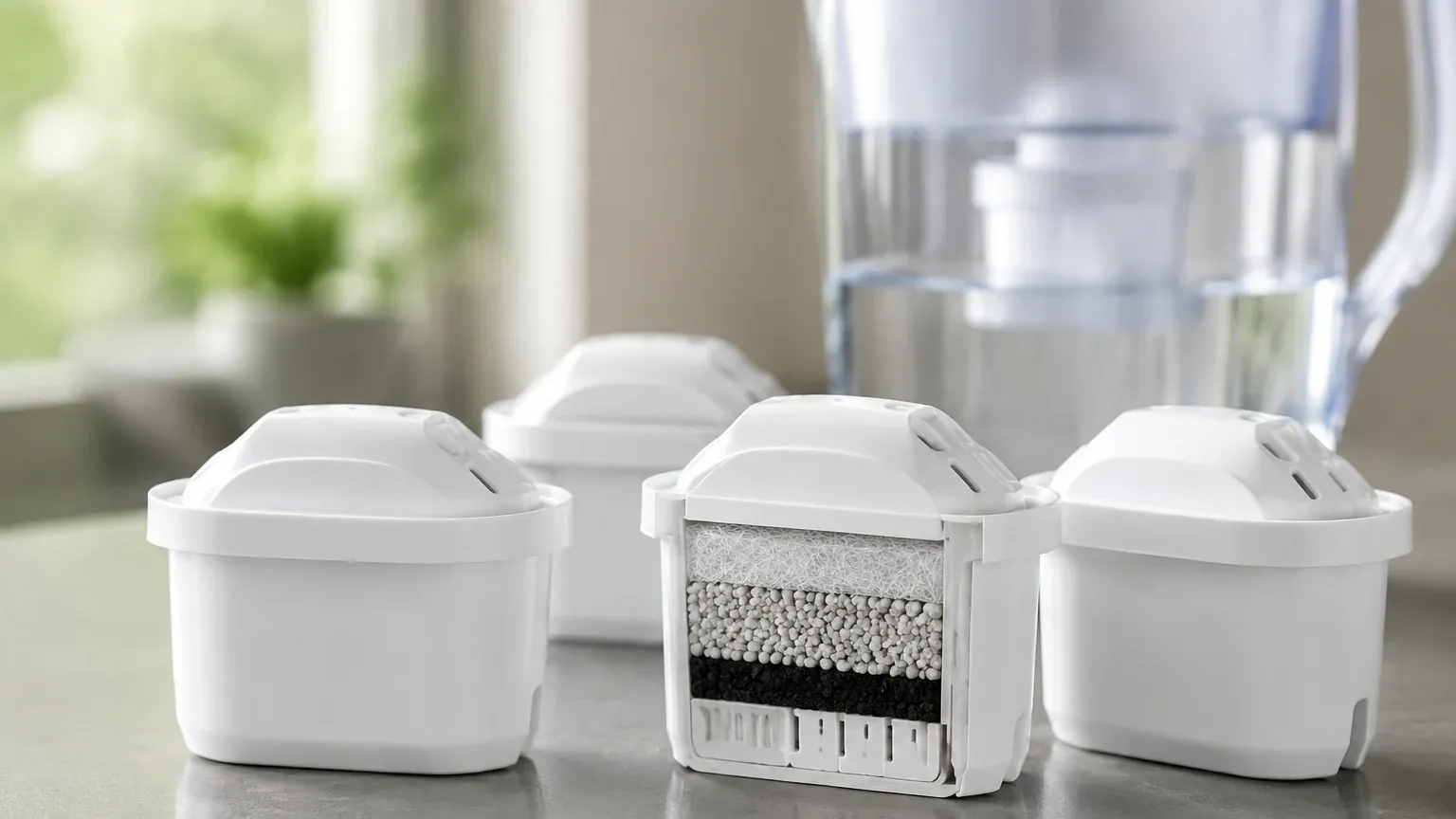
Brita Maxtra Water Filter Cartridges
In the landscape of water treatment, understanding the specific engineering behind point-of-use filtration is essential for both domestic and light commercial applications. The Brita Maxtra water filter cartridges represent a widely recognized standard in gravity-fed and low-pressure filtration systems. While often associated with consumer use, the underlying technology of these cartridges provides a baseline for understanding how ion-exchange and carbon-based media function in reducing water hardness and chemical impurities. For industrial engineers and procurement specialists, analyzing these systems offers a point of comparison when scaling up to more robust Filter Cartridges designed for high-pressure, high-temperature, or chemically aggressive environments.
Technical Composition and Filtration Mechanism
The Brita Maxtra water filter cartridges utilize a multi-stage filtration process housed within a compact, food-grade plastic casing. The internal media is primarily composed of two components: ion-exchange resins and micro-carbon pearls (activated carbon).
1. Ion-Exchange Resin: This component is specifically engineered to target carbonate hardness (limescale) and heavy metals such as copper and lead. Through a process of ion substitution, the resin traps metallic ions and releases hydrogen ions, effectively softening the water. This is a critical function for protecting downstream equipment, such as espresso machines or laboratory water baths, from scale buildup.
2. Activated Micro-Carbon Pearls: Derived from natural coconut shells, these carbon particles have a high surface area-to-volume ratio. They function via adsorption to remove chlorine, organic impurities, and substances that impair taste and odor. In an industrial context, carbon filtration is a standard pre-treatment step to protect sensitive membranes or catalysts from oxidative damage caused by chlorine.
3. Mechanical Mesh Filtration: The cartridge includes a fine mesh filter at the inlet and outlet to prevent media migration and to trap larger sediment particles. However, compared to industrial-grade stainless steel wire mesh, these plastic-based meshes have limited structural integrity and lower micron-rating precision.
Performance Parameters and Flow Dynamics
When evaluating brita maxtra water filter cartridges for any professional application, engineers must consider the flow dynamics. Unlike industrial pressure-driven systems, Maxtra cartridges are generally designed for gravity-flow or very low-pressure environments.
* Flow Rate: The flow rate is restricted by the density of the media and the gravity-fed design. In a standard pitcher, the filtration rate is approximately 0.2 to 0.5 liters per minute. For industrial processes requiring cubic meters of throughput per hour, these systems are insufficient, necessitating a shift toward stainless steel pleated or cylindrical Filter Cartridges.
* Filtration Capacity: A single Maxtra cartridge is typically rated for 100 to 150 liters of water, depending on the local water hardness. In a B2B environment, such as a commercial kitchen or a small-scale laboratory, the frequency of replacement can lead to high operational costs and significant downtime.
* Micron Rating: While not always explicitly stated in consumer literature, the mechanical filtration component of these cartridges typically operates in the 50 to 100-micron range. For precision filtration in chemical processing or pharmaceutical manufacturing, where sub-10-micron or even sub-1-micron absolute ratings are required, metal filter elements provide the necessary accuracy and consistency.
Limitations in Industrial and Commercial Environments
While brita maxtra water filter cartridges are effective for their intended use, they encounter significant limitations when introduced to industrial workflows. Engineers must be aware of these factual boundaries to avoid system failure or contamination.
Temperature Constraints
The thermoplastic housing and the chemical stability of the ion-exchange resin limit these cartridges to cold water applications, typically between 1°C and 30°C. Exceeding these temperatures can lead to "dumping," where the resin releases captured contaminants back into the water stream, or structural deformation of the cartridge. Industrial stainless steel filters, by contrast, can withstand temperatures exceeding 200°C, making them suitable for steam filtration and hot process fluids.
Pressure Sensitivity
Maxtra cartridges are not designed to withstand significant differential pressure. In high-pressure hydraulic or water treatment lines, the plastic housing would likely rupture. Industrial filtration demands components that can handle high ΔP (differential pressure) without collapsing. This is where sintered metal or reinforced wire mesh Filter Cartridges become indispensable, offering the structural rigidity required for high-velocity flows.
Chemical Compatibility
The materials used in consumer water filters are optimized for potable water. They are not compatible with solvents, oils, or highly acidic/alkaline solutions. In chemical processing, the use of 304 or 316L stainless steel is mandatory to ensure the filter does not corrode or leach impurities into the product stream.
Transitioning to Industrial-Grade Filter Cartridges
For facilities that have outgrown the capacity of consumer-grade filtration or require more stringent performance standards, transitioning to industrial Filter Cartridges is a logical step. Kaifil specializes in manufacturing these high-performance components, which offer several advantages over disposable plastic alternatives.
Reusability and Sustainability
One of the primary drawbacks of brita maxtra water filter cartridges is their disposable nature. While recycling programs exist, the total cost of ownership (TCO) increases with every replacement. Industrial stainless steel filters are often designed to be cleanable via backwashing, ultrasonic cleaning, or chemical soaking. This reusability significantly reduces long-term waste and operational expenses.
Customization and Precision Engineering
Industrial applications rarely follow a one-size-fits-all approach. While Maxtra cartridges come in a standard size, industrial filters can be customized in terms of:
* End Cap Configurations: DOE (Double Open End), SOE (Single Open End) with various O-ring codes (e.g., 222, 226).
* Length and Diameter: Custom sizing to fit existing housings or to meet specific flow requirements.
* Material Selection: Options for 304, 316, 316L, or even specialized alloys for extreme corrosion resistance.
* Filtration Layering: Combining different mesh counts to create a depth filtration effect, increasing dirt-holding capacity.
Engineering Considerations for Selection
When moving beyond the scope of brita maxtra water filter cartridges, engineers should focus on several key technical specifications to ensure the chosen filtration solution meets the application's demands.
1. Absolute vs. Nominal Rating: Consumer filters often provide nominal filtration, meaning they catch a percentage of particles at a certain size. Industrial processes often require absolute ratings, ensuring 99.9% of particles above a specific micron size are removed.
2. Dirt Holding Capacity: This refers to the amount of contaminant a filter can retain before the pressure drop reaches a critical level. Pleated metal filters offer a significantly higher surface area than the granular media found in Maxtra cartridges, leading to longer service intervals.
3. Compatibility with CIP (Clean-in-Place): In the food, beverage, and pharmaceutical industries, equipment must be cleaned without disassembly. Stainless steel Filter Cartridges are compatible with caustic cleaning agents and high-temperature sterilization, a requirement that plastic cartridges cannot meet.
Total Cost of Ownership (TCO) Analysis
For purchasing teams, the initial price of a stainless steel filter cartridge may seem high compared to a pack of brita maxtra water filter cartridges. However, a TCO analysis usually reveals a different story.
* Replacement Frequency: A Maxtra cartridge might last 4 weeks in a light commercial setting. A stainless steel filter may last several years with proper maintenance.
* Labor Costs: The time spent monitoring and replacing disposable filters adds up. Robust industrial systems often feature automated backwash cycles or differential pressure gauges that alert staff only when maintenance is necessary.
* Product Integrity: In B2B manufacturing, the cost of a batch of contaminated product far outweighs the cost of a high-quality filter. Investing in precision-engineered metal filtration ensures consistent product quality and protects expensive downstream machinery.
Conclusion
The brita maxtra water filter cartridges serve as an excellent example of efficient, small-scale water treatment technology. They effectively address common water quality issues like chlorine and hardness through a combination of carbon and ion-exchange media. However, as requirements scale toward industrial complexity, the limitations of plastic-housed, gravity-fed systems become apparent.
For engineers and procurement professionals, the focus must shift toward durability, precision, and chemical compatibility. By understanding the mechanisms that make consumer filters work, one can better appreciate the necessity of advanced Filter Cartridges manufactured from stainless steel and other high-performance materials. Whether the goal is to protect a high-pressure hydraulic system, ensure the purity of a pharmaceutical batch, or provide high-volume process water, selecting the right filtration component is a critical engineering decision that impacts the efficiency and reliability of the entire operation.