


Ecolab Water Filter Cartridges
In industrial and commercial water treatment, the selection of filtration components is a critical decision that impacts equipment longevity, operational efficiency, and product quality. Ecolab water filter cartridges are widely utilized across the food service, hospitality, and healthcare sectors to manage water chemistry and remove contaminants. For engineers and facility managers, understanding the technical specifications, material science, and performance variables of these systems is essential for maintaining high-standard operations.
This guide examines the engineering principles behind commercial water filtration, the specific roles of various cartridge types, and the considerations for selecting high-performance filtration solutions in demanding industrial environments.
The Role of Ecolab Water Filter Cartridges in Commercial Operations
Water serves as a primary utility in commercial kitchens, laundries, and boiler systems. However, raw municipal water often contains particulates, chlorine, and dissolved minerals that can compromise equipment. Ecolab water filter cartridges are engineered to address these specific challenges through targeted mechanical and chemical filtration processes.
In food service applications, for instance, the primary goal is often the protection of sensitive equipment like ice machines, espresso makers, and combi-ovens. Particulate matter can clog solenoids and valves, while chlorine can cause pitting corrosion in stainless steel components. Furthermore, dissolved minerals—primarily calcium and magnesium—precipitate out of solution when heated, forming scale that acts as an insulator on heating elements, significantly increasing energy consumption and leading to premature component failure.
Industrial-grade filtration systems utilize these cartridges to provide a multi-stage defense. By integrating sediment pre-filtration with carbon block technology and scale inhibition, these systems ensure that the water entering the equipment meets the stringent requirements for both taste and mechanical safety.
Technical Specifications for Industrial Filter Cartridges
When evaluating Filter Cartridges for industrial or commercial use, engineers must look beyond basic compatibility and focus on specific performance metrics. These metrics define how the filter will behave under varying load conditions and how it will affect the overall hydraulic balance of the system.
Flow Rate and Pressure Drop
Every filter cartridge introduces a degree of resistance to the water flow, known as pressure drop (delta P). In high-demand environments, such as a large-scale commercial laundry or a busy industrial kitchen, the flow rate must remain consistent even as the filter accumulates debris. A cartridge with a high dirt-holding capacity will maintain a lower pressure drop over a longer period, reducing the strain on pumps and ensuring that downstream equipment receives the necessary volume of water.
Micron Ratings: Nominal vs. Absolute
Filtration efficiency is typically measured in microns. It is important to distinguish between nominal and absolute ratings. A nominal rating indicates the ability of the filter to trap a certain percentage of particles of a given size, whereas an absolute rating indicates that the filter will trap 99.9% or more of particles at that size. For critical applications where microbial control or fine sediment removal is paramount, absolute-rated cartridges are often required.
Temperature and Pressure Limits
Commercial water systems often operate at elevated pressures or may be located near heat sources. It is vital to confirm that the housing and the internal cartridge are rated for the maximum expected operating pressure (often up to 125 PSI) and temperature. Exceeding these limits can lead to structural failure of the cartridge media, resulting in "unloading," where trapped contaminants are suddenly released back into the water stream.
Material Engineering and Chemical Compatibility
The effectiveness of Ecolab water filter cartridges is largely determined by the materials used in their construction. Different contaminants require different removal mechanisms, ranging from physical sieving to chemical adsorption.
Polypropylene and Depth Filtration
For sediment removal, spun or blown polypropylene is a standard material. These cartridges utilize depth filtration, where the density of the material increases toward the center of the core. This allows larger particles to be trapped on the outer layers while finer particles are captured deeper within the media. This graduated structure prevents the surface from blinding prematurely, extending the service life of the unit.
Activated Carbon and Adsorption
To remove chlorine, chloramines, and organic compounds that affect taste and odor, activated carbon is the primary medium. Carbon blocks are preferred over granular activated carbon (GAC) in many industrial settings because they provide a larger surface area for adsorption and prevent "channeling," where water finds a path of least resistance and bypasses the filter media. The carbon's porosity is engineered to maximize the contact time between the water and the carbon surface, ensuring efficient chemical reduction.
Scale Inhibition Technology
In applications involving heat, many cartridges include polyphosphate beads or similar scale-inhibiting agents. These materials do not remove minerals but rather sequester them, preventing them from bonding together to form hard scale. This is a critical feature for steam-generating equipment where traditional water softening may not be feasible or cost-effective.
Evaluating Filtration Efficiency and Micron Ratings
In the context of ecolab water filter cartridges, the choice of micron rating is often dictated by the specific equipment being protected. For example, an ice machine might require a 0.5-micron carbon block to effectively reduce cysts and fine sediment, whereas a general-purpose sediment pre-filter might only need a 5-micron or 10-micron rating.
Engineers must also consider the "beta ratio" of the filter media, which provides a more accurate picture of filtration efficiency across different particle sizes. In industrial filtration, a higher beta ratio signifies a more consistent and reliable filter performance. When sourcing replacement components or designing custom filtration housings, understanding these nuances allows for the optimization of the filtration train, ensuring that the most expensive filters are protected by lower-cost pre-filters.
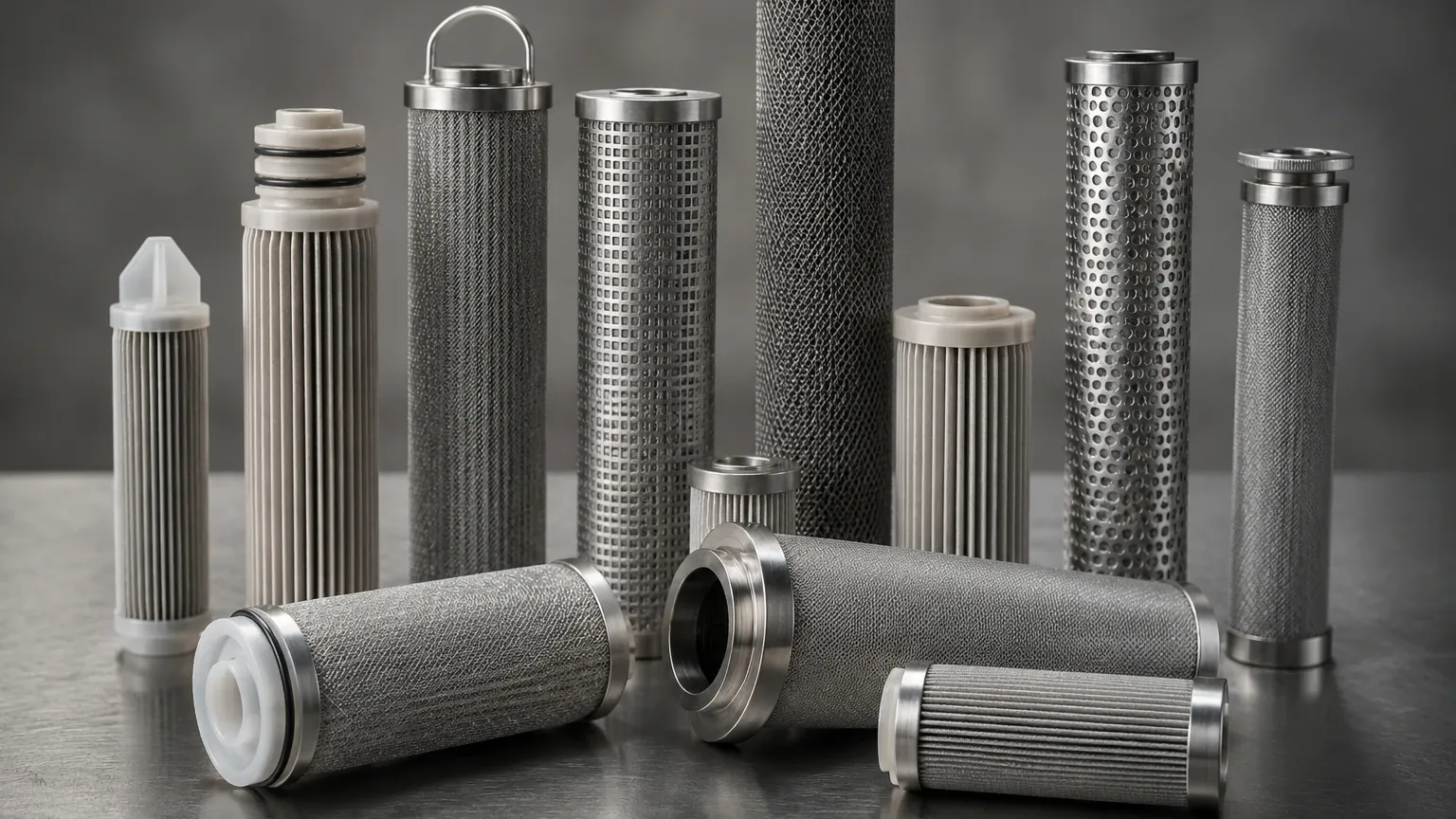
For specialized industrial applications where standard plastic or carbon cartridges may fail—such as high-temperature processing or aggressive chemical environments—stainless steel wire mesh or sintered metal filters provide a robust alternative. These metal components offer precise micron ratings and can be cleaned and reused, providing a different value proposition compared to disposable commercial cartridges.
Maintenance and Replacement Cycles for Industrial Water Filters
The total cost of ownership (TCO) for a filtration system is heavily influenced by the frequency of cartridge replacement. While many commercial cartridges are rated by gallonage (e.g., 10,000 or 25,000 gallons), these are estimates based on standard water quality. In practice, several factors can accelerate the need for replacement:
1. Turbidity Spikes: Sudden increases in suspended solids in the municipal supply can blind a filter in a fraction of its rated lifespan.
2. Biofilm Growth: In systems with low flow or intermittent use, bacteria can colonize the filter media, leading to pressure drops and potential contamination.
3. Chemical Exhaustion: Once the adsorption sites on an activated carbon block are filled, the filter will no longer remove chlorine, regardless of the remaining mechanical filtration capacity.
To manage these risks, industrial systems should incorporate pressure gauges before and after the filter housing. A significant increase in differential pressure (typically 10-15 PSI over the clean starting pressure) is a definitive signal that the cartridge has reached its end-of-life. Implementing a scheduled replacement program based on both time and pressure differential is the best practice for preventing equipment downtime.
Customization and the Role of Stainless Steel in Advanced Filtration
While standard Ecolab water filter cartridges meet the needs of many commercial applications, certain industrial environments require customized solutions that go beyond the capabilities of off-the-shelf products. This is where manufacturers like Kaifil provide significant value.
In industries such as chemical processing, pharmaceuticals, and high-pressure hydraulics, the filtration media must withstand extreme conditions that would compromise standard commercial cartridges. Custom-engineered stainless steel filter cartridges offer several advantages:
* Thermal Stability: Stainless steel can operate at temperatures far exceeding the limits of polypropylene or carbon.
* Chemical Resistance: For non-water applications or water with extreme pH levels, 304 or 316L stainless steel provides the necessary corrosion resistance.
* Structural Integrity: Metal filters do not suffer from media migration or bypass under high-pressure surges.
* Cleanability: Unlike disposable cartridges, stainless steel mesh and sintered filters can often be backwashed or ultrasonically cleaned, reducing long-term waste and replacement costs.
For engineers designing OEM equipment or upgrading existing filtration lines, the ability to customize the dimensions, end-cap configurations, and micron ratings of a filter is essential. Whether it is a pleated wire mesh for high surface area or a sintered metal powder for fine gas filtration, these precision components ensure that the filtration system is perfectly matched to the application's specific demands.
Conclusion: Selecting the Right Filtration Strategy
Effective water filtration is a balance of science and engineering. Whether utilizing Ecolab water filter cartridges for a commercial kitchen or implementing custom stainless steel solutions for an industrial plant, the goal remains the same: protecting downstream assets and ensuring process consistency.
When selecting filtration components, technical professionals should prioritize:
* Verification of Water Quality: Understanding the specific contaminants (sediment, chlorine, hardness) to be addressed.
* Performance Alignment: Matching the flow rate and micron rating to the equipment requirements.
* Material Suitability: Choosing between disposable media for ease of use or permanent metal media for durability and extreme conditions.
* Monitoring Protocols: Establishing clear metrics for replacement to avoid bypass or equipment damage.
By taking a rigorous, data-driven approach to filter selection, organizations can reduce maintenance costs, improve energy efficiency, and ensure the long-term reliability of their critical water-dependent systems.
