


Evolve Plus Water Filter Cartridges
In the landscape of industrial and commercial water treatment, the selection of filtration media is a critical decision that impacts equipment longevity, process efficiency, and final product quality. Among the various technologies available, evolve plus water filter cartridges have gained prominence for their multi-stage approach to contaminant removal. For engineers and facility managers, understanding the technical nuances of these cartridges—and how they compare to heavy-duty industrial Filter Cartridges—is essential for optimizing water systems.
This guide examines the engineering principles behind evolve plus water filter cartridges, evaluating their performance metrics, material composition, and the specific application environments where they offer the highest return on investment. We will also explore the transition from light commercial filtration to the precision stainless steel solutions required in demanding industrial sectors.
Technical Architecture of Multi-Stage Filtration
The "Plus" designation in water filtration often refers to an enhanced, multi-step process integrated into a single housing. Unlike standard sediment filters that rely solely on mechanical sieving, evolve plus water filter cartridges typically employ a sequential treatment logic designed to address both physical and chemical impurities.
The Five-Step Filtration Logic
1. Primary Particle Capture: A fine mesh filter at the inlet traps larger suspended solids, protecting the inner media from premature clogging.
2. Ion Exchange Resin: This stage focuses on chemical softening. By exchanging calcium and magnesium ions for sodium or hydrogen ions, the cartridge reduces carbonate hardness, which is the primary cause of limescale buildup in downstream machinery.
3. Activated Carbon Treatment: High-porosity carbon media adsorbs chlorine, pesticides, and organic pollutants. This is vital for applications where taste, odor, and chemical purity are paramount, such as in food and beverage production.
4. Secondary Fine Mesh: A final mechanical barrier ensures that any media fines (such as carbon dust) are retained within the cartridge and do not migrate into the treated water stream.
5. Flow Optimization: The internal geometry is engineered to maintain a consistent flow rate even as the media becomes loaded, minimizing the pressure drop across the system.
Engineering Evaluation: Performance Metrics
When specifying Filter Cartridges for professional environments, engineers must look beyond marketing claims and focus on quantifiable data. The performance of evolve plus water filter cartridges is defined by three primary factors: micron rating, flow capacity, and chemical reduction efficiency.
Micron Rating and Particle Distribution
Micron ratings indicate the size of particles the filter can effectively trap. For evolve plus systems, the mechanical stages often target the 5 to 10-micron range. In industrial contexts, it is important to distinguish between "nominal" and "absolute" ratings. A nominal rating indicates the filter can trap a large percentage of particles of a given size, whereas an absolute rating (often achieved through precision wire mesh or pleated membranes) implies a 99.9% efficiency at that size.
Flow Rate and Differential Pressure ($ \Delta P $)
Every filter cartridge introduces resistance into a fluid system. The differential pressure is the difference between the inlet and outlet pressure. As evolve plus water filter cartridges accumulate contaminants, $ \Delta P $ increases. Engineers must ensure that the pump systems are sized to handle the maximum allowable pressure drop before a cartridge change-out is required. High-quality cartridges are designed with a low initial $ \Delta P $ to maximize the available energy for the process.
Material Compatibility and Industrial Durability
While evolve plus water filter cartridges are highly effective for water softening and chlorine removal in light commercial settings, industrial environments often demand higher structural integrity. This is where the transition to stainless steel filtration components becomes necessary.
Plastic vs. Stainless Steel Housings
Most standard evolve plus cartridges utilize food-grade plastic housings (such as polypropylene). While cost-effective and resistant to corrosion in pure water applications, they have limitations regarding temperature and pressure. For high-temperature processes or systems involving aggressive chemical cleaning cycles (CIP), stainless steel Filter Cartridges provide the necessary mechanical strength and thermal stability.
Chemical Resistance
In the chemical processing and pharmaceutical industries, the filtration media must be inert to the fluid being processed. While the ion exchange resins in evolve plus cartridges are excellent for water, they may not be compatible with solvents or high-pH fluids. In these instances, custom-engineered wire mesh filters or sintered metal cartridges are preferred for their broad chemical compatibility and ability to be cleaned and reused.
Common Risks and Operational Challenges
Implementing a filtration strategy involving evolve plus water filter cartridges requires an awareness of potential failure points. Failure to manage these risks can lead to downstream contamination or system downtime.
Media Channeling
Channeling occurs when the fluid finds a path of least resistance through the filtration media (like the carbon or resin bed), bypassing the intended treatment. This usually happens due to excessive flow rates or improper cartridge installation. To prevent this, cartridges must be seated correctly with high-quality O-rings or gaskets to ensure a positive seal.
Biological Fouling
Because these cartridges remove chlorine, the water inside the housing can become a breeding ground for bacteria if the system remains stagnant for extended periods. In industrial food and beverage applications, it is often necessary to pair evolve plus filtration with UV sterilization or to use cartridges with antimicrobial properties to maintain hygiene standards.
Saturation of Ion Exchange Resin
Unlike mechanical filters that show a clear pressure drop when full, chemical media like ion exchange resins have a finite capacity that is not always reflected in flow resistance. Once the resin is saturated, "breakthrough" occurs, and hardness ions pass through the filter. Regular water testing or the use of totalized flow meters is required to determine the exact replacement cycle based on the local water hardness (measured in Grains per Gallon or ppm).
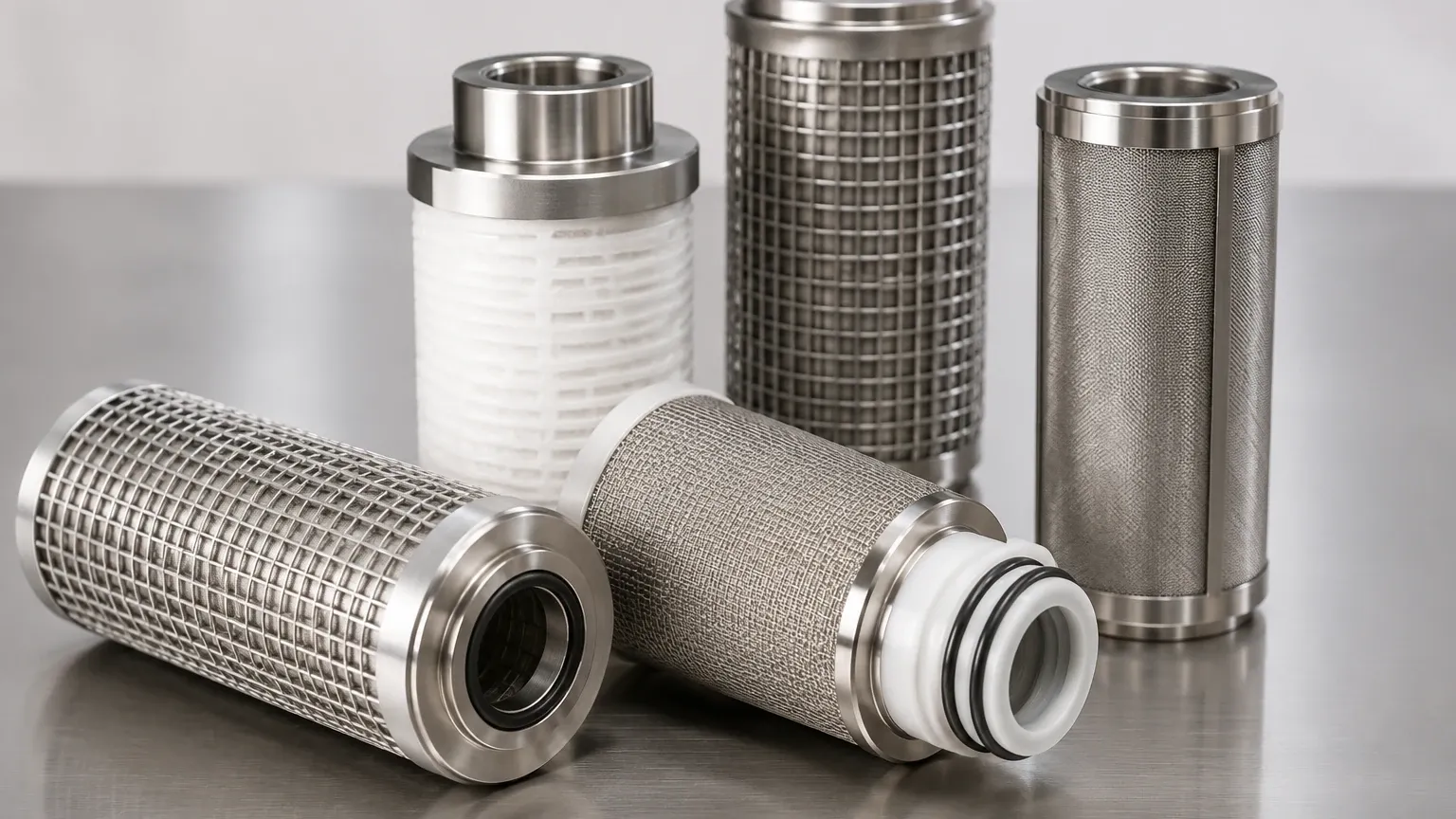
Selection Guide: When to Choose Evolve Plus vs. Custom Industrial Filters
Choosing the right Filter Cartridges involves balancing initial acquisition costs with long-term operational requirements.
* Scenario A: Commercial Kitchens and Laboratories. For applications requiring the removal of scale and chlorine from municipal water at moderate flow rates, evolve plus water filter cartridges are often the most efficient solution. They offer a compact footprint and easy maintenance.
* Scenario B: High-Pressure Hydraulic or Chemical Lines. In these environments, the structural failure of a plastic cartridge could lead to catastrophic system damage. Here, stainless steel wire mesh or pleated metal cartridges are the industry standard due to their high burst pressure ratings.
* Scenario C: High-Volume Industrial Water Treatment. When processing thousands of gallons per hour, the cost of frequent cartridge replacements can become prohibitive. In such cases, engineers may opt for larger, cleanable stainless steel filtration systems that can be backwashed, significantly reducing the total cost of ownership.
Maintenance and Replacement Strategy
A proactive maintenance schedule is the only way to ensure consistent water quality. For evolve plus water filter cartridges, the replacement interval is typically dictated by whichever comes first: the volumetric capacity (e.g., 6,000 liters) or the time interval (e.g., 6 months).
Signs That Replacement is Necessary:
* Reduced Flow Rate: Indicates mechanical clogging of the outer or inner mesh layers.
* Change in Taste or Odor: Suggests the activated carbon has reached its adsorption limit.
* Visible Scale Build-up: In coffee machines or boilers, this indicates the ion exchange resin is exhausted.
* Pressure Drop Alarms: In automated industrial systems, sensors will trigger an alert when the $ \Delta P $ exceeds a pre-set threshold (typically 15-20 psi over initial pressure).
The Role of OEM Customization in Filtration
For many specialized industrial applications, standard off-the-shelf cartridges do not meet the exact requirements for filtration accuracy or material durability. Manufacturers like Kaifil specialize in bridging this gap by providing custom stainless steel filtration solutions.
By leveraging advanced manufacturing techniques, it is possible to create filtration components that mimic the multi-stage benefits of evolve plus water filter cartridges but within a robust metal framework. This includes custom-sized wire mesh for specific particle retention and specialized cartridge geometries that fit into existing proprietary housings. For purchasing teams, working with an OEM manufacturer allows for the development of bespoke Filter Cartridges that are tailored to the unique chemical and physical demands of their specific process.
Conclusion
Evolve plus water filter cartridges represent a sophisticated approach to water treatment, combining mechanical and chemical filtration to protect sensitive equipment and ensure fluid purity. However, for the professional engineer, the choice of filtration media must always be grounded in the specific demands of the application. Whether utilizing the multi-stage convenience of evolve plus systems or the rugged reliability of custom stainless steel cartridges, the goal remains the same: achieving optimal filtration performance with minimal operational disruption.
Before proceeding with a bulk procurement or system redesign, technical teams should confirm the compatibility of the cartridge materials with their process fluids, verify the expected lifespan based on local water analysis, and evaluate whether a custom-engineered solution might offer better long-term value.
