


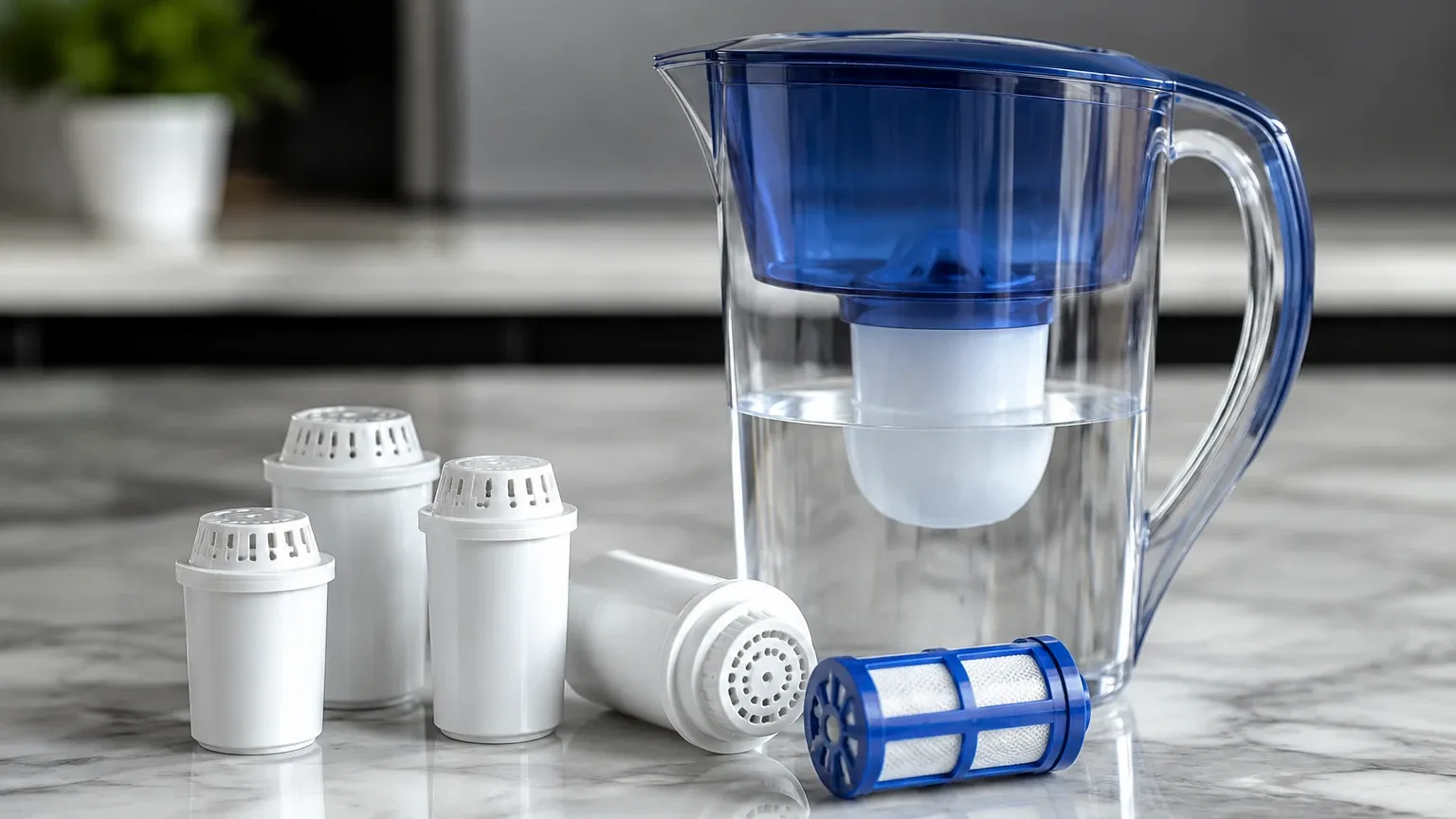
Filter Cartridges for Water Jug
In the realm of water purification, the efficiency of any system—whether a small-scale dispenser or a large-scale industrial treatment plant—relies heavily on the quality of its filtration components. While the term "filter cartridges for water jug" often brings to mind consumer-grade household items, the engineering principles behind these components are foundational to professional water treatment. For engineers and procurement specialists, understanding the technical nuances of filter cartridges is essential for ensuring water quality, system longevity, and operational cost-efficiency.
Industrial water filtration requires a higher standard of durability and precision than standard consumer products. When designing or maintaining systems that utilize Filter Cartridges, professionals must look beyond simple carbon blocks to consider material compatibility, structural integrity under pressure, and the specific micron ratings required for the application.
The Mechanics of Filter Cartridges in Water Systems
Filter cartridges function as the primary barrier against contaminants. In a water jug or dispenser context, these cartridges are designed to remove physical particulates, chemical impurities, and biological hazards. The filtration process generally involves two main mechanisms: mechanical straining and adsorption.
Mechanical straining occurs when the pore size of the filter media is smaller than the particles being filtered. In industrial settings, this is often achieved through the use of stainless steel wire mesh or pleated metal elements. These materials provide a rigid structure that maintains its pore size even under fluctuating pressure, a common failure point in lower-quality plastic or fiber-based cartridges.
adsorption, on the other hand, is the process where molecules of contaminants adhere to the surface of the filter media. This is typically the role of activated carbon. However, in high-performance industrial applications, the housing and the structural support of these carbon elements must be robust enough to prevent "channeling"—a phenomenon where water finds a path of least resistance, bypassing the filtration media entirely.
Comparing Consumer-Grade and Industrial-Grade Filter Cartridges
There is a significant technical gap between standard retail filter cartridges for water jug systems and the industrial-grade components manufactured by specialists like Kaifil. Understanding these differences is critical for technical professionals who require reliable performance in demanding environments.
Structural Integrity and Pressure Resistance
Consumer-grade cartridges are usually housed in thin plastic casings designed for gravity-fed systems. In contrast, industrial filter cartridges are engineered to withstand significant differential pressure. Stainless steel cartridges, for instance, offer superior mechanical strength, ensuring that the filter does not collapse or bypass when the system experiences pressure spikes or high flow rates.
Material Purity and Chemical Compatibility
In food, beverage, and pharmaceutical applications, the materials used in filter cartridges must be non-leaching and chemically inert. While consumer plastic filters may suffice for tap water, industrial processes involving treated water, high temperatures, or specific pH levels require the corrosion resistance of 304 or 316L stainless steel. These materials ensure that the filter itself does not become a source of contamination.
Service Life and Reusability
A primary differentiator is the lifecycle of the component. Most consumer cartridges are disposable and must be replaced every few hundred liters. Industrial stainless steel filter cartridges are often designed to be cleaned and reused. This backwashing or ultrasonic cleaning capability significantly reduces the total cost of ownership and minimizes environmental waste in large-scale operations.
Material Selection: Why Stainless Steel is Superior for Longevity
When evaluating filter cartridges for water jug dispensers in commercial or industrial settings, the choice of material is the most influential factor in performance. While synthetic polymers are common, stainless steel stands out for several engineering reasons.
1. Thermal Stability: Stainless steel maintains its physical properties across a wide temperature range. This is vital for systems that undergo steam sterilization or handle hot water loops.
2. Corrosion Resistance: In water treatment, the presence of chlorine, minerals, and varying oxygen levels can degrade inferior metals. 316L stainless steel provides excellent resistance to pitting and crevice corrosion.
3. No Media Migration: Unlike fiber-wound or paper cartridges, metal mesh filters do not shed fibers into the filtrate. This is a critical requirement for high-purity water systems where downstream contamination can ruin a production batch.
Kaifil specializes in leveraging these material benefits to create custom filtration solutions that exceed the performance of standard off-the-shelf components.
Key Performance Metrics for Water Filtration Cartridges
To make an informed purchasing decision, engineers must evaluate several key performance indicators (KPIs) associated with filter cartridges.
Micron Rating: Absolute vs. Nominal
It is important to distinguish between absolute and nominal micron ratings. A nominal rating indicates the filter can trap a percentage of particles of a certain size, whereas an absolute rating (common in high-end stainless steel mesh) guarantees that 99.9% of particles larger than the specified micron size will be captured. For critical water jug applications in laboratories or medical facilities, absolute ratings are often mandatory.
Flow Rate and Differential Pressure
The design of the filter cartridge must allow for the required flow rate without causing an excessive drop in pressure. Pleated designs are frequently used to increase the surface area within the same footprint, allowing for higher flow capacities and longer intervals between cleanings.
Dirt Holding Capacity
This refers to the amount of contaminant a filter can retain before the pressure drop reaches a critical limit. High-quality industrial cartridges are engineered with optimized geometry to maximize this capacity, ensuring that the system remains operational for longer periods.
Customization and Engineering Considerations for Bulk Water Systems
In many B2B scenarios, standard filter cartridges for water jug systems do not meet the specific spatial or functional requirements of a proprietary machine or a unique facility layout. This is where customization becomes a strategic advantage.
When working with a manufacturer like Kaifil, engineers can specify exact dimensions, end-cap configurations (such as DOE, 222, or 226 O-rings), and specialized mesh weaves. For example, a system designed for a high-traffic commercial water station may require a custom-length cartridge to fit a compact housing while maintaining a high flow rate. Customization ensures that the filtration component integrates seamlessly with the existing hardware, preventing leaks and ensuring maximum filtration efficiency.
Furthermore, OEM (Original Equipment Manufacturer) services allow companies to develop proprietary filtration components that are optimized for their specific equipment, providing a competitive edge in performance and reliability.
Maintenance and Replacement Cycles: Ensuring Continuous Performance
Even the highest quality filter cartridges require a structured maintenance program. In industrial water dispensing and storage, neglecting the filter can lead to biofilm buildup, reduced flow, and potential pump damage due to high differential pressure.
Monitoring Pressure Drop
The most effective way to determine when a filter cartridge needs attention is by monitoring the pressure gauge before and after the filter housing. A significant increase in differential pressure indicates that the media is loaded with contaminants.
Cleaning Protocols
For stainless steel cartridges, cleaning protocols may include backflushing with clean water, chemical soaking to remove mineral scale, or ultrasonic cleaning for fine mesh filters. These processes restore the filter’s permeability and extend its operational life far beyond that of disposable alternatives.
Validation and Testing
In regulated industries, such as food and beverage, regular validation of the filter's integrity is necessary. This may involve bubble point testing to ensure that the mesh has not been damaged and that the micron rating remains accurate.
Conclusion: Selecting the Right Filtration Partner
Choosing the right filter cartridges for water jug applications at an industrial or commercial scale involves more than just matching a part number. It requires a deep understanding of fluid dynamics, material science, and the specific challenges of the operating environment. By moving away from disposable, low-durability options and toward engineered stainless steel solutions, organizations can achieve higher water purity, lower long-term costs, and greater system reliability.
Kaifil provides the technical expertise and manufacturing precision needed to develop these high-performance components. Whether you are looking for standard replacements or a fully customized OEM filtration solution, focusing on quality and engineering excellence is the key to optimized water treatment performance.
