


Filter Cartridges for
In industrial processing, the efficiency of a system often hinges on the reliability of its filtration components. Selecting the right filter cartridges for specific industrial applications is a critical decision that affects product purity, equipment longevity, and overall operational costs. Unlike residential or light commercial filters, industrial-grade filter cartridges must withstand extreme temperatures, high pressure differentials, and chemically aggressive environments. This guide explores the technical considerations, material science, and engineering factors involved in selecting and implementing high-performance filtration solutions.
Industrial Filter Cartridges serve as the primary barrier against contaminants in fluid and gas streams. Whether the goal is to protect sensitive downstream equipment like high-pressure pumps or to ensure the final quality of a pharmaceutical product, understanding the nuances of filter design is essential for any engineering or procurement team.
Material Selection and Structural Integrity
The foundation of any high-performance filter cartridge is the material from which it is constructed. In demanding industrial sectors, stainless steel has become the standard for reusable and durable filtration. Specifically, alloys such as 304, 316, and 316L stainless steel are favored for their exceptional resistance to corrosion and thermal stress.
Stainless Steel Wire Mesh
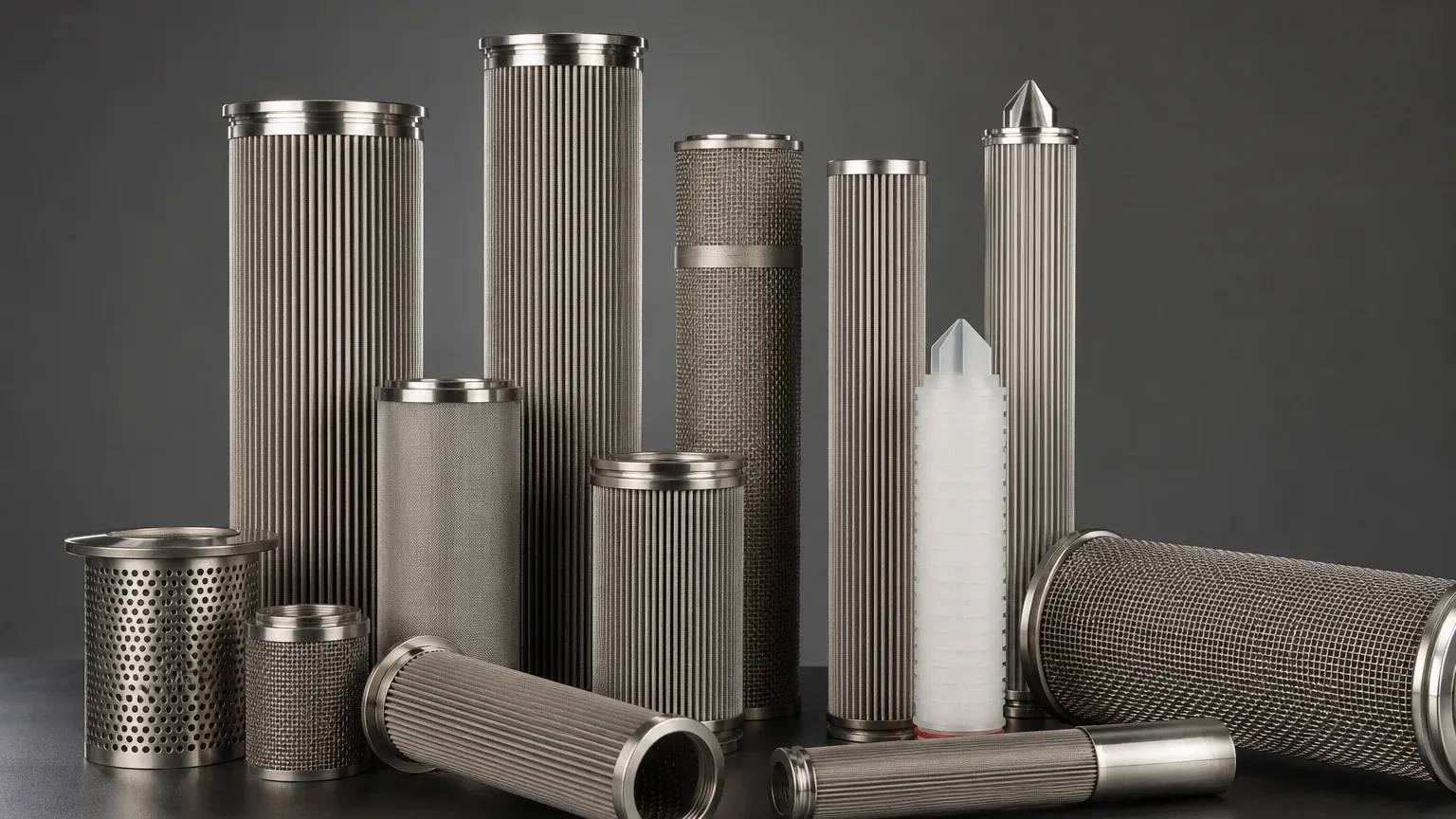
Stainless steel wire mesh is a versatile medium used in many filter cartridges for applications requiring precise pore sizes and high mechanical strength. Engineers can choose from various weave patterns, such as plain weave, twilled weave, or Dutch weave. Each pattern offers different characteristics regarding flow resistance and particle retention. For instance, Dutch weave provides a denser structure suitable for fine filtration, whereas plain weave is often used for coarser straining and high-flow applications.
Sintered Metal Media
For applications involving extreme pressures or the need for ultra-fine filtration, sintered metal media—where multiple layers of wire mesh or metal fibers are fused together through a heat-treatment process—offer unparalleled structural integrity. Sintered filter cartridges for high-viscosity fluids or high-temperature steam do not migrate fibers into the process stream, a common failure point for polymer-based or felt filters.
Chemical Compatibility
One of the primary reasons engineers specify stainless steel filter cartridges for industrial use is chemical compatibility. Unlike plastic or cellulose filters, which may swell, degrade, or leach chemicals when exposed to solvents, acids, or bases, stainless steel remains inert in most industrial environments. This is particularly vital in chemical processing and oil and gas applications where fluid chemistry can be volatile.
Key Performance Metrics in Filtration
When evaluating filter cartridges for a specific process, several technical parameters must be analyzed to ensure the component meets the system's requirements. Over-specifying can lead to unnecessary costs, while under-specifying can result in frequent downtime or equipment damage.
Micron Rating: Absolute vs. Nominal
Understanding the difference between absolute and nominal micron ratings is crucial. A nominal rating refers to a filter's ability to retain a major percentage of particles of a specific size (e.g., 90% of 10-micron particles). In contrast, an absolute rating implies that 99.9% or more of particles at that size are captured. For critical applications like pharmaceutical sterile filtration or fine chemical production, absolute-rated filter cartridges are typically required to ensure consistent output quality.
Differential Pressure (ΔP)
Differential pressure is the difference between the pressure at the inlet and the outlet of the filter. As a filter cartridge captures contaminants, the pores become restricted, and the differential pressure increases. Engineers must design systems with a clear understanding of the "clean" pressure drop and the "terminal" pressure drop—the point at which the filter must be cleaned or replaced. High-quality stainless steel cartridges are designed to handle significant ΔP without collapsing, providing a wider safety margin than disposable alternatives.
Flow Rate and Surface Area
The flow rate a filter can handle is directly related to its surface area. To increase surface area without increasing the overall footprint of the housing, many industrial filter cartridges utilize a pleated design. Pleating allows for a much larger filtration area within the same cylindrical volume, which lowers the face velocity of the fluid, reduces the initial pressure drop, and extends the service life between cleanings.
Specialized Filter Cartridges for Industry-Specific Needs
Different industries face unique challenges that dictate the design and specification of their filtration components. A "one size fits all" approach is rarely effective in complex B2B environments.
Chemical and Petrochemical Processing
In these sectors, filter cartridges for aggressive solvents and high-temperature hydrocarbons must maintain their shape and filtration accuracy under constant stress. Stainless steel cartridges are often the only viable option when temperatures exceed 200°C or when the fluid is highly acidic. The ability to weld the end caps and internal supports ensures that there are no adhesives or gaskets that could fail and contaminate the chemical stream.
Food and Beverage Production
Filtration in the food and beverage industry focuses on hygiene and the removal of spoilage organisms or particulate matter that could affect clarity and taste. Filter cartridges for this sector must be manufactured from FDA-compliant materials. Stainless steel is ideal here because it can be easily sterilized using Steam-In-Place (SIP) or Clean-In-Place (CIP) protocols. The smooth surface of the metal prevents the buildup of bacteria, ensuring a sanitary process.
Pharmaceutical and Biotechnology
Precision is the hallmark of pharmaceutical filtration. Filter cartridges for these applications often require validation for bacterial retention and must meet stringent regulatory standards. Sintered powder metal or multi-layer mesh cartridges provide the exact pore size distribution needed for the recovery of expensive catalysts or the removal of trace impurities in active pharmaceutical ingredients (APIs).
Hydraulic and Lubrication Systems
Hydraulic systems operate under immense pressure and are sensitive to even microscopic metal shavings or environmental dust. Filter cartridges for hydraulic fluids must have high dirt-holding capacity to prevent the wear of valves and actuators. Metal mesh filters are often used as "last chance" filters or suction strainers because of their ability to withstand the high-viscosity fluids common in heavy machinery.
Engineering Considerations for Customization
Off-the-shelf filtration solutions often fall short in specialized industrial machinery. This is where the value of custom-engineered filter cartridges becomes apparent. When working with a manufacturer like Kaifil, engineers can specify exact dimensions, connection types, and reinforcement structures.
Connection Types and End Caps
The interface between the filter cartridge and the housing is a common point of bypass if not designed correctly. Customization options include DOE (Double Open End), SOE (Single Open End) with various O-ring configurations (such as 222 or 226 fittings), and threaded connections (NPT or BSP). Ensuring a leak-proof seal is fundamental to maintaining the integrity of the filtration process.
Structural Reinforcement
In high-viscosity applications or systems subject to frequent pressure surges, the internal core and external cage of the filter cartridge must be reinforced. Perforated metal tubes or spiral-welded supports can be integrated into the design to prevent the media from deforming under load. This structural integrity is a key differentiator between high-end industrial cartridges and lower-cost alternatives.
Maintenance, Cleaning, and Total Cost of Ownership
While the initial purchase price of a stainless steel filter cartridge is higher than that of a disposable polymer filter, the Total Cost of Ownership (TCO) is often significantly lower in industrial settings.
Cleanability and Reusability
One of the primary advantages of metal filter cartridges for industrial use is that they are cleanable. Depending on the contaminant, cartridges can be cleaned using backwashing, ultrasonic baths, chemical solvents, or high-temperature burnout. This reusability eliminates the recurring cost of purchasing new filters and the environmental and financial costs associated with disposing of contaminated used filters.
Service Life and Reliability
A well-maintained stainless steel filter can last for years, whereas disposable filters might need replacement every few weeks or even days in high-load applications. This reliability translates to fewer process interruptions and reduced labor costs associated with filter change-outs. For facilities operating 24/7, the reduction in downtime alone often justifies the investment in premium metal filtration components.
Conclusion: Making an Informed Selection
Selecting the appropriate filter cartridges for an industrial system requires a deep understanding of the operating environment, the nature of the contaminants, and the desired output quality. By focusing on material science, such as the use of 316L stainless steel, and engineering metrics like absolute micron ratings and differential pressure limits, technical professionals can ensure their systems operate at peak efficiency.
When considering new or replacement filtration components, it is essential to confirm the specific chemical compatibility, pressure requirements, and cleaning protocols of your application. Partnering with a manufacturer that offers customization and technical support allows for the development of filtration solutions that are precisely tailored to the demands of the modern industrial landscape. For those looking to optimize their processes, exploring the range of available Filter Cartridges is the first step toward achieving durable, cost-effective, and high-performance filtration.
