


Fridge Water Filter Cartridges
In the landscape of industrial and commercial water treatment, the technology behind fridge water filter cartridges represents a critical intersection of mechanical straining and chemical adsorption. While often associated with residential appliances, the engineering principles governing these components are foundational to point-of-use (POU) filtration systems used in commercial kitchens, laboratory breakrooms, and industrial hydration stations. For engineers and procurement professionals, understanding the technical specifications and material limitations of these cartridges is essential for maintaining water quality and protecting downstream equipment.
Selecting the appropriate filtration solution requires a deep dive into micron ratings, flow dynamics, and material compatibility. This guide explores the technical nuances of cartridge filtration, comparing standard consumer-grade options with the high-performance Filter Cartridges required for demanding professional environments.
The Engineering Behind Point-of-Use Water Filtration
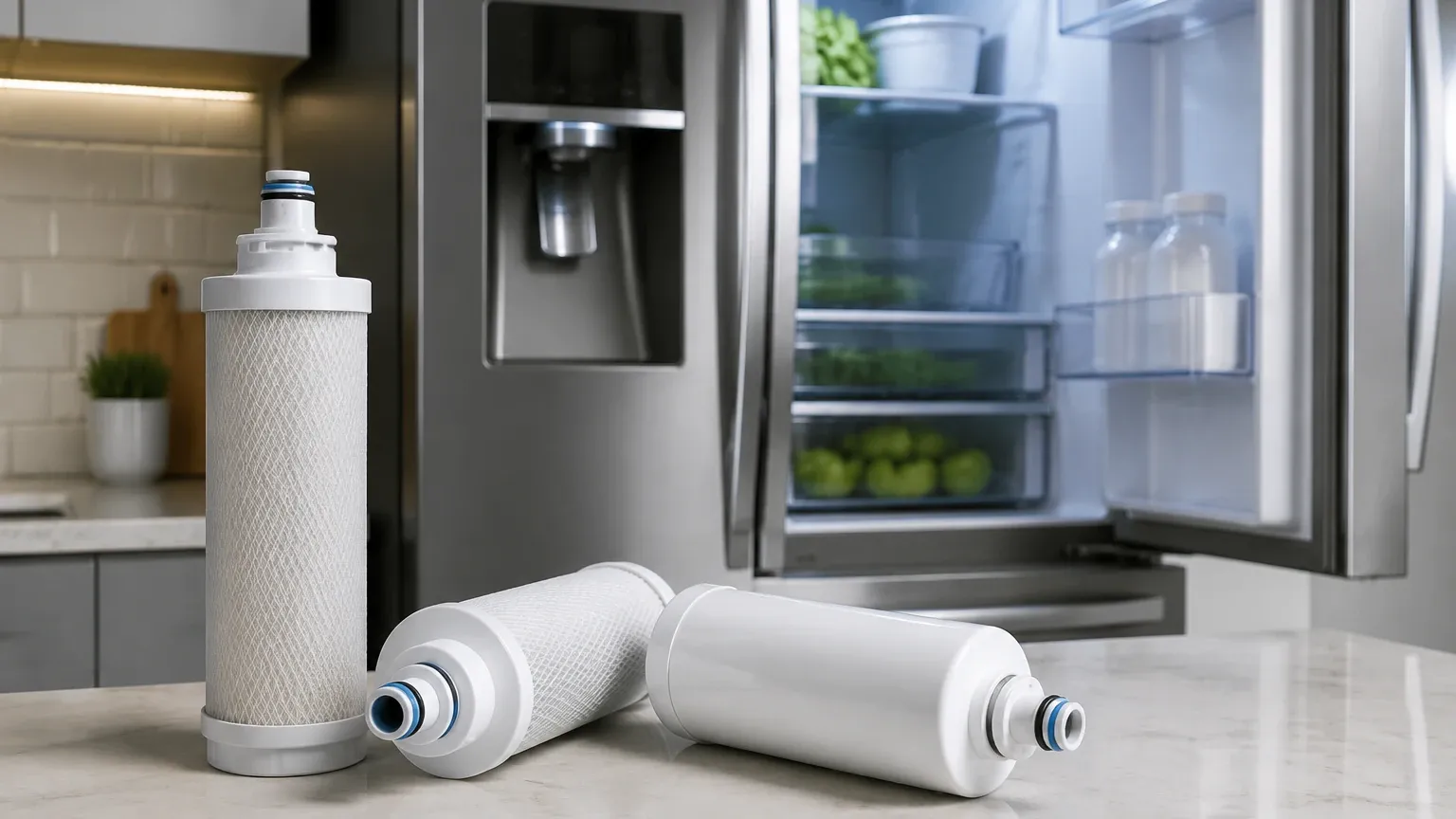
Fridge water filter cartridges typically employ a multi-stage filtration process designed to remove both particulate matter and dissolved contaminants. The primary mechanism for particulate removal is mechanical filtration, where the physical structure of the filter media traps solids such as rust, scale, and sediment. In most high-quality cartridges, this is achieved through a graduated density structure, where larger particles are trapped on the outer layers and finer particles are captured deeper within the media.
Beyond mechanical straining, these cartridges rely heavily on activated carbon for chemical reduction. Activated carbon works through adsorption—a process where gas or liquid molecules adhere to the surface of the carbon. This is highly effective for removing chlorine, volatile organic compounds (VOCs), and certain heavy metals that affect both the safety and the sensory profile of the water. In professional settings, the efficiency of this adsorption is a function of the "contact time" between the water and the carbon media, which is why flow rate management is a critical design consideration.
For industrial applications where durability is paramount, the transition from standard plastic-housed cartridges to robust metal-based filtration components is common. Manufacturers like Kaifil specialize in these precision-engineered solutions, providing the structural integrity needed for systems operating under higher pressures or temperatures than a standard domestic refrigerator would encounter.
Key Evaluation Criteria for Filtration Performance
When evaluating fridge water filter cartridges or their industrial equivalents, engineers must look beyond the brand name and focus on verified performance data. The following metrics are the benchmarks for filtration efficacy:
Micron Rating: Absolute vs. Nominal
A filter’s micron rating indicates the size of the particles it can effectively remove. However, there is a significant difference between nominal and absolute ratings. A nominal rating (e.g., 5 microns) suggests that the filter will trap a large percentage of particles of that size, but not all. An absolute rating, common in precision Filter Cartridges, guarantees that 99.9% of particles above the specified size are removed. For applications requiring the removal of cysts or fine bacteria, absolute ratings are mandatory.
Flow Rate and Pressure Drop
Every filtration media introduces a degree of resistance to the water flow, known as pressure drop (ΔP). In commercial refrigeration systems, an excessive pressure drop can lead to slow dispensing or inadequate ice production. Engineers must balance the need for fine filtration (which typically increases resistance) with the required flow rate (measured in gallons per minute or GPM). High-performance cartridges are designed to maximize surface area, often through pleating, to maintain high flow rates while achieving fine filtration.
Contaminant Reduction Claims
In the B2B sector, claims must be backed by standardized testing, such as NSF/ANSI 42 (Aesthetic Effects) and NSF/ANSI 53 (Health Effects). These certifications confirm the cartridge's ability to reduce specific contaminants like lead, mercury, and asbestos over its entire rated lifespan.
Material Considerations: From Polymers to Stainless Steel
The material composition of fridge water filter cartridges dictates their chemical compatibility and physical longevity. Most standard cartridges utilize polypropylene housings and carbon block cores. While cost-effective, these materials have limitations regarding hydrostatic pressure and chemical resistance.
In industrial filtration, where cartridges may be exposed to cleaning agents or high-pressure surges, stainless steel components offer a superior alternative. Stainless steel wire mesh filters provide several advantages over disposable polymer-based cartridges:
1. Thermal Stability: Metal filters can withstand significantly higher temperatures without deforming or leaching chemicals.
2. Structural Integrity: Stainless steel is resistant to pressure spikes that might cause a plastic cartridge to crack or bypass.
3. Cleanability: Unlike carbon-based fridge water filter cartridges which must be discarded, stainless steel mesh can often be backwashed or ultrasonically cleaned, reducing long-term waste and operational costs.
4. Precision Porosity: Advanced manufacturing techniques allow for highly controlled pore sizes in metal mesh, ensuring consistent performance in critical applications.
For organizations managing large-scale facilities, the choice between disposable cartridges and permanent, cleanable Filter Cartridges is often a calculation of total cost of ownership (TCO) and environmental impact.
Addressing Common Risks in Cartridge Filtration Systems
Implementing a filtration strategy involves more than just installing a cartridge; it requires mitigating risks that can compromise water safety or system health. One of the most common risks is "channeling." This occurs when water finds a path of least resistance through the filter media, bypassing the filtration process entirely. This is often a result of poor cartridge design or exceeding the recommended flow rate.
Another critical risk is biofilm accumulation. Because fridge water filter cartridges trap organic matter and remove chlorine (which acts as a disinfectant), the interior of the filter can become a breeding ground for bacteria if the cartridge is not replaced on schedule. This is why many industrial systems incorporate UV sterilization or antimicrobial media in conjunction with mechanical filtration.
Furthermore, material fatigue in plastic housings can lead to catastrophic leaks. In commercial environments with high water pressure, a failed filter housing can cause extensive property damage. This risk underscores the importance of selecting cartridges with high burst-pressure ratings and utilizing pressure-reducing valves where necessary.
Customization and OEM Specifications for Industrial Applications
Standard off-the-shelf fridge water filter cartridges often fail to meet the specific needs of specialized industrial equipment. In these instances, OEM (Original Equipment Manufacturer) and customized filtration solutions are required. Customization allows engineers to specify the exact dimensions, connection types (such as NPT, BSP, or flange), and filtration media best suited for their unique environment.
Kaifil provides extensive OEM capabilities, assisting technical teams in developing Filter Cartridges that meet precise engineering tolerances. Whether the requirement is for a specific stainless steel grade (like 304 or 316L) for corrosion resistance or a custom mesh weave for high-viscosity fluids, tailored filtration components ensure that the equipment operates at peak efficiency.
When sourcing custom cartridges, purchasing teams should confirm:
* Dimensional Accuracy: Ensuring the cartridge fits existing housings without bypass leaks.
* Seal Compatibility: Selecting O-ring materials (EPDM, Viton, or Silicone) that are compatible with the fluid and temperature range.
* End-Cap Design: Choosing between DOE (Double Open End) or SOE (Single Open End) configurations based on the housing architecture.
Maintenance, Replacement Cycles, and Total Cost of Ownership
A common pitfall in filtration management is the "set it and forget it" mentality. The performance of all fridge water filter cartridges degrades over time as the media becomes saturated. For carbon-based filters, the capacity is usually measured in gallons. Once the carbon’s pores are filled, it can no longer adsorb chemicals, and in some cases, it may even begin to release trapped contaminants back into the water—a phenomenon known as breakthrough.
For mechanical filters, the replacement cycle is typically determined by the pressure drop. As the filter traps more debris, the ΔP increases. In industrial settings, differential pressure gauges are used to monitor this. Once the ΔP reaches a predetermined limit, the cartridge must be replaced or cleaned.
Calculating the Total Cost of Ownership (TCO) involves more than the initial purchase price. It includes:
* Purchase Price: The cost of the cartridge itself.
* Labor Costs: The time required for staff to change the filters.
* Disposal Costs: The expense and environmental impact of discarding used cartridges.
* System Downtime: The cost of halting operations during maintenance.
By investing in high-quality, durable Filter Cartridges, facilities can often extend maintenance intervals and reduce the frequency of replacements, leading to significant long-term savings.
Conclusion: Making Informed Filtration Decisions
Whether managing a fleet of commercial refrigerators or a complex industrial processing line, the choice of filtration cartridge has a direct impact on water quality, equipment longevity, and operational costs. While fridge water filter cartridges serve as an entry point for many into the world of water purification, the demands of the B2B sector often require the precision and durability of industrial-grade components.
By focusing on technical specifications—such as absolute micron ratings, material integrity, and certified contaminant reduction—engineers can ensure they are selecting the most effective solution for their needs. For those requiring specialized designs or high-durability metal components, partnering with a manufacturer that understands the complexities of industrial filtration is the most reliable path to optimized performance. Reviewing the available options for Filter Cartridges and consulting with filtration experts can help bridge the gap between standard consumer products and the robust solutions required for professional applications.
