


Flow Pure Filter Cartridges
In industrial processing, the requirement for high-volume throughput often conflicts with the need for high-precision particle retention. Achieving "flow pure" results requires a sophisticated balance of fluid dynamics and material science. Flow pure filter cartridges are engineered to resolve this tension, providing consistent filtration efficiency without compromising the operational flow rates necessary for large-scale manufacturing. As industries move toward more stringent quality standards, understanding the technical nuances of these components is essential for engineers and procurement teams tasked with optimizing filtration systems.
Industrial filtration is not a one-size-fits-all discipline. Factors such as viscosity, temperature, chemical composition, and contaminant loading profiles dictate the specific design of a filter. For applications requiring durability and high-purity output, stainless steel Filter Cartridges have become the industry standard, offering a level of performance that polymer-based alternatives cannot match in demanding environments.
The Engineering Logic of Flow Pure Filtration
The term "flow pure" refers to the capability of a filtration system to maintain high purity levels while processing large volumes of fluid. In a B2B context, this usually involves minimizing the pressure drop (differential pressure) across the filter medium. A high pressure drop indicates that the filter is either restricted or undersized for the application, leading to increased energy consumption and potential system failure.
To achieve flow pure performance, engineers focus on several critical design elements:
1. Effective Filtration Area (EFA): By increasing the surface area through pleating or multi-layered mesh designs, the velocity of the fluid passing through the media is reduced. Lower velocity results in lower resistance and higher efficiency.
2. Pore Geometry: Precision-engineered wire mesh and sintered metal components provide uniform pore sizes. This ensures that the "cut-off" point for particles is consistent, preventing the passage of oversized contaminants while allowing the fluid to flow freely.
3. Structural Integrity: Under high flow conditions, filter media can deform. Stainless steel cartridges are designed with internal support cores and outer protective cages to maintain their shape and performance under high-pressure differentials.
Material Selection: Why Stainless Steel Dominates
While disposable polypropylene or glass fiber cartridges are common in light-duty applications, flow pure filter cartridges in industrial settings often utilize stainless steel (primarily grades 304 and 316L). The choice of material is driven by the need for chemical compatibility and thermal resistance.
Corrosion Resistance
In chemical processing and water treatment, the presence of corrosive agents can degrade standard filter media. 316L stainless steel, with its addition of molybdenum, provides superior resistance to chlorides and acidic solutions, ensuring that the filter does not introduce metallic contaminants into the process stream—a critical requirement for maintaining purity.
Thermal Stability
Many industrial processes, such as steam filtration or high-temperature oil processing, operate at temperatures exceeding 200°C. Synthetic filters often melt or lose structural integrity at these levels. Stainless steel cartridges maintain their mechanical properties across a wide temperature spectrum, allowing for consistent flow pure performance in extreme conditions.
Cleanability and Sustainability
Unlike disposable filters that must be discarded after a single loading cycle, stainless steel cartridges are cleanable. Through methods such as backwashing, ultrasonic cleaning, or chemical steeping, these cartridges can be restored to near-original performance. This not only supports a lower total cost of ownership (TCO) but also aligns with industrial sustainability goals by reducing waste.
Technical Specifications and Selection Criteria
When selecting flow pure filter cartridges, engineering teams must evaluate several technical parameters to ensure the product meets the specific needs of the application. These parameters include micron ratings, flow capacity, and connection types.
Micron Ratings: Absolute vs. Nominal
Understanding the difference between absolute and nominal ratings is vital for achieving purity goals. A nominal rating refers to an approximate filtration efficiency (e.g., 90% retention of particles at a specific size), whereas an absolute rating indicates that 99.9% or more of particles at that size are captured. For flow pure applications where downstream equipment or product quality is at risk, absolute-rated stainless steel mesh is typically preferred.
Pressure Drop Calculations
The initial pressure drop (clean ΔP) should be calculated based on the fluid’s viscosity and the intended flow rate. A well-designed flow pure system will typically aim for an initial pressure drop of less than 2-3 psi. As the filter captures contaminants, the pressure drop increases; knowing the "terminal pressure drop"—the point at which the filter must be cleaned or replaced—is essential for process planning.
Connection Interfaces
To prevent bypass (where fluid bypasses the filter media), the seal between the cartridge and the housing must be airtight. Common interfaces include:
* Double Open End (DOE): Uses flat gaskets at both ends.
* Code 7: Features a finned end and a double O-ring bayonet lock for high-security sealing.
* Threaded Connections (NPT/BSP): Used in high-pressure hydraulic or gas applications to ensure a rigid, leak-proof fit.
Applications of Flow Pure Filter Cartridges
The versatility of high-performance cartridges allows them to be deployed across diverse industrial sectors. Each sector has unique requirements for purity and flow.
Chemical and Petrochemical Processing
In the chemical industry, filtration is used to protect catalysts, remove precipitates, and ensure the clarity of final products. Flow pure cartridges must withstand aggressive solvents and high pressures. Stainless steel sintered mesh is often used here due to its ability to handle high-viscosity fluids while maintaining precise micron control.
Food and Beverage Industry
For food and beverage applications, filtration is a matter of safety and shelf-life. Flow pure filter cartridges are used for the clarification of juices, the filtration of bottled water, and the removal of carbon fines in spirits. The materials used must be FDA-compliant and capable of undergoing CIP (Clean-in-Place) or SIP (Steam-in-Place) sterilization cycles.
Pharmaceutical and Biotechnology
In pharmaceutical manufacturing, the removal of bacteria and pyrogens is critical. While membrane filters are used for final sterilization, stainless steel cartridges serve as essential pre-filters. They protect expensive downstream membranes by removing the bulk of the particulate load, ensuring the entire system maintains a flow pure profile.
Hydraulic and Lubrication Systems
High-speed machinery relies on clean oil to prevent wear and tear. Flow pure cartridges in hydraulic systems must handle high-velocity pulses and maintain filtration efficiency even during cold starts when oil viscosity is high. The use of wire mesh filters ensures that metal shavings and environmental dust are removed before they can damage sensitive valves and pumps.
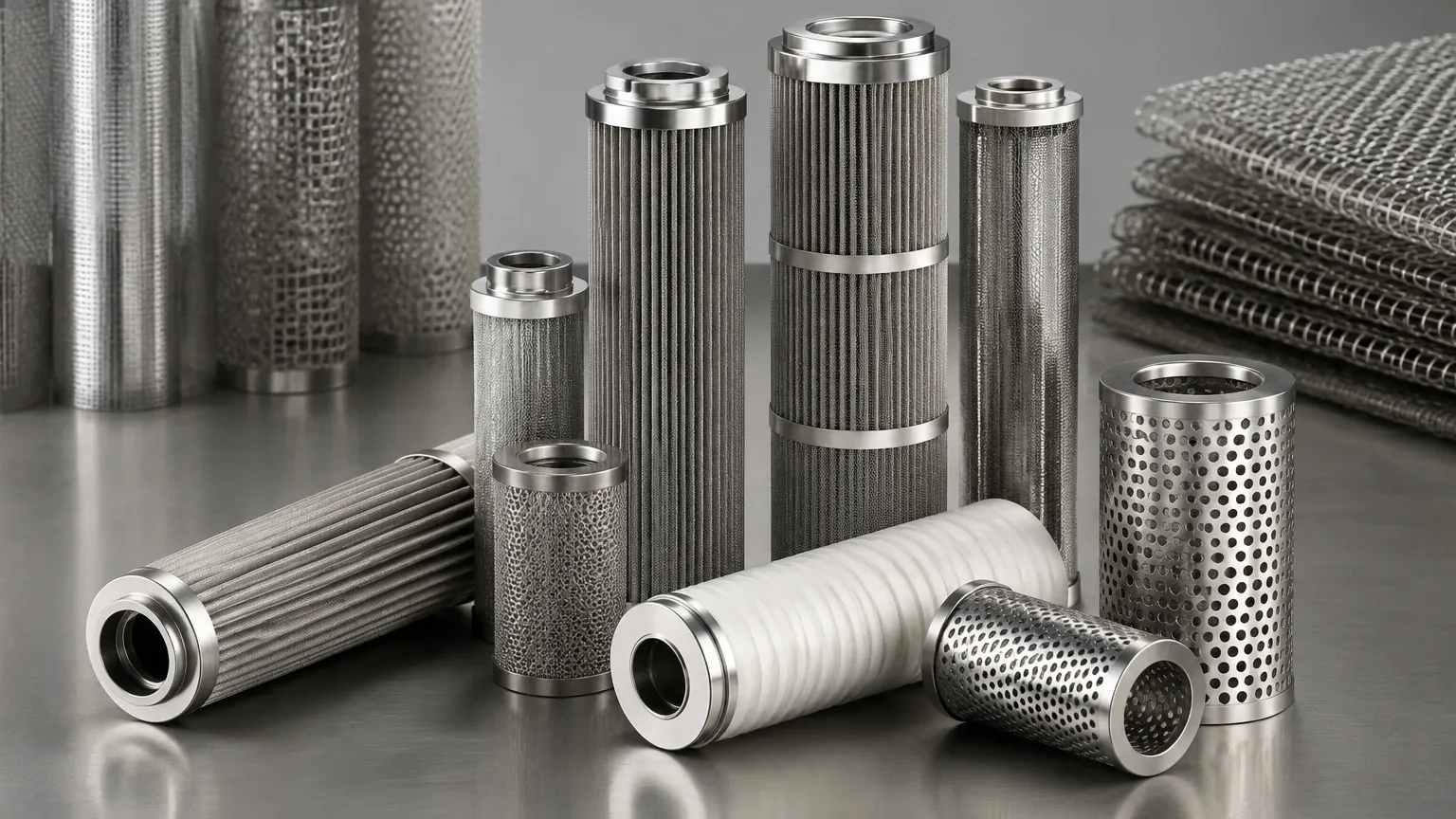
Customization and OEM Solutions
Standard off-the-shelf filters often fall short in specialized industrial environments. This is where customization becomes a strategic advantage. Manufacturers like Kaifil specialize in developing bespoke filtration solutions that are tailored to specific housing dimensions, flow requirements, and contaminant types.
Customization options include:
* Variable Pleat Density: Adjusting the number of pleats to balance dirt-holding capacity with flow resistance.
* Reinforced Cores: For applications involving high-viscosity fluids or extreme pressure spikes.
* Specialized End Caps: Engineering custom fittings to allow new filter technology to be retrofitted into legacy housing systems.
By working closely with an OEM manufacturer, engineering teams can ensure that their flow pure filter cartridges are optimized for the specific fluid dynamics of their plant, rather than settling for a generic solution that may lead to frequent maintenance or suboptimal purity.
Maintenance and Performance Monitoring
To maintain a flow pure state, a proactive maintenance strategy is required. Relying solely on a fixed schedule for filter changes can lead to either premature replacement (wasting money) or delayed replacement (risking product contamination or equipment damage).
Differential Pressure Monitoring
The most effective way to monitor filter health is through differential pressure (DP) gauges. By tracking the DP across the cartridge, operators can identify exactly when the filter is reaching its loading capacity. Automated systems can trigger an alarm or initiate a backwash cycle when the DP reaches a pre-set limit.
Cleaning Protocols
For stainless steel cartridges, the cleaning process must be handled with care to avoid damaging the fine mesh.
* Backwashing: Reversing the flow of clean fluid through the cartridge to dislodge particles from the surface.
* Ultrasonic Cleaning: Using high-frequency sound waves in a cleaning solvent to remove deeply embedded contaminants from sintered structures.
* Chemical Cleaning: Using acids or alkalis to dissolve organic or inorganic scaling, followed by thorough rinsing to ensure no chemical residue remains.
Evaluating Total Cost of Ownership (TCO)
When procurement departments evaluate flow pure filter cartridges, the initial purchase price is only one part of the equation. A comprehensive TCO analysis should include:
* Operational Lifespan: How many cleaning cycles can the cartridge withstand before the media degrades?
* Energy Costs: Does the filter design minimize pressure drop, thereby reducing the load on pumps?
* Downtime Costs: How quickly can the filter be cleaned or replaced? Does the design allow for rapid change-outs?
* Waste Disposal: What are the costs associated with disposing of used filter elements? (A major factor for disposable vs. permanent filters).
Stainless steel solutions often present a higher upfront investment but provide significant savings over time through reusability and improved process efficiency.
Conclusion: Selecting the Right Partner
Achieving flow pure filtration is an engineering challenge that requires high-quality components and a deep understanding of application-specific variables. Whether you are managing a chemical plant, a food processing facility, or a hydraulic system, the choice of filter cartridge directly impacts your operational success.
For engineers and purchasing teams, the priority should be finding a manufacturer that combines technical expertise with robust manufacturing capabilities. By focusing on material quality, precision engineering, and customization, you can ensure that your filtration system delivers the purity your process demands at the flow rates your production requires.
To explore specific configurations and technical data for your next project, Review product options and application support to find the ideal stainless steel solution for your industrial needs.
