


2 Inch Mesh Filter
In industrial fluid processing, the selection of filtration components is a critical decision that impacts system longevity, product purity, and operational overhead. A 2 inch mesh filter, often utilized in the form of Wire Mesh Filter Cylinders & Tubes, serves as a versatile solution for mid-sized flow applications. Whether integrated into hydraulic systems, chemical processing lines, or food and beverage production, understanding the technical nuances of these components is essential for engineers and procurement specialists.
This guide examines the structural design, material considerations, and performance variables associated with 2-inch filtration units, providing a factual framework for industrial selection.
1. Understanding the 2 Inch Mesh Filter in Industrial Systems
The designation "2 inch" in the context of industrial filtration can refer to several different dimensions depending on the system architecture. Most commonly, it refers to the nominal pipe size (NPS) of the inlet and outlet connections or the outer diameter (OD) of the filter cylinder itself.
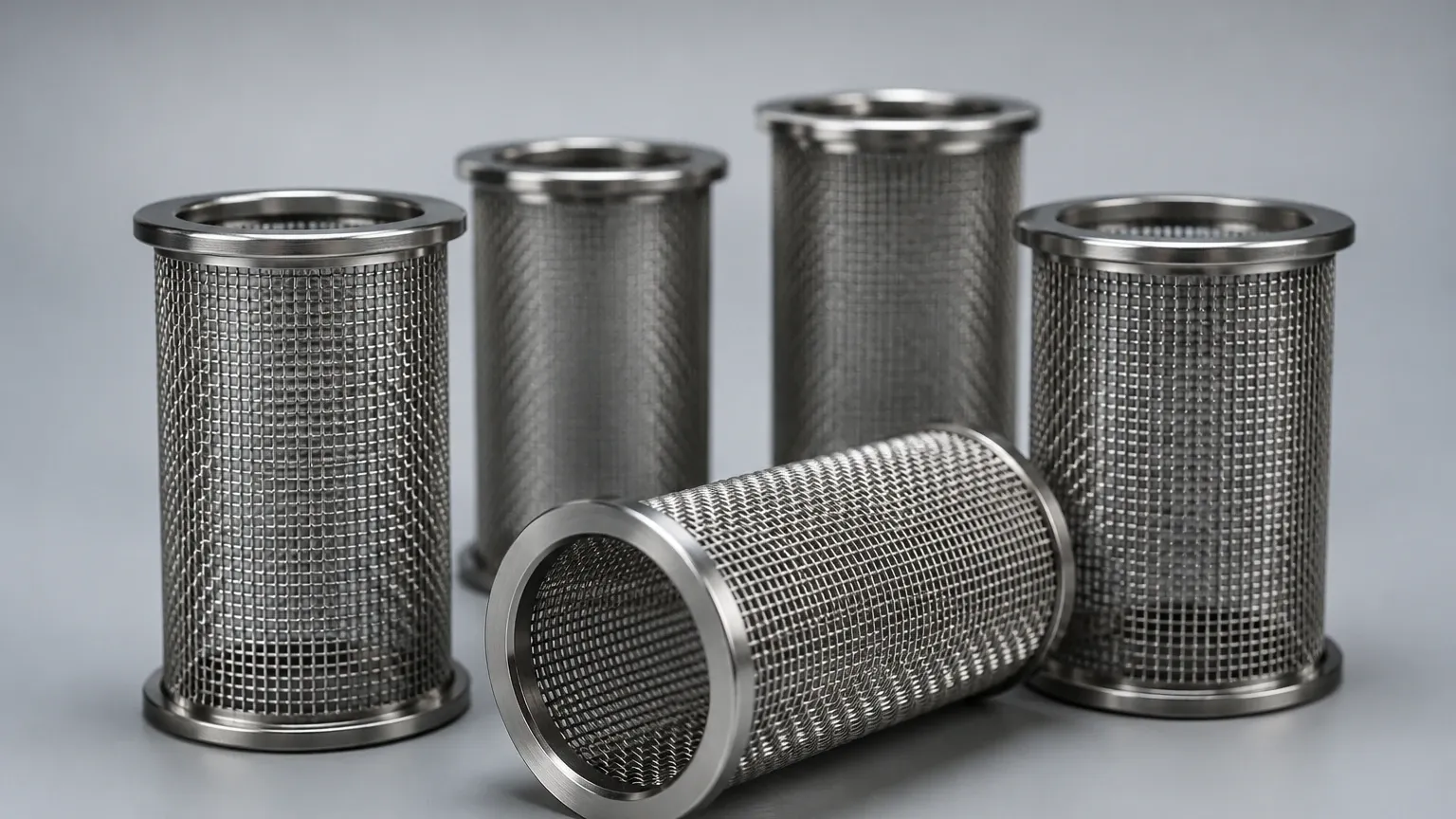
In high-pressure or high-flow environments, a 2 inch mesh filter is frequently designed as a cylindrical element. This geometry maximizes the surface area relative to the installation footprint. These filters are primarily surface filtration devices, where particles larger than the mesh openings are retained on the upstream side of the wire cloth. Unlike depth filters (such as wound cartridges), wire mesh cylinders offer a precise, absolute-rated filtration layer that is easily cleaned and reused, making them a sustainable choice for heavy-duty industrial cycles.
Key Configurations
* Single Layer Cylinders: Used for low-pressure applications where minimal flow resistance is required.
* Multi-Layer Sintered Tubes: Multiple layers of mesh are diffusion-bonded to provide enhanced mechanical strength and finer filtration ratings.
* Reinforced Mesh Tubes: A 2-inch mesh sleeve is supported by an internal or external perforated metal core to prevent collapse under high differential pressure.
2. Material Science and Structural Integrity
Industrial environments subject filtration components to thermal stress, chemical corrosion, and mechanical vibration. Therefore, material selection is the most significant factor in determining the filter’s service life.
Stainless Steel Grades
Most Wire Mesh Filter Cylinders & Tubes are manufactured from 300-series stainless steel:
* AISI 304: The standard grade for general industrial use, offering good corrosion resistance and excellent formability. It is suitable for water treatment and basic hydraulic applications.
* AISI 316L: The "L" denotes low carbon, which improves weldability and resistance to intergranular corrosion. This grade includes molybdenum, making it the preferred choice for chemical processing, marine environments, and pharmaceutical applications where chloride exposure is a concern.
Structural Reinforcement
For a 2 inch mesh filter operating in a high-viscosity fluid or high-velocity gas stream, the wire mesh alone may lack the structural rigidity to withstand the differential pressure ($ΔP$). Engineers must specify whether the tube requires a perforated support core. A common configuration involves a 316L stainless steel mesh pleated or wrapped around a heavy-gauge perforated stainless steel cylinder. This ensures that even as the filter accumulates debris (increasing the pressure drop), the mesh does not deform or rupture.
3. Performance Metrics: Flow Rate and Filtration Efficiency
When specifying a 2 inch mesh filter, engineers must balance the required filtration fineness (micron rating) with the allowable pressure drop.
Mesh Count vs. Micron Rating
The mesh count refers to the number of openings per linear inch. However, for engineering precision, the "absolute micron rating" is a more reliable metric. It defines the diameter of the largest hard spherical particle that will pass through the filter under specified test conditions.
* Coarse Filtration (100–500 microns): Used for pump protection and removing large scale or debris.
* Medium Filtration (40–100 microns): Common in hydraulic systems and cooling water loops.
* Fine Filtration (5–40 microns): Often requires multi-layer sintered wire mesh to maintain flow capacity while capturing fine particulates.
Calculating Effective Filtration Area (EFA)
The EFA of a 2-inch cylinder is calculated based on its diameter and length. Increasing the length of the tube is often a more cost-effective way to handle higher flow rates than increasing the diameter, provided the housing allows for the additional height. A larger EFA results in a lower face velocity, which reduces the rate of particle impingement and extends the time between cleaning cycles.
4. Engineering Selection: Matching Filter Specs to Application
Selecting the correct 2 inch mesh filter requires a comprehensive review of the operating environment. Failure to account for these variables can lead to premature component failure or downstream contamination.
Chemical Compatibility
Beyond the stainless steel grade, the compatibility of the end caps and bonding agents must be verified. In many Wire Mesh Filter Cylinders & Tubes, the mesh is joined to the end fittings via TIG (Tungsten Inert Gas) welding. This creates a monolithic metallic structure that eliminates the need for adhesives or resins, which could off-gas or degrade in the presence of solvents or high temperatures.
Temperature Limits
Stainless steel mesh filters can typically operate at temperatures exceeding 500°F (260°C), far surpassing the limits of polymer-based filters. However, at extreme temperatures, the mechanical strength of the mesh decreases. Engineers should consult the manufacturer’s derating charts if the application involves steam or high-temperature thermal oils.
Viscosity Considerations
High-viscosity fluids (such as resins or heavy oils) generate significantly higher pressure drops across a 2 inch mesh filter. In these cases, a coarser mesh or a significantly larger surface area (through pleating) is required to maintain a functional flow rate without triggering bypass valves.
5. Installation Guidelines and Mechanical Integration
The method by which a 2 inch mesh filter is integrated into the piping system dictates both the ease of maintenance and the security of the seal.
Connection Types
* Threaded Ends (NPT/BSP): Common for smaller 2-inch units in hydraulic lines. They provide a secure, leak-proof connection but require more effort to remove for cleaning.
* Flanged Connections: Preferred in chemical and water treatment plants. Flanges allow for quick removal of the filter housing cover to access the internal mesh cylinder.
* Double Open End (DOE) vs. Single Open End (SOE): DOE cylinders require gaskets at both ends to prevent fluid bypass. SOE cylinders typically feature a threaded or bayonet-style fitting at one end and a closed cap at the other, simplifying the sealing process.
Orientation and Flow Direction
Most cylindrical mesh filters are designed for "outside-to-inside" flow. Contaminants collect on the exterior surface of the tube, which is easier to inspect and clean. If a system requires "inside-to-outside" flow, the internal support structure must be designed to withstand outward radial tension rather than inward compression.
6. Maintenance, Cleaning, and Life Cycle Management
One of the primary advantages of a stainless steel 2 inch mesh filter is its cleanability. Unlike disposable cartridges, these units represent a higher initial capital expenditure (CAPEX) but significantly lower long-term operational expenditure (OPEX).
Cleaning Methodologies
1. Backwashing: Reversing the fluid flow to dislodge particles from the mesh surface. This can often be automated within the system.
2. Ultrasonic Cleaning: The filter element is removed and placed in an ultrasonic bath. High-frequency sound waves create cavitation bubbles that strip contaminants from the intricate wire intersections.
3. Chemical Soaking: Using specialized solvents or acids to dissolve scale or organic buildup. It is critical to ensure the cleaning agent is compatible with the specific grade of stainless steel (e.g., avoiding high concentrations of hydrochloric acid on 304 mesh).
Replacement Cycles
While the mesh itself is durable, it is not infinite. Over hundreds of cleaning cycles, the wire may experience fatigue or thinning. Engineers should monitor the "clean pressure drop"—the $ΔP$ across a freshly cleaned filter. If the clean $ΔP$ begins to rise steadily, it indicates that contaminants have become permanently embedded in the mesh pores (pore blinding), and the element should be replaced.
7. Customization and OEM Capabilities
Standard off-the-shelf filters may not meet the specific requirements of specialized machinery. Custom Wire Mesh Filter Cylinders & Tubes can be engineered with specific features:
* Custom Lengths: Adjusting the tube length to fit existing housing constraints while meeting flow requirements.
* Specialized End Caps: Incorporating handles, specialized gaskets (Viton, PTFE, or EPDM), or unique threading for proprietary equipment.
* Multi-Stage Filtration: Combining a coarse outer mesh with a fine inner mesh in a single 2-inch assembly to handle high solids loading.
By focusing on these technical parameters—material grade, structural reinforcement, and cleanability—purchasing teams and engineers can ensure that their 2 inch mesh filter selection provides the necessary protection for downstream equipment while optimizing the total cost of ownership. For demanding industrial applications, the transition from disposable media to precision-engineered stainless steel wire mesh is a strategic move toward higher reliability and lower environmental impact.
