


Filter Cartridge 20 Inch
In industrial filtration, the 20-inch length has established itself as a cornerstone standard for medium-to-high flow applications. Whether utilized in water treatment, chemical processing, or food and beverage production, the filter cartridge 20 inch format provides a specific balance between surface area and housing footprint. For engineers and procurement teams, selecting the correct cartridge involves more than just matching the length; it requires a deep understanding of material science, fluid dynamics, and the specific mechanical requirements of the filtration system.
Kaifil specializes in the engineering and manufacturing of high-performance stainless steel Filter Cartridges, offering customized solutions that transcend the limitations of standard polymer filters. This guide examines the technical nuances of the 20-inch format, focusing on material selection, structural integrity, and the engineering criteria necessary for optimizing industrial filtration cycles.
Technical Standards of the 20-Inch Filter Format
The designation of a "20-inch" filter cartridge typically refers to its nominal length. In precise engineering terms, this usually translates to approximately 508mm, though actual measurements can vary slightly depending on the end-cap configuration. While the length is standardized, the outer diameter (OD) and inner diameter (ID) are critical variables that dictate the flow capacity and the compatibility with existing filter housings.
Dimensional Variations
Standard 20-inch cartridges generally come in two primary diameter categories:
1. Standard Diameter (2.5" to 2.75"): These are the most common for multi-cartridge housings, allowing for high-density packing within a single vessel to achieve high cumulative flow rates.
2. Large Diameter / BB (4.5"): Often referred to as "Big Blue" or "Jumbo" formats, these provide a significantly higher surface area per element, reducing the number of cartridges required for a given flow rate and simplifying maintenance.
End-Cap Configurations
The method by which a filter cartridge 20 inch element seals into its housing is paramount to preventing bypass. Common configurations include:
* Double Open End (DOE): Features flat gaskets at both ends. This is a versatile design but requires a housing with a compression nut or spring to maintain the seal.
* Single Open End (SOE) with O-Rings: Includes configurations like Code 7 (226 O-rings with a locking fin) or Code 3 (222 O-rings with a flat cap). These designs offer superior sealing integrity, which is essential in pharmaceutical and high-purity chemical applications where bypass is unacceptable.
Material Engineering: Stainless Steel vs. Polymer
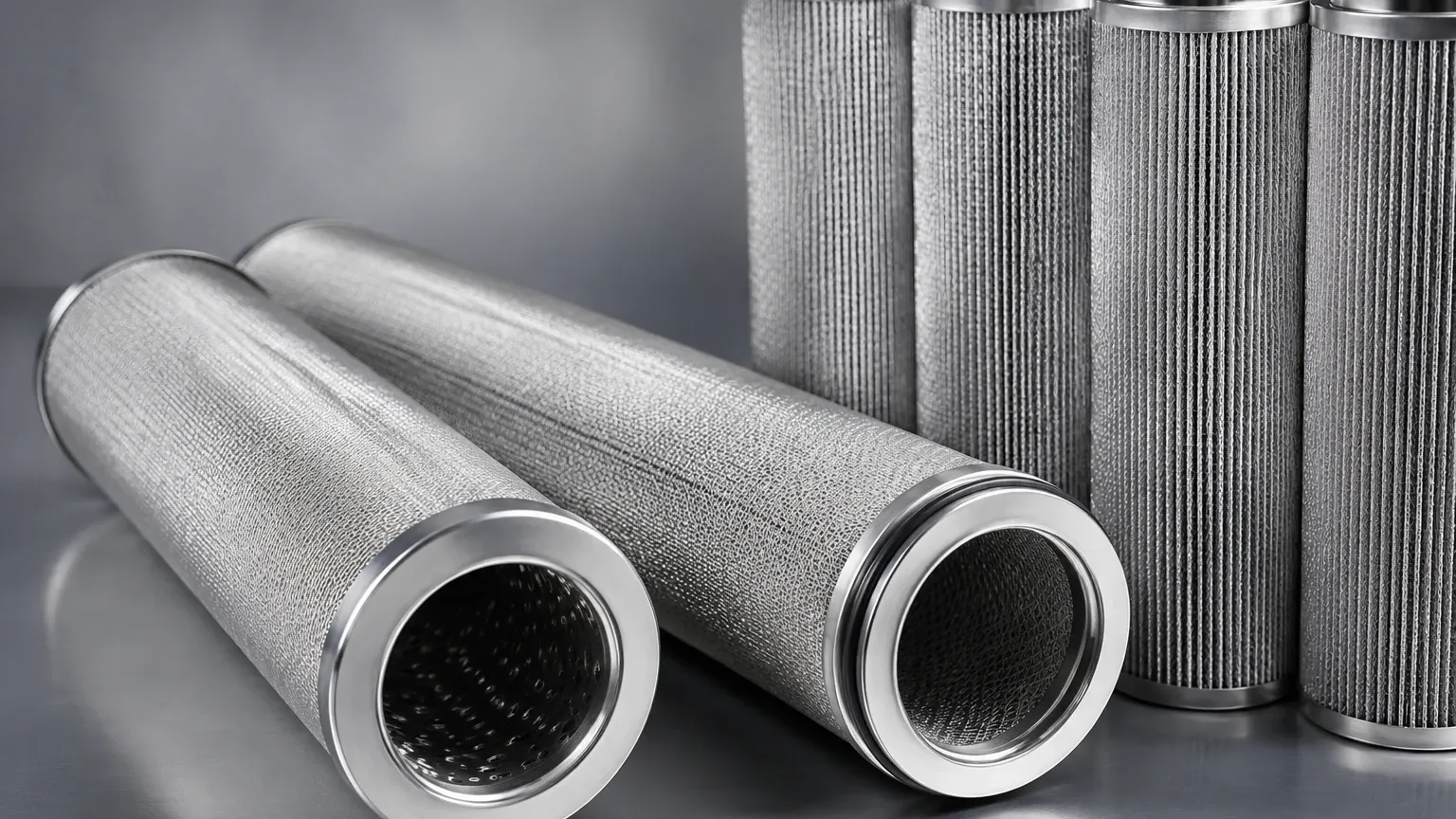
While many 20-inch filters are made from polypropylene or polyester, industrial environments often demand the robustness of metal. Stainless steel filter cartridges, particularly those manufactured from 304 or 316L grades, offer distinct advantages in demanding B2B applications.
Thermal and Pressure Resistance
Polymer-based cartridges often face structural degradation when temperatures exceed 60°C (140°F). In contrast, stainless steel 20-inch cartridges can operate at temperatures exceeding 230°C (450°F), depending on the gasket material used. Furthermore, metal cartridges can withstand significantly higher differential pressures (ΔP) without collapsing, making them ideal for high-viscosity fluids or systems prone to pressure spikes.
Chemical Compatibility
In chemical processing, the choice between SS304 and SS316L is determined by the corrosivity of the fluid. SS316L, containing molybdenum, provides enhanced resistance to chlorides and organic acids. For engineers, choosing a stainless steel filter cartridge 20 inch model ensures that the filtration media will not leach extractables into the process stream, a critical requirement in food, beverage, and pharmaceutical manufacturing.
Filtration Media and Precision
The performance of a 20-inch cartridge is defined by its media type, which determines both the micron rating and the dirt-holding capacity. Kaifil utilizes several types of stainless steel media to meet diverse industrial needs.
Sintered Metal Mesh
Sintered mesh consists of multiple layers of stainless steel wire cloth that are bonded together through a high-temperature vacuum sintering process. This creates a porous structure that is exceptionally strong and provides precise pore size distribution. Sintered 20-inch cartridges are preferred for applications requiring absolute filtration ratings and the ability to withstand repeated cleaning cycles.
Pleated Wire Mesh
To maximize surface area, the wire mesh can be pleated. A pleated filter cartridge 20 inch design can offer up to two or three times the surface area of a cylindrical (wrapped) cartridge. This increased area results in lower initial pressure drop and longer service life between cleanings, as the fluid velocity through any given point of the mesh is reduced.
Wedge Wire
For heavy-duty industrial applications, such as primary water intake or high-solids slurry filtration, wedge wire (V-wire) constructions are utilized. These provide a rugged, non-clogging surface that is particularly effective for backwashing systems.
Engineering Considerations for Selection
When specifying a filter cartridge 20 inch for a new or existing system, engineers must evaluate several interdependent factors to ensure the total cost of ownership (TCO) is minimized.
Flow Rate and Flux
The flux—defined as the flow rate per unit of surface area—is a critical metric. Overloading a 20-inch cartridge leads to premature blinding of the media and excessive pressure drop. By calculating the required total surface area, engineers can determine if a single 20-inch cartridge is sufficient or if a multi-round housing is necessary.
Absolute vs. Nominal Ratings
It is vital to distinguish between nominal and absolute micron ratings. A nominal rating indicates the cartridge will trap a majority of particles at that size, whereas an absolute rating (often defined as Beta 5000 or 99.9% efficiency) guarantees that particles above the specified size will be retained. For critical process protection, absolute-rated stainless steel cartridges are the industry standard.
Viscosity Adjustments
The viscosity of the fluid significantly impacts the pressure drop across the filter. For high-viscosity liquids, such as resins or heavy oils, the effective flow rate of a standard 20-inch cartridge may be significantly lower than its water-equivalent rating. Engineering teams must apply correction factors to ensure the pump system can handle the ΔP as the filter loads with contaminants.
Industrial Applications of 20-Inch Cartridges
The versatility of the 20-inch format allows it to serve as both a pre-filter and a final polishing stage across various sectors.
Chemical and Petrochemical Processing
In these environments, 20-inch stainless steel cartridges are used to remove catalysts, protect downstream high-pressure pumps, and clarify intermediate chemical products. The ability to withstand aggressive solvents and high temperatures makes metal media indispensable.
Food and Beverage Industry
From steam filtration to the clarification of syrups and oils, the 20-inch format is a staple. Stainless steel constructions are favored here because they are CIP (Clean-in-Place) compatible and meet stringent hygienic standards, ensuring no fibers or plastic particles migrate into the food product.
Hydraulic and Lube Oil Systems
High-pressure hydraulic systems require robust filtration to protect sensitive valves and actuators. A stainless steel filter cartridge 20 inch element provides the necessary collapse strength to handle the high-viscosity fluids and potential pressure surges inherent in hydraulic circuits.
Customization and OEM Solutions
One of the primary challenges in industrial maintenance is finding replacement cartridges for legacy or proprietary housings. Kaifil’s manufacturing capabilities allow for extensive customization of the 20-inch format. This includes:
* Custom Lengths: While 20 inches is the standard, some systems require non-standard lengths (e.g., 19.5" or 20.25") to fit specific internal hardware.
* Specialized End-Caps: Custom-machined adapters can be produced to convert a housing from one sealing style to another, or to match unique OEM specifications.
* Reinforced Cores: For high-differential pressure applications, internal support cores can be thickened or reinforced with perforated metal to prevent structural failure.
By working closely with an OEM manufacturer, purchasing teams can secure reliable supplies of specialized Filter Cartridges that meet the exact technical requirements of their machinery, often at a more competitive price point than original equipment brand replacements.
Maintenance, Cleaning, and Replacement Cycles
Unlike disposable polymer filters, stainless steel 20-inch cartridges are an investment in long-term operational efficiency. Their ability to be cleaned and reused significantly reduces waste and long-term procurement costs.
Cleaning Methodologies
Depending on the contaminant, several cleaning methods can be employed:
* Ultrasonic Cleaning: Highly effective for removing fine particles lodged deep within sintered mesh or pleated structures.
* Backwashing: Suitable for surface-loading media like wedge wire or coarse mesh, where fluid flow is reversed to dislodge the filter cake.
* Chemical Cleaning: Using acids, alkalis, or solvents to dissolve organic or inorganic deposits without damaging the stainless steel substrate.
Determining Replacement
While reusable, even stainless steel cartridges eventually reach the end of their service life. This is typically indicated by a "permanent pressure drop"—a condition where, even after thorough cleaning, the initial ΔP remains higher than the original factory specification. Regular inspection of the mesh for signs of mechanical wear, such as fraying or pinholes, is essential to maintain filtration integrity.
Conclusion
The filter cartridge 20 inch remains a vital component in the industrial filtration landscape due to its standardized dimensions and proven performance. However, the transition from disposable media to high-quality stainless steel elements represents a significant upgrade for facilities looking to improve durability, chemical resistance, and environmental sustainability. By evaluating the specific engineering demands of the application—including flow rates, temperature, and chemical compatibility—engineers can select a 20-inch filtration solution that provides reliable protection for their process equipment and ensures consistent product quality.
For organizations requiring precision-engineered filtration, Kaifil provides the technical expertise and manufacturing flexibility to deliver custom stainless steel solutions that meet the most rigorous industrial standards.
