


Filter Cartridge Manufacturers in India
The industrial landscape in India has undergone a significant transformation, evolving into a global hub for manufacturing and engineering services. Central to this growth is the demand for high-performance filtration systems across the chemical, pharmaceutical, food and beverage, and water treatment sectors. For engineers and procurement specialists, identifying reliable filter cartridge manufacturers in India requires a deep understanding of technical specifications, material science, and the specific demands of harsh industrial environments.
Selecting the right filtration component is not merely a matter of finding a part that fits; it is about ensuring process continuity, protecting downstream equipment, and maintaining product purity. While the Indian market offers a diverse range of suppliers, from small-scale fabricators to large industrial conglomerates, the technical requirements for specialized applications—particularly those involving high temperatures or corrosive fluids—often necessitate a focus on stainless steel and precision-engineered solutions.
Understanding the Industrial Filtration Market in India
India’s filtration market is driven by stringent environmental regulations and the expansion of the manufacturing sector. Filter cartridge manufacturers in India cater to both domestic requirements and international export markets, often adhering to global standards such as ISO and ASME. The market is generally divided into two categories: disposable polymer-based cartridges and reusable metal-based cartridges.
For many light-duty applications, polymer cartridges (such as polypropylene or PES) are common. However, in heavy industrial sectors like petrochemical processing or steam filtration, the limitations of polymers—such as low temperature resistance and chemical vulnerability—make stainless steel the preferred material. When evaluating manufacturers, it is essential to determine whether their production capabilities align with the specific material and durability requirements of the application.
Key Evaluation Criteria for Filter Cartridge Suppliers
When sourcing Filter Cartridges, technical buyers must move beyond price-point comparisons and focus on the engineering fundamentals that dictate long-term performance. A failure in a filtration system can lead to significant downtime, contaminated batches, or damage to expensive machinery.
Material Integrity and Grade Verification
The foundation of any high-quality filter is the raw material. In the context of metal filtration, the use of Stainless Steel 304, 316, or 316L is standard. However, the quality of the alloy can vary between suppliers. Reputable manufacturers should provide material test reports (MTRs) to verify the chemical composition of the steel. For pharmaceutical and food-grade applications, the surface finish and the absence of contaminants during the manufacturing process are critical factors that must be audited.
Filtration Accuracy and Micron Ratings
Filtration efficiency is defined by the micron rating, which can be either nominal or absolute. A nominal rating refers to a filter's ability to retain a major percentage of particles of a given size, whereas an absolute rating indicates that 99.9% or more of particles above that size are captured. Engineers must confirm how a manufacturer tests these ratings. Standardized tests, such as the bubble point test or multi-pass testing, provide the data necessary to ensure the cartridge will perform as expected under operational loads.
Structural Design and Pressure Differential
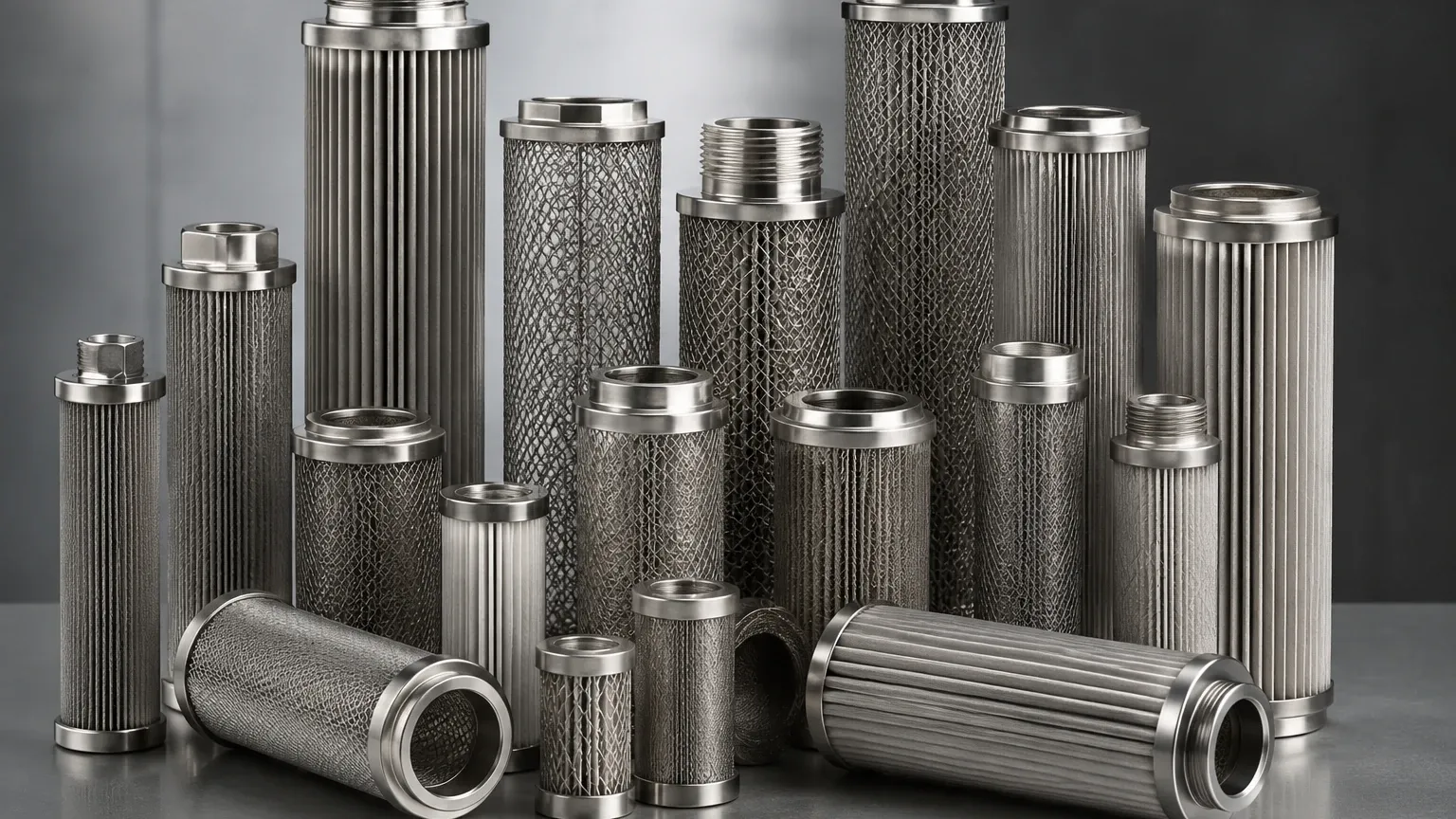
A filter cartridge must withstand the differential pressure (ΔP) across the media as it becomes loaded with contaminants. Manufacturers in India often offer various constructions, including pleated, cylindrical, and wrap-around designs.
* Pleated Designs: These provide a significantly higher surface area, which translates to lower initial pressure drops and longer service life between cleanings.
* Cylindrical Designs: These are often used for simpler, robust applications where high-pressure resistance is more critical than surface area.
* Wedge Wire: Ideal for heavy-duty solids removal where backwashing is required.
The Role of Stainless Steel in Critical Filtration
While many filter cartridge manufacturers in India produce a wide range of products, those specializing in stainless steel provide solutions for the most demanding environments. Stainless steel cartridges offer several advantages over synthetic alternatives:
1. Thermal Stability: They can operate at temperatures exceeding 300°C, where polymers would melt or degrade.
2. Chemical Compatibility: They resist a broad spectrum of solvents, acids, and alkaline solutions, making them indispensable in chemical processing.
3. Mechanical Strength: Metal cartridges can handle high-pressure surges without collapsing or bypassing.
4. Cleanability: Unlike disposable filters, stainless steel cartridges can be cleaned via ultrasonic baths, backwashing, or chemical cleaning, significantly reducing the total cost of ownership over time.
For engineers, the choice of stainless steel often hinges on the "total cost of filtration." While the initial investment is higher than disposable options, the longevity and reliability of a well-manufactured metal cartridge provide a better return on investment in continuous-process industries.
Customization and OEM Capabilities
A significant advantage of working with specialized manufacturers like Kaifil is the ability to develop customized filtration solutions. Standard off-the-shelf cartridges often fail to meet the unique constraints of specialized machinery or specific flow rate requirements.
When engaging with filter cartridge manufacturers in India or global OEM partners, technical teams should look for the following customization capabilities:
* End-Cap Configurations: Ensuring compatibility with existing filter housings (e.g., 222, 226, DOE, or NPT threaded ends).
* Varying Lengths and Diameters: Custom sizing to fit non-standard housings or to optimize flow dynamics within a vessel.
* Multi-Layer Media: Combining different layers of wire mesh or sintered fiber to achieve specific depth filtration characteristics.
* Reinforcement: Adding internal cores or external cages to handle extreme pressure differentials or mechanical stress.
Quality Assurance and Testing Standards
Reliability in filtration is a product of rigorous quality control. When vetting suppliers, it is important to inquire about their internal testing protocols. A high-quality manufacturing process should include:
* Bubble Point Testing: To ensure the integrity of the filter media and the absence of bypass leaks in the seams or end-caps.
* Dimensional Inspection: Verifying that every cartridge meets the precise tolerances required for a leak-proof seal in the housing.
* Pressure Decay Testing: To confirm the structural strength of the assembly.
* Cleanliness Standards: Ensuring the cartridges are free from manufacturing oils, burrs, or metallic dust before they are shipped to the client.
Total Cost of Ownership (TCO) Considerations
For procurement departments, the focus is often on the unit price. However, in the filtration industry, the unit price is only a fraction of the total cost. When evaluating filter cartridge manufacturers in India, consider the following factors that impact the TCO:
* Replacement Frequency: How often does the process need to be stopped to change a filter? A more expensive, high-surface-area pleated cartridge may last three times longer than a cheaper alternative, reducing labor costs and downtime.
* Disposal Costs: Disposable filters generate waste, which can be expensive to manage, especially if the filtered material is hazardous. Reusable stainless steel filters mitigate this issue.
* Energy Consumption: A filter with a high initial pressure drop requires the pump to work harder, increasing energy costs. Precision-engineered cartridges optimize flow to minimize this energy waste.
* Product Yield: In industries like pharmaceuticals or fine chemicals, any bypass or failure in the filter can result in the loss of an entire batch. The cost of a high-quality filter is negligible compared to the value of the product it protects.
Selecting the Right Partner for Industrial Filtration
The process of selecting a filter cartridge manufacturer involves more than a simple vendor registration. It requires a technical partnership where the manufacturer understands the nuances of the fluid being filtered, the flow dynamics, and the environmental constraints.
Whether you are sourcing from filter cartridge manufacturers in India or looking for specialized global manufacturers like Kaifil, the priority should always be on engineering excellence and material traceability. As industrial processes become more complex and efficiency targets more aggressive, the role of high-performance filtration will only continue to grow.
Kaifil specializes in providing these high-performance, custom stainless steel filtration solutions. By focusing on durability and precise filtration performance, we help engineers overcome the limitations of standard filtration components. For those seeking to optimize their industrial processes with reliable, long-lasting filter cartridges, understanding these technical boundaries is the first step toward achieving superior filtration outcomes.
