


Melt Blown Filter Cartridges
In the landscape of industrial liquid processing, melt blown filter cartridges serve as a fundamental component for depth filtration. These disposable filter elements are engineered to remove a wide range of particulate contaminants from process fluids, offering a balance of efficiency, dirt-holding capacity, and cost-effectiveness. For engineers and procurement specialists, understanding the technical nuances of these cartridges—from fiber geometry to gradient density—is essential for optimizing filtration systems and reducing operational downtime.
As a specialized manufacturer of industrial filtration solutions, Kaifil recognizes that selecting the right Filter Cartridges requires a deep dive into material science and fluid dynamics. While melt blown options are ubiquitous in water treatment and chemical processing, their performance is dictated by the precision of the manufacturing process and the specific requirements of the application environment.
Understanding Melt Blown Technology in Industrial Filtration
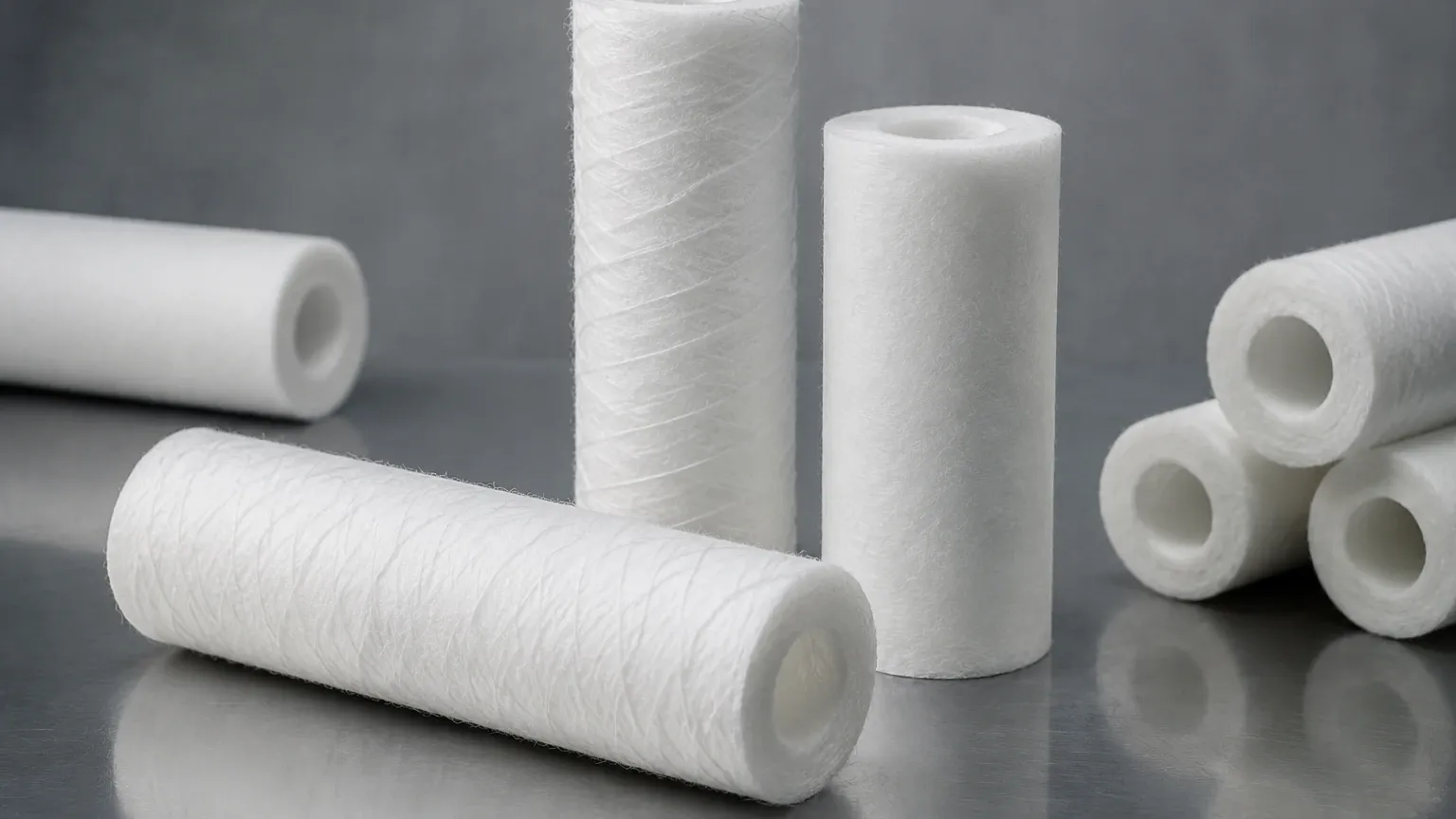
The performance of melt blown filter cartridges is a direct result of the melt-blowing process. This manufacturing technique involves extruding a thermoplastic polymer—most commonly polypropylene—through a series of fine nozzles. As the molten polymer emerges, it is hit by high-velocity hot air streams that attenuate the filaments into micro-fibers. these fibers are then collected on a rotating mandrel, where they thermally bond to one another without the need for chemical binders or adhesives.
One of the most critical engineering features of a high-quality melt blown cartridge is its gradient density structure. Unlike surface filters, which trap particles on a single plane, a melt blown depth filter is designed with a varying pore structure. The outer layers are typically loftier with larger pores to capture larger debris, while the inner layers become progressively denser to trap finer particles. This "true depth" filtration prevents the surface from blinding prematurely, significantly extending the service life of the cartridge and maintaining a lower pressure drop over time.
Key Performance Indicators for Melt Blown Depth Filters
When evaluating melt blown filter cartridges for industrial use, engineers must look beyond nominal micron ratings. Several technical factors determine how the filter will behave under real-world conditions:
Filtration Efficiency and Micron Ratings
Most melt blown cartridges are classified as "nominal" filters, meaning they are rated to trap a high percentage (typically 80% to 90%) of particles at a specific size. However, for critical applications, some manufacturers offer high-efficiency or absolute-rated melt blown filters. The choice between nominal and absolute depends on the sensitivity of the downstream equipment or the purity requirements of the final product.
Dirt-Holding Capacity (DHC)
The DHC refers to the total mass of contaminants a filter can retain before reaching its terminal pressure drop. A cartridge with superior gradient density will exhibit a higher DHC because it utilizes the entire volume of the filter media rather than just the surface. This is a primary driver of the Total Cost of Ownership (TCO), as higher DHC leads to fewer filter changes and lower labor costs.
Pressure Drop (Delta P)
The initial pressure drop is the resistance to flow offered by a clean filter. A well-engineered melt blown cartridge provides a low initial Delta P, allowing for higher flow rates or the use of smaller filter housings. Monitoring the increase in pressure drop during operation is the standard method for determining when a cartridge has reached the end of its functional life.
Material Compatibility and Chemical Resistance
The vast majority of melt blown filter cartridges are manufactured from 100% virgin polypropylene. Polypropylene is favored in industrial settings due to its broad chemical compatibility and its status as a chemically inert material. It is resistant to most acids, bases, and many organic solvents, making it suitable for everything from municipal water filtration to aggressive chemical processing.
However, temperature limitations are a critical consideration. Polypropylene typically has a maximum operating temperature of approximately 60°C to 80°C (140°F to 176°F), depending on the pressure. For applications exceeding these temperatures, or for fluids that are chemically incompatible with polyolefins, engineers must look toward alternative materials. In these demanding environments, Kaifil often recommends transitioning to stainless steel filter cartridges, which offer the structural integrity and thermal resistance that polymer-based melt blown filters cannot provide.
Comparing Melt Blown, Pleated, and String-Wound Cartridges
Selecting the appropriate style of filter cartridge is a common challenge for technical teams. Each design offers distinct advantages depending on the particle load and fluid characteristics.
* Melt Blown Cartridges: These are the preferred choice for fluids with a broad distribution of particle sizes. Their depth-loading capability makes them excellent for removing deformable particles and gels. They are generally more cost-effective for high-volume, disposable applications.
* String-Wound Cartridges: An older technology, string-wound filters consist of yarn wrapped around a core. While they are inexpensive, they can suffer from "media migration" (fibers shedding into the filtrate) and may not offer the consistent pore structure found in modern melt blown versions.
* Pleated Filter Cartridges: Unlike depth filters, pleated cartridges operate primarily on the principle of surface filtration. They offer a much larger surface area, which is ideal for high-flow applications with low concentrations of uniform-sized contaminants. However, they can blind quickly if the fluid contains a high volume of varied debris.
For many pre-filtration stages, melt blown cartridges provide the most reliable protection for expensive downstream components, such as membranes or high-precision pleated finishing filters.
Strategic Selection: Matching Cartridges to Industrial Applications
The versatility of melt blown depth filters allows them to be deployed across a wide range of sectors. The selection process should be guided by the specific demands of the industry:
Water Treatment and Desalination
In Reverse Osmosis (RO) systems, melt blown cartridges are used as essential pre-filters. They protect the delicate RO membranes from silt, scale, and organic matter. Using a high-quality melt blown filter here is critical; any bypass or fiber shedding can lead to irreversible membrane fouling.
Food and Beverage Processing
For food-grade applications, the filter must be free of surfactants, binders, and anti-static agents. Melt blown cartridges made from FDA-compliant polypropylene are used for clarifying juices, bottled water, and process water used in food preparation. The absence of chemicals in the thermal bonding process ensures that no extractables leach into the product.
Chemical and Petrochemical Industry
In the production of specialty chemicals, paints, and coatings, melt blown filters are used to remove oversized pigments or contaminants that could affect the quality of the final coating. Their ability to handle varying viscosities makes them a flexible tool in chemical batch processing.
Maintenance and Total Cost of Ownership (TCO) Considerations
From a procurement and maintenance perspective, the unit price of a melt blown filter cartridge is only one part of the equation. To truly optimize a filtration system, engineers must evaluate the following:
1. Replacement Frequency: A cheaper, lower-quality filter that clogs twice as fast as a premium cartridge will ultimately cost more in terms of hardware, labor, and system downtime.
2. Disposal Costs: Since melt blown filters are disposable, the volume of waste generated should be considered. In some high-volume applications, it may be more economical to invest in cleanable stainless steel filtration systems.
3. Bypass Risks: Poorly manufactured cartridges may lack a proper seal or may compress under high differential pressure, allowing unfiltered fluid to bypass the media. Ensuring the cartridge has a rigid core or high-quality end caps (such as 222 or 226 O-ring configurations) is vital for maintaining system integrity.
Engineering Support for Custom Filtration Solutions
While standard melt blown filter cartridges meet the needs of many general-purpose applications, unique industrial challenges often require customized solutions. Factors such as unusual fluid viscosities, extreme chemical concentrations, or non-standard housing dimensions necessitate a manufacturer that can provide technical guidance and custom fabrication.
Kaifil specializes in bridging the gap between standard off-the-shelf components and high-performance custom filtration. By analyzing the specific particulate load and environmental constraints of an application, we help engineering teams select the most durable and efficient filtration media. Whether the solution involves advanced polymer depth filters or precision-engineered stainless steel components, the goal remains the same: achieving consistent filtration performance with the lowest possible operational impact.
When evaluating your next filtration upgrade or replacement cycle, consider the technical specifications of your Filter Cartridges carefully. Moving from a generic commodity filter to a technically specified melt blown cartridge can result in cleaner process fluids, protected downstream equipment, and a more efficient production line.
