


Nouveaux Water Filter Cartridges Replacement
In industrial and commercial water treatment, the consistency of water quality is directly linked to the integrity of the filtration media. For facilities utilizing high-performance systems, executing a timely nouveaux water filter cartridges replacement is not merely a maintenance task but a critical step in protecting downstream equipment, ensuring process stability, and maintaining compliance with industry standards. Whether the application involves chemical processing, food and beverage production, or pharmaceutical manufacturing, understanding the technical nuances of filter replacement is essential for operational efficiency.
Industrial filtration systems often rely on a series of cartridges designed to remove suspended solids, chlorine, organic compounds, and microbial contaminants. When these cartridges reach their holding capacity, the resulting pressure drop can lead to reduced flow rates, increased energy consumption by pumps, and the potential for contaminant bypass. This guide provides a technical overview of the replacement process, selection criteria, and the engineering considerations involved in optimizing filter performance.
The Technical Necessity of Timely Replacement
The primary function of a filter cartridge is to trap particulates within its media structure. Over time, these particles accumulate, creating a "filter cake" that initially improves filtration efficiency but eventually restricts flow. In many industrial water systems, the nouveaux water filter cartridges replacement cycle is determined by the differential pressure (ΔP) across the filter housing.
From an engineering perspective, a filter is considered exhausted when the differential pressure reaches a pre-defined limit, typically between 15 and 25 psi (1.0 to 1.7 bar), depending on the housing design and the structural integrity of the cartridge. Operating beyond this limit risks "media migration," where the pressure forces trapped contaminants through the filter or causes the cartridge itself to deform or collapse. For critical applications, relying on a fixed calendar schedule for replacement is often less efficient than monitoring real-time performance data, as fluctuations in source water quality can significantly accelerate or decelerate cartridge loading.
Identifying the Need for Nouveaux Water Filter Cartridges Replacement
To maintain a proactive maintenance posture, technical teams should monitor several key indicators that signify the need for a nouveaux water filter cartridges replacement:
1. Differential Pressure Increase: As mentioned, the most reliable indicator is a sustained rise in ΔP. If the pressure at the outlet is significantly lower than at the inlet, the media is likely blinded.
2. Flow Rate Decay: In systems where pumps operate at a constant speed, a noticeable drop in the volumetric flow rate indicates high resistance within the filter housing.
3. Downstream Water Quality Fluctuations: Any increase in turbidity, particle counts, or the presence of specific contaminants (such as chlorine in carbon-based systems) suggests that the cartridge has reached its breakthrough point or that the seals have failed.
4. Visual and Sensory Changes: While less scientific, changes in the color or odor of the filtered water can indicate that organic loads have overwhelmed the filter media, particularly in activated carbon or specialized resin cartridges.
Key Technical Specifications for Replacement Cartridges
Selecting the correct replacement requires a detailed understanding of the system’s original specifications. Not all Filter Cartridges are created equal, and substituting one for another without verifying compatibility can lead to system failure. Engineers must confirm the following parameters before procurement:
Micron Rating: Absolute vs. Nominal
It is vital to distinguish between nominal and absolute micron ratings. A nominal rating refers to the filter's ability to retain a major percentage (usually 60% to 90%) of particles of a specific size. An absolute rating, often required in pharmaceutical or food-grade applications, indicates that 99.9% or more of particles at that size are captured. When performing a nouveaux water filter cartridges replacement, ensuring the new cartridge matches the required efficiency is paramount.
Dimensions and End-Cap Configurations
Industrial filter housings are designed for specific cartridge lengths (commonly 10, 20, 30, or 40 inches) and diameters. Furthermore, the end-cap configuration determines how the cartridge seals within the housing. Common configurations include:
* DOE (Double Open End): Requires flat gaskets at both ends.
* SOE (Single Open End) with 222 or 226 O-rings: Features a locking mechanism and double O-rings to ensure a bypass-free seal, often used in high-purity applications.
* Threaded Ends: Used in specific high-pressure or specialized industrial housings.
Material Compatibility
The filter media and hardware must be compatible with the fluid being processed. While polypropylene is common for general water filtration, applications involving high temperatures, aggressive chemicals, or high pressures may require stainless steel filter cartridges. Stainless steel options, such as those manufactured by Kaifil, provide superior structural strength and can often be cleaned and reused, offering a different total cost of ownership (TCO) profile compared to disposable polymer cartridges.
Step-by-Step Replacement Procedure
Following a standardized protocol for nouveaux water filter cartridges replacement ensures safety and prevents the introduction of contaminants into the system. Technical personnel should adhere to the following steps:
1. System Isolation: Close the inlet and outlet valves to isolate the filter housing from the main process line.
2. Depressurization: Open the vent valve or drain port to release internal pressure. Attempting to open a pressurized housing is a significant safety hazard.
3. Drainage: Drain the fluid from the housing to prevent spills and to allow for a visual inspection of the used cartridges.
4. Housing Opening: Use the appropriate filter wrench or tool to unscrew the housing sump or remove the top cover. Inspect the interior for any signs of corrosion or biofouling.
5. Cartridge Removal: Carefully remove the exhausted cartridges. Note the condition of the O-rings and gaskets; if they are cracked or compressed, they must be replaced.
6. Cleaning: Clean the interior of the housing and the seal surfaces with a compatible cleaning agent to remove any residual sediment or biofilm.
7. Installation: Insert the new cartridges, ensuring they are properly seated in the guides or end-cap adapters. If using O-rings, lubricate them with a food-grade lubricant (if applicable) to prevent pinching during installation.
8. Sealing and Venting: Reassemble the housing. Open the inlet valve slowly while keeping the vent valve open to allow air to escape. Once a steady stream of water exits the vent, close it and slowly open the outlet valve.
9. Rinsing: Most new filter cartridges require a brief rinse-to-drain period to remove any manufacturing residuals or trapped air before being put back into service.
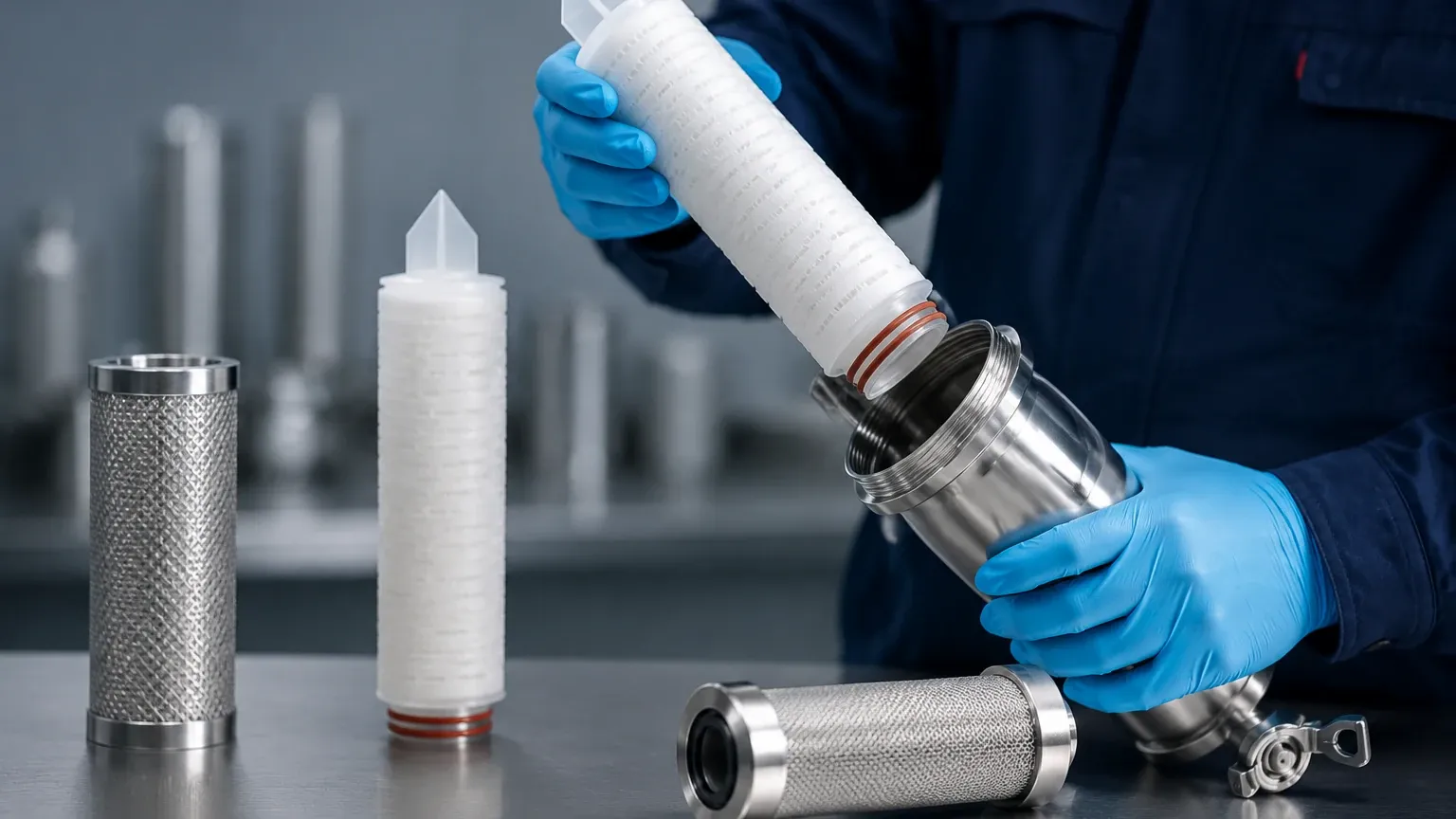
Evaluating Stainless Steel Upgrades for Filter Cartridges
In many industrial scenarios, the frequent nouveaux water filter cartridges replacement of disposable units becomes a bottleneck. Engineers often evaluate the transition to stainless steel filtration solutions to improve durability and reduce waste. Stainless steel filter cartridges, particularly those utilizing pleated wire mesh or sintered metal fibers, offer several advantages:
* Temperature Resistance: Unlike polypropylene, which loses structural integrity as temperatures rise, stainless steel can operate in extreme thermal environments.
* Chemical Stability: Stainless steel is resistant to a wide range of solvents and corrosive agents, making it ideal for harsh industrial water chemistry.
* Cleanability: Many metal filters can be backwashed or ultrasonically cleaned, significantly extending the service life compared to "one-and-done" disposable filters.
* High Differential Pressure Tolerance: Metal cartridges can withstand much higher ΔP without collapsing, providing a larger safety margin during process upsets.
For facilities looking to optimize their filtration stack, consulting with a manufacturer like Kaifil can help determine if a custom stainless steel component can replace standard Nouveaux-style disposables to achieve better long-term performance.
Common Risks and Maintenance Considerations
Failure to properly manage the nouveaux water filter cartridges replacement process can lead to several operational risks:
* Bypass: If the cartridge is not seated correctly or if the O-rings are damaged, unfiltered water will bypass the media, potentially contaminating the entire downstream system.
* Microbial Growth: In stagnant or infrequently serviced systems, filter cartridges can become a breeding ground for bacteria. Regular replacement and system sanitization are necessary to prevent biofilm formation.
* Water Hammer: Rapidly opening valves after a replacement can cause a pressure surge (water hammer) that may damage the new filter media or the housing seals.
To mitigate these risks, maintenance teams should maintain a detailed log of every replacement, including the date, the differential pressure at the time of change-out, and the specific model number of the replacement cartridge used. This data is invaluable for troubleshooting and for optimizing the replacement interval over time.
Total Cost of Ownership (TCO) in Filtration
When planning for nouveaux water filter cartridges replacement, it is important to look beyond the initial purchase price of the cartridge. The Total Cost of Ownership includes the cost of the replacement units, the labor required for the change-out, the cost of disposal for used cartridges, and the potential cost of downtime.
In high-volume industrial applications, a slightly more expensive cartridge with a higher dirt-holding capacity or a cleanable stainless steel alternative may result in a lower TCO by reducing the frequency of interventions. By analyzing the specific particulate load and flow requirements, engineers can select a filtration strategy that balances performance with cost-effectiveness.
Conclusion
Executing a nouveaux water filter cartridges replacement is a fundamental aspect of industrial water management. By understanding the technical specifications—ranging from micron ratings and end-cap styles to material compatibility—and following a rigorous replacement protocol, technical teams can ensure the longevity of their equipment and the quality of their output. Whether sticking with standard disposable media or upgrading to precision-engineered stainless steel solutions, the goal remains the same: reliable, efficient, and predictable filtration performance. For those seeking specialized advice on high-performance filtration components, engaging with experienced manufacturers ensures that the replacement parts meet the rigorous demands of modern industrial environments.
Download Nouveaux Water Filter Cartridges Replacement as a PDF
