


6 Mesh to Micron
In industrial filtration and separation processes, the ability to accurately translate mesh sizes into micron ratings is fundamental to system design and component selection. For engineers and procurement specialists, understanding the specifics of 6 mesh to micron conversion is particularly relevant when dealing with coarse filtration, pre-screening, or the protection of downstream equipment.
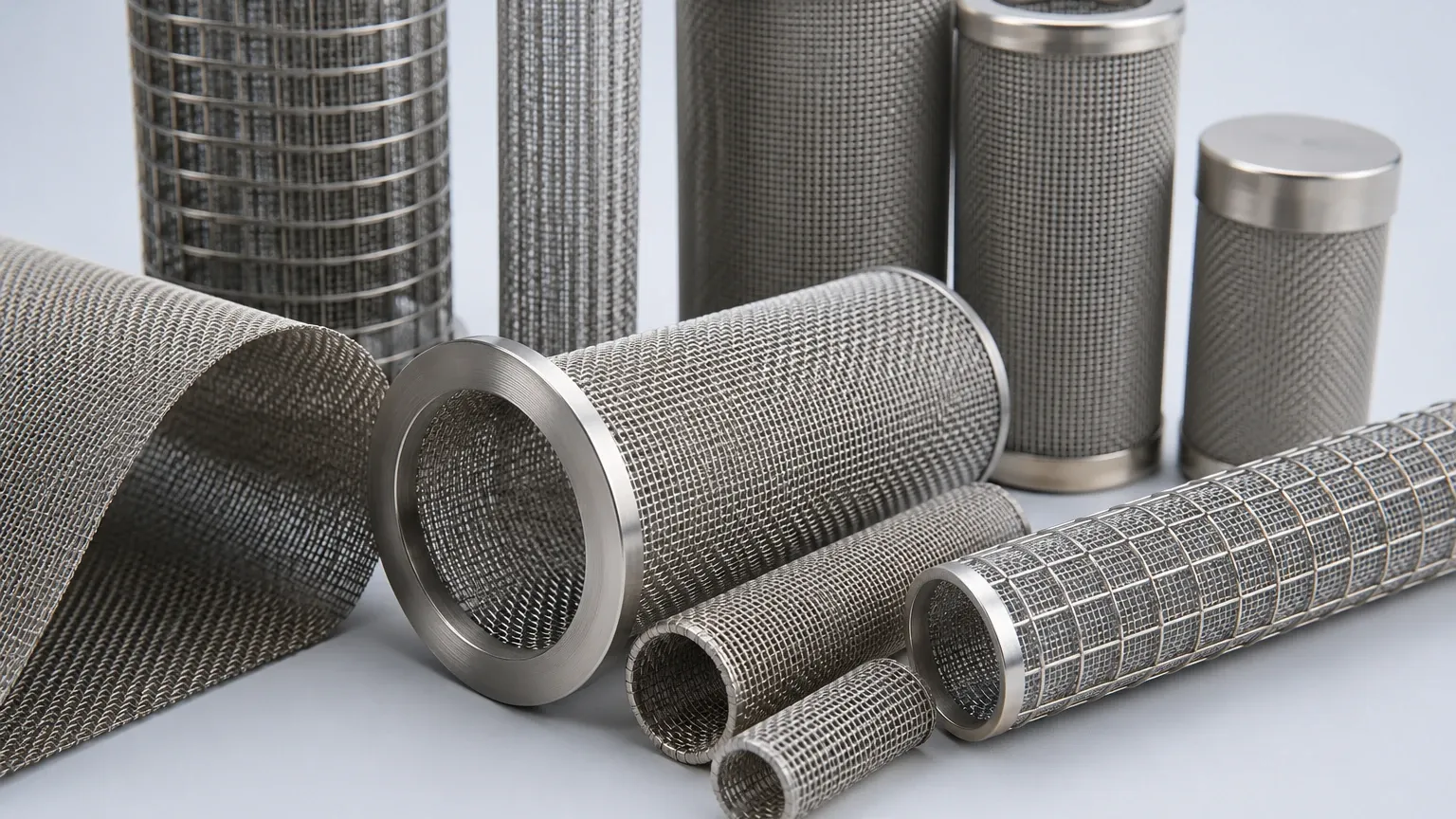
When specifying Wire Mesh Filter Cylinders & Tubes, the mesh count provides a nominal description, but the micron rating—representing the actual physical aperture—determines the particle retention capability. This guide explores the technical nuances of 6 mesh specifications, the engineering considerations for coarse filtration media, and the factors that influence the performance of stainless steel filter components.
Understanding the Conversion: 6 Mesh to Micron
The term "mesh" refers to the number of openings per linear inch of the wire cloth. A 6 mesh screen has six openings and six wires per inch in both the warp and shute directions. However, the mesh count alone does not define the filtration accuracy. The actual size of the opening (the aperture) is calculated by subtracting the diameter of the wire from the center-to-center distance between wires.
The Calculation Formula
To determine the micron rating for a specific mesh, the following formula is used:
1. Linear Pitch: 1 inch (25,400 microns) / Mesh Count = Pitch.
2. Aperture Size: Pitch – Wire Diameter = Opening Size.
For a standard industrial 6 mesh stainless steel wire cloth, the wire diameter is typically around 0.035 inches (0.889 mm).
* Pitch: 25.4 mm / 6 = 4.233 mm
* Aperture: 4.233 mm – 0.889 mm = 3.344 mm
* Micron Equivalent: Approximately 3,344 microns.
It is important to note that "6 mesh to micron" values can vary based on the wire gauge selected. A heavier wire diameter will result in a smaller micron rating and a lower percentage of open area, while a lighter wire will increase both the micron rating and the flow capacity. When ordering Wire Mesh Filter Cylinders & Tubes, engineers must specify both the mesh count and the wire diameter to ensure the resulting micron rating meets the application's requirements.
Engineering Considerations for Coarse Filtration
6 mesh is categorized as a coarse mesh, typically used in the initial stages of a filtration train. While fine filtration captures microscopic contaminants, coarse filtration using Wire Mesh Filter Cylinders & Tubes serves several critical mechanical functions.
1. Protection of Downstream Components
In hydraulic systems, chemical processing plants, and water treatment facilities, coarse filters act as "trash strainers." They prevent large debris, such as scale, weld slag, or pebbles, from entering sensitive equipment like high-pressure pumps, flow meters, and control valves. A 3,300-micron opening is ideal for capturing visible solids without causing excessive resistance to the fluid stream.
2. Pressure Drop and Open Area
One of the primary advantages of 6 mesh is its high percentage of open area. Standard 6 mesh with a 0.035" wire diameter provides approximately 62% open area. This high porosity ensures a very low pressure drop (ΔP) across the filter element, which is essential for gravity-fed systems or suction-side pump protection where cavitation is a concern.
3. Structural Integrity
The relatively thick wires used in 6 mesh construction provide significant inherent strength. Unlike fine meshes that require support baskets or perforated cores, 6 mesh Wire Mesh Filter Cylinders & Tubes can often stand alone in low-pressure applications or serve as the rigid support structure for finer mesh overlays in multi-layer filter elements.
Applications of Wire Mesh Filter Cylinders & Tubes
Custom-fabricated filter cylinders and tubes are utilized across diverse industries where durability and cleanability are paramount. Stainless steel's resistance to corrosion and temperature makes it the material of choice for 6 mesh applications.
Chemical and Petrochemical Processing
In chemical plants, coarse filter tubes are used to strain raw feedstock or protect heat exchangers from fouling. The ability of 304 or 316L stainless steel to withstand aggressive solvents and high temperatures ensures a long service life compared to polymer-based alternatives.
Food and Beverage Production
6 mesh screens are frequently used in the initial processing of agricultural products, such as straining pulps, seeds, or large particles from juices and syrups. Because stainless steel is non-leaching and easy to sanitize, it meets the stringent hygienic requirements of the food industry.
Water Treatment and Irrigation
For primary water intake from rivers or lakes, 6 mesh cylinders prevent aquatic debris and large organic matter from entering the treatment system. These filters are often designed for easy backwashing or manual cleaning to maintain continuous flow.
Customization and Material Selection
When sourcing Wire Mesh Filter Cylinders & Tubes, the choice of material and construction method is as important as the mesh count. Kaifil specializes in tailoring these components to specific industrial environments.
Material Grades
* AISI 304: The standard grade for general industrial use, offering good corrosion resistance and excellent formability.
* AISI 316L: Contains molybdenum for enhanced resistance to pitting and crevice corrosion, making it ideal for marine environments or chloride-rich chemical processes.
* Specialty Alloys: For extreme environments, alloys like Monel or Inconel can be used to manufacture mesh cylinders that resist high-temperature oxidation or highly acidic conditions.
Fabrication Techniques
The performance of a filter tube is often determined by its seams and end-caps. For 6 mesh cylinders, longitudinal seams are typically resistance-welded or TIG (Tungsten Inert Gas) welded to ensure a smooth, burr-free finish that does not trap contaminants. End-caps can be customized with flanges, NPT fittings, or quick-connect couplings to facilitate easy installation into existing piping systems.
Selection Guide for Industrial Buyers
Selecting the right 6 mesh filter component requires more than just knowing the 6 mesh to micron conversion. International buyers and engineers should evaluate the following criteria before finalizing a specification:
1. Fluid Compatibility: Ensure the stainless steel grade is compatible with the pH levels and chemical composition of the process fluid to prevent premature failure.
2. Flow Velocity: High-velocity flows can cause erosion or vibration in the mesh. Engineering the cylinder's surface area to keep face velocity within acceptable limits is crucial for longevity.
3. Cleaning Method: Determine if the filter will be cleaned via ultrasonic bath, manual pressure washing, or automated backpulsing. The construction must be robust enough to withstand the chosen cleaning cycle.
4. Total Cost of Ownership (TCO): While stainless steel filters have a higher initial cost than disposable cartridges, their ability to be cleaned and reused hundreds of times significantly reduces the long-term operational expense and waste.
Maintenance and Longevity
The durability of stainless steel Wire Mesh Filter Cylinders & Tubes is a major benefit in industrial settings. However, maintaining the 3,300+ micron aperture requires regular inspection. Over time, particles can become "wedged" in the mesh (blinding), or the wire may experience mechanical wear in abrasive slurries.
To extend the life of a 6 mesh filter:
* Regular Inspection: Check for signs of wire displacement or broken welds, especially in high-pressure systems.
* Controlled Cleaning: Avoid using abrasive tools that could scratch the wire surface, as scratches can become focal points for corrosion.
* Proper Sealing: Ensure that gaskets and O-rings at the connection points are replaced regularly to prevent bypass, where fluid skips the filter media entirely.
Conclusion
Understanding the technical details of 6 mesh to micron conversion allows engineers to design more effective and efficient filtration systems. While 6 mesh serves as a coarse barrier, its role in protecting expensive downstream equipment and managing high-volume flow rates is indispensable. By selecting high-quality Wire Mesh Filter Cylinders & Tubes manufactured to precise specifications, industrial operations can achieve a balance of performance, durability, and cost-effectiveness.
Whether the application involves chemical processing, food production, or heavy industrial hydraulics, the choice of mesh, wire diameter, and fabrication quality remains the foundation of reliable filtration performance. Kaifil continues to support global engineering teams by providing the technical expertise and manufacturing precision required for these demanding components.
