


Oncore Filter Cartridges
In the landscape of industrial process engineering, the integrity of filtration components is a primary determinant of system uptime and product quality. Among the various configurations available to engineers, oncore filter cartridges have emerged as a critical solution for applications requiring high structural stability and consistent performance under fluctuating pressure conditions. These cartridges, characterized by a robust internal support structure, are designed to withstand the rigors of heavy-duty industrial environments where standard, unsupported media might fail.
For procurement teams and maintenance engineers, understanding the technical nuances of oncore filter cartridges is essential for optimizing filtration efficiency and reducing the total cost of ownership. This guide examines the engineering principles, material considerations, and application-specific advantages of these specialized filtration components.
The Engineering Logic of Core-Supported Filtration
The fundamental challenge in industrial filtration is the management of differential pressure (ΔP). As a filter captures contaminants, the resistance to flow increases, leading to a rise in pressure across the filter media. Without sufficient internal support, the media can deform, pleats can bunch, or the entire cartridge can collapse, leading to "bypass"—where unfiltered fluid escapes into the clean stream.
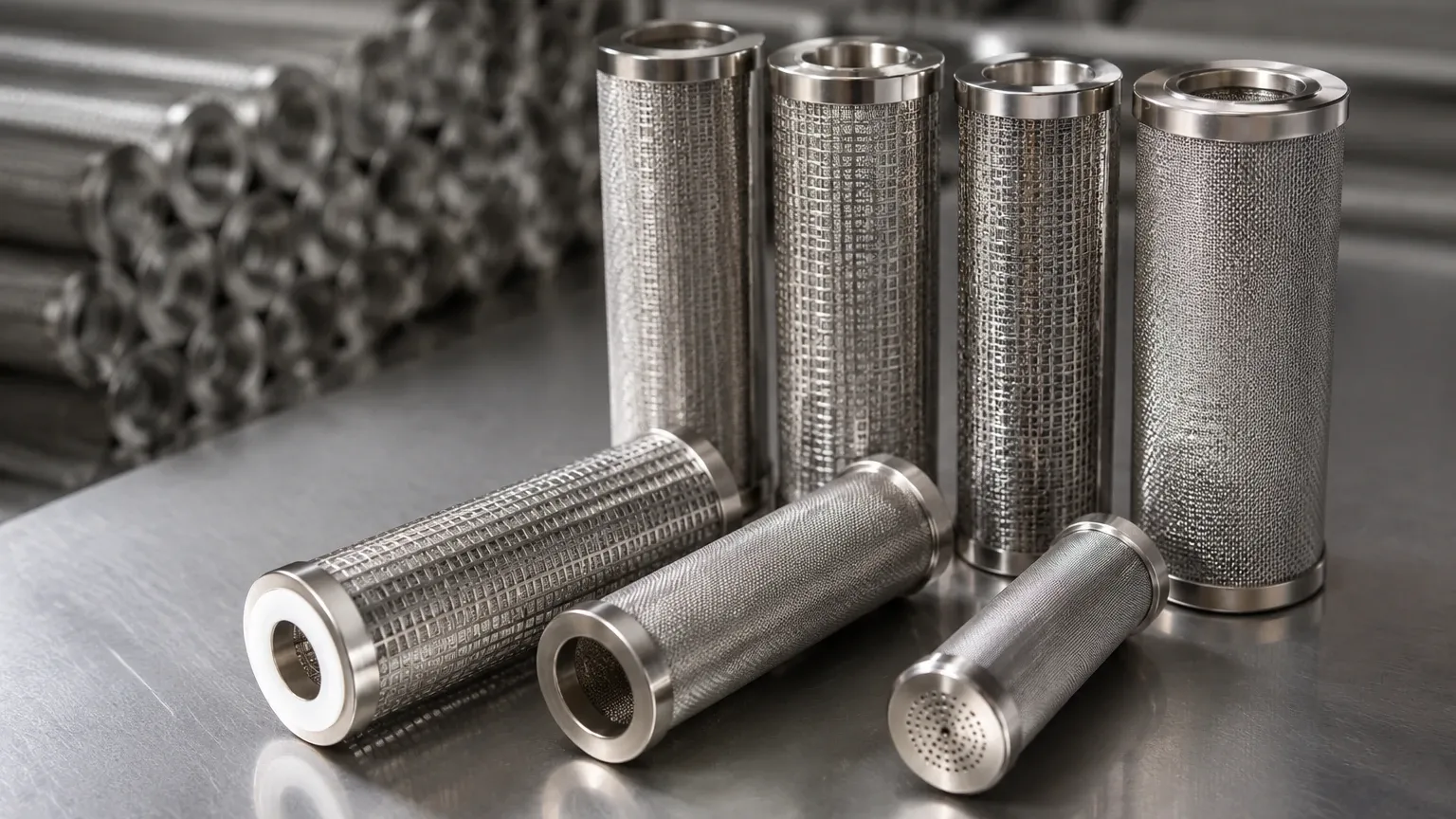
Oncore filter cartridges address this through a central support core, typically constructed from perforated metal or high-strength polymers. In the context of stainless steel filtration solutions, this core is often a heavy-gauge perforated tube or a spiral-welded cylinder. The core acts as the skeleton of the cartridge, ensuring that the filtration media—whether it be wire mesh, sintered metal fiber, or pleated fabric—remains in its optimal geometry even as the pressure drop increases toward the terminal limit.
From an engineering perspective, the design of the core is as important as the media itself. The open area of the core must be maximized to minimize inherent pressure drop, yet the structural ribs must be thick enough to resist the compressive forces exerted by the process fluid. This balance is critical for maintaining high flow rates in systems like hydraulic power units or chemical injection skids.
Material Selection and Compatibility
When specifying Filter Cartridges, material compatibility is the first gate in the selection process. For oncore filter cartridges used in aggressive environments, stainless steel is the industry standard. Kaifil specializes in utilizing 304 and 316L stainless steel to ensure that both the core and the media can withstand corrosive agents and extreme temperatures.
Stainless Steel 316L vs. 304
316L stainless steel, with its addition of molybdenum, offers superior resistance to chlorides and pitting, making it the preferred choice for pharmaceutical, food and beverage, and marine applications. 304 stainless steel remains a cost-effective and durable option for general industrial use, such as water treatment and hydraulic oil filtration.
Thermal Stability
Unlike polymer-based cartridges that may soften or lose structural integrity at temperatures exceeding 60°C (140°F), stainless steel oncore filter cartridges can operate reliably at temperatures up to 300°C or higher, depending on the sealing materials used (such as PTFE or Viton gaskets). This thermal resilience is vital for steam filtration and high-temperature chemical processing.
Performance Metrics: Efficiency and Dirt-Holding Capacity
Engineers must distinguish between nominal and absolute filtration ratings when evaluating oncore filter cartridges.
1. Absolute Rating: This represents the pore size at which a specified percentage (usually 99.9%) of particles of a certain size are retained. For critical processes, such as the final filtration of injectable drugs or high-purity chemicals, absolute-rated cartridges are mandatory.
2. Nominal Rating: This is an approximate value based on the weight percentage of particles retained. While less precise, nominally rated oncore filter cartridges are often used in pre-filtration stages to extend the life of more expensive downstream components.
Another key metric is the dirt-holding capacity (DHC). A well-designed oncore cartridge utilizes pleated media to increase the effective surface area. By increasing the surface area, the flux (flow per unit area) is reduced, which lowers the initial pressure drop and allows the cartridge to capture a greater volume of contaminants before reaching its terminal ΔP. This directly translates to longer service intervals and reduced labor costs for filter changes.
Applications in Demanding Industrial Sectors
The structural rigidity of oncore filter cartridges makes them indispensable in several key sectors:
Chemical and Petrochemical Processing
In these environments, filters are often exposed to high-viscosity fluids and aggressive solvents. The internal core prevents the media from compressing under the weight of viscous fluids, ensuring that the full depth or surface of the filter is utilized. This is particularly important in catalyst recovery and polymer melt filtration.
Food and Beverage Production
Sanitary design is paramount here. Stainless steel oncore cartridges are compatible with Clean-in-Place (CIP) and Steam-in-Place (SIP) protocols. The robust core allows the cartridge to withstand the high-pressure pulses associated with backwashing, a common technique used to extend the life of the filter in beverage clarification.
Hydraulic and Lubrication Systems
Hydraulic systems are prone to pressure spikes. An unsupported filter cartridge could easily rupture during a pump start-up or a valve shift. Oncore filter cartridges provide the mechanical strength necessary to protect sensitive servo-valves and actuators from particulate wear, even during transient pressure events.
Selection Criteria: What Engineers Should Confirm
Before finalizing a purchase order for oncore filter cartridges, technical teams should confirm the following parameters with the manufacturer:
* Collapse Pressure Rating: What is the maximum differential pressure the core can withstand before structural failure? This should exceed the maximum pump pressure or the setting of the bypass valve.
* Media Migration: In high-flow applications, there is a risk of the filter media shedding fibers into the filtrate. High-quality stainless steel mesh or sintered media should be used to eliminate the risk of downstream contamination.
* End-Cap Configuration: Whether the system requires a Double Open End (DOE), Code 7 (226 O-ring with bayonet), or Code 3 (222 O-ring) fitting, the interface between the cartridge and the housing must be leak-proof. The core must be securely welded or bonded to these end caps to ensure structural continuity.
* Chemical Compatibility of Seals: While the stainless steel core is robust, the O-rings or gaskets (Buna-N, EPDM, Silicone, Viton) must be compatible with the process fluid to prevent bypass at the sealing points.
Maintenance, Cleaning, and Total Cost of Ownership
One of the primary advantages of stainless steel oncore filter cartridges is their cleanability. Unlike disposable melt-blown or string-wound cartridges, metal oncore designs can often be regenerated.
Cleaning Methods
* Ultrasonic Cleaning: High-frequency sound waves create cavitation bubbles that dislodge fine particles from deep within the media layers.
* Backwashing: Reversing the flow of the fluid can remove surface-loaded contaminants.
* Chemical Cleaning: Soaking the cartridges in compatible solvents or caustic solutions can dissolve organic or mineral buildup.
While the initial capital expenditure (CAPEX) for a stainless steel oncore cartridge is higher than a plastic disposable, the total cost of ownership (TCO) is often lower over the long term. By eliminating the recurring cost of replacement filters, reducing waste disposal fees, and minimizing downtime, these robust components provide a significant return on investment in continuous process industries.
Customization and OEM Solutions
Every industrial system has unique constraints, from space limitations in a skid to specific flow dynamics. Standard off-the-shelf filter cartridges may not always meet these requirements. Working with a manufacturer like Kaifil allows for the development of customized oncore filter cartridges tailored to specific micron ratings, lengths, and core strengths.
Customization often involves optimizing the pleat density to balance dirt-holding capacity with flow resistance or reinforcing the core for ultra-high-pressure applications. For OEM equipment manufacturers, having a reliable partner who can provide consistent, high-quality filtration components is essential for maintaining the reputation of their own machinery.
Conclusion
Oncore filter cartridges represent a fusion of mechanical engineering and separation science. By providing a rigid foundation for high-performance filtration media, these components ensure that industrial processes remain efficient, safe, and productive. Whether dealing with high temperatures in a chemical plant or stringent hygiene requirements in a pharmaceutical facility, the selection of a core-supported cartridge is a strategic decision that impacts the entire production lifecycle.
When evaluating your next filtration upgrade or system design, prioritize structural integrity and material quality. Selecting the right Filter Cartridges—specifically those with a robust oncore design—will safeguard your equipment and ensure the consistency of your end products in even the most demanding environments.
