


Filter Queen Replacement Motor
In the realm of high-performance suction and filtration systems, the motor serves as the primary driver of operational efficiency. Whether maintaining specialized domestic equipment or managing large-scale industrial dust collection units, understanding the mechanics of motor performance and the critical role of filtration media is essential for long-term reliability. When a system experiences a drop in static pressure or an increase in operating temperature, the search for a filter queen replacement motor often begins. However, for engineers and maintenance professionals, the motor replacement is only one part of a broader technical equation that involves airflow dynamics, particulate bypass prevention, and the selection of high-quality Filter Cartridges.
This guide explores the technical relationship between motor longevity and filtration efficiency, providing an industrial perspective on why motors fail and how proper component selection can prevent premature system degradation.
The Critical Link Between Filtration and Motor Longevity
The motor in any vacuum or suction-based filtration system is designed to move a specific volume of air (CFM) against a calculated resistance (Static Pressure). In systems like the Filter Queen, which utilize a cyclonic or high-efficiency particulate air (HEPA) design, the motor relies on the air it moves to cool its internal windings.
When filtration components become compromised, the motor is subjected to two primary failure modes:
1. Thermal Overload due to Airflow Restriction: If the filtration media is clogged or improperly sized, the motor must work harder to pull air through the resistance. This increases the amperage draw and generates excessive heat. Without sufficient airflow to dissipate this heat, the insulation on the motor windings can degrade, leading to a short circuit and the eventual need for a replacement motor.
2. Particulate Ingress and Mechanical Wear: If the filter fails to capture fine particulates—either due to a tear in the media or a poor seal—dust enters the motor housing. These particles act as abrasives on the bearings and commutator, leading to mechanical friction, increased noise, and eventual bearing seizure.
For industrial applications, where downtime is costly, ensuring that the filtration system is optimized is the most effective way to protect the motor investment.
Identifying the Need for a Filter Queen Replacement Motor in Suction Systems
Before proceeding with the installation of a filter queen replacement motor or an industrial equivalent, it is vital to diagnose the root cause of the failure. Replacing a motor without addressing the underlying filtration or airflow issues will likely lead to a repeat failure.
Key diagnostic indicators include:
* Increased Amperage Draw: Using a multimeter to check the current draw can reveal if the motor is struggling against high resistance. If the draw exceeds the manufacturer’s specifications, the filtration system should be inspected immediately.
* Unusual Acoustic Signatures: High-pitched whining or grinding noises typically indicate bearing wear, often caused by fine dust bypassing the primary filters.
* Reduced Suction Power: Even with a new motor, suction will remain poor if the Filter Cartridges are not matched to the specific particulate size and volume of the application.
In industrial environments, these diagnostics are often integrated into a predictive maintenance schedule, where pressure transducers monitor the "delta P" (pressure drop) across the filter bank to signal when cleaning or replacement is required.
Engineering Specifications: Airflow, Static Pressure, and Micron Efficiency
When selecting replacement components for any suction system, engineers must look closely at the performance curves. A motor is rated for a specific performance envelope. To maintain this, the filtration media must offer a balance between high filtration accuracy and low flow resistance.
Micron Rating and Efficiency
Filtration accuracy is measured in microns (μm). For systems requiring a filter queen replacement motor, the original design often relies on high-efficiency cones or cartridges. In industrial B2B contexts, this is translated into specific micron ratings for stainless steel mesh or sintered metal filters. If the micron rating is too large, the motor is at risk of particulate damage. If it is too small (tighter than necessary), the pressure drop will be unnecessarily high, straining the motor.
Effective Filtration Area (EFA)
The surface area of the filter significantly impacts the motor's workload. By utilizing pleated Filter Cartridges, manufacturers like Kaifil increase the EFA within a compact footprint. This design allows for a higher volume of air to pass through the media at a lower velocity, which reduces the pressure drop and extends the life of the motor.
Why Industrial Systems Transition to Stainless Steel Filter Cartridges
While many standard systems use disposable paper or synthetic filters, industrial applications often transition to stainless steel filtration solutions. This shift is driven by the need for durability, chemical compatibility, and the ability to withstand high-pressure differentials that would collapse a standard filter.
Durability and Reusability
Stainless steel wire mesh filters are engineered to be cleaned and reused. In a commercial setting where a system might otherwise require frequent filter changes—risking motor exposure during every maintenance cycle—a permanent stainless steel cartridge provides a consistent barrier. This stability ensures that the motor always operates within its designed airflow parameters.
Material Integrity
In chemical processing or pharmaceutical applications, the filtration media must resist corrosion. Using 304 or 316L stainless steel ensures that the filter does not degrade or shed fibers into the motor or the downstream process. This level of material integrity is a hallmark of professional-grade filtration solutions.
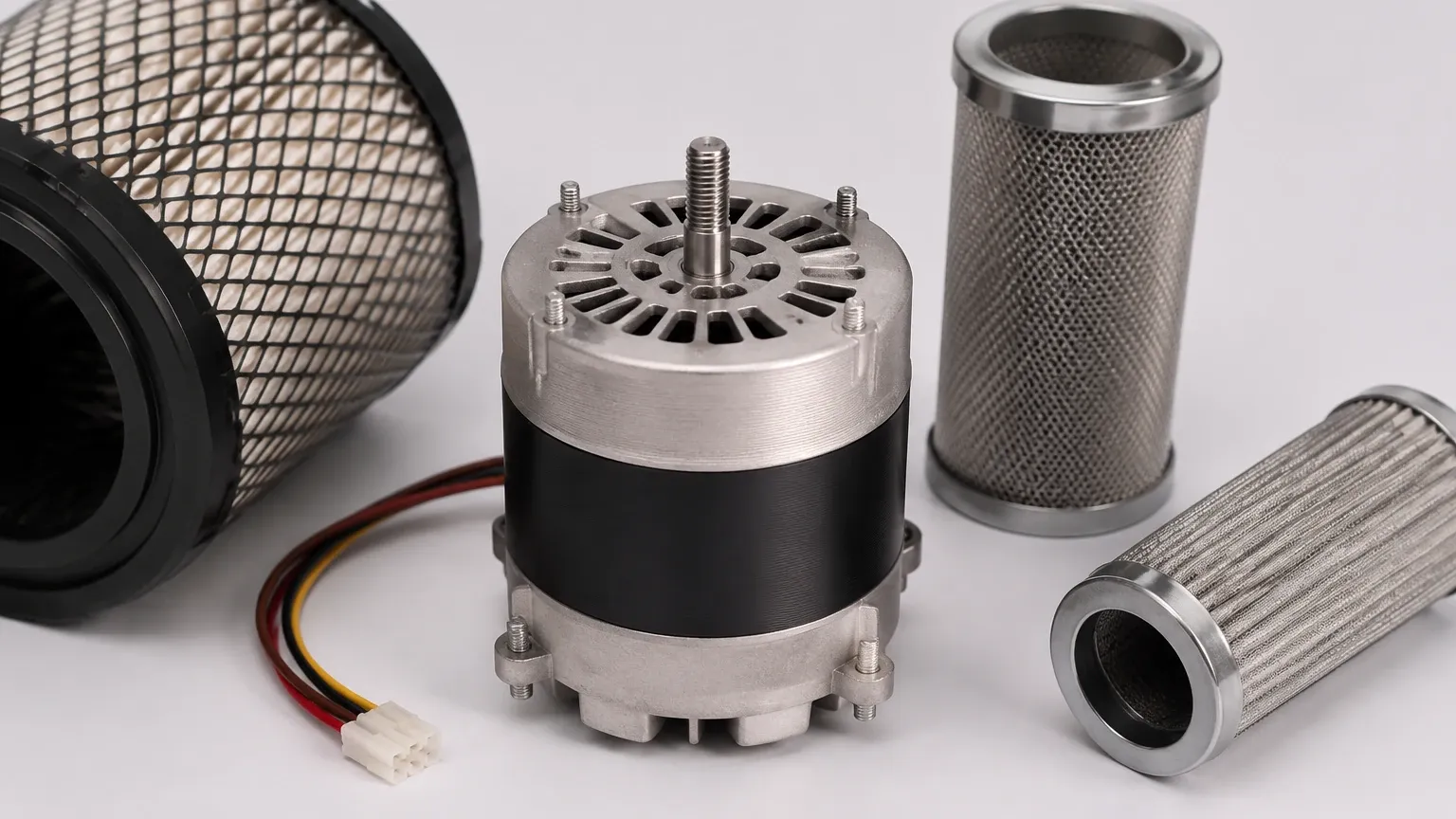
Custom OEM Solutions for Industrial Vacuum and Filtration Units
For manufacturers developing new suction equipment or those looking to upgrade existing fleets, custom-engineered filtration is often superior to off-the-shelf options. When an engineer is tasked with specifying a system that might eventually need a filter queen replacement motor, they must consider the entire assembly's lifecycle.
Kaifil specializes in OEM and customized filtration components, offering:
* Custom Dimensions: Tailoring the height, diameter, and end-cap configuration of Filter Cartridges to fit specific housing requirements.
* Advanced Joining Techniques: Utilizing plasma or TIG welding to ensure that the filter structure can handle the high-velocity airflows generated by powerful industrial motors without structural failure.
* Layered Media Support: For fine filtration, a multi-layer approach is used where a fine mesh is supported by a coarser, stronger mesh. This prevents the fine media from deforming under the suction force of the motor.
Maintenance Protocols to Prevent Motor Burnout
To avoid the premature need for a replacement motor, a rigorous maintenance protocol for the filtration system is required. In industrial B2B environments, this involves more than just shaking out a filter bag.
1. Differential Pressure Monitoring: Installing gauges to measure the pressure before and after the filter. A sudden drop in differential pressure indicates a leak (risking the motor), while a sharp increase indicates a clog (overheating the motor).
2. Ultrasonic Cleaning: For stainless steel cartridges, ultrasonic cleaning can remove deeply embedded particulates that manual washing cannot reach, restoring the filter to near-original flow specifications.
3. Seal Inspection: The gaskets and O-rings on filter cartridges must be inspected for elasticity and compression. A failing seal is the most common route for dust to bypass the filter and enter the motor assembly.
Total Cost of Ownership: Beyond the Initial Purchase
When evaluating a filter queen replacement motor or an industrial suction motor, the purchase price is only a fraction of the Total Cost of Ownership (TCO). A lower-quality motor may have a lower upfront cost but may lack the thermal protection or high-grade bearings found in premium units.
Similarly, the choice of filtration media impacts TCO. Disposable filters have a low initial cost but lead to high recurring expenses and increased labor. High-quality Filter Cartridges made from stainless steel represent a higher initial investment but offer a significantly longer service life and better protection for the motor, ultimately reducing the frequency of motor replacements and system downtime.
Conclusion
Maintaining the efficiency of a suction system requires a holistic understanding of how the motor and filtration media interact. Whether you are addressing a specific need for a filter queen replacement motor or designing a heavy-duty industrial filtration solution, the priority must remain on protecting the motor through superior filtration. By selecting the correct Filter Cartridges and adhering to technical maintenance standards, engineers can ensure their systems deliver consistent performance in even the most demanding environments.
For those seeking precision-engineered filtration components, Kaifil provides the manufacturing expertise and technical support necessary to optimize industrial suction and filtration processes. Understanding the balance between airflow and particulate capture is the key to extending the life of any motor and ensuring the reliability of the entire filtration system.
