


Best Quality Water Filter Cartridges
In industrial water treatment and process engineering, the term "quality" is often used broadly, yet its technical implications are precise. For engineers and procurement professionals, identifying the best quality water filter cartridges requires a deep dive into material science, structural integrity, and filtration efficiency. High-performance filtration is not merely about removing contaminants; it is about ensuring process consistency, protecting downstream equipment, and minimizing operational downtime.
Kaifil specializes in the manufacture of custom stainless steel filtration solutions, providing the technical expertise required to navigate the complexities of industrial water filtration. Whether the application involves chemical processing, food and beverage production, or high-pressure hydraulic systems, the selection of a filter cartridge must be guided by factual performance data and engineering requirements.
Defining Quality in Industrial Water Filtration
When evaluating the best quality water filter cartridges, the primary focus is often on the ability of the media to maintain its physical and chemical properties under stress. Unlike standard residential filters, industrial-grade cartridges must withstand high temperatures, aggressive chemical environments, and significant pressure differentials.
Quality is defined by three core pillars:
1. Filtration Accuracy: The ability to consistently capture particles of a specific micron size without bypass.
2. Structural Durability: The resistance of the filter element to collapse, fatigue, or media migration during high-flow or high-pressure events.
3. Chemical Compatibility: The inertness of the filter material relative to the fluid being processed, ensuring no leaching or corrosion occurs.
For many demanding industrial applications, stainless steel has emerged as the gold standard for high-quality filtration. These Filter Cartridges offer a level of reliability that polymer-based alternatives cannot match, particularly in systems where steam sterilization or high-temperature cleaning is required.
Material Science: Why Stainless Steel Defines Best Quality Water Filter Cartridges
The material of construction is the most critical factor in determining the longevity and performance of a filter. In the search for the best quality water filter cartridges, 304 and 316L stainless steel are the preferred materials for industrial environments.
Corrosion Resistance and Longevity
316L stainless steel contains molybdenum, which provides superior resistance to chlorides and pitting. In water treatment applications involving saline or chemically treated water, 316L ensures that the filter remains structurally sound over years of service. This longevity is a key component of "quality," as it reduces the frequency of replacements and the total cost of ownership.
Temperature Stability
Polypropylene and other plastic filters often lose structural integrity as temperatures rise, leading to pore expansion and decreased filtration efficiency. Stainless steel cartridges maintain their micron rating and mechanical strength at temperatures exceeding 300°C, making them essential for hot water loops and steam filtration.
Cleanability and Reuse
One of the defining characteristics of high-quality metal filter cartridges is their ability to be cleaned and reused. Through backwashing, ultrasonic cleaning, or chemical soaking, these filters can be restored to near-original differential pressure levels. This capability stands in stark contrast to disposable depth filters, which must be discarded once they reach their dirt-holding capacity.
Critical Engineering Specifications for Filter Cartridges
Selecting the right cartridge requires an understanding of technical specifications that go beyond simple micron ratings. To ensure you are acquiring the best quality water filter cartridges for your specific system, consider the following engineering parameters:
Absolute vs. Nominal Ratings
A nominal rating is an empirical value indicating the percentage of particles of a given size that a filter can retain. However, for critical applications, an absolute rating is required. An absolute rating signifies that 99.9% (Beta 1000) of particles at that micron size will be captured. High-quality manufacturers like Kaifil provide verified absolute ratings to ensure process safety.
Effective Filtration Area (EFA)
The surface area of the filter media directly impacts the flow rate and the dirt-holding capacity. Pleated stainless steel cartridges significantly increase the EFA compared to cylindrical designs. A higher EFA results in a lower initial pressure drop and longer service intervals, which are hallmarks of a high-efficiency system.
Pore Size Distribution
Consistency in the manufacturing of the wire mesh or sintered metal is vital. The best quality water filter cartridges feature a uniform pore size distribution. This ensures that the filtration load is distributed evenly across the media, preventing premature localized clogging and ensuring predictable performance.
Evaluating Manufacturing Precision and Structural Integrity
The quality of a filter cartridge is as much about its construction as it is about its media. Industrial filters are subject to mechanical stresses that can lead to failure if the manufacturing process is suboptimal.
Welding and Assembly
High-quality stainless steel cartridges utilize TIG (Tungsten Inert Gas) welding or plasma welding rather than adhesives or resins. Adhesives can degrade over time, especially when exposed to chemicals or heat, leading to bypass or fluid contamination. All-welded construction ensures a robust, leak-proof bond between the end caps, core, and filter media.
Support Cores and Outer Cages
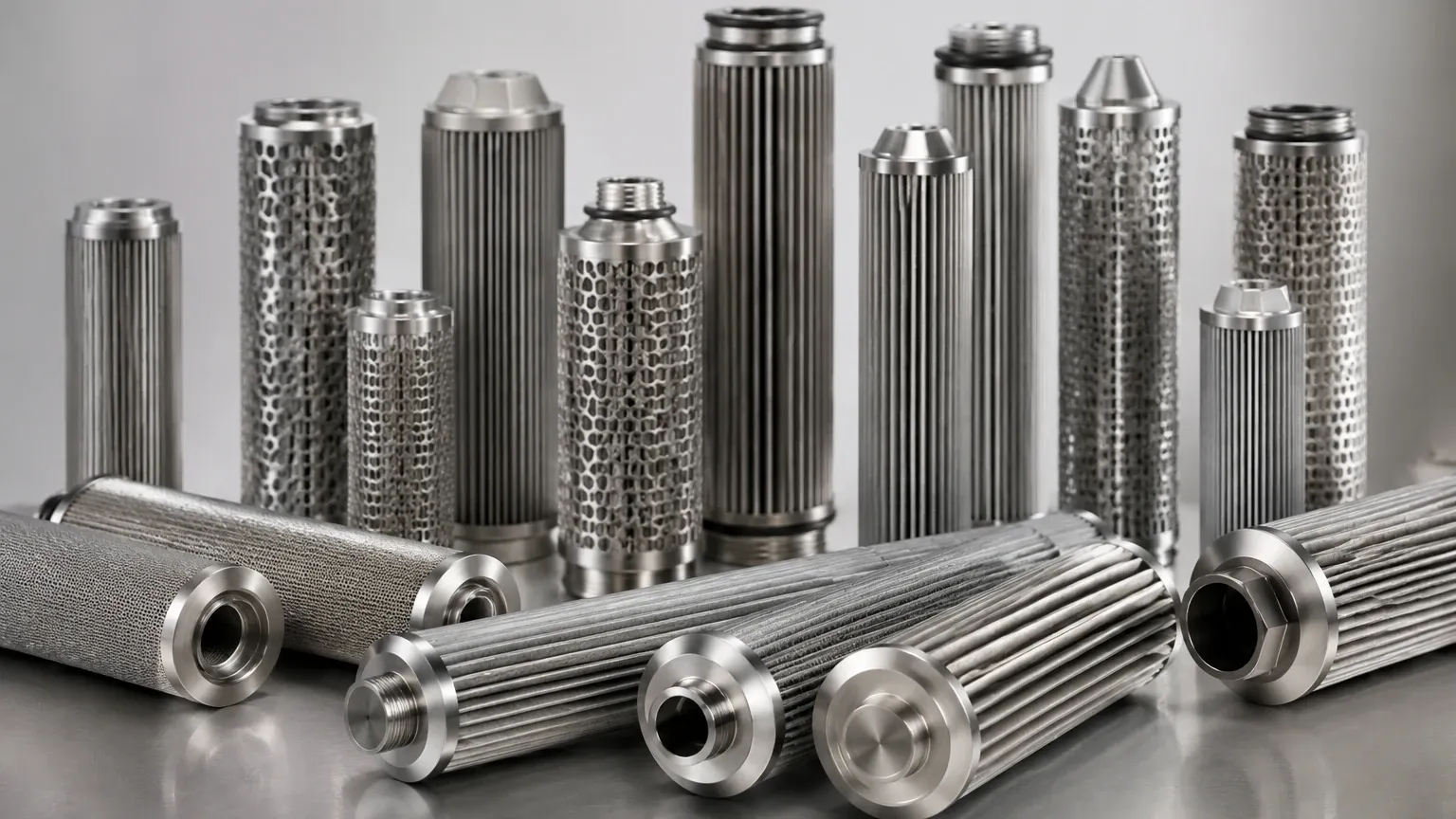
In high-pressure applications, the filter media requires internal support to prevent collapse. A heavy-duty perforated stainless steel core provides the necessary rigidity. Similarly, an outer cage protects the media during installation and handling. The gauge of the steel used in these components is a clear indicator of the cartridge's build quality.
End Cap Configurations
Compatibility with existing filter housings is essential. Quality cartridges are available in various end cap configurations, such as DOE (Double Open End), SOE (Single Open End) with 222 or 226 O-rings, and threaded connections. The precision of these fittings ensures a tight seal, which is critical for preventing untreated water from bypassing the filter element.
Operational Considerations: Flow Rates and Pressure Management
An often-overlooked aspect of filtration quality is how the cartridge interacts with the hydraulic dynamics of the system. The best quality water filter cartridges are designed to optimize flow while maintaining a low differential pressure (ΔP).
Initial Pressure Drop
A high-quality filter should have a low clean pressure drop. If the initial ΔP is too high, it leaves little room for contaminant loading before the filter reaches its terminal pressure drop and requires cleaning or replacement. This efficiency is achieved through optimized pleat geometry and high-porosity media.
Resistance to Pressure Surges
Industrial water systems often experience "water hammer" or sudden pressure spikes. Lower-quality filters may deform or shed media under these conditions. Stainless steel wire mesh filters are inherently resistant to these shocks, maintaining their form and filtration integrity even under fluctuating flow conditions.
Maintenance, Cleaning, and Total Cost of Ownership
While the initial purchase price of a high-quality stainless steel cartridge is higher than that of a disposable polymer filter, the Total Cost of Ownership (TCO) is frequently lower. Engineers must look beyond the invoice price to understand the true value.
Reduced Waste and Disposal Costs
In many industries, disposing of contaminated filter cartridges is a regulated and expensive process. Because stainless steel cartridges are cleanable and reusable, they significantly reduce the volume of solid waste generated by a facility.
Extended Service Life
A well-maintained stainless steel filter can last for several years, whereas disposable filters may need to be replaced weekly or even daily in high-load applications. The labor costs associated with frequent filter changes and the potential for process contamination during change-outs further justify the investment in premium hardware.
Cleaning Protocols
To maintain the best quality water filter cartridges, a structured cleaning protocol should be established. This may include:
* Backpulsing: Using a reverse flow of clean fluid or air to dislodge surface contaminants.
* Ultrasonic Cleaning: Using high-frequency sound waves in a cleaning solution to remove fine particles trapped deep within the mesh.
* Chemical Cleaning: Utilizing acids or alkalis to dissolve organic or inorganic scaling, provided the chemicals are compatible with the stainless steel grade.
Customization: Aligning Cartridge Design with Specific Industrial Needs
No two industrial water systems are identical. Often, the "best" filter is one that has been specifically engineered for a unique set of operating parameters. Customization is a core strength of Kaifil’s manufacturing process.
Tailored Micron Ratings
In some processes, standard micron ratings (e.g., 5, 10, or 25 microns) may not be optimal. Custom-woven wire mesh allows for precise control over the aperture size, enabling the creation of filters that target specific particle size distributions found in a particular water source.
Specialized Geometry
When space is limited or when retrofitting older housing units, custom lengths and diameters are often required. High-quality OEM manufacturers can produce cartridges in non-standard dimensions without compromising the structural integrity of the filter.
Material Enhancements
For exceptionally corrosive environments, such as those involving high-concentration brine or specific acids, alternative alloys like Monel or Hastelloy can be utilized. While more specialized than standard stainless steel, these materials represent the pinnacle of quality for niche industrial applications.
Conclusion: Making an Informed Procurement Decision
Identifying the best quality water filter cartridges requires a shift in perspective from viewing filters as consumables to viewing them as critical engineered components. By focusing on material grade, manufacturing precision, and verifiable performance data, engineers can ensure their water treatment systems operate at peak efficiency.
Before finalizing a purchase, technical teams should confirm the following with their supplier:
* The specific grade of stainless steel and its suitability for the process fluid.
* The welding methods used in assembly (ensuring no adhesives are present).
* The availability of absolute micron ratings and pressure drop curves.
* The recommended cleaning procedures and expected lifecycle of the cartridge.
Kaifil remains committed to providing high-performance, durable, and customized filtration solutions. By integrating advanced manufacturing with rigorous quality control, we help global industries achieve reliable filtration performance in the most demanding environments.
