


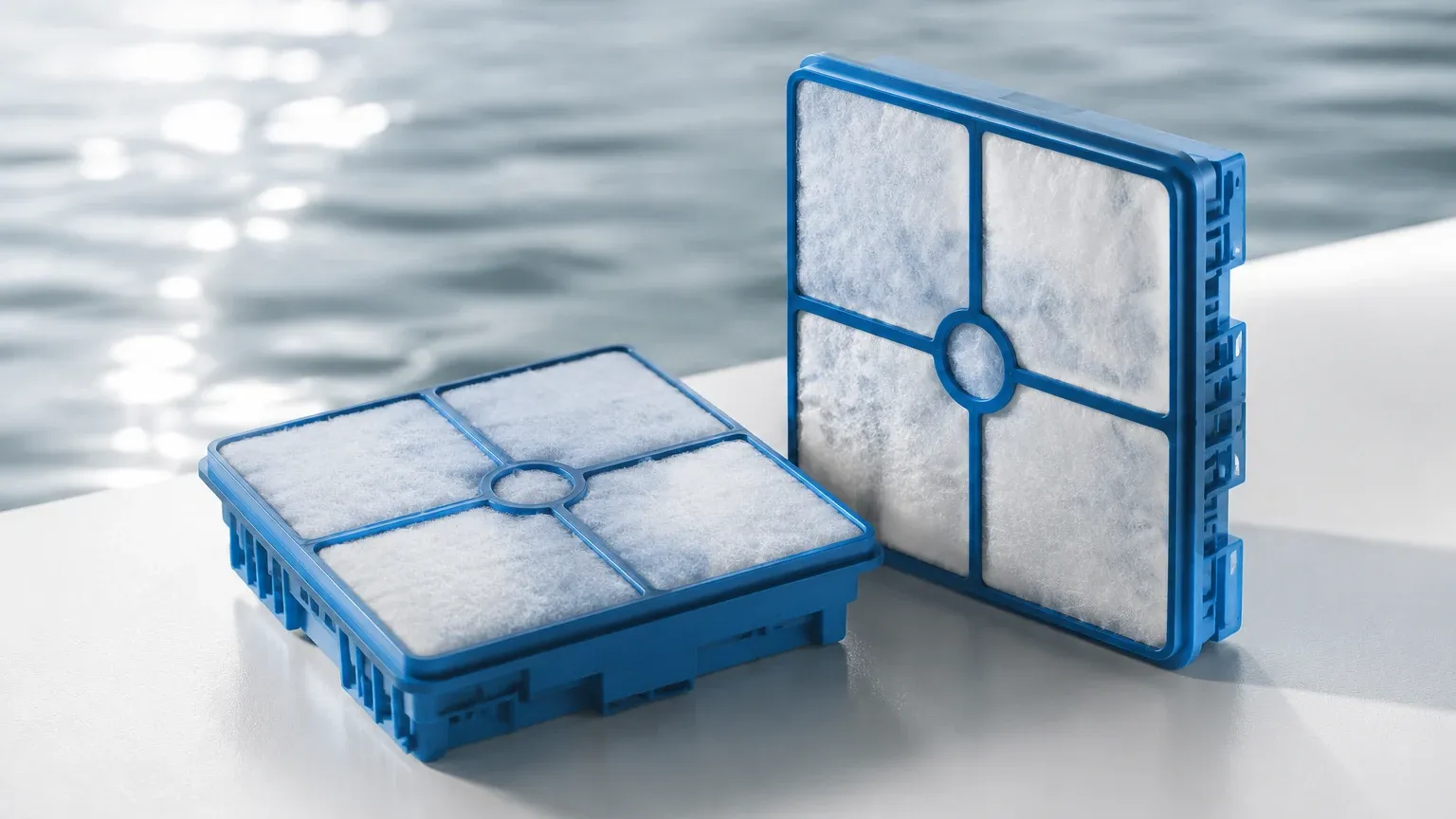
Superfish Aqua Flow 100 Filter Cartridges
In the realm of fluid management and filtration, understanding the specific requirements of a system is paramount to maintaining operational efficiency. While the Superfish Aqua Flow 100 filter cartridges are widely recognized in small-scale aquatic environments for their compact design and dual-action filtration, they serve as a practical entry point for discussing broader filtration principles. For engineers and procurement specialists in the industrial sector, these small-scale systems illustrate the fundamental necessity of matching cartridge media to the specific contaminants and flow requirements of the application.
Industrial filtration often demands a transition from the disposable, polymer-based media found in consumer units to robust, high-performance Filter Cartridges constructed from stainless steel or specialized alloys. This article explores the technical nuances of cartridge-based filtration, using the Superfish Aqua Flow 100 as a baseline to examine engineering considerations, material selection, and the transition to industrial-grade solutions.
Understanding the Design of Superfish Aqua Flow 100 Filter Cartridges
The Superfish Aqua Flow 100 filter cartridges are designed for internal power filters, primarily focusing on a "click-and-replace" system that simplifies maintenance. From a technical perspective, these cartridges employ a multi-stage approach within a single housing. They typically combine a mechanical filtration layer—usually a porous foam or sponge—with a chemical filtration core, often consisting of activated carbon.
Mechanical Filtration Layer
The outer foam layer is engineered with a specific pore size to trap suspended solids. In engineering terms, this is a depth filtration mechanism. As fluid passes through the tortuous path of the foam, particles are intercepted and held within the matrix. For the Aqua Flow 100, this is optimized for low-pressure, low-flow environments where the primary goal is clarity and the removal of organic debris.
Chemical Filtration Core
The internal activated carbon serves to adsorb dissolved impurities. This process relies on the high surface area of the carbon to attract and bond with chemical contaminants. While effective for small-scale water treatment, industrial applications often require more specialized chemical resistance, leading engineers to specify stainless steel mesh or sintered metal cartridges that can withstand aggressive solvents or high temperatures that would degrade standard consumer media.
Technical Specifications and Performance Metrics
When evaluating any filtration component, including the superfish aqua flow 100 filter cartridges, engineers must look beyond the brand name to the underlying performance metrics. These metrics dictate whether a cartridge is suitable for the intended flow rate and particle load.
Micron Ratings and Efficiency
Filtration accuracy is measured in microns (μm). Consumer-grade cartridges like the Aqua Flow 100 often operate on a nominal filtration basis, meaning they catch a significant percentage of particles at a certain size but lack the absolute rating required for precision industrial processes. In contrast, industrial stainless steel filter cartridges are often rated for absolute filtration, ensuring that 99.9% of particles above a specific micron size are removed.
Flow Rate and Differential Pressure
Every filter media creates a resistance to flow, known as pressure drop or differential pressure (ΔP). The Superfish Aqua Flow 100 is designed for a maximum flow of 200 liters per hour. If the cartridge becomes clogged, the ΔP increases, which can strain the pump motor. In industrial settings, monitoring ΔP is critical for preventing system failure. High-quality metal filter cartridges are engineered to maintain a low initial ΔP while providing a high dirt-holding capacity, extending the time between maintenance cycles.
Comparing Consumer and Industrial Filter Cartridges
While the Superfish Aqua Flow 100 filter cartridges are excellent for their intended niche, industrial applications involve variables that consumer products cannot accommodate. Understanding these differences is essential for technical professionals tasked with scaling up filtration systems.
| Feature | Superfish Aqua Flow 100 | Industrial Stainless Steel Cartridges |
| :— | :— | :— |
| Media Material | Polyurethane Foam / Activated Carbon | 304/316L Stainless Steel Wire Mesh |
| Temperature Limit | Typically < 35°C | Up to 500°C+ (depending on alloy) |
| Chemical Resistance | Limited to water-based fluids | High resistance to acids, alkalis, and solvents |
| Structural Integrity | Plastic housing; prone to deformation | Welded or sintered metal; high pressure resistance |
| Reusability | Disposable | Cleanable and reusable (ultrasonic/backwash) |
Durability and Material Longevity
The primary limitation of polymer-based cartridges is their susceptibility to environmental stress. Heat, pressure spikes, and chemical exposure can cause the plastic housing or the foam media to break down. Industrial Filter Cartridges utilize stainless steel wire mesh, which provides superior structural integrity. This allows for filtration in high-pressure hydraulic systems or steam filtration where a standard Aqua Flow cartridge would fail instantaneously.
Engineering Considerations for Cartridge Selection
Selecting the right filtration solution requires a deep dive into the fluid dynamics and the nature of the slurry or fluid being processed. Engineers should confirm several key factors before deciding on a cartridge type.
Particle Size Distribution (PSD)
Understanding the range of particle sizes in the fluid is the first step. If the fluid contains a high volume of very fine particles, a depth filter (like a sponge) may clog too quickly. In such cases, a pleated stainless steel cartridge might be preferred because it offers a much larger surface area within the same footprint, allowing for higher flow rates and longer service life.
Fluid Viscosity and Temperature
Viscosity significantly impacts the pressure drop across the filter. High-viscosity fluids require cartridges with larger open areas or reinforced structures to prevent media migration. Furthermore, if the process involves high temperatures, the thermal expansion coefficients of the cartridge materials must be considered to ensure a proper seal within the filter housing.
Total Cost of Ownership (TCO)
While the initial cost of a disposable cartridge like the superfish aqua flow 100 filter cartridges is low, the TCO in an industrial environment can be high due to frequent replacements and disposal costs. Stainless steel cartridges, although requiring a higher initial investment, offer a lower TCO over time because they can be cleaned and returned to service multiple times, reducing waste and downtime.
Customization and OEM Solutions in Industrial Filtration
One of the most significant advantages of working with specialized manufacturers like Kaifil is the ability to customize filtration components. Unlike the standardized dimensions of the Superfish Aqua Flow 100, industrial filters can be tailored to fit existing machinery or to meet unique performance specifications.
Tailored Micron Ratings
In many B2B applications, a standard 20-micron or 50-micron filter is insufficient. Manufacturers can produce custom wire mesh weaves that provide precise filtration at specific micron levels, ensuring that sensitive downstream equipment—such as high-pressure nozzles or delicate sensors—is protected from damage.
Structural Reinforcements
For applications involving high-pressure differentials or turbulent flow, cartridges can be reinforced with internal support cores or external shrouds. This prevents the mesh from collapsing or distorting under stress, a level of engineering that is not present in consumer-grade plastic cartridges.
Maintenance and Replacement Cycles
For the Superfish Aqua Flow 100, the manufacturer typically recommends replacing the cartridge every month to ensure the carbon remains active and the foam is not overly restricted. In the industrial sector, replacement cycles are determined by monitoring the differential pressure.
Signs of Cartridge Exhaustion
1. Increased Differential Pressure: A steady rise in ΔP indicates that the media is reaching its dirt-holding capacity.
2. Reduced Flow Rate: If the pump output drops significantly, the filter is likely the bottleneck.
3. Contaminant Bypass: If downstream fluid quality degrades, it may indicate a breach in the filter media or a failure of the seals.
Cleaning Protocols for Metal Cartridges
Unlike disposable foam filters, stainless steel cartridges can be cleaned using various methods, including ultrasonic cleaning, chemical baths, or high-pressure backwashing. This capability is vital for industries where process continuity is essential and where the cost of specialized filter media justifies the cleaning process.
Conclusion
Whether managing a small-scale aquatic system with superfish aqua flow 100 filter cartridges or overseeing a complex chemical processing plant, the principles of effective filtration remain the same: match the media to the contaminant, respect the flow limits of the system, and prioritize structural integrity. For industrial professionals, moving beyond disposable consumer solutions to high-performance, customized Filter Cartridges is often the key to optimizing system uptime and ensuring product purity. By focusing on material science and engineering precision, facilities can achieve reliable filtration that stands up to the most demanding industrial environments.
