


Sta Rite S7m120 Filter Cartridges
In the realm of high-capacity liquid filtration, the Sta Rite S7M120 filter cartridges represent a specific engineering standard for modular media systems. Often utilized in large-scale residential and light commercial water treatment applications, these cartridges are designed to handle significant flow rates while maintaining high clarity. However, for engineers and procurement specialists operating in industrial environments—such as chemical processing, pharmaceuticals, or high-temperature hydraulic systems—understanding the technical boundaries of these components is essential for optimizing system performance and ensuring long-term reliability.
When evaluating Filter Cartridges for industrial use, it is necessary to look beyond surface-level specifications. The Sta Rite S7M120 system typically employs a dual-cartridge design within a single housing, maximizing the effective filtration area. This approach reduces the frequency of maintenance cycles but also introduces specific considerations regarding material compatibility, pressure differentials, and total cost of ownership (TCO).
Technical Specifications and Performance Metrics of S7M120 Cartridges
The Sta Rite S7M120 series is part of the System 3 modular media family. The "120" designation typically refers to the total square footage of the filtration media, though in the System 3 architecture, this is often achieved through a combination of a small inner cartridge and a larger outer cartridge. This nested configuration is a strategic engineering choice intended to balance flow velocity with particulate capture efficiency.
From a technical perspective, the primary performance metric for these cartridges is their flux rate—the volume of fluid passing through a specific area of media over time. By distributing the load across 120 square feet of media, the system minimizes the "face velocity" of the fluid. Lower face velocity allows for deeper penetration of particulates into the media fibers (if using depth-loading materials) or more stable cake formation (if using surface-loading materials), which ultimately prevents premature blinding of the filter.
Engineers must also consider the micron rating. While standard S7M120 replacements often target 20 to 30 microns for general water clarity, industrial applications may require much tighter tolerances. In such cases, the structural integrity of the cartridge becomes paramount. If the pressure drop (Delta P) across the media exceeds the manufacturer’s recommended limit, the media may bypass or collapse, leading to downstream contamination.
Material Considerations: Synthetic Media vs. Stainless Steel Alternatives
The standard sta rite s7m120 filter cartridges are typically constructed from pleated polyester or similar synthetic polymers. While these materials are cost-effective for ambient temperature water filtration, they possess inherent limitations in demanding industrial environments.
1. Thermal Stability: Synthetic fibers like polyester can begin to soften or lose structural integrity at temperatures exceeding 140°F (60°C). In industrial steam loops or chemical heat exchangers, stainless steel filter cartridges are required to maintain pore size consistency.
2. Chemical Compatibility: Polyester is susceptible to degradation when exposed to high concentrations of chlorine, certain acids, or organic solvents. For applications involving aggressive chemistry, upgrading to 304 or 316L stainless steel wire mesh ensures that the filter does not leach contaminants or fail catastrophically.
3. Mechanical Strength: High-pressure hydraulic systems or high-viscosity fluid processing can exert significant mechanical stress on pleated media. Stainless steel cartridges, featuring reinforced inner cores and outer support cages, offer the rigidity necessary to withstand high differential pressures without pleat deformation.
For facilities looking to transition from disposable synthetic cartridges to more durable solutions, the engineering team must verify that the replacement stainless steel components match the flow characteristics of the original S7M120 footprint to avoid over-taxing existing pumps.
Engineering Selection Criteria for Industrial Filter Cartridges
When selecting Filter Cartridges for a new or existing system, engineers should follow a rigorous evaluation process. This ensures that the filtration solution aligns with both the process requirements and the facility's operational goals.
Particulate Characterization
Before choosing a cartridge, the nature of the contaminant must be understood. Is the particulate deformable (organic) or rigid (inorganic)? Rigid particles are easily captured by surface-loading wire mesh, while deformable particles may require depth-loading media to prevent immediate surface blinding. The S7M120’s pleated design is a hybrid approach, offering high surface area to handle a mix of particulate types.
Flow Rate and Pressure Drop
Every filter housing has a maximum flow capacity. However, the cartridge itself is the primary source of resistance. A common mistake in procurement is selecting a filter based solely on the pipe size. Instead, the selection should be based on the Clean Pressure Drop. Ideally, the initial pressure drop should not exceed 2-3 PSI. As the filter loads, the pressure will rise; the system must be designed to trigger a cleaning or replacement cycle before reaching the terminal pressure drop (usually 15-25 PSI for synthetic media).
Seal Integrity
The interface between the cartridge and the housing is a frequent point of failure. The S7M120 uses specific gaskets to ensure a tight seal. In industrial settings, the elastomer material of these seals (e.g., EPDM, Viton, or Buna-N) must be checked against the fluid’s chemical profile to prevent swelling or brittleness.
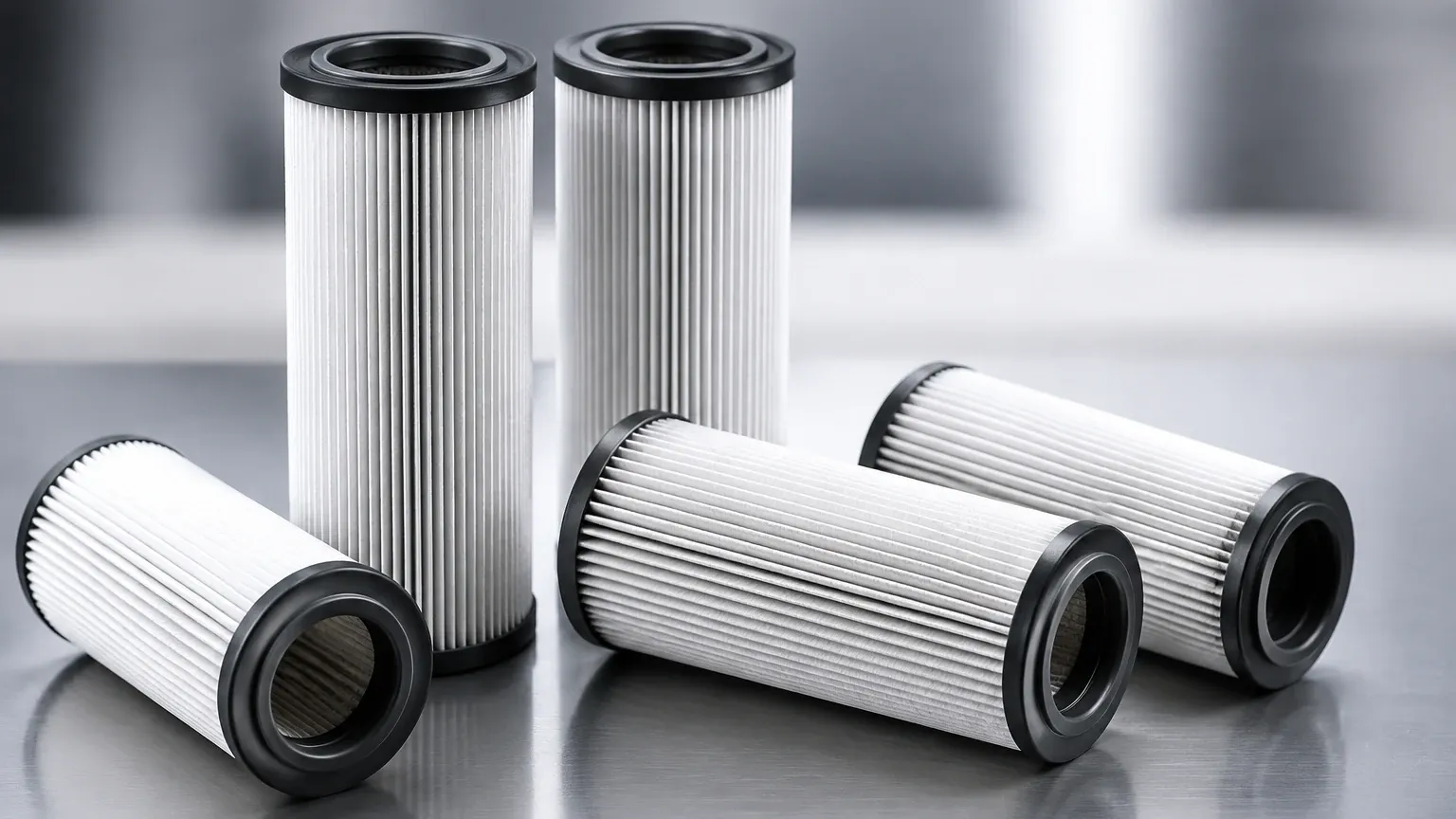
Flow Dynamics and Pressure Drop Management
Managing flow dynamics is critical when utilizing high-surface-area cartridges like the sta rite s7m120 filter cartridges. The pleated geometry is designed to maximize the area within a compact cylindrical volume, but if the pleats are too tightly packed, "bridging" can occur. Bridging happens when particulates lodge between the pleats, effectively sealing off large portions of the filter media and causing a rapid spike in differential pressure.
In industrial fluid dynamics, the Reynolds number (Re) helps determine if the flow through the filter media is laminar or turbulent. Most efficient filtration occurs under laminar flow conditions at the media interface. The 120-square-foot surface area of the S7M120 helps achieve this by slowing down the fluid velocity as it passes through the pores.
Furthermore, the housing design plays a role. If the fluid enters the housing at high velocity and hits the cartridge directly, it can cause localized erosion of the media. Strategic use of flow distributors or baffles within the housing can protect the Filter Cartridges and ensure that the entire surface area is utilized uniformly, rather than just the section closest to the inlet.
Maintenance, Cleaning, and Total Cost of Ownership (TCO)
One of the primary drivers for selecting the S7M120 system is the extended service life provided by its large media area. However, the method of maintenance significantly impacts the TCO.
* Disposable Cartridges: Standard polyester S7M120 cartridges are designed to be removed and hosed off a limited number of times before the fibers become permanently embedded with fine debris. Once the "clean" pressure drop remains high after washing, the cartridge must be replaced. This creates a recurring operational expense and a waste stream.
* Cleanable Metal Cartridges: In contrast, stainless steel filtration components manufactured for industrial use can be cleaned via backwashing, ultrasonic baths, or chemical cleaning. While the initial capital expenditure (CAPEX) for a stainless steel filter is higher than a synthetic S7M120, the elimination of replacement costs and reduced downtime often results in a lower TCO over a 24-to-60-month period.
Engineers should also consider the labor costs associated with maintenance. A system that requires monthly cartridge changes may be less cost-effective than a more expensive, robust system that only requires annual servicing. The modular nature of the System 3 S7M120 housing allows for relatively quick changes, but the frequency of those changes is the variable that must be controlled.
Customization and OEM Solutions for Demanding Applications
While the sta rite s7m120 filter cartridges are a standard product for many water systems, industrial processes often demand customized dimensions or specialized performance characteristics. OEM (Original Equipment Manufacturer) capabilities allow for the development of filtration components that fit existing S7M120 housings but feature upgraded materials or specific micron ratings tailored to a unique process.
Customization options often include:
* Varying Mesh Weaves: From plain weave to Dutch twill, the choice of weave affects both flow rate and the ability to shed filter cakes during cleaning.
* Reinforced Cores: For high-viscosity oils or polymers, an extra-thick perforated core prevents the cartridge from collapsing under the weight of the fluid.
* End Cap Modifications: Custom end caps can be engineered to ensure 100% bypass-free operation in critical pharmaceutical or food-grade applications.
By working with a specialized manufacturer like Kaifil, engineering teams can obtain Filter Cartridges that bridge the gap between standard commercial specifications and the rigorous demands of industrial manufacturing. Whether the goal is to improve the durability of a water treatment loop or to implement a high-precision filtration step in a chemical line, understanding the engineering principles behind cartridge design is the first step toward optimized performance.
In conclusion, while the Sta Rite S7M120 provides a robust baseline for high-capacity filtration, its successful implementation in a B2B or industrial context depends on a thorough analysis of flow dynamics, material science, and maintenance protocols. By prioritizing technical data and engineering compatibility, purchasing teams can ensure they select the right filtration media for their specific operational environment.
