


Filter Cartridge Type 2
In the landscape of industrial and commercial filtration, the designation "Type 2" often serves as a shorthand for specific dimensional standards and performance profiles. While the term is frequently encountered in consumer-grade pool and spa maintenance, its implications in industrial fluid processing are far more technical. For engineers and procurement specialists, understanding the nuances of a filter cartridge type 2—particularly when transitioning from disposable media to high-performance stainless steel alternatives—is essential for maintaining system integrity and optimizing operational costs.
Industrial filtration requires a rigorous approach to component selection. Whether a system utilizes a standard filter cartridge type 2 or a custom-engineered variant, the primary objectives remain constant: achieving the required filtration fineness, ensuring chemical compatibility, and managing the total cost of ownership through durability and cleanability. This guide examines the technical specifications, engineering considerations, and industrial applications associated with these filtration components.
Technical Specifications and Dimensional Standards
The term "Type 2" typically refers to a specific set of dimensions that allow the cartridge to fit into standardized housings. In many common configurations, a filter cartridge type 2 measures approximately 5.4 inches (136mm) in height with an outer diameter of 4.2 inches (106mm). However, in industrial B2B environments, these dimensions may be adapted to meet the requirements of specific machinery or pressurized vessels.
When evaluating Filter Cartridges for industrial use, the physical dimensions are only the starting point. Engineers must also consider:
* Core Strength: Industrial-grade cartridges often feature a reinforced inner core (typically made of 304 or 316L stainless steel) to prevent collapse under high differential pressure.
* End-Cap Configuration: Depending on the housing, the cartridge may require DOE (Double Open End) or SOE (Single Open End) configurations with specific O-ring or gasket materials such as Viton, EPDM, or PTFE.
* Filtration Surface Area: The efficiency of a filter is directly proportional to its surface area. Pleated designs are often employed to maximize this area within the standard Type 2 footprint, allowing for higher flow rates and lower initial pressure drops.
Material Selection for Demanding Environments
One of the most critical decisions in specifying a filter cartridge type 2 is the choice of filtration media. While many off-the-shelf Type 2 filters use synthetic fibers or paper, industrial applications often demand the resilience of metal.
Stainless Steel Wire Mesh
For applications involving high temperatures or corrosive chemicals, stainless steel wire mesh is the preferred medium. Unlike synthetic materials that may degrade or shed fibers, stainless steel maintains its structural integrity. It is available in various weave patterns, such as plain weave, twill weave, or Dutch weave, each offering different levels of mechanical strength and filtration accuracy.
Sintered Metal Media
In scenarios requiring extreme precision and high pressure resistance, sintered metal fiber or multi-layer sintered mesh may be used. Sintering bonds the metal strands together, creating a rigid structure that cannot migrate or bypass, which is vital in pharmaceutical and food-grade processes where purity is paramount.
Chemical Compatibility
The fluid being filtered dictates the alloy required. 304 stainless steel is suitable for many general-purpose industrial applications, while 316L stainless steel provides superior resistance to chlorides and organic acids, making it the standard for chemical processing and marine environments.
Engineering Considerations for Filter Selection
Selecting the right filter cartridge type 2 involves more than matching dimensions. Engineers must calculate the specific performance requirements of their system to avoid premature failure or insufficient filtration.
Micron Rating: Nominal vs. Absolute
It is vital to distinguish between nominal and absolute micron ratings. A nominal rating indicates the ability of the filter to trap a major percentage of particles of a given size, whereas an absolute rating (often achieved with precision-woven stainless steel mesh) signifies that 99.9% of particles above that size will be retained. For critical hydraulic systems or fine chemical synthesis, absolute ratings are generally required.
Flow Rate and Pressure Drop (Delta P)
Every filter introduces a resistance to flow, known as pressure drop. As the filter cartridge type 2 accumulates contaminants, this pressure drop increases. An oversized filter or a pleated design can mitigate the initial Delta P, extending the interval between cleanings or replacements. Engineers should target an initial pressure drop of less than 2-3 PSI for most liquid applications.
Temperature and Viscosity
High-viscosity fluids require more robust filter structures and potentially larger pore sizes to maintain flow. Similarly, if the process operates at elevated temperatures, the thermal expansion coefficients of the filter media and the housing must be compatible to prevent bypass leaks.
Customization and OEM Solutions
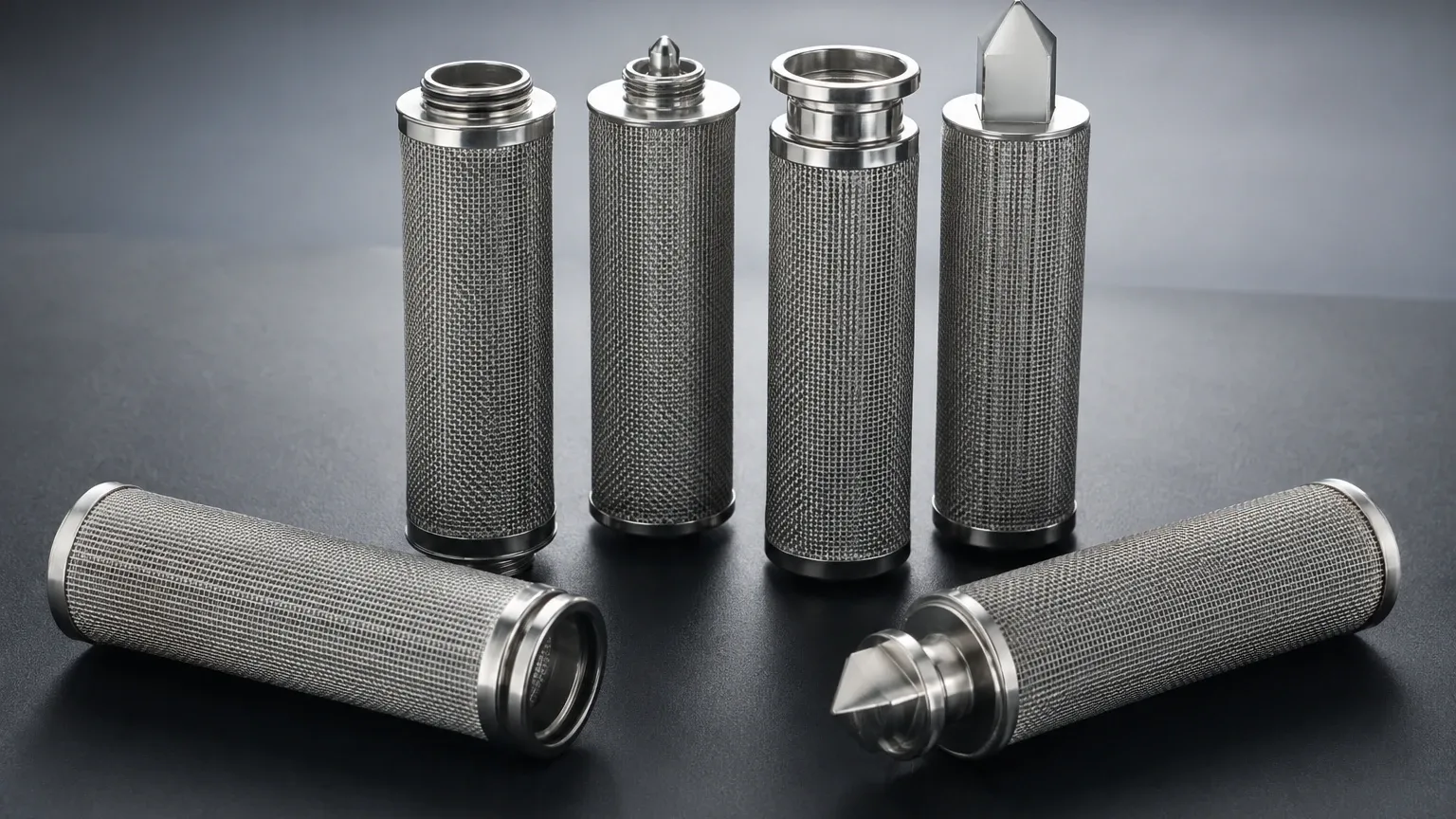
While standard sizes exist, many industrial systems require a customized approach to the filter cartridge type 2 format. Customization allows for the optimization of the filter to the specific contaminant load and fluid dynamics of a unique process.
Manufacturing partners like Kaifil specialize in adapting these standards to meet rigorous industrial demands. Customization options often include:
1. Variable Lengths and Diameters: Adjusting the standard Type 2 dimensions to fit legacy housings or proprietary equipment.
2. Specialized End-Caps: Integrating threaded connectors, bayonet locks, or custom flange mounts to ensure a leak-proof seal.
3. Reinforced Outer Guards: Adding a perforated metal shroud to protect the delicate filter media from high-velocity flow or mechanical damage during installation.
4. Multi-Stage Filtration: Incorporating a coarse pre-filter layer and a fine secondary layer within a single cartridge to handle high sediment loads without rapid clogging.
By working with a manufacturer that understands both the metallurgy and the mechanics of filtration, procurement teams can secure Filter Cartridges that outperform generic alternatives.
Maintenance, Cleaning, and Replacement Cycles
In a B2B context, the longevity of a filter cartridge type 2 is a key component of operational efficiency. Unlike disposable plastic or paper filters, stainless steel cartridges offer the advantage of being cleanable and reusable.
Cleaning Methods
Depending on the contaminant, stainless steel filters can be cleaned using several methods:
* Ultrasonic Cleaning: Highly effective for removing fine particles trapped deep within the mesh pores.
* Backwashing: Reversing the flow of fluid to dislodge cake buildup on the surface of the media.
* Chemical Cleaning: Using compatible solvents or acids to dissolve organic or mineral scaling.
* Burn-off/Pyrolysis: For heavy polymer or resin buildup, controlled heating can remove contaminants without damaging the stainless steel structure.
Determining Replacement Cycles
While stainless steel filters are durable, they are not infinite. Factors such as metal fatigue from repeated pressure cycling or irreversible blinding (clogging) will eventually necessitate replacement. Monitoring the "clean" pressure drop after each cleaning cycle is the best way to track the filter's health. When the clean pressure drop exceeds 50% of the original new-filter value, it is usually time to commission a replacement.
Total Cost of Ownership (TCO) in Industrial Filtration
When evaluating the procurement of a filter cartridge type 2, the initial purchase price is often misleading. A comprehensive TCO analysis considers:
* Disposal Costs: Disposable filters generate significant waste and may require hazardous waste handling depending on the fluid filtered.
* Downtime: Frequent filter changes lead to system downtime. A high-capacity stainless steel cartridge reduces the frequency of intervention.
* Energy Consumption: A filter that operates with a lower average pressure drop reduces the load on pumps, leading to measurable energy savings over time.
* Product Quality: Consistent filtration performance prevents downstream contamination, which can protect expensive equipment like high-pressure pumps or spray nozzles.
For most industrial applications, the higher upfront investment in a precision-engineered stainless steel filter cartridge type 2 is recouped through extended service life and reduced maintenance overhead.
Conclusion: Selecting the Right Partner
The selection of a filter cartridge type 2 is a decision that impacts the efficiency, safety, and cost-effectiveness of industrial operations. By focusing on material integrity, precise engineering, and application-specific customization, engineers can ensure their filtration systems perform reliably under the most demanding conditions.
When sourcing these components, it is essential to partner with a manufacturer that provides technical transparency and engineering support. Confirming material certifications, pressure ratings, and filtration efficiency data before purchase ensures that the selected Filter Cartridges will meet the rigorous standards of your specific industry, whether in chemical processing, food production, or hydraulic power. Moving beyond generic standards to high-performance metal filtration solutions is a strategic step toward optimized industrial fluid management.
