


Stainless Steel Woven Wire Mesh: A Technical Guide for Industrial Filtration
In industrial engineering and process design, the selection of filtration media is a critical factor that directly influences product purity, equipment longevity, and operational efficiency. Among the various materials available, stainless steel woven wire mesh stands out as a versatile and high-performance solution. Its ability to withstand extreme temperatures, resist corrosive chemicals, and maintain structural integrity under high pressure makes it a staple in sectors ranging from petrochemical processing to pharmaceutical manufacturing.
Understanding the technical nuances of woven wire mesh is essential for engineers and purchasing teams tasked with optimizing filtration systems. This guide examines the engineering fundamentals, material properties, and selection criteria necessary to ensure reliable performance in demanding industrial environments.
Engineering Fundamentals of Woven Wire Mesh
At its core, woven wire mesh is produced by weaving longitudinal (warp) wires and transverse (weft) wires together on industrial looms. The resulting structure provides a stable, porous medium with precise aperture sizes. However, the performance characteristics of the mesh are determined by the specific weave pattern employed during manufacturing.
Plain Weave
The most common and straightforward pattern, plain weave follows a simple over-one, under-one sequence. This results in square openings and is ideal for general screening and low-pressure filtration applications. It offers high flow rates and is relatively easy to clean, making it a cost-effective choice for many industrial tasks.
Twill Weave
In a twill weave, each weft wire passes over and under two warp wires in a staggered sequence. This allows for the use of heavier wire diameters than plain weave for a given mesh count, resulting in a stronger and more durable mesh. Twill weave is often selected when the application requires a higher mechanical load capacity or when using finer wires that would be too delicate for a plain weave structure.
Dutch Weave (Plain and Twill)
Dutch weaves utilize different diameters for the warp and weft wires. Typically, the warp wires are thicker and spaced further apart, while the weft wires are thinner and driven tightly together. This creates a "zero-aperture" mesh where the openings are not straight through but follow a tortuous path. Dutch weaves provide superior filtration accuracy, often reaching into the low micron ranges, and are highly resistant to pressure-induced deformation.
Material Selection: The Role of Stainless Steel Alloys
The durability of stainless steel woven wire mesh is largely dependent on the specific alloy grade used. While many stainless steels exist, two primary grades dominate the industrial filtration market due to their balanced mechanical and chemical properties.
1. Type 304 Stainless Steel: Often referred to as the standard "18-8" alloy, SS304 provides excellent corrosion resistance in most atmospheric conditions and freshwater environments. It is a cost-effective solution for food processing, architectural applications, and general industrial filtering where extreme chemical exposure is not a primary concern.
2. Type 316/316L Stainless Steel: For more aggressive environments, SS316 is the industry standard. The addition of molybdenum (2-3%) significantly enhances its resistance to pitting and crevice corrosion, particularly in chloride-rich or acidic environments. The "L" in 316L denotes a low carbon content, which is essential for components that require welding, as it prevents carbide precipitation and maintains corrosion resistance at the weld joints.
For specialized applications, other alloys such as 904L, Duplex stainless steels, or high-nickel alloys (Inconel, Monel) may be used, though SS316L remains the most common choice for high-performance industrial filters.
Evaluating Filtration Performance
When specifying stainless steel woven wire mesh, engineers must move beyond simple "mesh count" (the number of wires per linear inch) and focus on the functional parameters of the filtration process.
Micron Rating: Absolute vs. Nominal
A critical distinction in filtration is the difference between nominal and absolute micron ratings. A nominal rating refers to the ability of the mesh to retain a certain percentage of particles of a specific size. An absolute rating, common in precision Dutch weaves, indicates the largest spherical particle that can pass through the mesh under laboratory conditions. For critical pharmaceutical or hydraulic applications, absolute ratings are necessary to ensure process safety.
Open Area and Flow Rate
The percentage of open area determines the flow capacity and the initial pressure drop across the filter. A higher open area allows for greater throughput but may reduce the mechanical strength of the mesh. Engineers must balance the required flow rate with the structural demands of the system to prevent "blinding" (premature clogging) or mesh failure.
Mechanical Strength and Pressure Differential
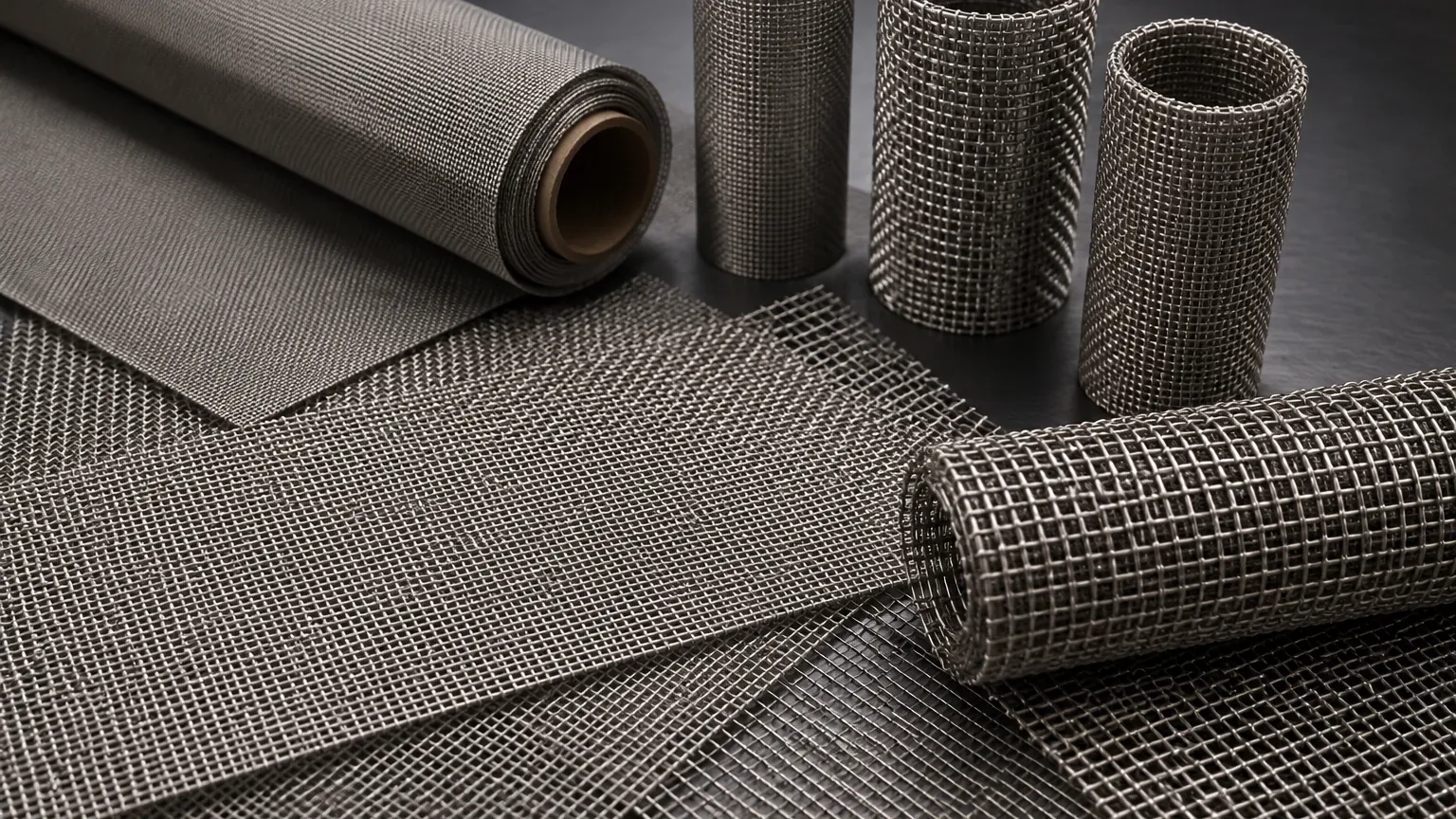
In high-pressure systems, the mesh must withstand the differential pressure ($ΔP$) that increases as particles accumulate on the surface. If the mesh is not properly supported or if the wire diameter is insufficient, the mesh may stretch or tear. This is where customized solutions, such as Plain, twill and dutch woven wire mesh in SS304/316L — rolls, cut mesh and framed panels. Send mesh count or micron target for a technical quote. become vital, as they allow for the integration of support layers or reinforced frames.
Common Risks and Mitigation in Mesh Selection
Selecting the wrong specification for stainless steel woven wire mesh can lead to significant operational risks. Understanding these risks is the first step toward effective mitigation.
* Corrosion and Contamination: Using SS304 in a high-chloride environment (such as seawater or certain chemical processes) can lead to rapid pitting. This not only destroys the filter but can also contaminate the downstream product with metallic particles.
* Fatigue Failure: In systems with pulsating flows or mechanical vibrations, the wires in the mesh can undergo fatigue. Over time, this leads to wire breakage. Specifying a twill weave or a sintered mesh structure can often mitigate this risk by providing better mechanical stability.
* Bypass and Leakage: Even the highest quality mesh will fail if the sealing mechanism is inadequate. Improperly cut mesh or poorly fitted frames allow unfiltered fluid to bypass the media. Precision OEM manufacturing ensures that the mesh is cut to exact tolerances and integrated into the housing with zero-leakage seals.
Customization and OEM Capabilities
Standard off-the-shelf mesh rolls are rarely sufficient for specialized industrial equipment. Most engineers require customized filtration components tailored to specific housing dimensions and performance targets. Kaifil specializes in bridging the gap between raw material and finished filtration components.
Customization options typically include:
* Slitting and Cutting: Precision cutting of mesh into discs, rectangles, or custom shapes to fit specific filter housings.
* Framing and Edging: Adding stainless steel borders or gaskets to provide structural rigidity and ensure a secure seal within the assembly.
* Multi-layer Lamination: Combining multiple layers of different mesh counts to create a composite filter that offers both high-precision filtration and high mechanical strength.
* Pleating: Increasing the surface area of the mesh within a fixed volume to lower the flux rate and extend the service life between cleanings.
Total Cost of Ownership and Maintenance
While the initial purchase price of stainless steel woven wire mesh is a factor, the total cost of ownership (TCO) is a more accurate metric for B2B decision-making. TCO includes the cost of the filter, the labor required for replacement, the cost of downtime, and the potential for cleaning and reuse.
Unlike disposable synthetic filters, stainless steel mesh is often cleanable. Methods such as ultrasonic cleaning, backwashing, or chemical cleaning can restore the mesh to near-original performance levels. This recyclability significantly reduces the long-term environmental impact and operational costs of the filtration system.
Before finalizing a purchase, engineers should confirm the expected replacement cycle and the compatibility of the mesh with standard cleaning protocols. A high-quality SS316L mesh may have a higher upfront cost but can last for years in applications where synthetic media would fail in weeks.
Technical Confirmation Checklist for Engineers
To ensure the successful implementation of stainless steel woven wire mesh in your project, confirm the following technical details before requesting a quote:
1. Material Grade: Is SS304 sufficient, or does the chemical environment require SS316L or a higher alloy?
2. Filtration Target: What is the specific micron rating required? Is it an absolute or nominal requirement?
3. Operating Conditions: What are the maximum operating temperature and the maximum expected differential pressure?
4. Flow Characteristics: What is the required flow rate, and what is the maximum allowable initial pressure drop?
5. Physical Dimensions: Does the application require standard rolls, or are precision-cut pieces and framed panels necessary for integration into existing equipment?
By addressing these technical parameters, procurement and engineering teams can secure filtration solutions that provide reliable, long-term performance. As a professional manufacturer, Kaifil provides the technical expertise and manufacturing precision needed to develop custom woven wire mesh components that meet the most demanding industrial standards.
