


Steel Woven Wire Mesh: A Technical Guide for Industrial Filtration Applications
In industrial environments, the efficiency of a filtration system often depends on the precision and durability of its core components. Steel woven wire mesh serves as a fundamental material in these systems, providing a versatile and robust solution for particle separation, fluid purification, and structural reinforcement. As a precision-engineered fabric made from metallic wires, woven wire mesh must be selected based on rigorous technical criteria to ensure it meets the demands of specific chemical, thermal, and mechanical environments.
For engineers and procurement professionals, understanding the nuances of weave patterns, material grades, and geometric specifications is essential. This guide explores the technical aspects of Woven Wire Mesh and provides actionable insights for selecting the right filtration media for industrial applications.
Understanding the Fundamentals of Steel Woven Wire Mesh
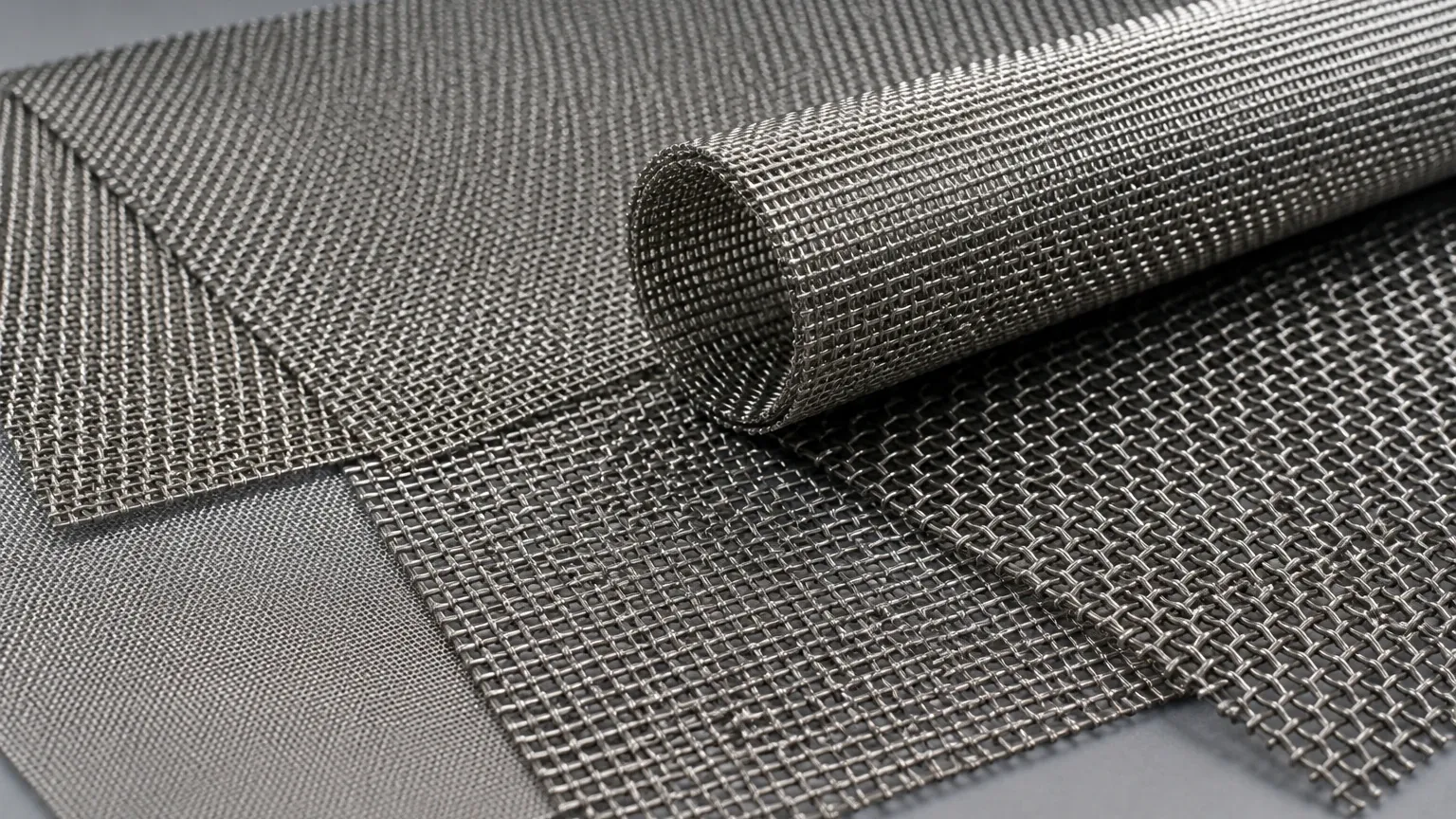
At its core, steel woven wire mesh is produced by weaving individual metal wires on industrial looms. The process is similar to textile weaving but requires significantly higher tension and precision to maintain consistent aperture sizes. The resulting mesh is a stable, porous structure that can be customized in terms of wire diameter, opening size, and weave style.
In the context of industrial filtration, the term "steel" most commonly refers to stainless steel alloys. These alloys are preferred due to their inherent resistance to oxidation and corrosion, which are critical factors in the longevity of filter elements. When selecting steel woven wire mesh, the primary objective is to balance filtration accuracy (micron rating) with structural integrity and flow capacity.
Material Selection: Beyond Standard Stainless Steel
The performance of a wire mesh filter is largely dictated by its metallurgy. While many industrial applications utilize standard grades, specific environments require specialized alloys to prevent premature failure due to pitting, stress corrosion cracking, or high-temperature oxidation.
SS304 and SS304L
Grade 304 is the most widely used stainless steel for woven mesh. It offers excellent value and sufficient corrosion resistance for most atmospheric conditions and many liquid processing applications. The "L" variant (304L) has a lower carbon content, which is vital if the mesh is to be welded into a filter cartridge, as it prevents carbide precipitation and ensures the integrity of the heat-affected zone.
SS316 and SS316L
For more demanding environments, particularly those involving chlorides or marine exposure, SS316 is the industry standard. The addition of molybdenum enhances its resistance to localized corrosion. Like 304L, SS316L is preferred for welded assemblies to maintain maximum corrosion resistance at the joints. This grade is frequently specified in the pharmaceutical and chemical processing sectors.
High-Performance Alloys
In extreme cases—such as highly acidic chemical processing or high-temperature exhaust filtration—standard stainless steels may be insufficient. In these instances, materials such as 904L, Duplex stainless steels, or nickel-based alloys (Inconel, Monel, Hastelloy) are employed. These materials provide the necessary chemical stability to withstand aggressive media that would otherwise degrade standard steel mesh.
Technical Analysis of Weave Patterns
The manner in which wires are interlaced determines the mesh's filtration characteristics, mechanical strength, and cleaning capability. There are three primary weave types used in industrial filtration.
1. Plain Weave
This is the most common and straightforward weave, where each warp wire (running lengthwise) passes alternately over and under each weft wire (running crosswise). Plain steel woven wire mesh provides square or rectangular openings. It is ideal for general-purpose filtration, sieving, and support layers where a high open area and low pressure drop are required.
2. Twill Weave
In a twill weave, each warp wire passes over two and under two weft wires. This allows for the use of heavier wire diameters relative to the mesh count, resulting in a stronger and more durable mesh. Twill weave is often used when the mesh needs to withstand higher mechanical loads or when a finer mesh count is required than can be achieved with a plain weave.
3. Dutch Weave (Plain and Twill)
Dutch weaves utilize different wire diameters for the warp and weft. Typically, a smaller number of heavy warp wires are combined with a larger number of fine weft wires. This creates a dense, "zero-aperture" mesh where the filtration path is tortuous rather than a straight-through hole.
- Plain Dutch Weave: Offers high mechanical strength and is easy to clean via backwashing.
- Twill Dutch Weave: Allows for the finest filtration ratings (down to 1–5 microns) by overlapping multiple layers of fine weft wires. It is the preferred choice for high-pressure hydraulic and fuel filtration.
Key Specifications and Engineering Calculations
When specifying steel woven wire mesh, engineers must look beyond simple descriptions and focus on quantifiable metrics. These metrics determine how the filter will perform under operational loads.
Mesh Count vs. Aperture Size
- Mesh Count: The number of openings per linear inch. While useful for general categorization, it does not account for wire diameter.
- Aperture (w): The clear distance between two adjacent wires. This is the most accurate measure of what size particle the mesh will stop.
- Wire Diameter (d): The thickness of the wire before weaving.
Open Area Percentage
The open area is a critical factor in determining the flow rate and pressure drop across the filter. It is calculated using the formula:
`Open Area % = (w² / (w + d)²) x 100`
A higher open area reduces the initial pressure drop but may result in a mesh that is more easily deformed under pressure. Engineers must find the "sweet spot" where the mesh is open enough for efficient flow but robust enough to maintain its geometry.
Micron Rating
Micron ratings can be absolute or nominal. In woven wire mesh, the absolute rating refers to the largest spherical particle that can pass through the mesh. For Dutch weaves, this is determined through bubble point testing or glass bead challenges, as the openings are not visible to the naked eye.
Engineering Considerations for Industrial Integration
Selecting the mesh is only the first step. Integrating it into a functional industrial filter requires consideration of the following factors:
Mechanical Stability and Support
Fine mesh is often fragile. In high-pressure applications, such as hydraulic systems, the filtration mesh is typically pleated and supported by a coarser "drainage" or "support" mesh. This multi-layer construction prevents the fine mesh from collapsing or migrating under the force of the fluid flow.
Thermal Expansion
In high-temperature applications, such as hot gas filtration, the thermal expansion coefficient of the steel must be considered. If the mesh is constrained within a housing made of a different material, thermal cycling can lead to mechanical fatigue or buckling of the mesh surface.
Cleaning and Maintenance Cycles
One of the primary advantages of steel woven wire mesh over disposable media is its cleanability. Depending on the contaminant, mesh can be cleaned using:
- Backpulsing/Backwashing: Reversing the flow to dislodge particles.
- Ultrasonic Cleaning: Using high-frequency sound waves in a solvent bath to remove fine particulates from the weave intersections.
- Chemical Cleaning: Using acids or alkalis to dissolve organic or mineral deposits.
The choice of weave affects cleanability; for example, Plain Dutch weaves are generally easier to backwash than Twill Dutch weaves due to their simpler internal geometry.
Applications Across Key Industrial Sectors
Customized Woven Wire Mesh solutions are utilized across diverse industries, each with unique requirements:
* Chemical Processing: Used for catalyst recovery and the filtration of aggressive solvents. The focus here is on corrosion resistance and precise micron ratings to protect downstream equipment.
* Food and Beverage: Requires food-grade stainless steel (usually SS316L) with smooth surfaces to prevent bacterial growth. Applications include juice clarification, syrup filtration, and spice sifting.
* Pharmaceuticals: Demands high-precision Dutch weaves for sterile filtration and active pharmaceutical ingredient (API) recovery. The mesh must withstand rigorous SIP (Steam-In-Place) and CIP (Clean-In-Place) cycles.
* Hydraulics and Oil & Gas: Uses high-strength twilled mesh to protect sensitive valves and pumps from particulate contamination in high-pressure environments.
Procurement Checklist: What to Confirm Before Ordering
To ensure the successful implementation of a filtration solution, purchasing teams and engineers should confirm the following details with their manufacturer:
1. Exact Alloy Grade: Ensure the material matches the chemical compatibility requirements of the process fluid (e.g., SS316L vs. SS304).
2. Filtration Rating: Specify whether the requirement is for a nominal or absolute micron rating.
3. Physical Dimensions: For rolls, specify width and length. For cut-to-size pieces or framed panels, provide precise tolerances.
4. Edge Treatment: Determine if the mesh needs to be hemmed, welded, or framed to prevent fraying and facilitate installation.
5. Certification: Request material test reports (MTRs) to verify the chemical composition of the steel and compliance with industry standards like ISO 9001.
Conclusion
Steel woven wire mesh is a sophisticated engineering material that offers a unique combination of precision, strength, and durability. By carefully selecting the appropriate material grade, weave pattern, and technical specifications, industrial operators can optimize their filtration processes, reduce downtime, and lower the total cost of ownership.
Whether you are designing a new filtration system or seeking to improve the performance of an existing one, partnering with a manufacturer that understands the complexities of metal filtration is vital. For detailed specifications and assistance with custom designs, you can Plain, twill and dutch woven wire mesh in SS304/316L — rolls, cut mesh and framed panels. Send mesh count or micron target for a technical quote. to ensure your application receives the highest quality filtration component.
