


Filter Element 0015 D 010 Bn4hc
In industrial hydraulic and lubrication systems, the precision of filtration components directly correlates with the longevity of expensive downstream components such as pumps, valves, and actuators. The filter element 0015 d 010 bn4hc represents a standardized high-performance solution designed for pressure line applications. Understanding the technical nuances of this specific element is critical for maintenance engineers and procurement teams who must balance system reliability with operational costs.
As a specialized manufacturer of industrial filtration solutions, Kaifil emphasizes the importance of material integrity and structural design in high-pressure environments. Whether utilizing standard glass fiber media or transitioning to custom stainless steel Filter Cartridges, selecting the correct element requires a deep dive into nomenclature, performance metrics, and application-specific requirements.
Decoding the Nomenclature: 0015 D 010 BN4HC
The alphanumeric code for this filter element is not merely a part number; it is a technical specification summary that defines the physical and functional boundaries of the component. For engineers, decoding these segments is the first step in ensuring system compatibility.
Size and Flow Capacity (0015)
The "0015" designation refers to the nominal size of the filter housing and the corresponding element. This size dictates the maximum flow rate the element can handle while maintaining an acceptable pressure drop. In hydraulic systems, sizing is critical; an undersized element leads to premature bypass and high differential pressure, while an oversized element may introduce unnecessary costs and space constraints.
Pressure Rating (D)
The letter "D" typically signifies that this element is designed for pressure line filtration (often referred to as D-elements). These components are engineered to withstand significant differential pressures. Unlike return line filters that operate at lower pressures, pressure line elements must maintain structural integrity under the stress of system surges and high-viscosity fluids during cold starts.
Filtration Rating (010)
The "010" indicates a nominal or absolute filtration rating of 10 microns. In high-precision hydraulic systems, 10-micron filtration is often the standard for protecting sensitive proportional valves and high-pressure pumps. This level of filtration ensures that the fluid meets specific ISO 4406 cleanliness codes required by equipment manufacturers.
Media Material (BN4HC)
The "BN4HC" suffix refers to the specific filter media—in this case, Betamicron® 4 (or an equivalent high-performance inorganic glass fiber). This material is characterized by its multi-layer structure, high dirt-holding capacity, and low initial pressure drop. The "HC" indicates a high-capacity design, optimized for longer service intervals even in systems with high particulate ingress.
The Role of Betamicron (BN4HC) in High-Performance Filtration
The choice of media is the most significant factor in a filter's performance. The filter element 0015 d 010 bn4hc utilizes inorganic glass fiber, which offers several advantages over traditional cellulose (paper) or simple wire mesh in hydraulic applications.
1. High Beta Ratio: Glass fiber media provides a high Beta ratio (βx(c) ≥ 1000), meaning it captures a significantly higher percentage of particles at the specified micron rating compared to nominal media. This ensures consistent fluid cleanliness.
2. Chemical and Thermal Stability: Inorganic fibers are resistant to the chemical additives found in modern hydraulic fluids and can operate across a wide temperature range without degrading or shedding fibers into the system.
3. Multi-Layer Construction: High-performance elements often feature a pre-filter layer to catch larger particles and a fine-filter layer for the target micron rating. This graduated density prevents the surface from blinding prematurely, effectively utilizing the entire depth of the media for contaminant storage.
For applications involving aggressive chemicals or extreme temperatures where glass fiber may reach its limits, Kaifil provides customized stainless steel alternatives that offer similar filtration accuracy with enhanced mechanical durability.
Key Performance Metrics for Industrial Filter Cartridges
When evaluating the filter element 0015 d 010 bn4hc or its equivalents, engineers must look beyond the part number to specific performance data. These metrics determine the total cost of ownership and the level of protection provided to the system.
Differential Pressure (ΔP)
The pressure drop across a clean filter element is a primary concern. A high initial ΔP reduces the available pressure for the work circuit and can trigger bypass valves prematurely. The BN4HC media is engineered to provide a low resistance to flow, ensuring that the system operates efficiently from the moment the element is installed.
Dirt-Holding Capacity (DHC)
DHC defines how much contaminant (usually measured in grams) an element can retain before the differential pressure reaches the change-out limit. A higher DHC directly translates to longer service intervals and fewer maintenance interventions. This is particularly important in heavy industrial environments where air-borne dust or internal component wear generates constant particulate matter.
Collapse Pressure Rating
Because the 0015 D series is used in pressure lines, the element must be able to withstand high differential pressures without collapsing. Standard elements in this category are typically rated for 20 to 30 bar (approx. 300-450 psi) of differential pressure, though high-collapse versions are available for systems where bypass valves are not permitted or where extreme pressure spikes are common.
Evaluating OEM vs. Aftermarket Filter Elements
For many procurement teams, the choice between Original Equipment Manufacturer (OEM) elements and high-quality aftermarket alternatives is a matter of balancing cost and reliability. As a manufacturer specializing in custom stainless steel filtration, Kaifil approaches this by focusing on engineering equivalence.
An effective replacement for the filter element 0015 d 010 bn4hc must match or exceed the original in three areas:
* Dimensional Accuracy: The element must fit perfectly within the housing to prevent bypass leakage around the seals.
* Media Integrity: The replacement must use high-grade inorganic fibers or precision-woven wire mesh to ensure the ISO cleanliness code is maintained.
* Structural Support: The inner support tube and outer wrapping must be robust enough to handle the flow velocity and pressure fluctuations of the specific application.
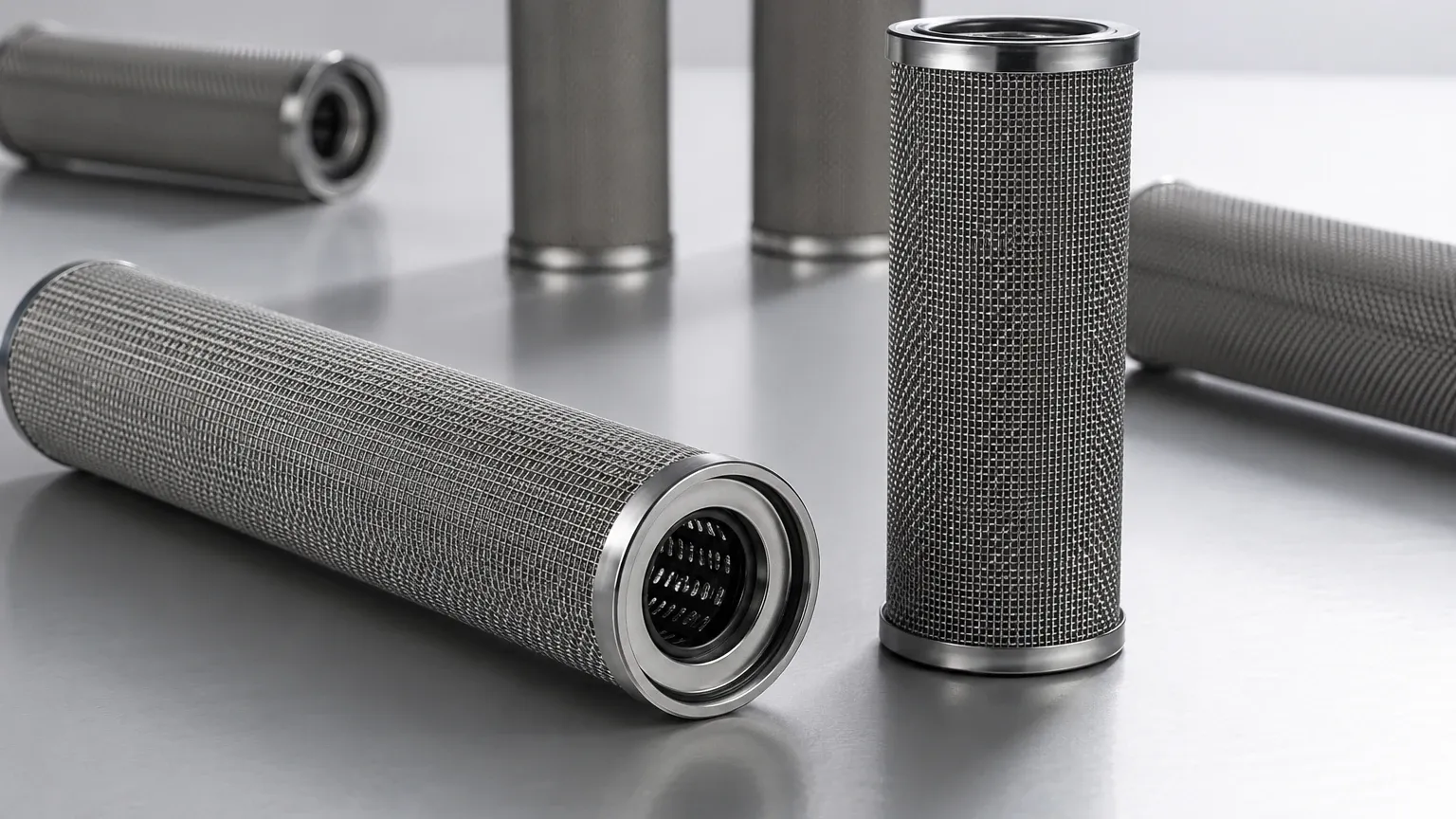
By manufacturing Filter Cartridges that adhere to strict ISO testing standards (such as ISO 2941 for collapse resistance and ISO 16889 for multi-pass performance), manufacturers can provide reliable alternatives that reduce operational expenses without risking machine downtime.
Common Challenges in Hydraulic System Contamination Control
Even with the correct filter element 0015 d 010 bn4hc installed, systems can face challenges that compromise filtration efficiency. Recognizing these issues is essential for maintaining optimal fluid health.
Cold Start Conditions
In cold environments, hydraulic fluid viscosity increases significantly. This can lead to a high pressure drop across the filter element, potentially triggering the bypass valve and allowing unfiltered fluid to circulate. Engineers should consider elements with higher flow areas or specialized bypass settings to mitigate this risk.
Fluid Compatibility
While BN4HC media is compatible with most mineral-based oils, certain synthetic fluids or water-glycol mixtures may require different seal materials, such as Viton (FKM) instead of the standard Buna-N (NBR). Ensuring that the O-rings and adhesives used in the element construction are compatible with the system fluid is a critical step in the selection process.
Particle Ingress and Breather Maintenance
Filtration is a reactive process; reducing the amount of dirt that enters the system is proactive. If a filter element 0015 d 010 bn4hc is clogging more frequently than expected, it may indicate a failure in the reservoir breathers or cylinder seals. A holistic approach to contamination control involves protecting the filter as much as the filter protects the system.
Maintenance and Replacement Strategies
The lifecycle of a filter element is determined by the environment and the system's operational intensity. Relying on fixed calendar dates for replacement often leads to either wasted resources (replacing a clean filter) or system risk (operating a clogged filter).
Differential Pressure Monitoring
The most effective way to determine when to replace the filter element 0015 d 010 bn4hc is through differential pressure indicators. These devices, which can be visual or electrical, signal when the element has reached its dirt-holding limit. For critical systems, integrating these indicators into the PLC (Programmable Logic Controller) allows for real-time monitoring and automated maintenance alerts.
Fluid Analysis
Regular oil analysis provides a window into the effectiveness of the filtration system. If the particle count (ISO 4406) remains high despite regular filter changes, it may be time to move to a finer micron rating or evaluate the structural integrity of the filter housing and bypass valves.
Engineering Considerations for Custom Filtration Solutions
In some industrial scenarios, standard glass fiber elements like the 0015 D 010 BN4HC may not be the optimal choice. This is where custom engineering and material selection become vital. At Kaifil, we often work with clients to transition from disposable media to cleanable, durable stainless steel solutions.
* High-Temperature Applications: Standard elements often use epoxy resins that can degrade at temperatures exceeding 100°C. All-welded stainless steel cartridges eliminate the need for adhesives, allowing for operation in extreme heat.
* Corrosive Environments: In chemical processing or offshore applications, the outer cage and end caps of the filter must be resistant to corrosion. Utilizing 304 or 316L stainless steel ensures the element does not become a source of contamination itself.
* Backwashing and Cleaning: For systems where frequent element replacement is logistically difficult or environmentally costly, customized wire mesh elements can be designed for backwashing or ultrasonic cleaning, significantly extending the service life of the component.
When selecting or designing Filter Cartridges, engineers must weigh the initial investment against the long-term benefits of durability and reduced waste. The filter element 0015 d 010 bn4hc serves as an excellent benchmark for performance, but the specific demands of the industrial environment should always dictate the final material and design specifications.
