


Zero Filter Cartridge
In industrial filtration, the term "zero" often signifies a threshold of performance where bypass, residue, or contamination is engineered out of the process. A zero filter cartridge is a specialized component designed to meet these stringent requirements, ensuring that 100% of the process fluid passes through the filtration media without leakage or "heel" retention. For engineers and procurement teams in the chemical, pharmaceutical, and food processing sectors, selecting a zero filter cartridge involves a deep understanding of mechanical seals, material science, and fluid dynamics.
At Kaifil, we recognize that industrial filtration is not merely about removing particles; it is about process integrity. High-performance Filter Cartridges are the backbone of systems where even a microscopic bypass can lead to batch rejection or downstream equipment damage. This guide explores the technical nuances of the zero filter cartridge, its construction, and the engineering criteria essential for optimized industrial application.
The Engineering Principles of Zero-Bypass Filtration
The primary objective of a zero filter cartridge is the elimination of bypass. In standard filtration setups, bypass often occurs at the interface between the cartridge and the housing. If the sealing mechanism fails or is improperly seated, unfiltered fluid can take the path of least resistance, bypassing the media entirely.
To achieve a "zero" bypass state, these cartridges typically utilize advanced sealing configurations. Common designs include the 222 or 226 O-ring interfaces. The 226 design, in particular, features a locking tab mechanism that ensures the cartridge is physically locked into the housing, preventing it from unseating during pressure surges. The use of high-grade elastomers—such as Viton, EPDM, or PTFE-encapsulated silicone—ensures chemical compatibility and a gas-tight seal under varying thermal conditions.
Furthermore, the structural integrity of the cartridge itself must be absolute. In stainless steel variants, TIG (Tungsten Inert Gas) welding is preferred over adhesives or resins. Adhesives can degrade when exposed to aggressive solvents or high temperatures, creating micro-fissures that allow bypass. A fully welded zero filter cartridge maintains its geometric stability even under high differential pressures, ensuring that the defined micron rating is consistently applied to the entire flow.
Material Selection: Why Stainless Steel Dominates
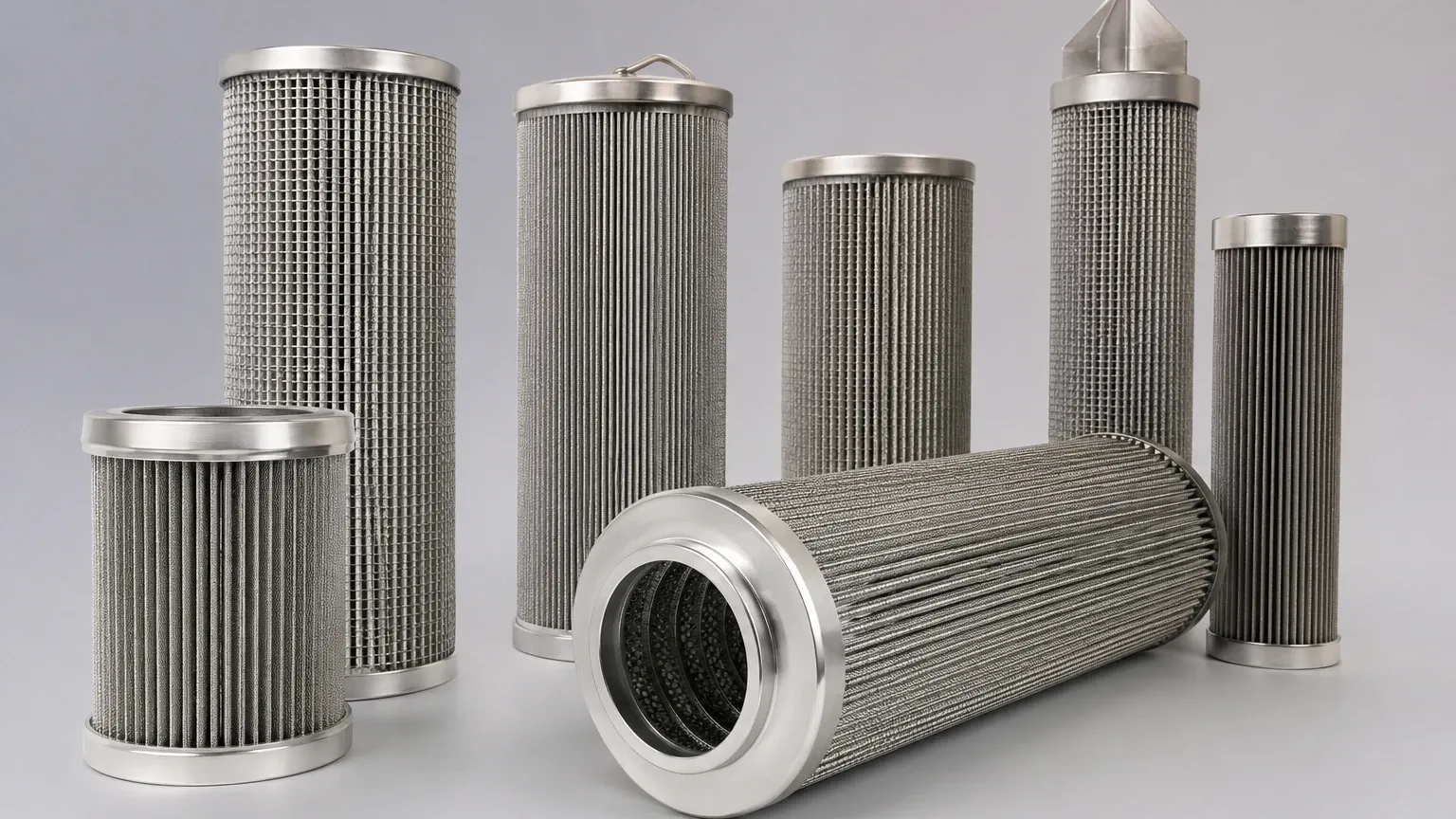
While polymer-based cartridges are common in light-duty applications, the industrial zero filter cartridge is almost exclusively constructed from stainless steel, typically 304 or 316L grades. The choice of material is dictated by three primary factors: durability, cleanability, and chemical resistance.
316L Stainless Steel for Corrosive Environments
316L stainless steel, with its low carbon content and addition of molybdenum, offers superior resistance to pitting and crevice corrosion. This is critical in chemical processing and marine applications where the fluid may contain chlorides or acidic compounds. A zero filter cartridge made from 316L ensures that the filtration media does not become a source of contamination through metallic leaching or structural failure.
Sintered Metal vs. Wedge Wire
Engineers must choose between different media types based on the nature of the solids being removed:
- Sintered Wire Mesh: Created by fusing multiple layers of stainless steel wire cloth through a heat-treatment process. This creates a robust, fixed-pore structure that provides precise filtration ratings. It is ideal for applications requiring high-efficiency removal of fine particulates.
- Wedge Wire: Constructed from V-shaped profiles welded onto support rods. This design is exceptionally strong and resistant to clogging, making it the preferred choice for "zero-residue" systems where backwashing or mechanical cleaning is frequent.
Key Applications for Zero Filter Cartridges
The implementation of a zero filter cartridge is often a regulatory or safety requirement in specific industries. Where product purity is non-negotiable, these components provide the necessary fail-safe.
Pharmaceutical and Biotechnology
In pharmaceutical manufacturing, the recovery of expensive active pharmaceutical ingredients (APIs) is paramount. A zero-residue filtration system ensures that no valuable product is left as a "heel" in the bottom of the filter housing. Stainless steel cartridges are also compatible with SIP (Steam-in-Place) and Autoclave sterilization, which are mandatory for maintaining aseptic conditions.
Food and Beverage Clarification
In the production of high-end spirits, oils, and syrups, clarity is a primary quality indicator. A zero filter cartridge ensures that no yeast cells, proteins, or polishing agents bypass the filter. The use of food-grade stainless steel prevents the migration of odors or flavors, preserving the organoleptic properties of the product.
Chemical and Petrochemical Processing
In catalyst recovery and polymer filtration, the environment is often characterized by high temperatures and aggressive solvents. A zero filter cartridge provides the thermal stability required to operate at temperatures exceeding 250°C, where standard plastic filters would melt or deform. The zero-bypass seal prevents hazardous materials from reaching sensitive downstream instruments.
Performance Evaluation and Selection Criteria
Selecting the right zero filter cartridge requires more than just matching a micron rating. Engineers must evaluate the following performance metrics to ensure long-term reliability.
Micron Rating and Efficiency
It is essential to distinguish between nominal and absolute micron ratings. A nominal rating indicates the ability to trap a percentage of particles, whereas an absolute rating (often validated via the Beta Ratio test) guarantees the retention of particles above a specific size. For a zero filter cartridge, an absolute rating is typically required to ensure process consistency.
Differential Pressure (ΔP)
As the filter cake builds up on the surface of the media, the differential pressure increases. A well-designed cartridge should have a high collapse pressure rating. For instance, Kaifil’s stainless steel cartridges are engineered to withstand significant ΔP without deforming, allowing for longer run times before cleaning or replacement is necessary.
Flow Velocity and Viscosity
The viscosity of the fluid significantly impacts the flow rate through the cartridge. High-viscosity fluids require more surface area or a coarser media to maintain an acceptable flow rate. Engineers should calculate the flux (flow per unit area) to prevent premature blinding of the filter media.
Maintenance, Cleaning, and Replacement Cycles
One of the primary advantages of a stainless steel zero filter cartridge is its reusability. Unlike disposable depth filters, metal cartridges can be cleaned and returned to service, significantly reducing the total cost of ownership.
Cleaning Methodologies
- Backwashing: Reversing the flow of fluid to dislodge particles from the surface of the media. This is highly effective for wedge wire and surface-filtration sintered mesh.
- Ultrasonic Cleaning: Using high-frequency sound waves in a cleaning solvent to remove deeply embedded particles within the pore structure of sintered metal.
- Chemical Cleaning: Circulating caustic or acidic solutions to dissolve organic or inorganic scaling. Stainless steel’s broad chemical compatibility makes this a versatile option.
Determining Replacement Cycles
While reusable, no filter lasts forever. Fatigue from repeated pressure cycling or the gradual accumulation of non-cleanable "irreversible" fouling will eventually necessitate replacement. Regular bubble point testing can verify the integrity of the cartridge, ensuring that the "zero bypass" capability remains intact. If a cartridge fails a bubble point test, it indicates that a pore has enlarged or a seal has failed, and the unit must be decommissioned.
Customization and Total Cost Considerations
Off-the-shelf filtration solutions often fall short in specialized industrial environments. Customization is frequently required to integrate a zero filter cartridge into existing piping or to handle unique fluid characteristics.
OEM and Tailored Designs
Customization options include varying the length of the cartridge, modifying the end-cap configuration (e.g., DOE, SOE, NPT threads), or adding internal support cores for high-pressure applications. By working with a manufacturer like Kaifil, engineers can specify the exact mesh weave and layer count to balance filtration efficiency with dirt-holding capacity.
Analyzing Total Cost of Ownership (TCO)
When evaluating the cost of a zero filter cartridge, the initial purchase price is only one component. A comprehensive TCO analysis includes:
1. Operational Downtime: How often does the system need to be stopped for cleaning?
2. Product Loss: Does the "zero-residue" design significantly increase product yield?
3. Disposal Costs: Reusable stainless steel filters eliminate the waste disposal costs associated with contaminated polymer cartridges.
4. Energy Consumption: A filter with a lower clean ΔP requires less pump energy to maintain flow.
Conclusion
The zero filter cartridge represents the pinnacle of industrial filtration reliability. By focusing on robust mechanical seals, high-grade stainless steel construction, and precise media engineering, these components allow manufacturers to achieve levels of purity and recovery that are impossible with standard filtration products. Whether the goal is protecting sensitive downstream equipment or ensuring the safety of a pharmaceutical batch, the technical integrity of the cartridge is the deciding factor in process success.
For technical professionals seeking to optimize their filtration systems, understanding these variables is the first step toward achieving a truly efficient and reliable operation. Selecting the right Filter Cartridges is not just a procurement task—it is an engineering decision that impacts the entire production lifecycle.
