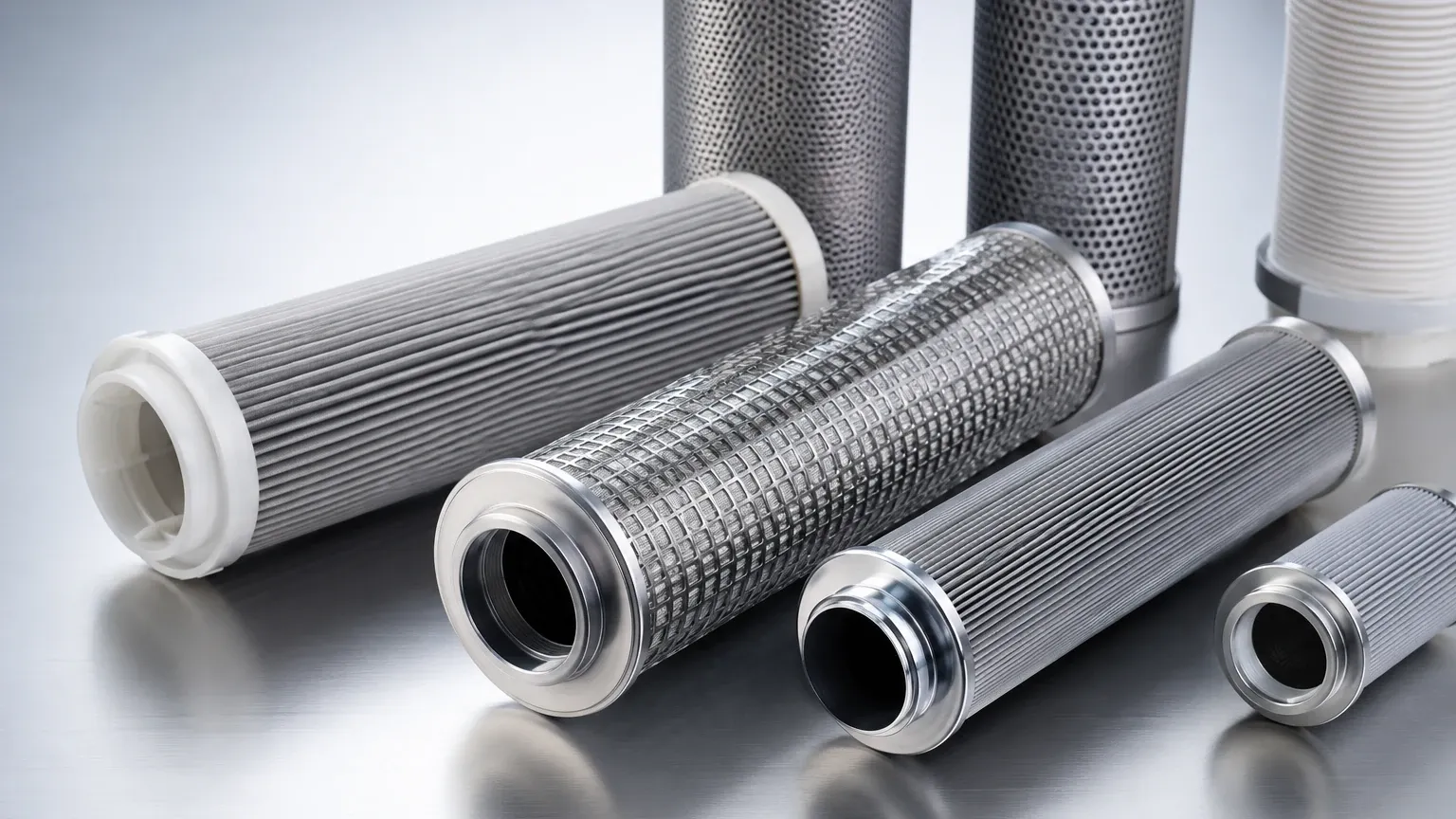
Water Filter Cartridge 0.5 Micron
In industrial water treatment and process engineering, the selection of a water filter cartridge 0.5 micron rating represents a critical threshold between standard sediment removal and high-precision microbial or particulate control. Achieving consistent results at the sub-micron level requires an understanding of fluid dynamics, material science, and the specific mechanical constraints of the filtration housing. For engineers and procurement teams, specifying a 0.5-micron solution involves more than just selecting a pore size; it requires evaluating the distinction between nominal and absolute ratings, the structural integrity of the filter media, and the total cost of ownership over the component's lifecycle.
Understanding the 0.5 Micron Rating: Absolute vs. Nominal
The effectiveness of a water filter cartridge 0.5 micron depends heavily on how the manufacturer defines the micron rating. In industrial contexts, the distinction between nominal and absolute filtration is paramount for process reliability.
1. Nominal Rating: A nominal rating indicates that the filter can trap a large percentage of particles of a given size (typically 60% to 85%). For non-critical applications, such as general sediment reduction in cooling towers, a nominal 0.5-micron filter may suffice. However, it allows a significant portion of sub-micron particles to bypass the media under pressure surges.
2. Absolute Rating: An absolute rating implies a much higher efficiency, often 99.9% or greater (Beta Ratio of 1000). In pharmaceutical or food and beverage processing, an absolute 0.5-micron rating is often required to ensure the removal of specific contaminants like *Cryptosporidium* or *Giardia* cysts, which typically range from 3 to 5 microns but can be compressed through larger pores.
When evaluating Filter Cartridges, technical teams must confirm the Beta Ratio associated with the 0.5-micron claim. A filter with a Beta 1000 rating at 0.5 microns provides a level of security that a nominal filter cannot match, particularly in protecting sensitive downstream equipment like reverse osmosis (RO) membranes or high-pressure spray nozzles.
Material Science in Sub-Micron Filtration
The material used to construct a 0.5-micron filter cartridge dictates its chemical compatibility, thermal stability, and mechanical strength. While polymer-based depth filters are common, industrial environments often demand the robustness of metallic solutions.
Polypropylene and Synthetic Media
Polypropylene (PP) is widely used for disposable 0.5-micron cartridges. These are typically depth filters, where the density of the fibers increases toward the center core. While cost-effective for one-time use, they are susceptible to "media migration" and can off-gas or leach chemicals if not properly graded for the specific fluid. They also have limited temperature resistance, usually capping at 60°C to 80°C.
Stainless Steel and Sintered Metal
For demanding industrial applications, stainless steel (304 or 316L) is the preferred material. Achieving a 0.5-micron rating in metal is accomplished through advanced manufacturing techniques such as sintering. Sintered metal fiber felt or multi-layer wire mesh provides a rigid pore structure that does not deform under high differential pressure.
Kaifil specializes in these high-performance metal solutions, where the stainless steel structure offers several advantages:
* Thermal Resistance: Ability to operate in temperatures exceeding 250°C.
* Chemical Compatibility: Resistance to aggressive solvents, acids, and caustic cleaning agents.
* Structural Integrity: Prevention of "unloading," where trapped particles are forced through the media as pressure builds.
Key Industrial Applications for 0.5 Micron Filtration
The 0.5-micron threshold is a standard requirement across several high-stakes industries where water purity directly impacts product quality or equipment longevity.
1. Food and Beverage Processing
In the beverage industry, water used for dilution or rinsing must be free of spoilage organisms. A 0.5-micron absolute filter serves as an effective biological barrier. It is frequently used as a final polish for bottled water or as a pre-filter to protect UV sterilization systems from particulate shadowing, which can hide bacteria from lethal UV doses.
2. Pharmaceutical and Biotech
Pharmaceutical manufacturing requires ultrapure water (UPW). Here, the 0.5-micron cartridge acts as a critical pre-filtration stage for deionization (DI) resin beds and RO membranes. By removing fine colloids and suspended solids at this stage, facilities can significantly extend the life of more expensive membrane elements.
3. Chemical and Petrochemical Refining
In chemical processing, water is often used as a solvent or a cooling medium. Fine particulates can catalyze unwanted side reactions or cause abrasion in high-speed pumps. Stainless steel 0.5-micron filters are particularly valued here for their ability to withstand the harsh chemical environments that would degrade synthetic polymers.
Engineering Considerations: Pressure Drop and Flow Dynamics
One of the most common challenges when implementing a water filter cartridge 0.5 micron is managing the trade-off between filtration fineness and flow resistance. As the pore size decreases, the resistance to fluid flow (differential pressure or Delta P) increases.
Initial Clean Pressure Drop
Engineers must calculate the initial pressure drop to ensure the system pump can handle the load. A 0.5-micron filter will inherently have a higher clean pressure drop than a 5-micron or 10-micron filter of the same dimensions. To compensate for this, engineers often increase the surface area of the filter by using pleated designs or by installing multiple cartridges in a larger housing manifold.
Dirt Holding Capacity (DHC)
Fine filters can blind (clog) quickly if the influent water has a high silt density index (SDI). In industrial design, it is rarely advisable to use a 0.5-micron filter as the primary stage for raw water. Instead, a graduated filtration approach—using 20-micron and 5-micron pre-filters—is employed to protect the 0.5-micron cartridge, ensuring it only handles the finest particles it was designed to capture. This optimization maximizes the DHC and extends the interval between maintenance cycles.
Evaluating Total Cost of Ownership (TCO)
When specifying filtration components, the purchase price is only a fraction of the total cost. For a water filter cartridge 0.5 micron, the TCO is influenced by three main factors: replacement frequency, labor costs, and disposal fees.
* Disposable vs. Cleanable: Synthetic 0.5-micron cartridges are typically disposable. While their unit cost is low, the cumulative cost of frequent replacements, system downtime, and hazardous waste disposal can be substantial.
* The Metal Advantage: Stainless steel cartridges, while requiring a higher initial investment, are often cleanable. Through backwashing, ultrasonic cleaning, or chemical immersion, these filters can be restored to near-original performance. In high-volume industrial processes, a cleanable stainless steel filter can pay for itself within months by eliminating the recurring cost of consumables.
* System Downtime: Every time a filter needs to be changed, the process line must be depressurized and opened. High-quality 0.5-micron filters with high structural integrity reduce the frequency of bypass events and unscheduled maintenance, contributing to overall plant OEE (Overall Equipment Effectiveness).
Customization and OEM Solutions for Specialized Filtration
Standard off-the-shelf filter cartridges often fail to meet the specific spatial or mechanical requirements of custom industrial machinery. This is where OEM customization becomes vital. Factors such as specialized end-cap configurations (DOE, Code 7, or custom threaded fittings), non-standard lengths, and reinforced internal cores for high-viscosity fluids must be considered.
Kaifil provides tailored engineering support to develop Filter Cartridges that align with specific housing geometries and flow requirements. Whether the application involves high-pressure hydraulic water or precision chemical dosing, the ability to customize the wire mesh weave or the sintering density allows for a 0.5-micron solution that is optimized for the specific particulate profile of the process water.
Final Technical Checklist for Procurement
Before finalizing a purchase order for 0.5-micron filtration components, technical professionals should confirm the following parameters with their supplier:
1. Efficiency Verification: Request the test data for the 0.5-micron rating. Is it validated using ISO or ASTM standards?
2. Housing Compatibility: Ensure the cartridge seal (O-ring or gasket) material is compatible with the process fluid. Common materials include Viton, EPDM, and PTFE.
3. Maximum Differential Pressure: Determine the "collapse pressure" of the cartridge. This is the point at which the structural integrity fails, potentially contaminating the downstream flow.
4. Flow Rate vs. Surface Area: Verify that the flux rate (gallons per minute per square foot of media) is low enough to prevent premature surface blinding.
By focusing on these technical benchmarks rather than just the nominal micron size, engineering teams can implement a 0.5-micron filtration strategy that enhances process reliability, protects downstream assets, and optimizes the long-term operational budget.