


Woven Wire Mesh Architecture: An Engineering Perspective on Selection and Performance
In the realm of industrial design and structural engineering, woven wire mesh architecture has transitioned from a purely functional filtration and screening component to a sophisticated material used in complex architectural systems. While its aesthetic appeal is undeniable, the selection of woven wire mesh for architectural applications requires a rigorous technical understanding of material properties, weave structures, and environmental resistance. For engineers and procurement professionals, the challenge lies in balancing visual requirements with structural integrity and long-term durability.
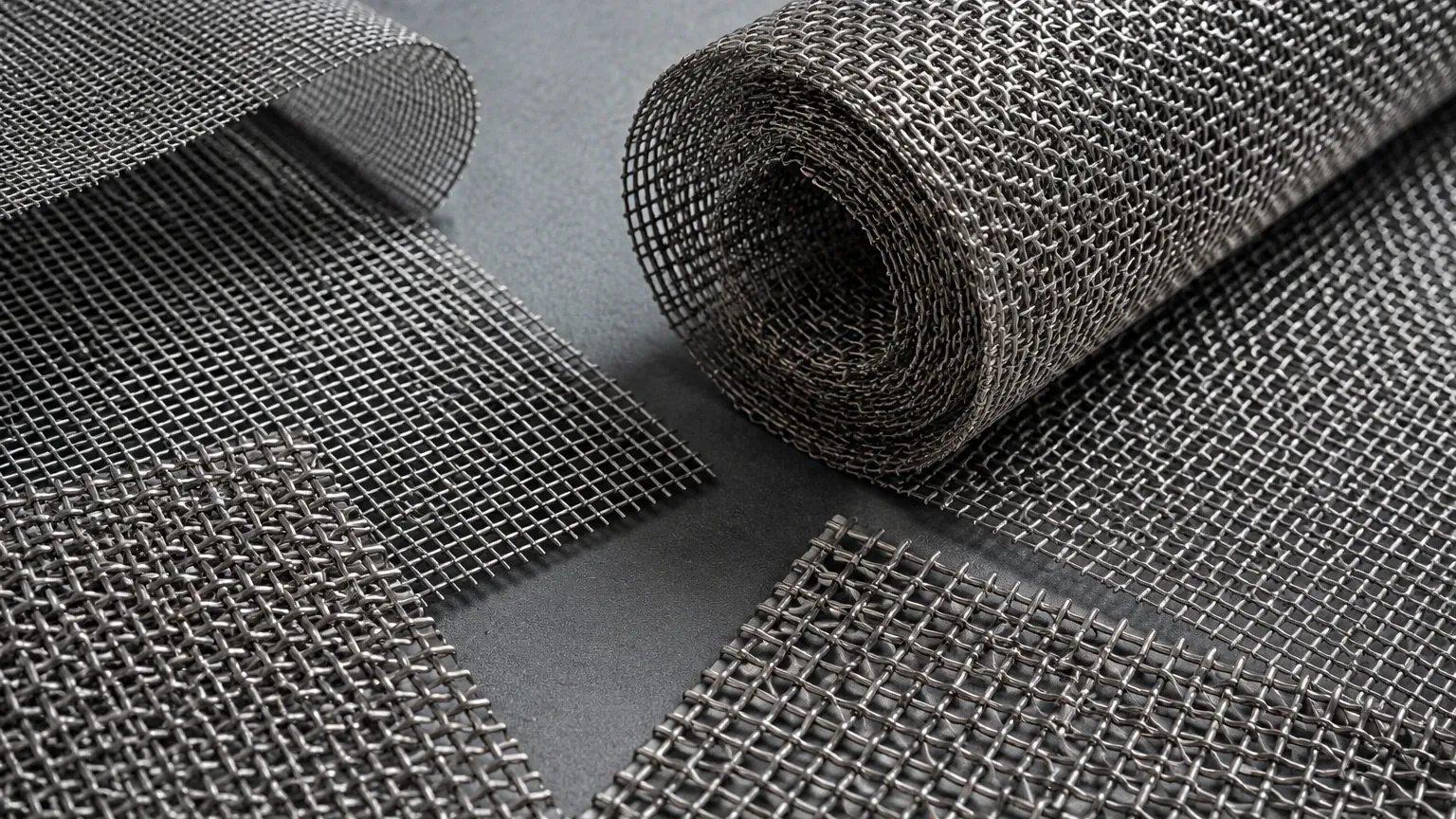
At its core, Woven Wire Mesh is a precision-engineered fabric created by interlacing metallic wires on industrial looms. When applied to architecture, these materials must meet stringent performance standards that go beyond standard filtration needs, encompassing wind load resistance, transparency ratios, and corrosion limits. This guide explores the technical parameters that define high-performance architectural mesh and the critical factors involved in its specification.
Technical Fundamentals of Woven Wire Mesh
To specify the correct mesh for an architectural project, one must first understand the variables that dictate the material's behavior. Unlike standard perforated sheets or expanded metal, woven wire mesh offers a unique combination of flexibility and strength due to the mechanical interlocking of the wires.
Material Selection: SS304 vs. SS316L
In woven wire mesh architecture, stainless steel is the industry standard due to its mechanical properties and resistance to atmospheric corrosion. However, the specific grade chosen is critical:
* Type 304 Stainless Steel: This is the most common grade for interior applications. It offers excellent strength and good corrosion resistance for controlled environments. It is often used for interior partitions, ceiling panels, and wall cladding where exposure to moisture and salts is minimal.
* Type 316L Stainless Steel: For exterior facades, balustrades, or projects in coastal and industrial environments, 316L is mandatory. The addition of molybdenum and a lower carbon content provides superior resistance to pitting and crevice corrosion caused by chlorides and environmental pollutants.
Weave Patterns and Their Structural Impact
The weave pattern determines both the visual transparency and the physical rigidity of the mesh. Common patterns used in architectural contexts include:
1. Plain Weave: The simplest and most common weave where each warp wire (running vertically) passes over and under each weft wire (running horizontally). This provides a uniform appearance and stable open areas.
2. Twill Weave: Each warp wire passes over and under two weft wires. This allows for heavier wire diameters in a given mesh count, increasing the overall strength and weight of the panel.
3. Dutch Weave: Primarily used in high-pressure filtration, Dutch weaves are increasingly used in architecture for their unique "three-dimensional" appearance and high density, which can provide effective sun shading while maintaining a sleek metallic finish.
4. Cable Mesh: Utilizing multi-strand cables for the warp and solid rods for the weft, this configuration provides high tensile strength in one direction and flexibility in the other, making it ideal for large-scale exterior facades.
Performance Metrics in Architectural Applications
Engineers must evaluate several performance metrics to ensure the mesh meets the project's functional requirements. These metrics are often interrelated; for example, increasing the wire diameter to improve strength will simultaneously decrease the open area.
Open Area and Transparency
The "Percent Open Area" is a critical calculation in woven wire mesh architecture. It is defined as the ratio of the area of the openings to the total area of the mesh. In architectural facades, this percentage dictates:
* Natural Ventilation: High open area percentages (typically 40% to 70%) allow for natural airflow, reducing the energy load required for HVAC systems in parking garages or building envelopes.
* Light Diffusion: The mesh acts as a secondary skin, diffusing direct sunlight to reduce glare and solar heat gain while maintaining visibility from the interior.
* Visual Privacy: Depending on the viewing angle and lighting conditions, mesh can appear opaque from the outside while remaining transparent from the inside.
Tensile Strength and Load Bearing
For applications like safety balustrades or fall protection, the mesh must withstand specific point loads and impact forces. Engineers must confirm the tensile strength of the individual wires and the overall breaking strength of the woven fabric. Factors such as the wire diameter and the number of wires per inch (mesh count) are the primary drivers of structural performance.
Engineering Considerations for Exterior Facades
When woven wire mesh is used as an exterior building envelope, it is subjected to dynamic environmental forces that do not affect interior installations. Addressing these factors during the design phase is essential to prevent premature failure.
Wind Load and Vibration
Large-scale mesh panels act as sails. Engineers must calculate the wind load based on the mesh's open area and the local wind speeds. Furthermore, wire mesh can be prone to harmonic vibration if not properly tensioned. The use of intermediate support tubes and specialized tensioning hardware (such as springs and clevis bolts) is necessary to dampen vibrations and distribute loads evenly across the building’s substructure.
Thermal Expansion and Contraction
Stainless steel has a significant coefficient of thermal expansion. In large exterior installations, the mesh will expand in the heat and contract in the cold. If the mounting system is too rigid, this movement can lead to buckling or excessive stress on the attachment points. Flexible mounting solutions or spring-loaded tensioning systems are typically employed to accommodate these fluctuations.
Interior Applications and Functional Design
In interior woven wire mesh architecture, the focus shifts toward acoustics, safety, and spatial definition. The material’s ability to be formed and framed allows it to integrate seamlessly into various architectural elements.
Acoustic Management
While metal mesh is inherently reflective, it can be used as a decorative facing for acoustic absorption materials. In ceiling applications, mesh panels allow sound waves to pass through to acoustic blankets hidden above, providing a clean, industrial aesthetic without sacrificing sound quality in high-traffic areas like lobbies or auditoriums.
Safety and Security
Woven mesh is an ideal material for security screens and elevator interiors. Its resistance to scratching and denting makes it suitable for high-use environments. Furthermore, because it is woven rather than welded, it maintains a degree of flexibility that allows it to absorb impacts without permanent deformation.
Installation and Customization Options
Successful implementation of woven wire mesh requires a collaborative approach between the manufacturer and the installation team. Customization is often necessary to meet the specific geometry of a building.
Framing and Edge Treatments
The edges of woven wire mesh are naturally prone to fraying if not properly secured. Common edge treatments include:
* U-Edging: A metal channel is welded or mechanically fastened around the perimeter of the mesh panel.
* Hemming: The edges of the mesh are folded over to provide a smooth, finished edge.
* Integrated Rods: For tensioned systems, heavy rods are woven into the top and bottom of the mesh to provide a secure attachment point for tensioning hardware.
Surface Finishes
While the natural metallic luster of stainless steel is often preferred, various finishes can be applied to achieve specific design goals. These include electropolishing for enhanced corrosion resistance and brightness, PVD (Physical Vapor Deposition) coating for metallic colors (gold, bronze, black), and powder coating for specific RAL colors.
Risk Mitigation and Quality Assurance
Procuring architectural mesh involves identifying potential risks early in the process. Technical professionals should verify the following before finalizing a specification:
1. Alloy Verification: Ensure the manufacturer provides material test reports (MTRs) to confirm the chemical composition of the stainless steel, particularly for 316L applications.
2. Weave Consistency: In architectural projects, visual uniformity is paramount. Inconsistent wire tension during the weaving process can lead to "shadowing" or visible streaks in the mesh.
3. Tensioning Requirements: For large panels, the manufacturer should provide recommended tensioning forces to ensure the mesh remains taut under environmental loads.
4. Compatibility of Hardware: All mounting hardware (bolts, clips, springs) should be made of the same grade of stainless steel as the mesh to prevent galvanic corrosion.
Maintenance and Long-Term Durability
One of the primary advantages of stainless steel woven wire mesh is its low maintenance requirement. However, "low maintenance" does not mean "no maintenance." In exterior environments, atmospheric pollutants and salts can accumulate on the wire surfaces. If not washed away by rain, these deposits can lead to localized corrosion.
Regular cleaning cycles—typically once or twice a year depending on the environment—using pressurized water and mild detergents are usually sufficient to maintain the material's integrity. For interior applications, simple dusting or vacuuming is often all that is required.
Total Cost of Ownership (TCO)
When evaluating woven wire mesh against alternative materials like glass or perforated aluminum, it is important to consider the total cost of ownership. While the initial material cost of high-grade stainless steel mesh may be higher, its lifespan often exceeds 30 to 50 years with minimal upkeep. Additionally, its contribution to energy savings through solar shading and natural ventilation can provide a significant return on investment over the building's lifecycle.
Conclusion
Woven wire mesh architecture represents a perfect intersection of industrial utility and design innovation. By understanding the technical nuances of weave patterns, material grades, and structural requirements, engineers can leverage this material to create building envelopes and interiors that are as durable as they are visually striking. Whether the goal is to provide fall protection, manage solar heat gain, or define an interior space, selecting the right mesh configuration is the key to project success.
For technical assistance in selecting the appropriate specifications for your next project, Plain, twill and dutch woven wire mesh in SS304/316L — rolls, cut mesh and framed panels. Send mesh count or micron target for a technical quote. to ensure your filtration or architectural needs are met with precision-engineered solutions.
