


10 Water Filter Cartridges
In industrial fluid processing, standardization is essential for maintaining system compatibility and operational efficiency. Among the most widely utilized configurations in liquid processing are 10 water filter cartridges. These components, typically measuring approximately 10 inches in length (with nominal variations such as 9.75 inches depending on the housing standard), serve as a modular building block for filtration systems across the chemical, pharmaceutical, and food and beverage sectors.
Selecting the appropriate cartridge requires a deep understanding of fluid dynamics, material science, and the specific contaminants present in the process stream. For engineers and procurement teams, the choice between disposable polymeric media and reusable stainless steel components often dictates the total cost of ownership and the long-term reliability of the filtration system.
Understanding the 10-Inch Standard in Industrial Filtration
The term "10-inch" refers to the nominal length of the filter element. In industrial applications, these cartridges are designed to fit into standard single-round or multi-round filter housings. While the length is standardized, the end-cap configuration is a critical variable that must be confirmed before procurement. Common configurations include:
* Double Open End (DOE): Features gaskets at both ends, requiring a spring or compression nut within the housing to ensure a seal.
* Code 7 (226 O-ring/Fin): Utilizes a bayonet-style locking mechanism with double O-rings to prevent bypass in high-purity applications.
* Code 3 (222 O-ring/Flat): Features a double O-ring seal without the locking tabs, common in lower-pressure liquid systems.
When evaluating 10 water filter cartridges, the interface between the cartridge and the housing is the most frequent point of failure. A mismatch in end-cap style or gasket material can lead to fluid bypass, effectively rendering the filtration process useless. Engineers must verify that the selected Filter Cartridges match the internal hardware of their existing pressure vessels.
Material Selection: The Case for Stainless Steel
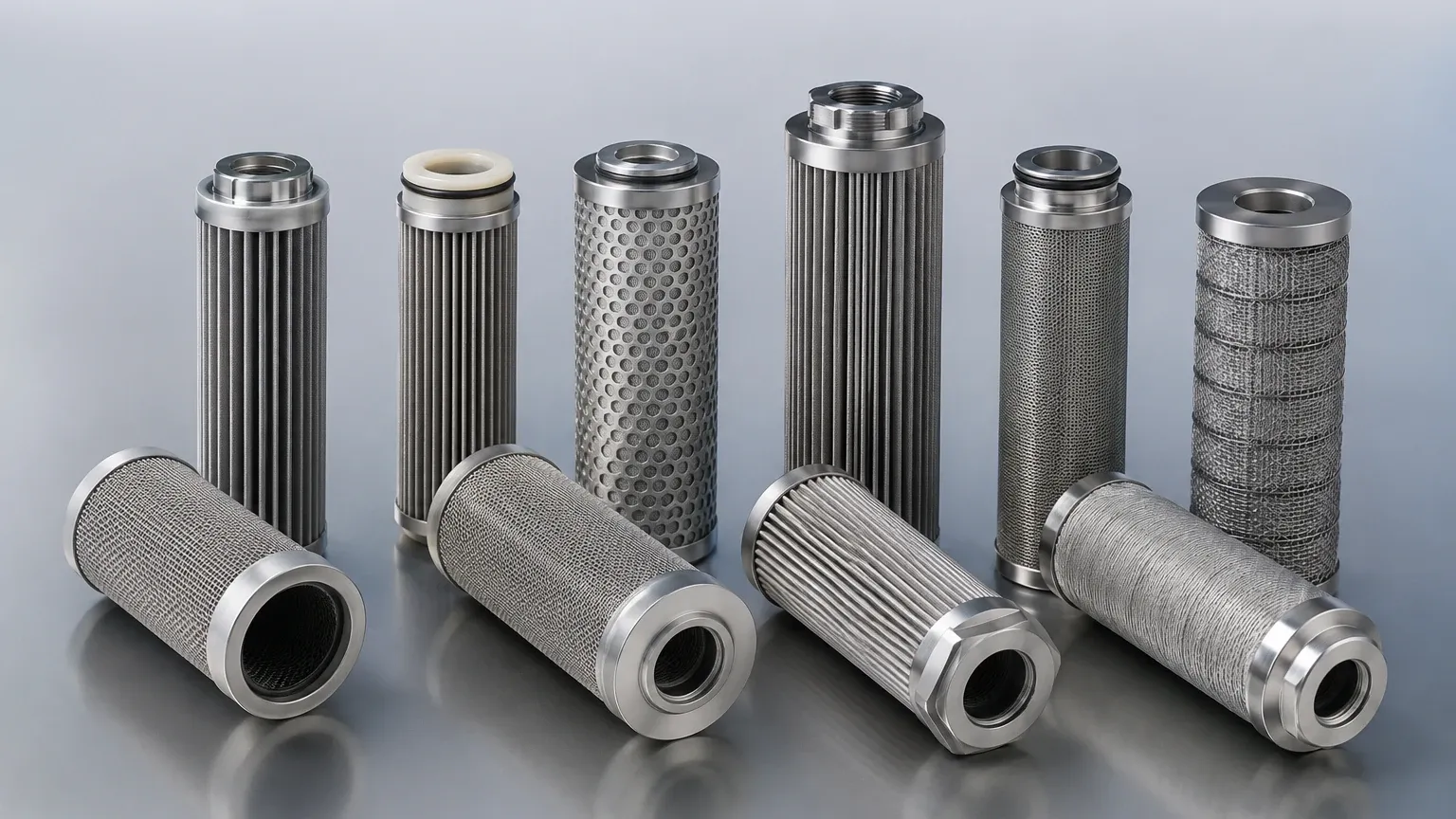
While many industrial facilities initially utilize polypropylene or pleated paper cartridges due to lower upfront costs, demanding environments often necessitate the transition to metallic media. Stainless steel filter cartridges, particularly those manufactured from 304 or 316L alloys, offer distinct advantages in industrial water treatment and process fluid applications.
Temperature and Pressure Resistance
Polymeric filters often face structural limitations when temperatures exceed 60°C (140°F) or when differential pressures spike. In contrast, stainless steel wire mesh or sintered metal fiber cartridges can withstand temperatures exceeding 250°C and maintain structural integrity under high-pressure surges. This makes them ideal for steam filtration, hot condensate recovery, and high-viscosity fluid processing.
Chemical Compatibility
In chemical processing, the presence of solvents, corrosive agents, or extreme pH levels can degrade plastic filters, leading to media migration—where the filter material itself becomes a contaminant. Stainless steel provides superior resistance to a broad spectrum of chemicals, ensuring that the filtered effluent remains pure and the filter element does not leach extractables into the process stream.
Cleanability and Sustainability
One of the primary drivers for selecting stainless steel 10 water filter cartridges is their reusability. Unlike disposable depth filters that must be sent to landfills once saturated, stainless steel mesh can be cleaned via backwashing, ultrasonic cleaning, or chemical baths. This reduces the recurring procurement costs and the environmental impact associated with high-volume filter disposal.
Technical Parameters for Evaluation: Flow, Pressure, and Efficiency
When specifying filtration components, engineers must look beyond the nominal dimensions. The performance of a filter is defined by its interaction with the specific fluid it is processing.
Micron Rating: Absolute vs. Nominal
A "nominal" rating indicates that the filter will trap a certain percentage of particles at that size, whereas an "absolute" rating (often defined by a Beta Ratio of 5000 or 99.9% efficiency) guarantees that no particles larger than the specified micron size will pass through. For critical applications like pharmaceutical water or final product polishing, absolute-rated stainless steel mesh is often the preferred choice to ensure consistency.
Clean Pressure Drop (Delta P)
Every filter introduces resistance to the flow. The "clean pressure drop" is the initial loss of pressure across the filter media. High-quality 10 water filter cartridges are designed with optimized pleating or mesh structures to maximize surface area, which minimizes the initial Delta P and extends the time between cleaning or replacement cycles.
Dirt Holding Capacity
This refers to the amount of contaminant a filter can retain before the pressure drop reaches a terminal point (the "change-out pressure"). In industrial water systems, a higher dirt-holding capacity reduces downtime. Stainless steel pleated designs significantly increase the available surface area compared to cylindrical mesh, providing a longer service life in high-solids applications.
Industrial Applications and Compatibility Considerations
The versatility of the 10-inch format allows it to be deployed in diverse industrial scenarios. However, the specific requirements of each industry dictate the necessary cartridge features.
Food and Beverage Processing
In this sector, filters must comply with stringent hygiene standards. Stainless steel cartridges are favored because they can be sterilized in place (SIP) using steam or hot water. They are commonly used for filtering bottled water, beer, and syrups, where removing yeast, molds, and fine particulates is essential for product stability.
Hydraulic and Lube Oil Systems
Industrial machinery relies on clean oil to prevent component wear. 10 water filter cartridges made of reinforced stainless steel mesh are used to remove metallic shavings and carbon deposits from high-pressure hydraulic lines. Their ability to resist collapse under high differential pressure is a critical safety feature in these systems.
Chemical and Petrochemical Production
Filtering aggressive catalysts or corrosive process water requires materials that will not oxidize or dissolve. 316L stainless steel provides the necessary molybdenum content to resist pitting corrosion in chloride-rich environments, a common challenge in industrial water cooling towers and brine filtration.
Maintenance, Cleaning, and Replacement Cycles
For B2B operations, the maintenance strategy for filtration is a key component of operational expenditure (OPEX). While stainless steel cartridges are durable, they are not indestructible. Establishing a rigorous maintenance protocol is necessary to maximize the lifespan of the investment.
1. Monitoring Differential Pressure: Industrial housings should always be equipped with upstream and downstream pressure gauges. A sudden drop in Delta P may indicate media rupture or a failed seal, while a rapid increase suggests heavy contaminant loading.
2. Standardized Cleaning Procedures: For stainless steel media, cleaning should be performed before the contaminants become "baked" onto the mesh. Ultrasonic baths are highly effective for removing fine particulates from within the pores of sintered or woven wire mesh.
3. Integrity Testing: In critical applications, cartridges should undergo regular integrity testing (such as bubble point testing) to ensure that the micron rating has not been compromised by mechanical wear or improper cleaning.
Customization and OEM Solutions for Specialized Requirements
Standard 10 water filter cartridges do not always meet the needs of unique industrial processes. In many cases, a custom-engineered solution is required to address specific challenges such as extreme flow rates, non-standard housing dimensions, or the need for specialized alloy constructions like Monel or Hastelloy.
Customization options often include:
* Variable Pleat Density: Adjusting the number of pleats to balance dirt-holding capacity with flow resistance.
* Reinforced Cores: Adding internal support structures to prevent cartridge collapse in high-viscosity or high-pressure applications.
* Custom End-Caps: Engineering bespoke fittings to integrate with proprietary or legacy filtration housings that do not follow standard 222 or 226 configurations.
Working with a manufacturer that understands these engineering nuances allows purchasing teams to move beyond off-the-shelf limitations and implement a filtration strategy tailored to their specific technical requirements.
Final Checklist for Procurement
Before finalizing an order for 10 water filter cartridges, technical professionals should confirm the following data points with their supplier:
* Fluid Characteristics: What is the viscosity, temperature, and chemical composition of the fluid?
* Contaminant Profile: Are the particles hard, deformable, or fibrous? What is the particle size distribution?
* Housing Compatibility: Does the cartridge end-cap exactly match the housing seat and seal requirements?
* Operational Limits: What is the maximum allowable pressure drop before the process must be halted?
* Certification Requirements: Does the application require FDA compliance for food contact or specific material certifications (e.g., 3.1 mill certificates) for traceability?
By addressing these factors, engineers can ensure they select a filtration solution that provides the necessary precision, durability, and cost-efficiency. Whether the goal is protecting downstream equipment or ensuring the purity of a final product, the right cartridge selection is the foundation of a successful industrial filtration process.
