


10 Inch Water Filter Cartridges
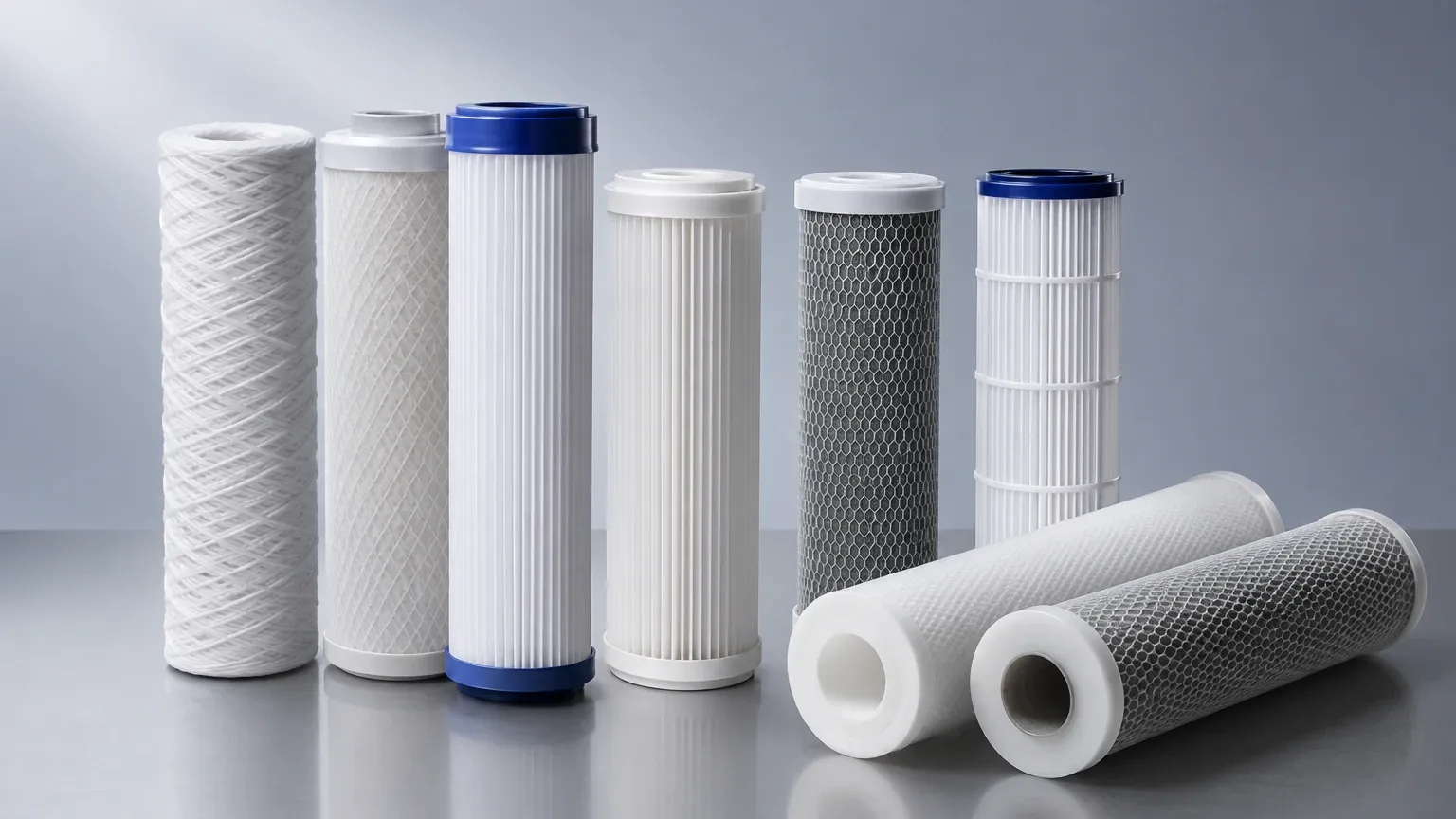
In the landscape of industrial fluid processing, the 10-inch format is one of the most widely recognized and utilized standards for filtration components. While residential systems often use this size for basic sediment removal, industrial-grade 10 inch water filter cartridges serve a much more rigorous purpose. These components are engineered to withstand high pressures, extreme temperatures, and corrosive chemical environments, providing a critical line of defense for downstream equipment and product purity.
For engineers and procurement professionals, selecting the correct Filter Cartridges involves more than just matching dimensions. It requires a deep understanding of material science, fluid dynamics, and the specific mechanical requirements of the application. This guide examines the technical nuances of 10-inch filtration solutions, focusing on industrial-grade stainless steel options and the criteria necessary for optimizing filtration performance.
The Role of 10-Inch Standard in Industrial Filtration
The "10-inch" designation typically refers to the nominal length of the filter element. In practice, the actual length may vary slightly depending on the end-cap configuration (such as DOE or Code 7), usually measuring approximately 9.75 to 10 inches. This standardization allows for a degree of interchangeability across different filter housing brands, which is essential for maintaining global supply chains and reducing downtime.
In industrial settings, 10 inch water filter cartridges are frequently used in multi-round housings. By clustering several 10-inch elements together, engineers can achieve high flow rates while maintaining a relatively small footprint. This modularity also allows for staged filtration, where different micron ratings are used in sequence to protect sensitive membranes or high-value catalysts.
Material Engineering: Stainless Steel vs. Polymer Media
While polypropylene and other polymers are common in low-demand water treatment, industrial applications often require the robustness of metal. Stainless steel 10-inch cartridges, manufactured by specialists like Kaifil, offer several distinct advantages:
Temperature Resistance
Polymer-based filters typically lose structural integrity as temperatures rise above 60°C (140°F). In contrast, 304 or 316L stainless steel cartridges can operate effectively at temperatures exceeding 230°C (450°F), making them indispensable for steam filtration, hot oil processing, and high-temperature chemical synthesis.
Chemical Compatibility
Industrial process water is rarely pure H2O. It often contains solvents, caustic cleaning agents, or acidic byproducts. Stainless steel provides superior resistance to a wide pH range and organic solvents that would cause polymer media to swell, degrade, or leach contaminants into the process stream.
Structural Integrity and Differential Pressure
In high-viscosity applications or systems prone to pressure surges, polymer filters may collapse or bypass. Metal filter elements are designed to withstand high differential pressures (Delta P), ensuring that the filtration barrier remains intact even as the filter cake builds up and resistance increases.
Technical Performance Metrics and Selection Criteria
When evaluating 10 inch water filter cartridges, engineers must look beyond the physical dimensions and focus on performance data. The following metrics are essential for proper selection:
Micron Rating: Absolute vs. Nominal
* Nominal Rating: This indicates the filter's ability to retain a major percentage (usually 60% to 90%) of particles of a specific size. It is a general guide but does not guarantee total removal.
* Absolute Rating: This refers to the diameter of the largest hard spherical particle that will pass through the filter under specified test conditions. For critical pharmaceutical or semiconductor applications, absolute-rated cartridges are required to ensure consistent output quality.
Flow Rate and Pressure Drop
The relationship between flow rate and pressure drop is a primary consideration in system design. A 10-inch cartridge with a fine micron rating (e.g., 1 micron) will naturally exhibit a higher initial pressure drop than a 50-micron element. Engineers must calculate the total surface area required to maintain the desired flow without exceeding the pump's capacity or triggering a premature change-out alarm.
Dirt-Holding Capacity
This metric defines the mass of contaminants the filter can retain before the pressure drop reaches a critical limit. Metal pleated designs significantly increase the available surface area compared to cylindrical elements, thereby extending the service life between cleaning or replacement cycles.
Structural Design: Pleated vs. Sintered Wire Mesh
The internal structure of a 10-inch metal filter determines its efficiency and cleanability. There are two primary constructions used in high-performance industrial filters:
Pleated Stainless Steel Mesh
By pleating the stainless steel wire cloth, manufacturers can increase the filtration surface area by up to 2-3 times within the same 10-inch envelope. This design is ideal for high-flow applications and provides excellent surface filtration, making it relatively easy to clean via backwashing or ultrasonic baths.
Sintered Metal Fiber and Mesh
Sintering involves bonding multiple layers of wire mesh or metal fibers using heat and pressure without the use of binders. This creates a highly stable, porous structure with precise pore size distribution. Sintered 10 inch water filter cartridges are preferred for high-pressure applications where media migration must be zero and maximum mechanical strength is required.
Interface and Sealing: Ensuring Housing Compatibility
A filter is only as effective as its seal. Even a high-efficiency 10-inch cartridge will fail if fluid can bypass the media through the end-caps. Common configurations for 10-inch industrial cartridges include:
* Double Open End (DOE): Features flat gaskets on both ends. This is the most common standard for general-purpose industrial housings.
* Code 7 (226 O-ring / Fin): Features two 226 O-rings and a locking tab at one end, with a closed fin at the other. This provides a high-security seal and is often used in the pharmaceutical and beverage industries to prevent bypass.
* Code 3 (222 O-ring / Flat): Uses two 222 O-rings with a flat end-cap. This is common in high-purity water systems.
Selecting the correct O-ring material (EPDM, Viton, Silicone, or PTFE) is equally critical to ensure chemical compatibility with the fluid being processed.
Industrial Applications and Chemical Compatibility
10 inch water filter cartridges are utilized across a diverse range of sectors, each with unique challenges:
* Chemical Processing: Used for the filtration of aggressive solvents, catalysts, and polymers. The use of 316L stainless steel is often mandatory here to prevent corrosion.
* Food and Beverage: Employed in the filtration of bottled water, beer, and syrups. In these applications, the filters must meet FDA compliance standards and be capable of withstanding Steam-In-Place (SIP) sterilization.
* Hydraulic Systems: Protecting sensitive valves and pumps from particulate wear. Metal cartridges are favored here for their ability to handle high-viscosity fluids and pressure spikes.
* Water Treatment: Serving as pre-filters for Reverse Osmosis (RO) membranes. By removing larger particulates, 10-inch cartridges extend the life of expensive RO elements.
Maintenance Cycles and Economic Sustainability
One of the most significant decisions for a plant engineer is whether to use disposable or cleanable filter elements. While disposable polymer 10-inch filters have a lower initial purchase price, the Total Cost of Ownership (TCO) can be significantly higher due to frequent replacement costs, disposal fees, and labor.
Stainless steel 10 inch water filter cartridges are designed to be cleaned and reused. Depending on the contaminant, they can be cleaned using:
* Backwashing: Reversing the flow to dislodge surface particles.
* Chemical Cleaning: Using compatible solvents or acids to dissolve organic or inorganic scaling.
* Ultrasonic Cleaning: Using high-frequency sound waves in a cleaning solution to remove fine particles trapped deep within the mesh pores.
By investing in high-quality metal cartridges, facilities can reduce their environmental footprint and achieve more predictable operational costs over the long term.
Customization and OEM Considerations
In many industrial scenarios, off-the-shelf solutions may not meet specific engineering requirements. Customization options for 10-inch cartridges include varying the mesh weave (plain, twill, or dutch weave), adjusting the pleat density, or adding internal support cores for extreme pressure environments.
Working with a specialized manufacturer like Kaifil allows engineering teams to develop bespoke filtration components tailored to specific flow rates, chemical exposures, and mechanical constraints. When ordering, it is essential to confirm the fluid viscosity, operating temperature, maximum allowable pressure drop, and the specific nature of the contaminants to be removed. This technical alignment ensures that the resulting filter cartridges provide the reliability and precision required for demanding industrial processes.
