


Woven Wire Fence at Tractor Supply: A Guide to Agricultural vs. Industrial Woven Wire Mesh
When sourcing materials for containment, protection, or filtration, many procurement professionals and engineers begin their search with familiar retail options. A common starting point for basic perimeter needs is the woven wire fence at tractor supply, which serves as a staple for agricultural and residential boundary applications. However, in industrial environments—such as chemical processing, food and beverage manufacturing, and pharmaceutical production—the requirements for material integrity, precision, and durability far exceed the specifications of standard retail fencing.
Understanding the distinction between commercial-grade fencing and high-precision Woven Wire Mesh is critical for ensuring operational efficiency and safety. While retail products are designed for general-purpose containment, industrial filtration and separation tasks require engineered solutions that can withstand corrosive environments, high pressures, and extreme temperatures.
The Evolution of Woven Wire: From Perimeter Fencing to Precision Filtration
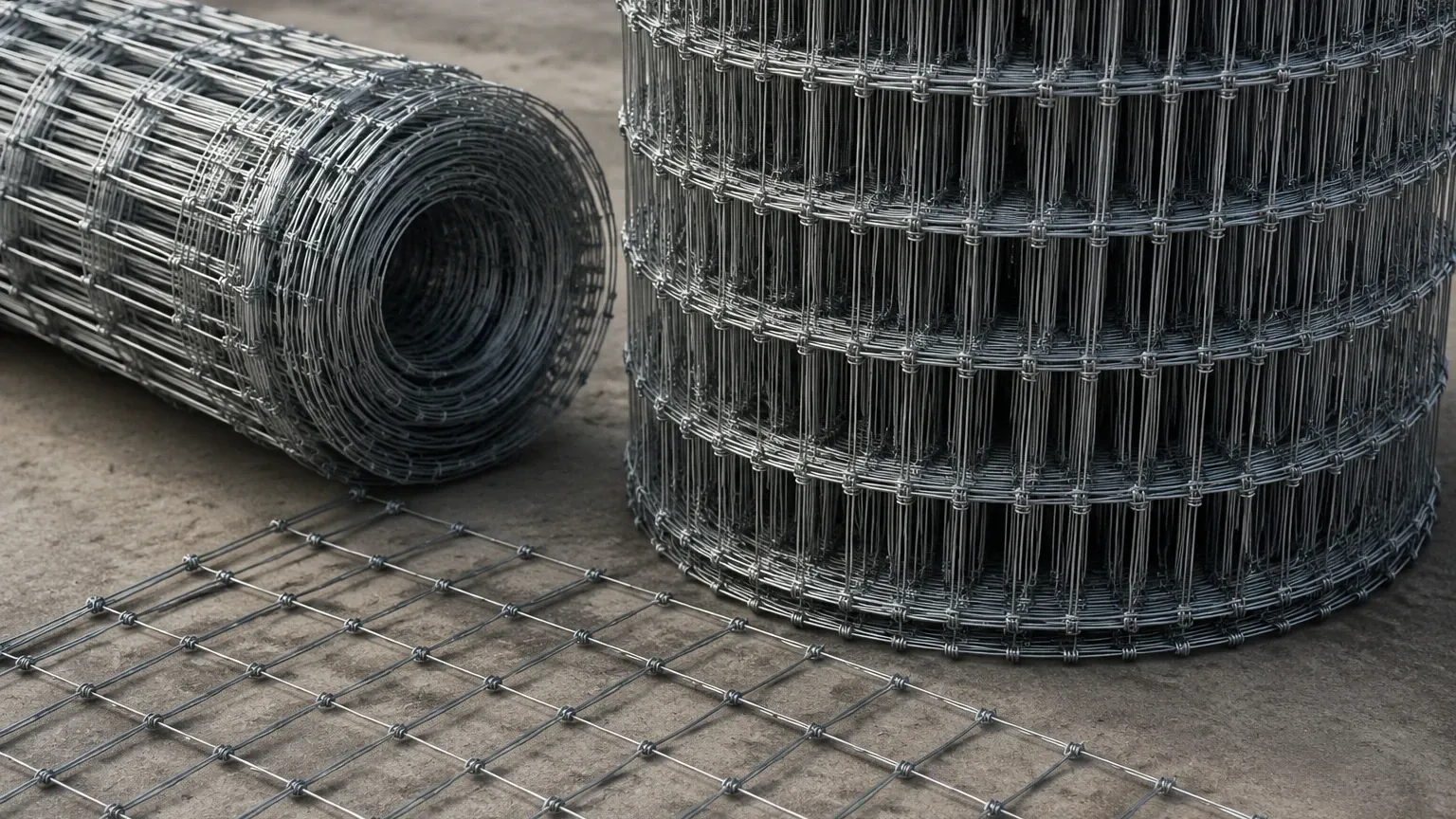
The fundamental principle of weaving wire remains consistent across various industries, but the execution differs significantly based on the intended application. A standard woven wire fence at tractor supply is typically manufactured using a hinge-joint or fixed-knot construction. These designs are optimized for flexibility and impact resistance, allowing the fence to absorb the weight of livestock or resist the pressure of external elements.
In contrast, industrial woven wire mesh is produced using sophisticated looms that maintain tight tolerances on aperture size and wire diameter. For engineers, the choice between a retail-grade fence and a precision mesh depends on the objective: is the goal to keep a large object out (containment), or is it to allow specific particles through while blocking others (filtration)?
Industrial applications demand a level of uniformity that retail fencing cannot provide. In filtration, even a deviation of a few microns in the opening size can compromise the entire process, leading to equipment failure or product contamination. This is why specialized manufacturers focus on technical weaving patterns like plain, twill, and dutch weaves to achieve specific performance outcomes.
Comparing Construction: Hinge-Joint Fencing vs. Industrial Woven Wire Mesh
To make an informed purchasing decision, it is essential to look at the structural differences between these two categories of wire products.
Agricultural Woven Wire Fence
Retail fencing, such as the woven wire fence at tractor supply, is usually characterized by its "large" openings, often measured in inches. The wires are joined at intersections using knots. The hinge-joint knot, for instance, allows the fence to give under pressure and spring back into shape. While excellent for farm use, this structure lacks the rigidity and precision required for mechanical filtration or high-pressure hydraulic applications.
Industrial Woven Wire Mesh
Industrial mesh is defined by its weave type. Rather than knots, the wires are interlaced over and under one another in a continuous pattern.
* Plain Weave: The most common industrial weave where each shute wire passes over and under one warp wire. It provides a stable structure with high flow rates.
* Twill Weave: Each shute wire passes over and under two warp wires, allowing for heavier wire diameters in a given mesh count. This is ideal for high-load filtration tasks.
* Dutch Weave: This utilizes different diameters for warp and shute wires, creating a dense, multi-layered structure that offers superior filtration accuracy down to the micron level.
For those requiring specific engineering standards, exploring Plain, twill and dutch woven wire mesh in SS304/316L — rolls, cut mesh and framed panels. Send mesh count or micron target for a technical quote. is the recommended path for industrial-grade procurement.
Material Science: Why Stainless Steel Outperforms Galvanized Options
One of the most significant differences between a standard woven wire fence at tractor supply and industrial mesh is the metallurgy. Most retail fencing is made from galvanized steel—carbon steel coated with a layer of zinc to prevent rust. While cost-effective for outdoor use in mild climates, galvanized steel has limitations in industrial settings.
Corrosion Resistance
In chemical processing or marine environments, the zinc coating on galvanized wire can eventually break down, leading to structural failure. Industrial woven wire mesh is primarily manufactured from stainless steel alloys, most notably SS304 and SS316L.
* SS304: Offers excellent resistance to atmospheric corrosion and is widely used in food processing and general industrial applications.
* SS316L: Contains molybdenum, which provides superior resistance to chlorides and acids. This makes it the standard choice for pharmaceutical and oil and gas industries where chemical exposure is a constant factor.
Temperature Stability
Industrial processes often involve extreme heat. While the structural integrity of a retail fence may degrade at high temperatures, stainless steel mesh maintains its mechanical properties, ensuring consistent filtration performance even in furnace or steam-cleaning environments.
Engineering Specifications: Understanding Mesh Count and Micron Ratings
When an engineer evaluates a woven wire fence at tractor supply, they are typically looking at the height of the roll and the spacing between the horizontal and vertical wires (e.g., 4"x4" openings). In the B2B industrial sector, the language of specification is much more granular.
Mesh Count
Mesh count refers to the number of openings per linear inch. A high mesh count indicates a fine mesh with small apertures, whereas a low mesh count indicates a coarser mesh. This metric is vital for determining the surface area available for filtration and the structural strength of the screen.
Micron Rating
For precision filtration, the micron rating is the most critical factor. It defines the size of the particles that the mesh will effectively intercept. Industrial manufacturers can produce mesh with openings as small as 5 to 10 microns, a level of precision that is impossible to achieve with standard agricultural fencing products.
Wire Diameter
The relationship between wire diameter and aperture size determines the "open area" percentage. A higher open area allows for better flow rates and lower pressure drops across the filter, which is a key consideration in hydraulic and water treatment systems.
Customization and OEM Solutions for Industrial Filtration
A primary limitation of purchasing a woven wire fence at tractor supply is the lack of customization. Retail products come in standard roll sizes and wire gauges. Industrial operations, however, rarely fit into a "one size fits all" category.
Custom stainless steel filtration solutions allow for the integration of mesh into specific components. This includes:
1. Cut-to-Size Panels: Precision-cut mesh that fits exactly into existing machinery frames.
2. Framed and Reinforced Edges: Adding structural support to the mesh to prevent fraying and ensure a secure fit within a housing.
3. Multi-Layer Sintering: Combining multiple layers of woven wire mesh through a heat-treating process to create a single, high-strength filter element that combines fine filtration with high mechanical stability.
4. Cylindrical and Conical Shapes: Forming the mesh into specific geometries for use in basket strainers or cartridge filters.
By working with a manufacturer that offers OEM capabilities, engineering teams can develop filtration components that are tailored to the specific flow rates, pressure requirements, and chemical profiles of their unique processes.
Selection Criteria for Technical Professionals
When moving beyond the retail availability of a woven wire fence at tractor supply, technical professionals should confirm the following data points before finalizing a source for industrial mesh:
* Material Certification: Ensure the supplier provides mill test reports (MTRs) to verify the chemical composition of the stainless steel (e.g., confirming the nickel and chromium content in SS316L).
* Aperture Uniformity: Inquire about the manufacturing tolerances. For critical filtration, the consistency of the hole size across the entire roll is paramount.
* Cleaning and Maintenance: Industrial mesh is often reusable. Evaluate the ease of backwashing or ultrasonic cleaning based on the weave type selected.
* Total Cost of Ownership (TCO): While the initial cost of industrial stainless steel mesh is higher than retail galvanized fencing, the longevity, reduced downtime, and protection of downstream equipment offer a significantly lower TCO over the life of the project.
Conclusion
While the woven wire fence at tractor supply remains an excellent choice for its intended purpose—agricultural containment and basic property protection—it is not a substitute for engineered Woven Wire Mesh in technical applications. For engineers and purchasing managers in the industrial sector, the focus must remain on material grade, weave precision, and application-specific customization.
By selecting high-performance stainless steel mesh, industries can achieve the reliable filtration and separation results necessary for demanding environments. Whether you are designing a new hydraulic system or upgrading a chemical processing line, prioritizing technical specifications over retail convenience ensures the long-term success and safety of your operations.
