


Water Filter Cartridges 20 Inch
In industrial water treatment and process fluid management, the 20-inch filter cartridge serves as a critical standard for modular filtration systems. This specific length is widely adopted across various sectors, including chemical processing, food and beverage production, and pharmaceutical manufacturing, due to its balance between surface area and housing footprint. Choosing the correct water filter cartridges 20 inch requires a deep understanding of fluid dynamics, material compatibility, and the specific mechanical demands of the application environment.
Industrial filtration is not a one-size-fits-all discipline. While 20-inch cartridges are standardized in terms of length, their internal architecture, media composition, and end-cap configurations vary significantly. For engineers and procurement professionals, evaluating these components involves more than just matching dimensions; it requires a technical assessment of how the filter will perform under varying pressures, temperatures, and chemical exposures.
Understanding the 20-Inch Industrial Standard
The 20-inch designation typically refers to the nominal length of the filter element. However, in the industrial market, there are two primary diameter standards that dictate the flow capacity and dirt-holding potential of these cartridges:
1. Standard Diameter (Slim): Usually measuring approximately 2.5 inches in diameter, these are used in multi-round housings where multiple cartridges are installed in parallel to handle high flow rates within a compact vessel.
2. Large Diameter (Big Blue): Measuring approximately 4.5 inches in diameter, these cartridges provide significantly more surface area and are often used in high-flow single-cartridge applications or as pre-filtration stages in heavy-duty industrial water systems.
For high-performance industrial applications, the choice of Filter Cartridges often moves away from disposable polymers toward more robust materials like stainless steel. Stainless steel 20-inch cartridges offer structural integrity that plastic alternatives cannot match, particularly in high-pressure systems where the risk of bypass or structural collapse is a primary concern.
Material Science in High-Performance Filter Cartridges
The material of construction is the most significant factor determining the longevity and effectiveness of a 20-inch filter cartridge. While polypropylene and pleated paper are common for low-temperature, non-corrosive water applications, industrial processes often demand specialized metallic media.
Stainless Steel Wire Mesh
Stainless steel wire mesh filters, often manufactured from 304 or 316L grade steel, provide precise pore sizes ranging from 5 microns to over 500 microns. These are ideal for water filter cartridges 20 inch used in high-temperature environments or where the fluid contains aggressive chemicals. The 316L variant is particularly valued in the pharmaceutical and food industries for its superior corrosion resistance and ease of sterilization.
Sintered Metal Media
For applications requiring extreme filtration accuracy and high mechanical strength, sintered metal fiber or sintered mesh is utilized. Sintering bonds the metal strands at their contact points through a thermal process, creating a rigid structure that does not migrate or shed fibers into the filtrate. This is essential for protecting downstream components like high-pressure pumps or sensitive analytical equipment.
Chemical Compatibility
Engineers must verify that the cartridge materials—including the gaskets and O-rings (typically EPDM, Viton, or PTFE)—are compatible with the process fluid. In industrial water treatment, factors such as pH levels, chlorine concentration, and the presence of trace solvents can degrade inferior materials, leading to premature failure and system contamination.
Technical Parameters: Flow Rates and Pressure Management
When integrating water filter cartridges 20 inch into a system, the relationship between flow rate and differential pressure ($ΔP$) is a primary engineering consideration. Every filter media imposes a degree of resistance to flow.
Clean Pressure Drop
The "clean pressure drop" is the initial resistance measured when a new cartridge is installed. For a 20-inch cartridge, this value depends on the media density and the viscosity of the fluid. In industrial water applications, keeping the initial $ΔP$ low (typically below 2-3 psi) ensures that the system has sufficient "headroom" to operate as the filter accumulates contaminants.
Dirt Holding Capacity
As particles are trapped, the effective pore space decreases, and the differential pressure increases. The total volume of contaminants a cartridge can hold before reaching its terminal pressure drop (often 20-30 psi depending on the housing) defines its service life. Pleated designs in 20-inch cartridges significantly increase the available surface area compared to cylindrical designs, thereby extending the interval between maintenance cycles.
Flow Velocity Considerations
High flow velocities can force contaminants through the media (a phenomenon known as unloading) or cause structural deformation. For 20-inch cartridges, maintaining a velocity that aligns with the manufacturer’s specifications is vital for ensuring that the micron rating remains consistent throughout the filtration cycle.
Industrial Applications for 20-Inch Filtration Systems
The versatility of the 20-inch format allows it to serve in various roles across the industrial landscape. Each application places unique demands on the cartridge design.
* Chemical Processing: In the production of specialty chemicals, 20-inch stainless steel cartridges are used to remove catalysts or impurities from process water and solvent streams. Their ability to withstand broad pH ranges makes them indispensable.
* Food and Beverage: Filtration in this sector requires compliance with sanitary standards. 20-inch cartridges are frequently used for polishing water used in ingredient mixing or for steam filtration. The ability to withstand Clean-in-Place (CIP) procedures is a major advantage of metallic cartridges.
* Hydraulic and Cooling Systems: Industrial machinery relies on clean cooling water to prevent scale buildup and corrosion in heat exchangers. 20-inch cartridges provide the necessary flow capacity to protect large-scale industrial cooling loops.
* Pharmaceutical Manufacturing: Precision is paramount here. 20-inch cartridges with absolute micron ratings are used to ensure the removal of bacteria and fine particulates in USP-grade water systems.
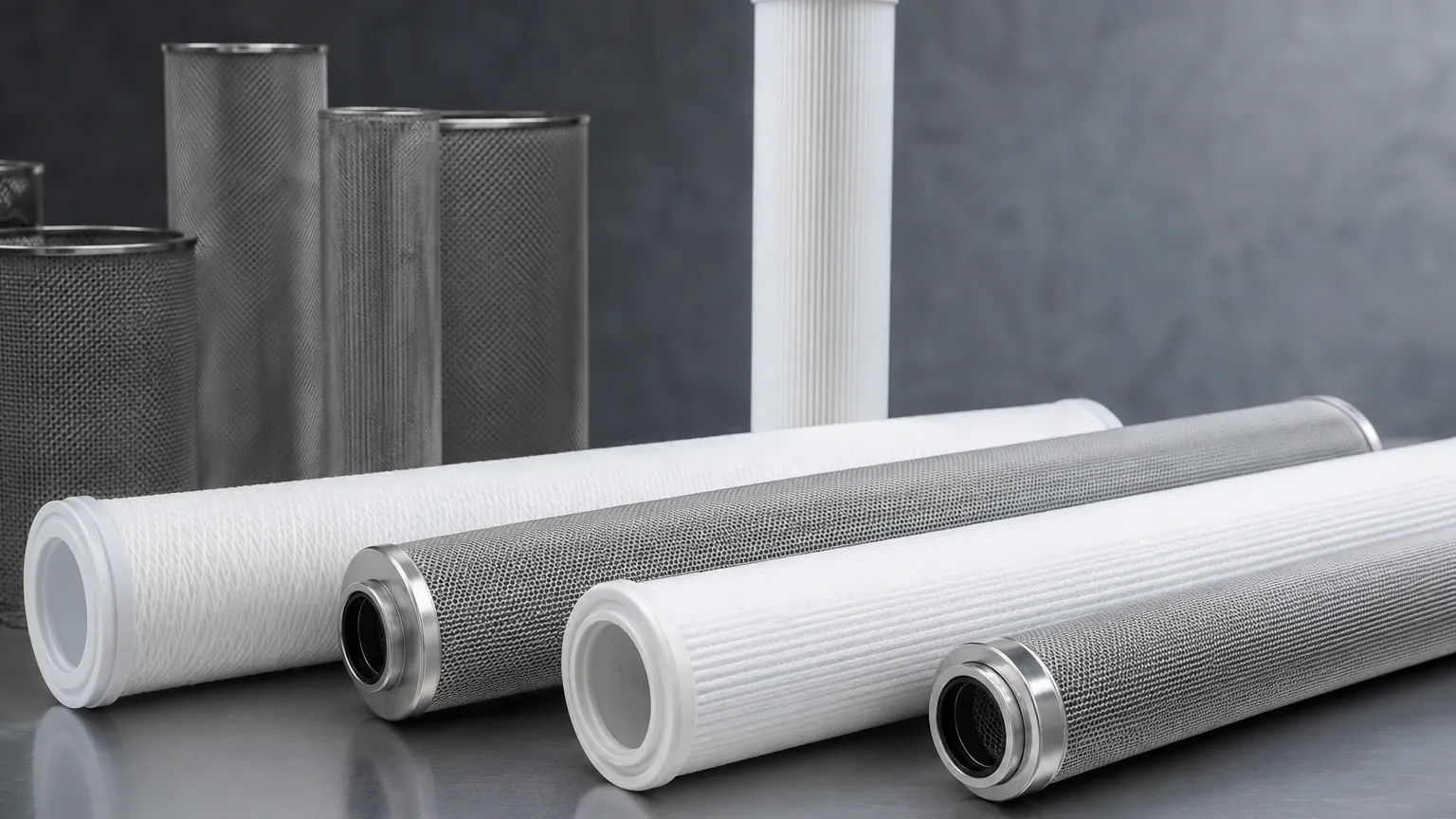
Selection Engineering: Choosing Between Surface and Depth Filtration
One of the critical decisions in selecting water filter cartridges 20 inch is determining whether surface or depth filtration is required for the specific contaminant profile.
Surface Filtration
Surface filters, such as those made from woven wire mesh or pleated membranes, trap particles on the upstream side of the media. These filters are characterized by a precise pore size and are typically easier to clean via backwashing. They are preferred when the contaminant size is relatively uniform and when the goal is to recover the solids or reuse the filter element.
Depth Filtration
Depth filters utilize a thick matrix of media (such as felt or wound fibers) to trap particles throughout the entire thickness of the material. This is highly effective for fluids with a wide distribution of particle sizes or for removing deformable contaminants like gels and oils. While depth filters generally offer higher dirt-holding capacity for varied solids, they are typically disposable and cannot be effectively cleaned once saturated.
Maintenance, Cleaning, and Total Cost of Ownership
In a B2B procurement context, the initial purchase price of a 20-inch cartridge is only one component of the total cost of ownership (TCO). For high-volume industrial operations, the costs associated with downtime, labor for replacement, and waste disposal can far exceed the cost of the filter itself.
Reusability of Stainless Steel Cartridges
One of the primary advantages of utilizing stainless steel Filter Cartridges is their cleanability. Unlike polymer cartridges that must be discarded, metallic cartridges can often be cleaned using ultrasonic baths, chemical soaking, or backflushing. This reusability significantly reduces the long-term environmental impact and disposal costs, making them a more sustainable choice for heavy industrial use.
Monitoring Systems
To optimize the replacement cycle, industrial systems should be equipped with differential pressure gauges. Replacing a cartridge too early results in wasted capacity, while replacing it too late can lead to media rupture or pump damage. Automated systems can trigger a bypass or a cleaning cycle when the $ΔP$ reaches a predetermined setpoint.
Customization and OEM Solutions for Specialized Requirements
Standard 20-inch cartridges meet many needs, but unique industrial challenges often require customized engineering. Manufacturers like Kaifil specialize in tailoring filtration components to meet specific operational parameters that off-the-shelf products cannot accommodate.
Customization options include:
* End-Cap Configurations: Adapting the cartridge to fit proprietary housing designs (e.g., Code 7, 222, 226, or NPT threaded ends).
* Reinforced Cores: Adding internal support cores to withstand extreme pressure spikes or high-viscosity fluids.
* Specialized Alloys: Utilizing Monel, Hastelloy, or other exotic metals for environments where even 316L stainless steel might succumb to corrosion.
* Varying Lengths: While 20 inches is the standard, modular designs can allow for stacked configurations to meet higher flow requirements within the same footprint.
By working closely with a manufacturer during the design phase, engineers can ensure that the filtration system is optimized for the specific characteristics of their process water, leading to higher efficiency and lower operational risks.
Conclusion
The 20-inch water filter cartridge remains a staple of industrial fluid management due to its standardized dimensions and proven performance. However, the move toward more demanding industrial processes has highlighted the limitations of standard disposable media. By opting for high-quality stainless steel constructions and carefully evaluating technical parameters like flow velocity, material compatibility, and cleaning protocols, industrial facilities can achieve superior filtration results. Whether for pre-filtration in a desalination plant or final polishing in a chemical refinery, the right 20-inch cartridge is a fundamental component of system reliability and product quality.
