


Water Filter Cartridge 20 X 4.5
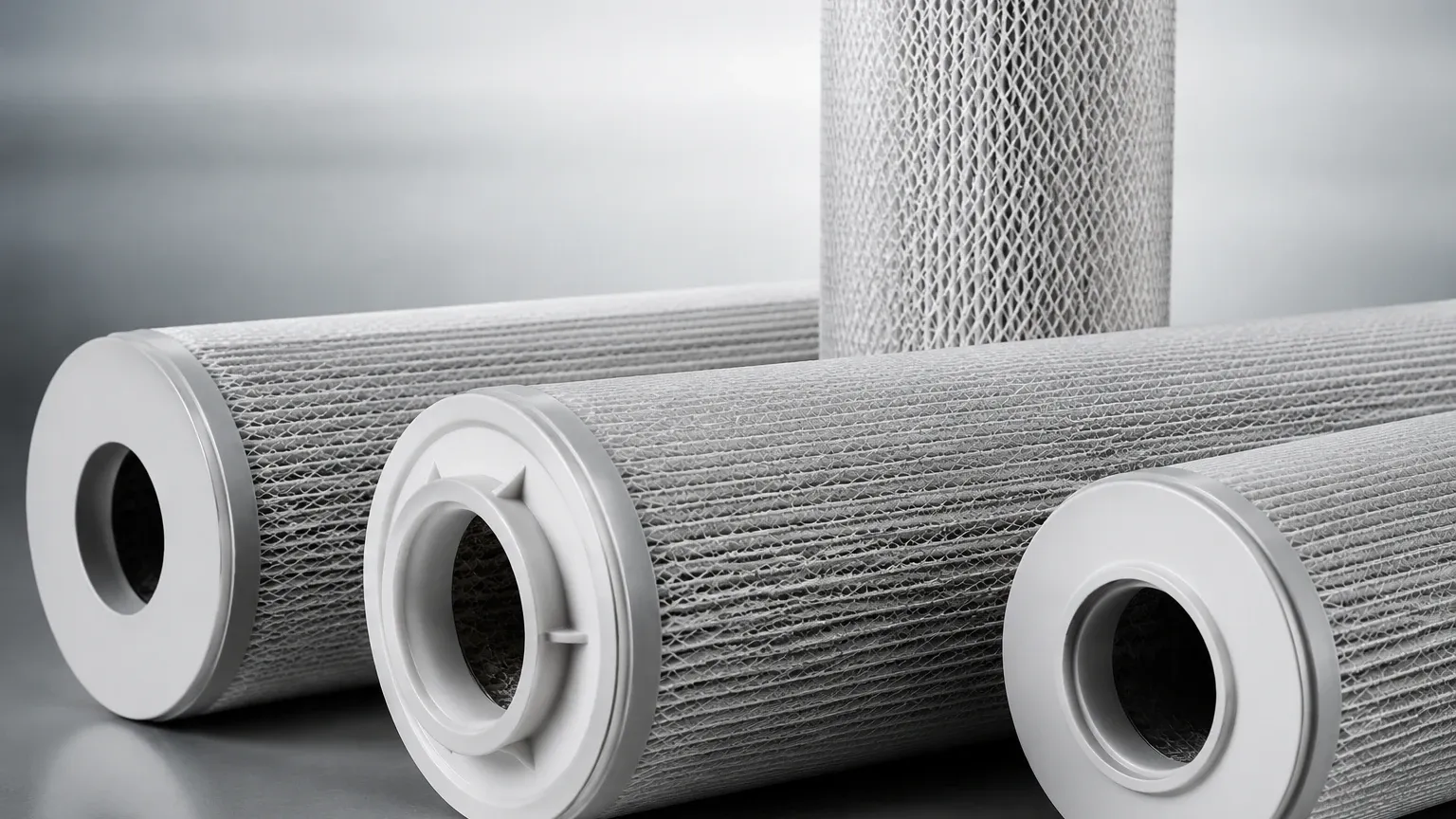
In industrial and commercial water treatment, the 20 x 4.5-inch format—often referred to as the "Big Blue" standard—represents a critical benchmark for high-flow filtration. Selecting the correct water filter cartridge 20 x 4.5 requires an understanding of fluid dynamics, material science, and the specific requirements of the application environment. These large-diameter cartridges are designed to handle significantly higher flow rates and higher sediment loading than standard 10-inch or slimline alternatives, making them a staple in pre-filtration for reverse osmosis (RO) systems, chemical processing, and large-scale facility water management.
For engineers and procurement professionals, the choice of a Filter Cartridges solution involves balancing initial capital expenditure against long-term operational efficiency. This guide examines the technical specifications, material considerations, and performance metrics essential for optimizing filtration systems utilizing the 20 x 4.5-inch architecture.
Understanding the 20 x 4.5 Standard in Industrial Filtration
The dimensions of a water filter cartridge 20 x 4.5 (20 inches in length and 4.5 inches in diameter) are not merely arbitrary; they are engineered to maximize surface area while maintaining a manageable footprint. Compared to a standard 2.5-inch diameter cartridge, the 4.5-inch diameter provides approximately four times the volume and significantly more surface area, depending on the internal media configuration (pleated vs. depth).
Flow Rate and Pressure Drop
In any filtration system, the relationship between flow rate and pressure drop (differential pressure, or ΔP) is paramount. A larger surface area allows for a lower face velocity of the fluid passing through the media. This reduction in velocity results in a lower initial pressure drop, which extends the service life of the pump and reduces energy consumption. In high-flow industrial applications, using a 20 x 4.5 cartridge allows for flow rates typically ranging from 20 to 50 gallons per minute (GPM) per housing, depending on the micron rating and fluid viscosity.
Dirt Holding Capacity
The increased volume of the 20 x 4.5 format allows for greater contaminant loading. In depth filtration, where particles are trapped throughout the cross-section of the media, the increased thickness of the 4.5-inch diameter provides a longer tortuous path for particles to navigate, leading to higher efficiency in capturing varying particle sizes.
Material Selection and Chemical Compatibility
The efficacy of a water filter cartridge 20 x 4.5 is heavily dependent on the material of construction. Industrial environments often involve fluids with varying pH levels, temperatures, and chemical compositions, necessitating a rigorous selection process.
Polypropylene (PP)
Polypropylene is the most common material for sediment and chemical filtration due to its broad chemical resistance and low cost. Melt-blown PP cartridges provide graduated density, where the outer layers trap larger particles and the inner core captures finer contaminants. This material is ideal for aqueous solutions, organic solvents, and many acids and alkalis. However, PP has a temperature limit typically around 140°F (60°C), above which the structural integrity may be compromised.
Stainless Steel (304 and 316L)
For demanding industrial applications involving high temperatures, high pressures, or aggressive chemicals, stainless steel filter cartridges are the preferred engineering choice. Kaifil specializes in custom stainless steel filtration solutions that utilize wire mesh or sintered metal media. Unlike disposable polymer cartridges, stainless steel versions of the 20 x 4.5 format offer:
* Temperature Resistance: Capable of operating in environments exceeding 500°F (260°C).
* Mechanical Strength: High collapse pressure ratings, essential for high-viscosity fluids or systems prone to pressure surges.
* Cleanability: Stainless steel cartridges can be backwashed, ultrasonically cleaned, or chemically sanitized, allowing for multiple reuse cycles and reducing the total cost of ownership in permanent installations.
Activated Carbon
In applications requiring the removal of chlorine, volatile organic compounds (VOCs), or odors, carbon block or granular activated carbon (GAC) is utilized within the 20 x 4.5 housing. The large diameter is particularly beneficial here, as it ensures sufficient contact time (empty bed contact time, or EBCT) between the water and the carbon media even at higher flow rates.
Performance Metrics: Micron Ratings and Efficiency
When specifying a water filter cartridge 20 x 4.5, understanding the distinction between nominal and absolute micron ratings is critical for process control.
Nominal Micron Rating
A nominal rating indicates the filter's ability to trap a major percentage (usually 60% to 90%) of particles of a specific size. This is often sufficient for general sediment removal or pre-filtration where the primary goal is to protect downstream components from large debris.
Absolute Micron Rating
An absolute rating refers to the pore size of the filter media and implies that 99.9% (Beta 1000) of particles larger than the specified micron size will be retained. In pharmaceutical, food and beverage, or precision manufacturing applications, absolute-rated pleated cartridges are often required to ensure consistent product quality and prevent microbial contamination.
Beta Ratio
For technical procurement, the Beta Ratio (β) provides a more accurate picture of filter performance. It is the ratio of particles of a given size in the upstream fluid to the number of particles of the same size in the downstream fluid. A higher Beta ratio signifies higher filtration efficiency. Engineers should request Beta ratio data when comparing different brands of 20 x 4.5 cartridges to ensure they meet the specific cleanliness levels required for the system.
Engineering Considerations for System Integration
Integrating a 20 x 4.5 cartridge into an industrial system requires attention to the housing and sealing mechanisms to prevent bypass—the phenomenon where unfiltered fluid escapes around the edges of the cartridge.
Seal Types and O-Rings
Standard 20 x 4.5 cartridges often use a Double Open End (DOE) configuration with flat gaskets. While common, DOE configurations can be susceptible to bypass if the housing is not tightened correctly or if the gaskets degrade. For high-purity applications, Single Open End (SOE) designs with 222 or 226 O-ring configurations provide a more secure, leak-proof seal. The choice of O-ring material (EPDM, Viton, or Silicone) must be matched to the chemical profile of the process fluid.
Housing Compatibility
While the 20 x 4.5 size is a standard, slight variations in length or end-cap design can exist between manufacturers. It is essential to verify that the chosen cartridge is compatible with the existing housing's internal dimensions and support structures. In industrial settings, heavy-duty stainless steel housings are often preferred over plastic "Big Blue" sumps to handle higher operating pressures and provide grounding for static dissipation in flammable solvent applications.
Maintenance, Lifecycle Management, and TCO
The total cost of ownership (TCO) of a filtration system is not defined by the purchase price of the cartridge alone, but by the frequency of replacement, labor costs, and disposal fees.
Monitoring Differential Pressure
The most effective way to manage the lifecycle of a water filter cartridge 20 x 4.5 is through differential pressure monitoring. Most industrial housings are equipped with upstream and downstream pressure gauges. A common rule of thumb is to replace or clean the cartridge when the ΔP reaches 15–20 psi (1.0–1.4 bar). Operating beyond this point can lead to media migration, cartridge collapse, or a significant drop in flow rate that impacts downstream processes.
Replacement Cycles
In high-sediment applications, such as well water or open-loop cooling systems, cartridges may need replacement every few weeks. In these scenarios, moving to a pleated design—which offers significantly more surface area than a melt-blown depth filter—can extend the interval between changes by 3 to 5 times. Alternatively, investing in a cleanable stainless steel cartridge from a manufacturer like Kaifil can eliminate the recurring cost of disposables entirely, provided the facility has the infrastructure for cleaning.
Disposal Considerations
For industries dealing with hazardous materials or strict environmental regulations, the disposal of used polymer cartridges can be a significant cost and compliance burden. Stainless steel filters offer a sustainable alternative, as they are non-disposable and fully recyclable at the end of their multi-year service life.
Customization and OEM Solutions
Standard off-the-shelf cartridges do not always meet the nuances of specialized industrial processes. Factors such as unusual fluid viscosities, extreme pH levels, or specific flow path requirements may necessitate a customized filtration component.
Kaifil provides comprehensive OEM and customized filtration solutions, leveraging advanced manufacturing capabilities to produce stainless steel filter cartridges tailored to specific application requirements. Customization options for the 20 x 4.5 format include:
* Varying Mesh Weaves: Selecting specific weave patterns (plain, twill, or dutch) to optimize for particle retention and flow resistance.
* Reinforced Cores: Adding internal support structures for high-pressure differential scenarios.
* Specific End-Cap Fittings: Designing custom adapters to fit proprietary housing systems.
* Multi-Layer Composites: Combining different grades of mesh or sintered fleece to achieve graduated filtration in a single metal cartridge.
By working closely with a manufacturer that understands the engineering behind the media, purchasing teams can ensure that their water filter cartridge 20 x 4.5 investment delivers reliable, long-term performance in even the most demanding industrial environments. Whether the goal is protecting sensitive RO membranes or ensuring the purity of chemical additives, the 20 x 4.5 cartridge remains a versatile and effective tool in the industrial filtration toolkit.
