


Filter Element 40 Micron
In industrial filtration, the selection of a specific micron rating is a critical engineering decision that directly impacts equipment longevity, product purity, and operational costs. A filter element 40 micron is often categorized as a fine-to-medium grade filtration solution. To put this in perspective, 40 microns is approximately the lower limit of what the human eye can perceive without magnification. In heavy industrial and precision manufacturing environments, this level of filtration serves as a vital safeguard for downstream components and a standard for liquid clarity.
Selecting the correct 40-micron filter requires an understanding of the media type, the fluid dynamics of the application, and the mechanical stresses the element will endure. For engineers and procurement teams, the choice often involves balancing the need for high-efficiency particle removal with the requirement for low pressure drop and extended service intervals.
Understanding the Role of 40-Micron Filtration in Industrial Systems
A 40-micron rating indicates that the filter is designed to capture particles 40 micrometers in diameter and larger. Depending on whether the rating is "absolute" or "nominal," the efficiency of this capture can vary. In high-stakes industrial applications, such as hydraulic systems or chemical processing, absolute-rated stainless steel elements are preferred to ensure that no particles above the specified threshold pass through the media.
At the 40-micron level, filtration is typically used for:
* Secondary Filtration: Acting as a secondary stage after a coarser pre-filter to refine the fluid quality.
* Equipment Protection: Safeguarding spray nozzles, heat exchangers, and low-pressure pumps from debris that could cause clogging or mechanical wear.
* Fluid Conditioning: Maintaining the cleanliness of lubricants and coolants in machining and metalworking processes.
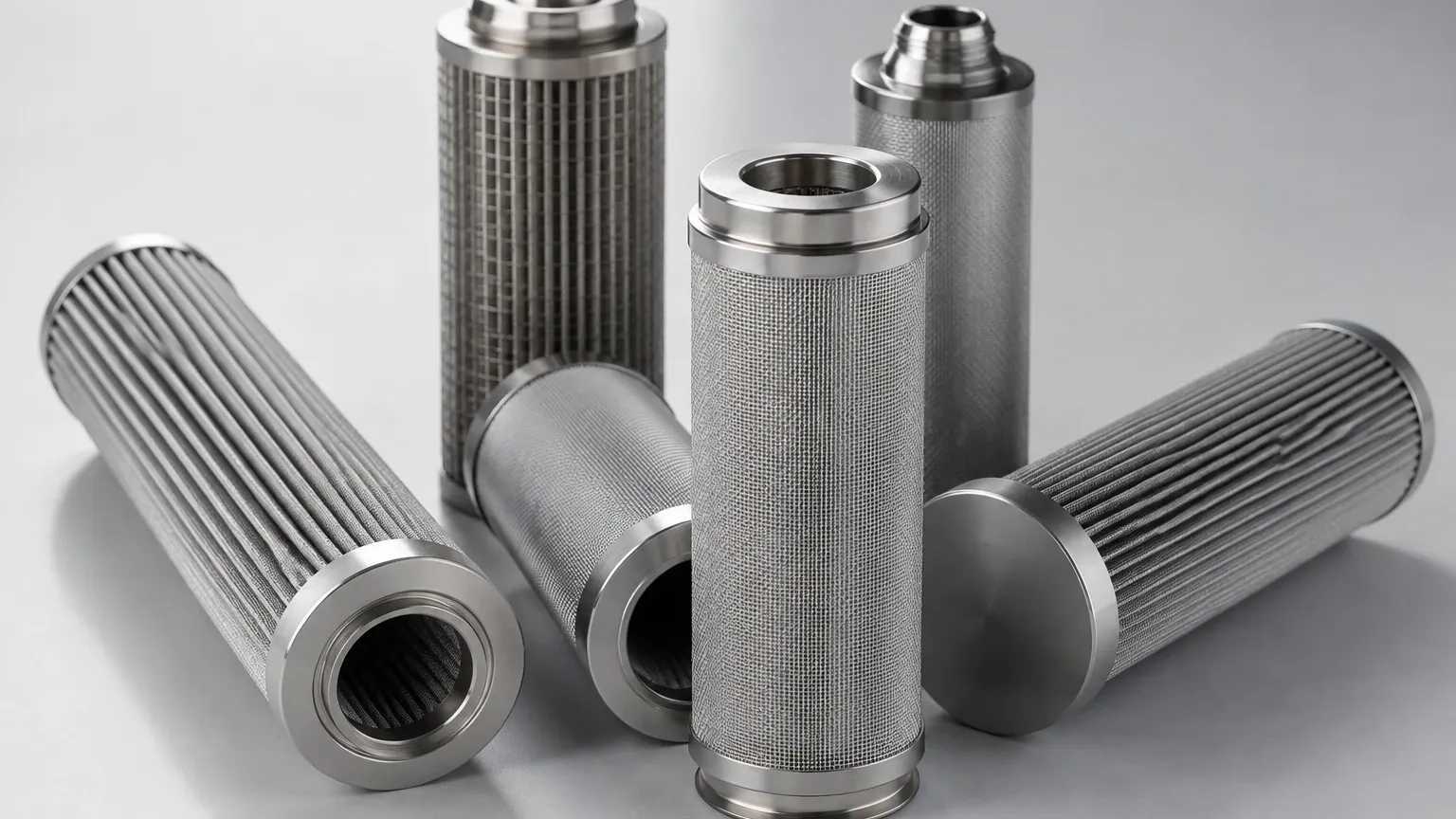
Because 40 microns is relatively fine, the surface area of the filter element becomes a primary design consideration. To prevent rapid clogging, many industrial Filter Cartridges utilize pleated designs, which significantly increase the available filtration area compared to standard cylindrical elements.
Material Selection and Construction for 40-Micron Filter Elements
The material of construction determines the filter's compatibility with different temperatures, pressures, and chemical environments. While polymer-based filters are common in water treatment, industrial-grade 40-micron elements are frequently manufactured from stainless steel (SS304 or SS316L) due to its superior durability.
Stainless Steel Wire Mesh
For a 40-micron rating, woven wire mesh is the most common media. Engineers can choose between different weave patterns, such as plain weave or Dutch weave, depending on the required mechanical strength and flow characteristics. Stainless steel mesh is ideal for high-temperature applications where synthetic fibers would fail.
Sintered Metal Media
In applications involving extreme pressures or highly corrosive fluids, sintered metal fiber or multi-layer sintered mesh may be used. Sintering bonds the metal strands together, creating a rigid structure that maintains its 40-micron pore size even under significant differential pressure. This prevents "media migration," where the filter material itself sheds particles into the filtrate.
End Cap and Seal Configurations
To ensure a 40-micron element functions correctly, the bypass must be eliminated. This requires precision-engineered end caps. Common configurations include:
* Double Open End (DOE): Standard for many housing types, requiring gaskets for sealing.
* Code 7 (226 O-ring/Fin): Features a locking tab and double O-rings for high-purity or high-vibration environments.
* Threaded Connections: Used in high-pressure hydraulic or gas systems to ensure a leak-proof mechanical seal.
Engineering Performance: Flow Rates and Pressure Differential
When integrating a filter element 40 micron into a system, engineers must calculate the clean pressure drop (ΔP). The pressure drop is the difference in pressure between the upstream and downstream sides of the filter. A high initial ΔP reduces the available energy in the system and shortens the time between cleaning or replacement cycles.
Several factors influence the performance of a 40-micron element:
1. Fluid Viscosity: Thicker fluids, such as heavy oils or resins, require more force to pass through 40-micron pores. This often necessitates larger filter housings or multiple cartridges in parallel to maintain the desired flow rate.
2. Contaminant Loading: The nature of the solids being removed (e.g., hard metallic chips vs. soft organic matter) affects how quickly the filter reaches its terminal pressure drop.
3. Velocity: Higher flow velocities through the media can cause particles to be forced through the pores or lead to premature blinding of the filter surface.
By selecting pleated stainless steel Filter Cartridges, operators can achieve a higher dirt-holding capacity. The increased surface area allows for a lower "flux" (flow per unit area), which minimizes the pressure drop and extends the operational life of the element.
Critical Application Environments for 40-Micron Elements
The versatility of the 40-micron rating makes it a standard across diverse sectors. Each industry has specific requirements regarding material certification and structural integrity.
Chemical and Petrochemical Processing
In these environments, 40-micron filters are used to remove catalysts, scale, and sediment from process streams. 316L stainless steel is typically specified for its resistance to pitting and crevice corrosion in the presence of chlorides or acidic solutions.
Food and Beverage Production
Filtration at the 40-micron level is often used for clarifying syrups, oils, and beverages. Elements used here must comply with food-safety standards (such as FDA or EC 1935/2004). Stainless steel is the preferred material because it can withstand Steam-in-Place (SIP) and Clean-in-Place (CIP) sterilization cycles without degrading.
Hydraulic and Lubrication Systems
Hydraulic fluids must be kept clean to prevent the erosion of precision valves and pumps. A 40-micron element often serves as a suction-side filter or a return-line filter to capture wear particles generated within the system.
Water Treatment and Desalination
Before water enters high-pressure pumps or sensitive membrane systems (like Reverse Osmosis), a 40-micron pre-filter removes suspended solids that could cause mechanical damage or rapid membrane fouling.
Maintenance, Cleaning, and Service Life Optimization
One of the primary advantages of using stainless steel 40-micron filter elements is that they are cleanable and reusable. Unlike disposable depth filters made of polypropylene or cellulose, metal elements represent a higher initial investment but a significantly lower total cost of ownership (TCO) over time.
Cleaning Methodologies
* Backwashing: Reversing the flow of fluid through the element to dislodge accumulated particles from the surface. This is often automated in continuous process systems.
* Ultrasonic Cleaning: Submerging the element in an ultrasonic bath. The high-frequency sound waves create cavitation bubbles that strip contaminants from deep within the wire mesh or sintered structure.
* Chemical Cleaning: Using compatible solvents or acids to dissolve organic or mineral deposits that cannot be removed mechanically.
Determining Replacement Cycles
While stainless steel elements are durable, they are not infinite. Over many cleaning cycles, the media may experience work hardening or fatigue. Engineers should monitor the "recovered" pressure drop after cleaning; if the clean ΔP begins to rise steadily, it indicates that the pores are becoming permanently blinded, and a replacement is necessary.
Customization and OEM Procurement for Industrial Filter Cartridges
Standard off-the-shelf filters do not always meet the specific geometric or performance requirements of specialized industrial equipment. Customization is often necessary to optimize filtration efficiency and fitment.
When sourcing custom Filter Cartridges, technical teams should provide the following specifications to the manufacturer:
* Micron Rating and Efficiency: Clarify if 40 microns is a nominal or absolute requirement.
* Housing Dimensions: Length, outer diameter (OD), and inner diameter (ID) to ensure compatibility with existing vessels.
* Operating Conditions: Maximum operating temperature, normal and surge pressures, and the chemical composition of the fluid.
* Connection Type: Specify end cap styles (e.g., 222, 226, NPT threads, or custom flanges).
Working with a manufacturer that understands the nuances of wire mesh weaving and metal fabrication allows for the development of filtration components that are tailored to the specific debris profile of the application. For example, a custom-designed 40-micron element might incorporate a perforated inner core for extra collapse resistance in high-viscosity applications.
In conclusion, the filter element 40 micron is a cornerstone of industrial fluid management. By selecting high-quality stainless steel construction and considering the specific flow and chemical demands of the environment, engineering teams can ensure reliable performance, protect expensive downstream assets, and achieve a sustainable filtration strategy.
