


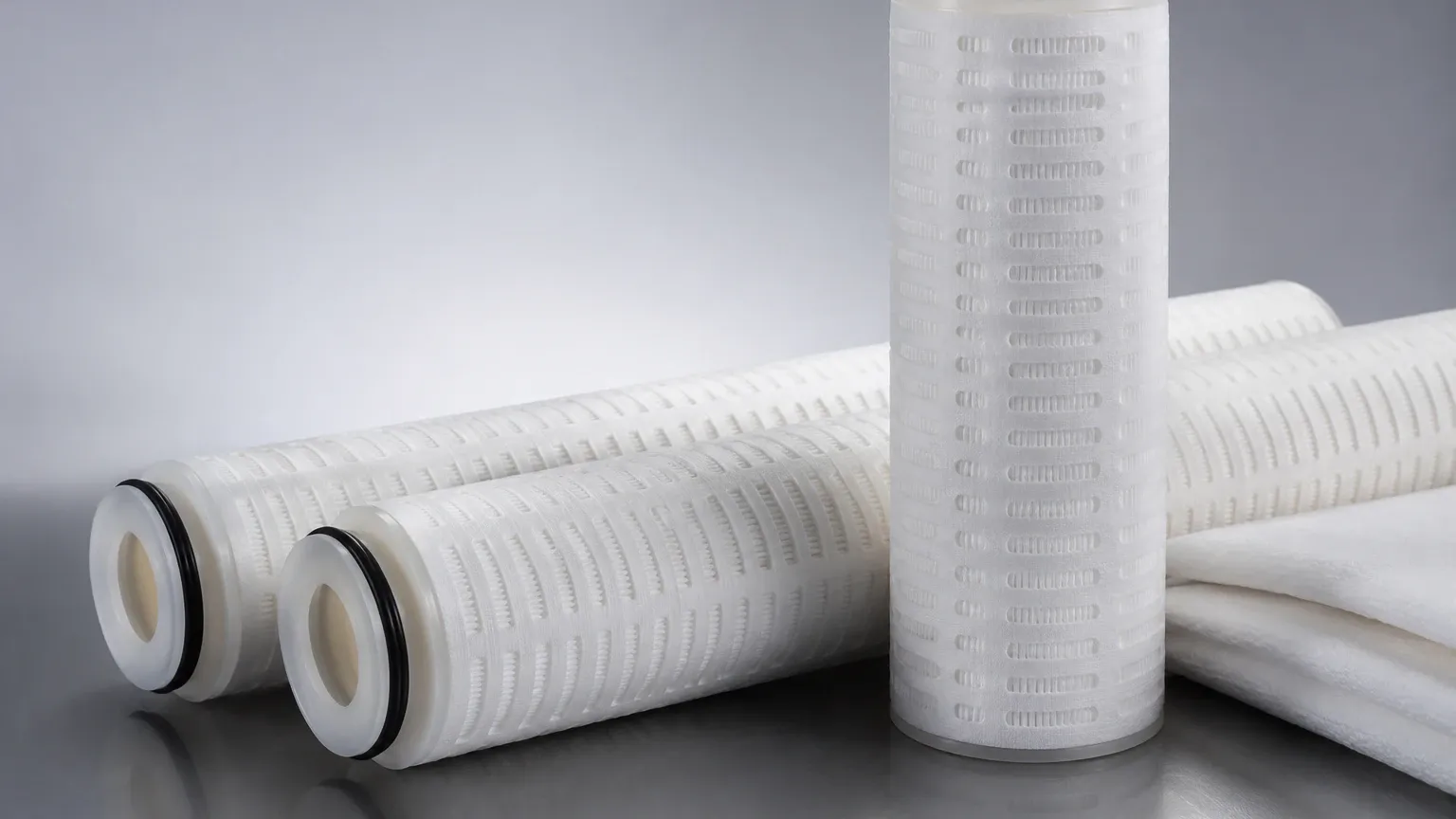
Filter Cartridge 5 Micron 20 Inch
In industrial process engineering, the selection of filtration components is a critical factor in maintaining system integrity, protecting downstream equipment, and ensuring product purity. Among the most common specifications encountered in fluid processing is the filter cartridge 5 micron 20 inch. This configuration represents a standard balance between physical dimensions and filtration fineness, making it a versatile choice across various sectors, from chemical processing to food and beverage production.
Understanding the technical nuances of this specification—specifically the material of construction, the distinction between nominal and absolute ratings, and the hydraulic performance characteristics—is essential for engineers and procurement teams. When evaluating Filter Cartridges, the focus must remain on the total cost of ownership, which includes not only the initial purchase price but also the service life, cleaning capability, and energy costs associated with pressure drop.
Technical Specifications of the 5 Micron 20 Inch Format
The "5 micron 20 inch" designation refers to two primary physical properties: the filtration accuracy and the length of the cartridge. However, these figures require deeper technical context to be useful in an industrial setting.
The 20-Inch Length Standard
A 20-inch cartridge is a standard size in the filtration industry, typically designed to fit into standard multi-round or single-round filter housings. The actual length may vary slightly based on the end-cap configuration (e.g., DOE – Double Open End, or SOE – Single Open End with various O-ring codes like Code 7 or Code 3). In industrial applications, the 20-inch length is often preferred over shorter 10-inch versions because it provides double the surface area within a relatively compact footprint, allowing for higher flow rates or longer intervals between maintenance cycles.
The 5 Micron Rating
A 5-micron rating indicates that the filter is designed to remove particles 5 micrometers in diameter or larger. To put this in perspective, a human hair is approximately 50 to 70 microns thick. A 5-micron filter is considered a fine filtration stage, often used as a pre-filter for ultra-fine membranes or as a final polishing stage for industrial fluids where high clarity is required.
Material Selection for Industrial Filtration Performance
While many 5-micron 20-inch filters are made from polymers like polypropylene or polyester, industrial environments often demand the durability and chemical resistance of stainless steel. Stainless steel filter cartridges, such as those manufactured by Kaifil, offer significant advantages in demanding applications.
Stainless Steel Wire Mesh
For a 5-micron rating, precision-woven stainless steel wire mesh is a primary material. Woven mesh provides a fixed pore size, ensuring consistent filtration performance. In a 5-micron application, the mesh is often Dutch-woven or twilled to achieve the necessary density while maintaining structural integrity. Stainless steel 304 or 316L is typically used, providing excellent resistance to corrosion and high temperatures.
Sintered Metal Media
In applications involving high pressure or extreme temperatures, sintered metal fiber or multi-layer sintered mesh is employed. Sintering involves bonding metal fibers or mesh layers together through a thermal process without the use of binders. This creates a robust, porous structure that can withstand mechanical stress and repeated cleaning cycles that would destroy polymer-based cartridges.
Chemical and Thermal Compatibility
One of the primary reasons engineers specify a stainless steel filter cartridge 5 micron 20 inch is compatibility. Polymer filters may leach surfactants or degrade when exposed to aggressive solvents, high-temperature steam (for sterilization), or extreme pH levels. Stainless steel remains inert and structurally sound in temperatures exceeding 250°C and in various chemical environments where synthetic fibers would fail.
Evaluating Filtration Efficiency: Nominal vs. Absolute Ratings
A critical distinction that engineers must confirm before purchase is whether the 5-micron rating is "nominal" or "absolute." This distinction significantly impacts the performance of the filter cartridge 5 micron 20 inch in a live system.
Nominal Filtration
A nominal rating is an industry-standardized term that generally implies the filter can trap a large percentage (often 60% to 90%) of particles of the specified micron size. Nominal filters are typically depth-style filters. They are cost-effective but allow a certain percentage of "oversize" particles to pass through, especially if the pressure differential increases or the flow surges.
Absolute Filtration
An absolute rating implies that the filter has a capture efficiency of 99.9% (Beta ratio of 1000) or higher for particles of the specified size. For critical applications—such as protecting high-pressure nozzles or ensuring the purity of pharmaceutical ingredients—an absolute-rated 5-micron cartridge is required. Stainless steel wire mesh and sintered cartridges are frequently rated for absolute filtration because their pore structures are fixed and do not bypass under pressure.
Engineering Considerations: Flow Rate and Pressure Drop
When integrating a filter cartridge 5 micron 20 inch into a system, engineers must calculate the clean pressure drop ($ΔP$) and the expected dirt-holding capacity. These factors dictate the sizing of pumps and the frequency of system downtime.
Initial Pressure Drop
Every filter media introduces resistance to flow. A 5-micron filter, being relatively fine, will have a higher initial pressure drop than a 20-micron or 50-micron filter of the same size. To minimize energy consumption, it is often necessary to use multiple 20-inch cartridges in a multi-round housing to increase the total filtration area, thereby reducing the face velocity of the fluid through the media.
Dirt-Holding Capacity and Surface Area
The 20-inch length provides a specific surface area. However, if the application involves high solids loading, a pleated design is often superior to a cylindrical design. Pleating the stainless steel mesh significantly increases the available surface area within the same 20-inch envelope, leading to a lower pressure drop and a much longer service life before the cartridge reaches its terminal pressure drop (the point at which it must be cleaned or replaced).
Flow Velocity
For liquid filtration, maintaining a flow velocity that does not exceed the manufacturer's recommendations is vital. Excessive velocity can cause "particle migration," where trapped contaminants are forced through the media, or it can lead to premature blinding of the filter surface.
Industrial Applications for 5 Micron Metal Filter Cartridges
The 5-micron 20-inch specification is utilized across various industries where precision and durability are non-negotiable.
* Chemical Processing: Used for the filtration of aggressive solvents, catalysts, and intermediate chemical products. The stainless steel construction ensures that the filter does not react with the process fluid.
* Food and Beverage: 5-micron cartridges serve as polishing filters for syrups, oils, and beverages. In these applications, the ability to withstand Steam-In-Place (SIP) and Clean-In-Place (CIP) procedures is a major advantage of metal cartridges.
* Hydraulic and Lubrication Systems: Protecting sensitive valves and bearings requires fine filtration. A 5-micron metal cartridge can handle the high viscosity of oils and the high-pressure environment of hydraulic circuits.
* Water Treatment: In industrial water recycling or pre-filtration for Reverse Osmosis (RO) systems, these cartridges remove fine suspended solids that could otherwise foul expensive membranes.
Maintenance, Cleaning, and Replacement Cycles
Unlike disposable polymer filters, stainless steel filter cartridges are often designed to be cleanable and reusable, which is a significant factor in B2B procurement decisions.
Cleaning Methods
When a filter cartridge 5 micron 20 inch reaches its maximum allowable pressure drop, it can be cleaned using several methods:
1. Backwashing: Reversing the flow of clean fluid through the cartridge to dislodge surface contaminants.
2. Ultrasonic Cleaning: Using high-frequency sound waves in a cleaning solution to remove particles lodged deep within the mesh or sintered structure.
3. Chemical Cleaning: Using surfactants or acids to dissolve specific types of fouling, provided the chemical is compatible with the 304 or 316L stainless steel.
Determining Replacement
While metal cartridges are durable, they are not infinite. Over many cleaning cycles, the media may experience mechanical fatigue or irreversible fouling (permanent blinding). Engineers should monitor the "recovered" pressure drop—the pressure drop measured after cleaning. When the recovered $ΔP$ is significantly higher than the original clean $ΔP$, it indicates that the cartridge is reaching the end of its functional life and should be replaced to maintain system efficiency.
Customization and OEM Solutions for Specialized Requirements
In many industrial scenarios, a standard off-the-shelf filter may not meet all the requirements of a specific machine or process. This is where custom manufacturing becomes essential. Kaifil specializes in providing OEM solutions for Filter Cartridges, allowing for modifications that go beyond standard catalog specifications.
Custom End-Cap Configurations
While the 20-inch length is standard, the method of sealing the cartridge into the housing can vary. Custom-machined end caps in various materials or specialized O-ring grooves can be designed to ensure a bypass-free seal in proprietary housing designs.
Reinforced Structures
For applications involving high-pressure pulses or heavy cake loading, the internal support core or the outer cage of the 20-inch cartridge can be reinforced. This prevents the collapse or bursting of the filter media under extreme conditions.
Specific Alloy Selection
While 316L is the standard for corrosion resistance, some applications may require specialized alloys like Monel or Hastelloy. Custom manufacturers can work with these materials to provide 5-micron filtration in environments that would rapidly corrode standard stainless steel.
Conclusion: Selecting the Right 5 Micron 20 Inch Filter
Selecting a filter cartridge 5 micron 20 inch requires a comprehensive understanding of the process conditions. Engineers must look beyond the basic dimensions and micron rating to consider the structural integrity of the media, the chemical compatibility of the seals, and the long-term maintainability of the component.
By opting for high-quality stainless steel solutions, industrial facilities can achieve more reliable filtration, reduce the waste associated with disposable cartridges, and ensure that their downstream equipment is protected by a precise, absolute filtration barrier. Whether for a standard water treatment application or a complex chemical synthesis process, the right filtration component is a fundamental building block of operational excellence.
