


5 Water Filter Cartridges
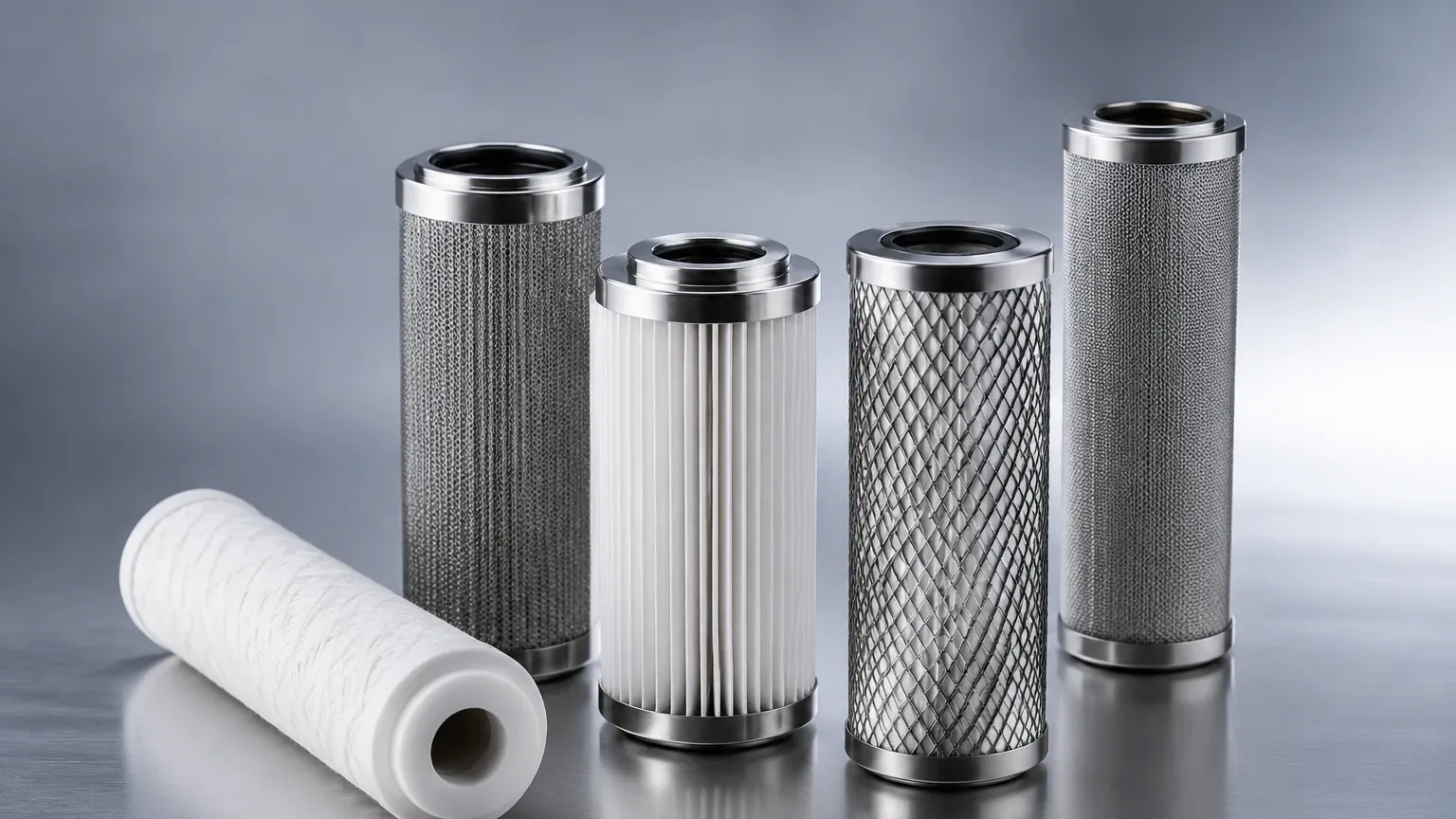
In industrial water treatment, the efficiency of a system often depends on the strategic deployment of multi-stage filtration. Whether managing process water for chemical plants, cooling water for power generation, or ingredient water for food and beverage production, engineers frequently rely on a sequence of 5 water filter cartridges or multi-cartridge housing configurations to achieve specific purity levels. This technical guide explores the engineering considerations, material selections, and performance metrics essential for selecting high-quality Filter Cartridges for demanding industrial environments.
The Engineering Logic Behind Multi-Stage Water Filtration
Industrial water filtration is rarely a single-step process. To protect sensitive downstream equipment—such as reverse osmosis (RO) membranes, high-pressure pumps, or precision nozzles—a graduated approach is required. Using a sequence of five distinct filtration stages or a 5-cartridge array allows for the systematic removal of contaminants ranging from large scale and sediment to microscopic particulates.
In a typical multi-stage setup, the initial cartridges act as "sacrificial" pre-filters. These are designed with higher porosity to capture the bulk of the solids, preventing the finer, more expensive downstream cartridges from blinding prematurely. By distributing the solids-loading capacity across multiple stages, facilities can extend the service life of the entire system, reduce the frequency of maintenance shutdowns, and ensure a more consistent flow rate. For engineers, the challenge lies in balancing the pressure drop (Delta P) across these stages while maintaining the required effluent quality.
Material Selection: Why Stainless Steel Outperforms Polymer in Industrial Water
While polypropylene and other polymer-based cartridges are common in light commercial applications, industrial-grade water treatment often demands the durability of stainless steel. Stainless steel filter cartridges, particularly those manufactured from 304 or 316L grades, offer several technical advantages:
1. Thermal Stability: Industrial water processes often involve high temperatures that would cause polymer cartridges to soften or bypass. Stainless steel maintains structural integrity at temperatures exceeding 250°C.
2. Chemical Compatibility: In applications involving treated boiler water, caustic cleaning solutions, or acidic process streams, 316L stainless steel provides superior corrosion resistance.
3. Mechanical Strength: High-pressure systems can cause differential pressure spikes. Unlike disposable media that may collapse or shed fibers, metal mesh and sintered cartridges are engineered to withstand high collapse pressures.
4. Cleanability: One of the most significant B2B advantages is the transition from a consumable expense to a capital asset. Stainless steel cartridges can be cleaned via backwashing, ultrasonic baths, or chemical cleaning, significantly reducing the long-term waste stream.
When specifying 5 water filter cartridges for a heavy-duty system, engineers must evaluate the specific alloy's resistance to localized pitting, especially in water with high chloride content.
Critical Performance Metrics for Filter Cartridges
To ensure a filtration system meets its design goals, technical professionals must look beyond simple micron ratings. The following metrics are essential for evaluating industrial cartridges:
Absolute vs. Nominal Ratings
A nominal rating indicates the cartridge's ability to retain a major percentage of particulates of a certain size (e.g., 90% of 5-micron particles). In contrast, an absolute rating implies a 99.9% or higher retention efficiency. For critical stages in a 5-stage system, absolute-rated sintered mesh or metal fiber felt is often required to ensure no bypass of contaminants occurs.
Permeability and Pressure Drop
Every filter medium introduces resistance to flow. A well-engineered cartridge maximizes the open area of the mesh or the porosity of the sintered structure to provide high permeability. This minimizes the initial pressure drop, allowing the system to operate longer before reaching the terminal pressure drop that triggers a cleaning cycle.
Dirt Holding Capacity (DHC)
The DHC determines how much contaminant a cartridge can retain before the pressure drop becomes unacceptable. Pleated stainless steel designs are often preferred for water treatment because they significantly increase the available surface area compared to cylindrical designs, thereby increasing the DHC and extending service intervals.
Designing for High Flow: The 5-Cartridge Housing Configuration
In many industrial scenarios, the term "5 water filter cartridges" refers to the internal configuration of a single filter housing. A 5-round housing (containing five individual cartridges) is a common mid-range solution for flow rates that exceed the capacity of a single cartridge but do not require a massive multi-round vessel.
Flow Distribution and Turbulence
When five cartridges are arranged in a single vessel, the internal manifolding must ensure even flow distribution. If the flow is imbalanced, one or two cartridges may become loaded much faster than the others, leading to inefficient use of the media and potential structural stress on the overloaded components.
Seal Integrity and End-Cap Styles
To prevent untreated water from bypassing the filter media, the seal between the cartridge and the housing is critical. Common configurations include:
* Double Open End (DOE): Uses flat gaskets at both ends; requires a tie-rod and seal nut.
* 222/226 O-Rings: Feature specialized bayonet or plug-in fittings with double O-rings (typically EPDM, Viton, or PTFE) to provide a high-integrity seal, essential for sub-micron filtration.
Operational Maintenance and Cleaning of Reusable Cartridges
For purchasing teams, the total cost of ownership (TCO) is a primary concern. While the initial investment in stainless steel 5 water filter cartridges is higher than disposable alternatives, the ability to regenerate the media provides substantial savings over 24 to 60 months.
Cleaning Protocols
Effective maintenance of metal cartridges involves several specialized techniques:
* Backpulsing: Using a reverse flow of clean water or air to dislodge surface-loaded solids during operation.
* Ultrasonic Cleaning: Using high-frequency sound waves in a detergent bath to remove deeply embedded particulates from sintered structures.
* Chemical Soaking: Utilizing mild acids or bases to dissolve scale or organic bio-fouling that backwashing cannot remove.
Engineers should establish a baseline "clean pressure drop" after each cleaning cycle. If the baseline pressure drop begins to rise over time, it indicates that the media is reaching the end of its functional life and may require professional refurbishment or replacement.
Total Cost of Ownership: Disposable vs. Custom Metal Solutions
When deciding whether to implement a system using five disposable cartridges or five permanent stainless steel components, the following factors should be analyzed:
* Disposal Costs: Many regions have strict regulations regarding the disposal of used filter media, especially if it has been exposed to industrial chemicals or heavy metals.
* Downtime: The time required to change out five cartridges in a pressurized system can result in significant production losses. Reusable systems often incorporate duplex designs, allowing one side to be cleaned while the other remains in operation.
* Filtration Consistency: Polymer cartridges can bypass under pressure surges or "unload" captured contaminants as they become saturated. Precision-welded stainless steel cartridges provide a fixed pore structure that ensures consistent effluent quality regardless of pressure fluctuations.
Customization is also a vital factor. Industrial applications often require non-standard lengths (e.g., 10", 20", 30", or 40") or specific end-cap geometries to fit existing housings. Working with a manufacturer that provides OEM capabilities allows for the development of filtration components tailored to the specific flow dynamics and contaminant profiles of a particular site.
Conclusion
Selecting the right 5 water filter cartridges involves a deep understanding of the fluid dynamics, chemical environment, and long-term operational goals of a facility. By prioritizing high-grade materials like stainless steel and focusing on absolute filtration efficiency, engineers can build robust systems that protect downstream assets and optimize process reliability. Whether the goal is to reduce waste through cleanable media or to ensure the highest levels of purity in a chemical process, the technical specifications of the cartridge remain the most critical link in the filtration chain.
