


Cartridge Filter 60926
In the landscape of industrial safety and process engineering, filtration requirements often span a spectrum from personal protective equipment (PPE) to large-scale industrial fluid processing. The cartridge filter 60926 represents a highly specialized segment of this market, primarily recognized for its multi-hazard protection capabilities. For engineers and procurement professionals, understanding the technical specifications of such components is essential for maintaining operational safety and efficiency.
While personal filtration focuses on the immediate protection of personnel from airborne contaminants, the broader industrial application of Filter Cartridges involves the removal of particulates and chemical impurities from liquids and gases within complex manufacturing systems. This article examines the engineering principles behind the 60926 standard and provides a technical framework for selecting industrial filtration solutions that meet similar high-performance benchmarks.
Understanding the Engineering Behind the 60926 Cartridge
The cartridge filter 60926 is engineered to address a wide array of environmental hazards simultaneously. In technical terms, it is a combination cartridge that integrates high-efficiency particulate filtration with chemical adsorption. The "60926" designation typically refers to a Multi-Gas/Vapor/P100 rating, which is one of the most comprehensive protection levels available for modular filtration units.
Multi-Gas and Vapor Adsorption
The chemical filtration component of the 60926 is designed to neutralize organic vapors, chlorine, hydrogen chloride, sulfur dioxide, chlorine dioxide, hydrogen sulfide, ammonia, methylamine, formaldehyde, and hydrogen fluoride. This is achieved through a bed of specially treated activated carbon. The engineering challenge in these cartridges is to maximize the surface area of the carbon while maintaining a low pressure drop, ensuring that the user can breathe or the system can flow without excessive resistance.
P100 Particulate Efficiency
The "P100" portion of the rating indicates that the filter is capable of capturing at least 99.97% of airborne particles, including oil-based aerosols. This level of efficiency is comparable to HEPA (High-Efficiency Particulate Air) standards. The filter media used in these cartridges is typically a pleated synthetic fiber or a specialized glass fiber matrix, designed to trap sub-micron particles through interception, impaction, and diffusion mechanisms.
Transitioning from Personal Safety to Industrial Process Filtration
While the cartridge filter 60926 is a staple in personal safety, the principles of multi-stage filtration and high-efficiency particulate removal are equally critical in industrial process streams. In sectors such as chemical processing, pharmaceuticals, and food production, the requirement for Filter Cartridges extends to durable, high-capacity systems that can withstand high pressures, extreme temperatures, and corrosive environments.
In industrial settings, the transition is often made from disposable synthetic cartridges to cleanable stainless steel filtration media. Stainless steel cartridges offer several engineering advantages over their synthetic counterparts, particularly when dealing with the same types of aggressive chemicals that the 60926 is rated to handle. For instance, while a 60926 cartridge uses activated carbon for gas adsorption, an industrial process might utilize a sintered metal cartridge to remove catalysts or impurities from a high-temperature gas stream where synthetic materials would fail.
Key Performance Indicators for Industrial Filter Cartridges
When evaluating industrial Filter Cartridges, engineers must look beyond simple part numbers and focus on specific performance metrics that define the efficiency and longevity of the filtration system.
Micron Rating: Absolute vs. Nominal
One of the most critical specifications is the micron rating. A nominal rating indicates the filter's ability to retain a majority of particles of a specific size, whereas an absolute rating (often defined as a Beta Ratio of 5000 or 99.9% efficiency) guarantees the retention of almost all particles at that size. For critical applications, such as pharmaceutical sterile filtration or high-purity chemical production, absolute-rated stainless steel mesh or sintered cartridges are preferred.
Differential Pressure (ΔP)
Differential pressure is the difference in pressure between the upstream and downstream sides of the filter. A high initial ΔP indicates that the filter media is either too dense for the required flow rate or that the filter housing is undersized. Engineers must balance filtration fineness with the allowable pressure drop to prevent system strain and energy waste. In industrial systems, monitoring ΔP is the primary method for determining when a cartridge needs cleaning or replacement.
Dirt Holding Capacity (DHC)
DHC refers to the total amount of contaminants a cartridge can retain before reaching its terminal differential pressure. Factors influencing DHC include the total surface area of the media (often increased through pleating) and the depth of the filtration matrix. Stainless steel wire mesh filters provide excellent surface filtration, while multi-layered sintered mesh provides a combination of surface and depth filtration, significantly increasing DHC in heavy-loading applications.
Material Selection: Stainless Steel vs. Synthetic Media
The choice of material for Filter Cartridges is dictated by the chemical compatibility of the process fluid and the operating conditions. While the cartridge filter 60926 utilizes plastic housings and specialized fiber media for light-duty or personal use, industrial applications often demand more robust materials.
Stainless Steel 304 and 316L
Stainless steel is the industry standard for durable filtration. Grade 304 provides good corrosion resistance for general applications, while Grade 316L contains molybdenum, offering superior resistance to chlorides and organic acids. These materials are essential for applications involving high-pressure steam, caustic cleaning solutions, or high-temperature gas filtration where synthetic fibers would melt or degrade.
Sintered Metal Media
For the most demanding environments, sintered metal powder or sintered wire mesh cartridges are used. Sintering involves bonding metal particles or mesh layers together through heat and pressure without melting them. This creates a porous structure that is incredibly strong and resistant to high differential pressures. Unlike the media in a cartridge filter 60926, which must be discarded after use, sintered stainless steel cartridges can be ultrasonically cleaned or backpulsed, offering a much longer service life.
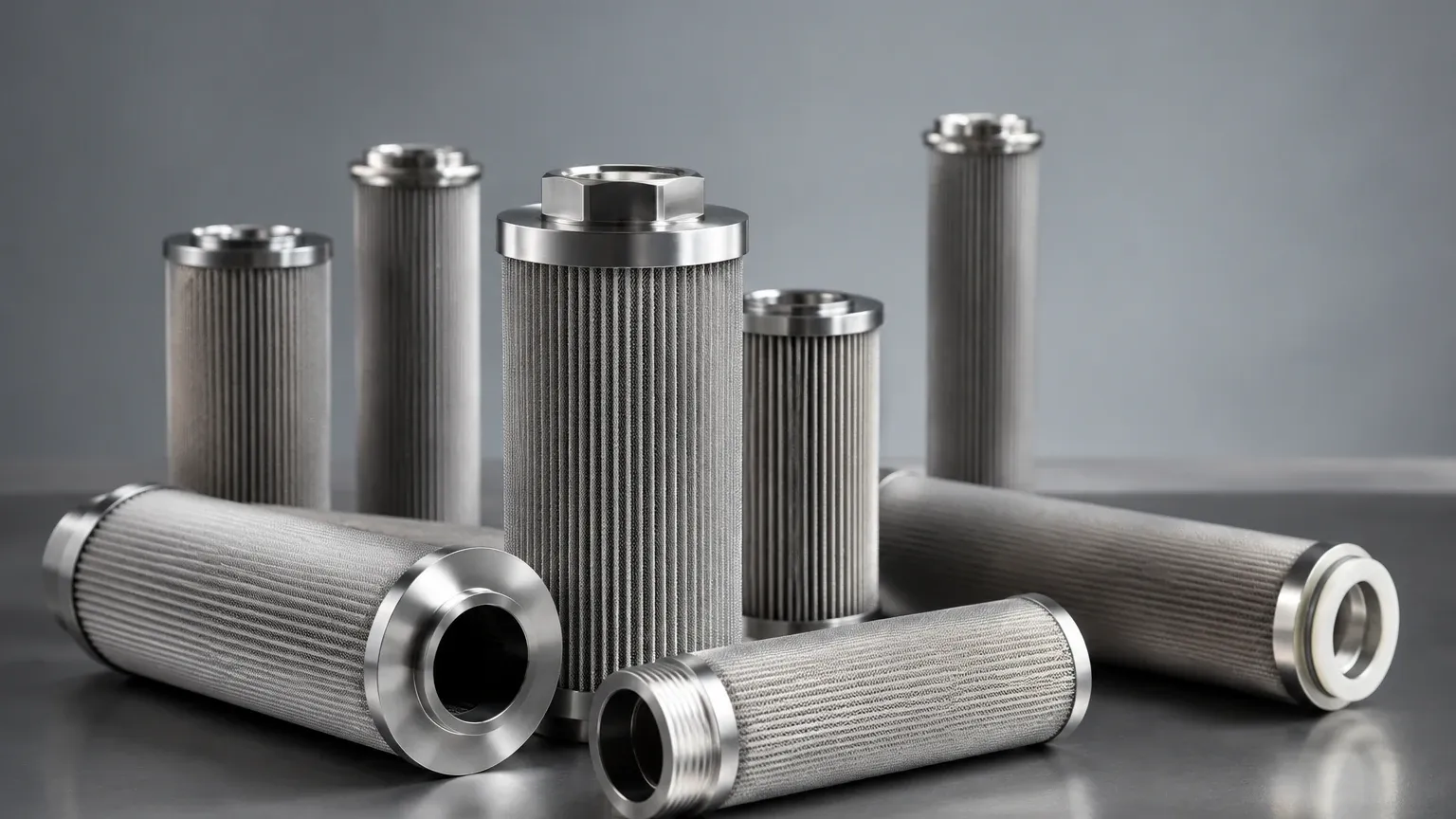
Customization and OEM Engineering for Specialized Filtration
Many industrial processes involve unique challenges that standard off-the-shelf cartridges cannot address. This is where custom-engineered Filter Cartridges become necessary. Customization allows for the optimization of every aspect of the filter to suit a specific application.
Tailored Micron Ratings and Mesh Weaves
By selecting specific wire diameters and weave patterns (such as Plain Dutch Weave or Twill Dutch Weave), manufacturers can create filters with precise flow characteristics and particle retention capabilities. For example, a custom-designed stainless steel filter can be engineered to mimic the particulate capture efficiency of a P100 filter while operating in a liquid hydrocarbon stream at 300°C.
Structural Reinforcement
In high-viscosity or high-pressure applications, standard cartridges may collapse or bypass. Custom OEM solutions include internal support cores, outer protective cages, and specialized end-cap configurations (such as 222 or 226 O-ring styles) to ensure a leak-proof seal and structural integrity under stress. This level of engineering ensures that the filtration system remains reliable even during pressure surges or flow reversals.
Maintenance, Cleaning, and Total Cost of Ownership
One of the most significant differences between personal-grade cartridges like the 60926 and industrial stainless steel Filter Cartridges is the approach to maintenance and replacement. Personal filters are consumables; once the carbon is saturated or the particulate layer increases breathing resistance, the unit is replaced.
In contrast, the Total Cost of Ownership (TCO) for industrial systems is often lower when using cleanable metal cartridges, despite a higher initial investment.
Cleaning Protocols
Stainless steel cartridges can be cleaned using several methods:
* Ultrasonic Cleaning: Uses high-frequency sound waves to dislodge fine particles from deep within the mesh or sintered structure.
* Chemical Cleaning: Involves soaking the cartridges in solvents, acids, or caustic solutions to dissolve organic or inorganic fouling.
* Backwashing/Backpulsing: Reversing the flow of the process fluid to blow contaminants off the surface of the filter media.
Replacement Cycles
While the 60926 has a finite service life based on gas concentration and breathing rates, industrial metal filters can last for years if maintained correctly. The decision to replace a metal cartridge is usually based on permanent fouling (where ΔP no longer returns to baseline after cleaning) or physical damage to the mesh. For engineers, establishing a rigorous maintenance schedule is key to maximizing the return on investment for high-quality filtration components.
Conclusion: Selecting the Right Filtration Solution
Whether an application requires the multi-hazard protection of a cartridge filter 60926 for personnel or a high-capacity stainless steel system for process fluids, the underlying engineering principles remain the same: compatibility, efficiency, and reliability. For industrial professionals, the focus must be on selecting Filter Cartridges that are specifically engineered for the rigors of the environment. By considering material science, micron accuracy, and the potential for customization, technical teams can ensure that their filtration systems provide optimal performance and long-term value.
