


60923 Filter Cartridges
In industrial environments where hazardous vapors, acid gases, and particulate matter coexist, the selection of filtration media is a critical safety and operational decision. The 60923 filter cartridges represent a specific class of high-performance filtration components designed to provide multi-hazard protection. For engineers and procurement specialists, understanding the technical nuances of these cartridges—ranging from their adsorption capacities to their structural integrity—is essential for maintaining compliance and ensuring the longevity of both personnel and equipment.
While often associated with personal protective equipment (PPE), the underlying technology of 60923 filter cartridges mirrors the complexity found in industrial process Filter Cartridges. These components must balance high-efficiency particulate air (HEPA) filtration with chemical adsorption, requiring a sophisticated multi-layered design. This guide explores the engineering principles, material science, and selection criteria that define the 60923 specification in industrial contexts.
Understanding the Technical Profile of 60923 Filter Cartridges
The 60923 designation typically refers to a combination cartridge that offers protection against a broad spectrum of contaminants. Specifically, these cartridges are engineered to filter organic vapors, chlorine, hydrogen chloride, sulfur dioxide, hydrogen sulfide, and hydrogen fluoride, while simultaneously providing P100-level particulate filtration.
From a technical standpoint, the "P100" rating indicates that the filter is at least 99.97% efficient against oil-based and non-oil-based aerosol particles. Achieving this level of efficiency requires a pleated media structure, often composed of glass microfibers or synthetic polymers, which maximizes the surface area for mechanical filtration without excessively increasing the pressure drop. The chemical filtration component, on the other hand, relies on a bed of activated carbon that has been chemically treated (impregnated) to react with specific acid gases.
For industrial applications, the 60923 filter cartridges are evaluated based on their "breakthrough time"—the duration a filter can be exposed to a specific concentration of gas before the effluent concentration reaches a predefined limit. This metric is a function of the carbon bed depth, the quality of the adsorbent, and the flow rate of the air or gas stream.
Filtration Mechanisms: Combined Particulate and Chemical Adsorption
The efficiency of 60923 filter cartridges is derived from two distinct but integrated filtration mechanisms: mechanical capture and chemical adsorption.
Mechanical Particulate Filtration
The P100 component of the cartridge utilizes a high-density pleated media. In industrial filtration, pleating is a standard technique used to increase the effective filtration area (EFA) within a compact footprint. This design allows for lower face velocities, which enhances the capture of sub-micron particles through diffusion, interception, and inertial impaction. Because the 60923 is designed for high-risk environments, the media must maintain its structural integrity even when subjected to high humidity or moderate mechanical stress.
Chemical Adsorption and Chemisorption
The chemical protection layer is significantly more complex. Activated carbon is the primary substrate due to its immense internal surface area. However, standard activated carbon is ineffective against many acid gases. Therefore, the carbon in 60923 filter cartridges is impregnated with metal salts or caustic compounds. These impregnants facilitate "chemisorption," a process where a chemical reaction occurs between the gas molecules and the impregnated surface, effectively neutralizing the hazard and binding it to the media.
Engineering Selection Criteria for Industrial Environments
When specifying 60923 filter cartridges for industrial use, engineers must look beyond the basic hazard ratings. Several technical factors influence the performance and cost-effectiveness of these components in a process or safety system.
Flow Resistance and Pressure Drop
Every filter introduces a resistance to flow, measured as differential pressure (ΔP). In systems where air is moved mechanically, a high ΔP increases energy consumption and can strain blowers or fans. In PPE applications, high resistance increases the physiological burden on the user. Engineers must evaluate the initial pressure drop and the rate at which ΔP increases as the filter loads with particulates. A well-designed cartridge will feature a balanced pleat geometry that ensures uniform flow distribution across the entire media surface.
Capacity and Service Life
The service life of a 60923 cartridge is not a fixed value; it is highly dependent on the concentration of contaminants, the temperature, and the relative humidity. High humidity can be particularly challenging for chemical filters, as water vapor can compete with gas molecules for adsorption sites on the activated carbon. When selecting cartridges, it is vital to review the manufacturer’s breakthrough curves under conditions that mirror the actual operating environment.
Material Integrity and Chemical Compatibility
In the realm of industrial filtration, the materials used for the cartridge housing and seals are just as important as the filtration media itself. 60923 filter cartridges are frequently exposed to corrosive gases like hydrogen chloride or sulfur dioxide.
Housing Materials
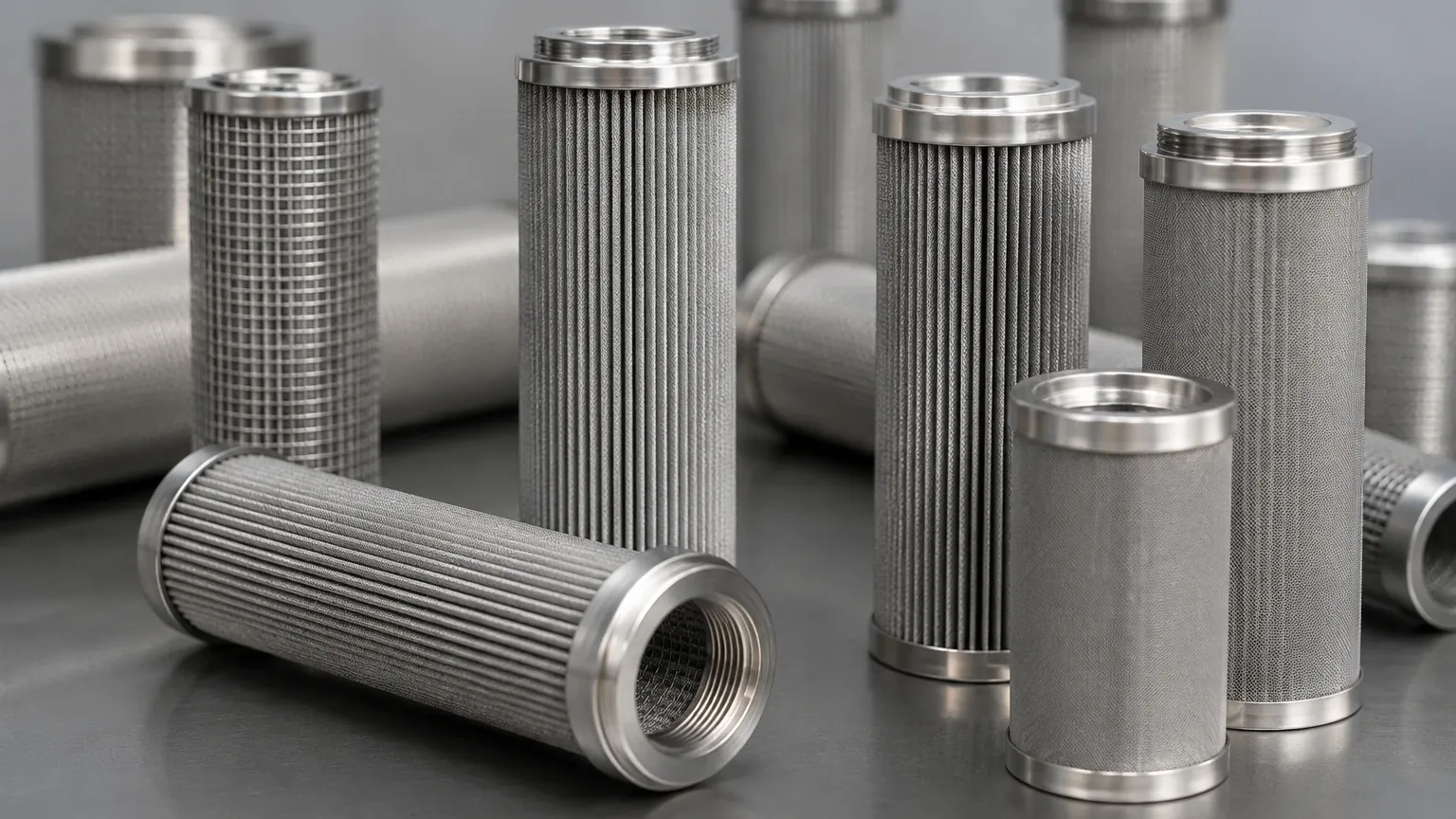
Most standard cartridges use high-impact polystyrene or polypropylene for the housing. However, in more demanding industrial process applications, stainless steel or specialized fluoropolymers may be required to prevent degradation. For manufacturers like Kaifil, the use of stainless steel wire mesh or perforated metal supports is common in custom filtration solutions to provide the necessary rigidity and chemical resistance that plastic housings cannot offer.
Gaskets and Seals
The interface between the cartridge and the filter housing is a common point of failure. If the seal is compromised, "bypass" occurs, allowing contaminated air to circumvent the filtration media. Industrial-grade cartridges often utilize EPDM, Viton (FKM), or silicone gaskets to ensure a gas-tight seal. The choice of elastomer must be compatible with the specific chemicals present in the environment to prevent swelling or brittleness over time.
Performance Validation and Compliance Standards
Reliability in filtration is backed by rigorous testing and certification. For 60923 filter cartridges, the primary regulatory framework is established by NIOSH (National Institute for Occupational Safety and Health) in the United States or EN standards in Europe.
NIOSH Testing Protocols
NIOSH-approved 60923 cartridges undergo stringent testing for gas life and particulate efficiency. For example, the organic vapor component is tested against carbon tetrachloride (CCl4), while the acid gas components are tested against specific challenge gases like chlorine (Cl2) and hydrogen sulfide (H2S). The particulate filter is tested using a sodium chloride (NaCl) or dioctyl phthalate (DOP) aerosol to verify the 99.97% efficiency requirement.
Quality Control in Manufacturing
Beyond third-party certification, industrial users should look for manufacturers that employ internal quality management systems, such as ISO 9001. This ensures that every batch of cartridges meets the specified tolerances for weight, carbon activity, and pleat count. For custom or OEM filtration solutions, technical documentation should include material mill reports and pressure test results to verify that the components meet the project's engineering specifications.
Life Cycle Management and Replacement Indicators
One of the most significant risks in using 60923 filter cartridges is the failure to replace them before they reach saturation. Unlike particulate filters, which show a clear increase in pressure drop as they clog, chemical filters may not show any physical signs of exhaustion until the contaminant "breaks through" the media.
End-of-Service-Life Indicators (ESLI)
Some modern 60923 cartridges are equipped with End-of-Service-Life Indicators. These are typically visual sensors that change color when the chemical media is nearing exhaustion. However, ESLIs are not available for all gases. In the absence of a visual indicator, industrial facilities must implement a strict replacement schedule based on mathematical modeling of the workplace concentrations and environmental conditions.
Storage and Shelf Life
The activated carbon in these cartridges is highly reactive. Even in storage, cartridges can adsorb moisture and trace gases from the air if not properly sealed. Engineers should ensure that 60923 cartridges are stored in their original, vacuum-sealed packaging in a climate-controlled environment. Most manufacturers specify a shelf life of 2 to 5 years, after which the chemical adsorption capacity may be compromised.
Customization Options for Specialized Industrial Applications
While the 60923 is a standardized specification, many industrial processes require variations that are not addressed by off-the-shelf products. This is where the expertise of a professional manufacturer becomes invaluable.
Customization may involve:
* Alternative Media Substrates: Using stainless steel wire mesh for pre-filtration to protect the delicate P100 media from large sparks or abrasive dust.
* High-Temperature Configurations: Modifying the housing and adhesives to withstand temperatures that would melt standard plastic cartridges.
* Specific Adsorbent Blends: Tailoring the carbon impregnation to target a single high-concentration gas more effectively than a broad-spectrum multi-gas cartridge.
For organizations looking for specialized Filter Cartridges, collaborating with an OEM manufacturer allows for the development of components that are precisely tuned to the unique chemical and physical demands of their process. This approach not only enhances safety but can also lead to significant cost savings by optimizing the filter's service life and reducing the frequency of maintenance shutdowns.
Common Risks and Mitigation Strategies
Implementing 60923 filter cartridges without a thorough technical assessment can lead to several operational risks:
1. Chemical Incompatibility: Using a 60923 cartridge for gases it is not rated for (e.g., ammonia or carbon monoxide) can lead to immediate exposure. Always verify the specific gas list on the manufacturer's data sheet.
2. Environmental Saturation: In extremely high humidity (>85% RH), the service life of the acid gas component can drop by more than 50%. Pre-conditioning the air or using larger-capacity industrial canisters may be necessary.
3. Mechanical Damage: In high-vibration environments, the carbon granules inside the cartridge can settle or undergo "dusting," creating channels where gas can pass through unfiltered. Selecting cartridges with high-density packing or internal baffles can mitigate this risk.
Conclusion: Confirming Technical Requirements
Before proceeding with a bulk purchase or integrating 60923 filter cartridges into a larger industrial system, technical teams should confirm several key pieces of information with their supplier:
* Challenge Gas Concentrations: What are the maximum concentrations the cartridge can handle while maintaining the required breakthrough time?
* Physical Dimensions and Fitting: Does the cartridge use a standard bayonet, threaded, or custom connection that is compatible with existing hardware?
* Certification Documentation: Is the product fully compliant with the relevant NIOSH or EN standards for the specific hazards present?
By focusing on these factual boundaries and engineering considerations, industrial professionals can ensure that their filtration strategy is both robust and cost-effective. Whether utilizing standard 60923 components or seeking customized stainless steel filtration solutions for more aggressive process environments, the priority remains the same: precise performance and uncompromised reliability.
