


General Filter 2a-710 Filter Replacement Cartridges
In industrial and commercial fluid management, maintaining the integrity of filtration systems is paramount to equipment longevity and process efficiency. The General Filter 2a-710 model has long been a standard in fuel oil and light hydraulic filtration applications. However, for engineers and procurement professionals managing complex systems, understanding the technical nuances of general filter 2a-710 filter replacement cartridges is essential for optimizing performance and reducing total cost of ownership.
Selecting the right Filter Cartridges involves more than simply matching a part number; it requires a deep dive into material compatibility, filtration efficiency, and the specific demands of the operating environment. This guide explores the engineering considerations, performance metrics, and selection criteria for these critical components.
Understanding the Technical Specifications of 2a-710 Cartridges
The 2a-710 series is typically associated with high-capacity fuel oil filtration. To ensure a replacement cartridge meets the original equipment manufacturer (OEM) standards, technical buyers must verify several key parameters.
Micron Rating and Filtration Efficiency
Standard replacement cartridges for the 2a-710 housing generally offer a 10-micron filtration rating. In the context of industrial filtration, the "micron rating" refers to the size of the particles the media can effectively trap. For fuel oils and light lubricants, 10 microns is often the "sweet spot" that protects burner nozzles and hydraulic valves without causing excessive pressure drop. However, it is vital to distinguish between nominal and absolute ratings. A nominal rating indicates the ability to trap a percentage of particles, while an absolute rating (often achieved through precision-engineered stainless steel mesh) provides a more consistent barrier against contaminants.
Media Composition
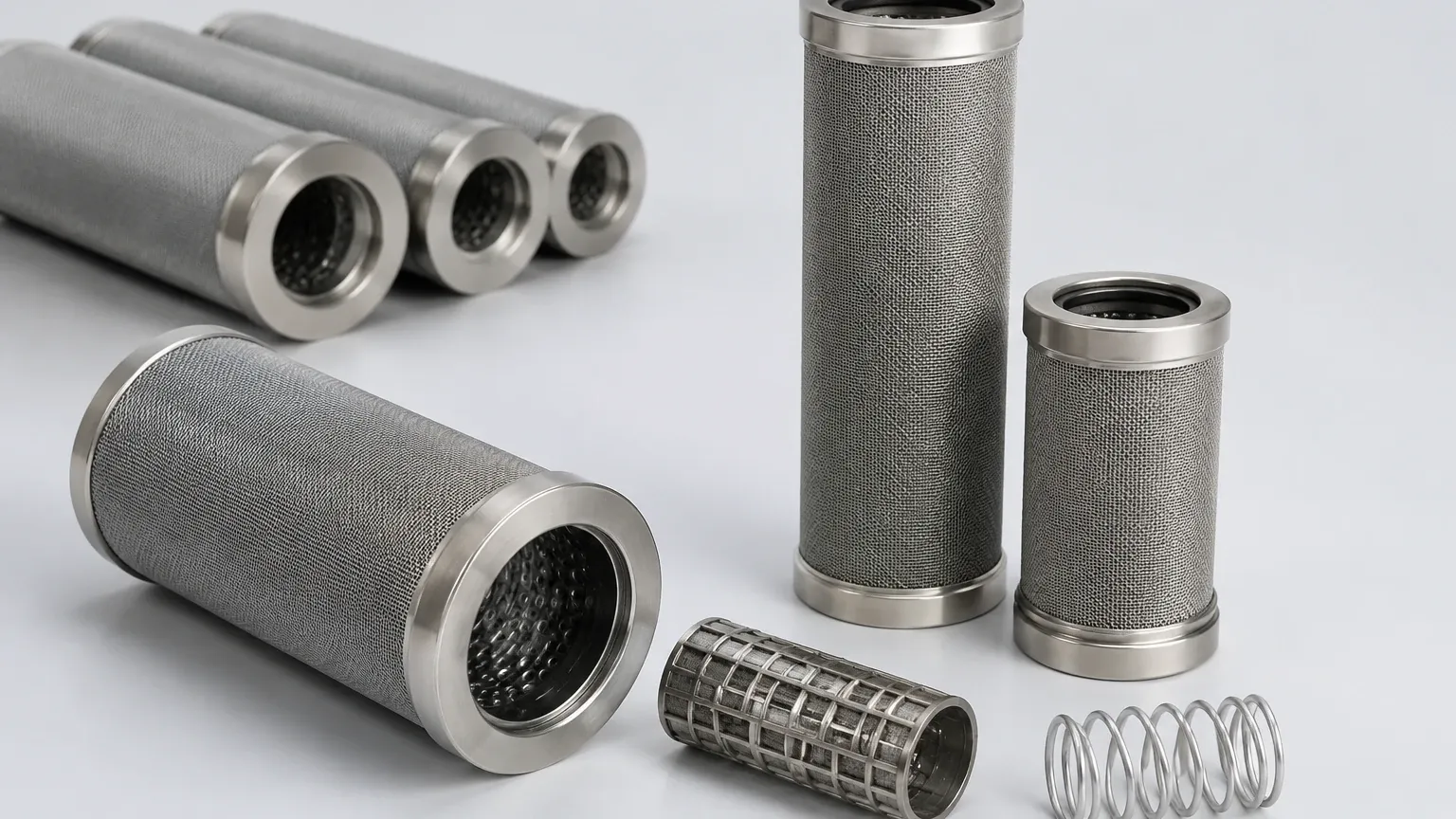
Traditionally, 2a-710 cartridges utilize wool felt or resin-impregnated paper. These depth-filtration media are effective for capturing organic contaminants and sediment. However, in demanding industrial environments—such as those involving high temperatures or aggressive chemical additives—engineers may look toward advanced materials. Stainless steel wire mesh or sintered metal components offer superior structural integrity and can be cleaned and reused, providing a sustainable alternative to disposable media.
Engineering Considerations for Filter Replacement
When evaluating general filter 2a-710 filter replacement cartridges, engineering teams must consider the fluid dynamics of the entire system. A filter does not operate in isolation; its performance is dictated by flow rate, viscosity, and pressure.
Pressure Drop (Delta P)
Every filter media introduces a degree of resistance to flow, known as pressure drop. As the cartridge accumulates debris, this resistance increases. Engineers must monitor the differential pressure (DP) across the filter housing. For the 2a-710 series, a clean pressure drop should ideally be minimal (often below 2 PSI). If a replacement cartridge is poorly designed or uses inferior media, the initial DP may be higher, leading to premature system strain and shorter service life.
Flow Velocity and Turbulence
Industrial filtration systems are designed for specific flow velocities. If the replacement cartridge cannot handle the required gallons per minute (GPM), turbulence can occur within the housing. This turbulence can lead to "media migration," where fibers from the filter itself are shed into the downstream fluid, or "particle unloading," where trapped contaminants are forced through the media due to pressure surges. High-quality Filter Cartridges are engineered with internal supports to maintain structural rigidity under varying flow conditions.
Comparing Material Options: Wool Felt vs. Stainless Steel
While the standard wool felt cartridge is the most common choice for the 2a-710, specialized industrial applications often require different material properties.
The Case for Wool Felt
Wool felt is an excellent depth-loading medium. It allows particles to be trapped throughout the thickness of the material rather than just on the surface. This provides a high dirt-holding capacity, making it suitable for systems with high levels of soft contaminants. It is also cost-effective for standard heating oil applications.
The Case for Stainless Steel Mesh
In chemical processing or high-pressure hydraulic systems, stainless steel wire mesh cartridges offer advantages that felt cannot match:
* Chemical Compatibility: Stainless steel is resistant to a wide range of solvents, fuels, and corrosive agents that might degrade organic fibers.
* Temperature Resistance: Metal filters can operate at temperatures far exceeding the limits of felt or paper.
* Cleanability: Unlike disposable cartridges, stainless steel mesh can be ultrasonically cleaned or backflushed, reducing the long-term waste stream.
* Precision: Wire mesh allows for exact control over pore size, ensuring consistent filtration performance in critical applications.
Common Challenges in Cartridge Selection and Installation
Even with the correct part number, several factors can compromise the effectiveness of general filter 2a-710 filter replacement cartridges.
Bypass and Sealing Integrity
The most common failure point in cartridge filtration is not the media itself, but the seal. If the cartridge does not seat perfectly within the 2a-710 housing, fluid will take the path of least resistance—bypassing the filter media entirely. This "bypass" allows unfiltered contaminants to reach sensitive downstream components. When selecting replacements, ensure the gaskets (often made of Buna-N or Viton) are compatible with the fluid being filtered and that the cartridge length is precise enough to maintain a tight compression seal.
Structural Collapse
In systems subject to cold starts or high-viscosity fluids, the pressure differential can spike suddenly. If the replacement cartridge lacks a robust center core or outer support, the media may collapse inward. A collapsed filter not only stops filtering but can also release a large slug of contaminants into the system, potentially causing catastrophic equipment failure.
Maintenance and Replacement Cycles
Determining when to replace a 2a-710 cartridge is a critical aspect of industrial maintenance. Relying solely on a calendar schedule (e.g., "replace every six months") can be inefficient.
Condition-Based Monitoring
The most effective way to manage replacement cycles is through differential pressure monitoring. By installing gauges on the inlet and outlet of the filter housing, operators can see exactly when the media is reaching its capacity. For most 2a-710 applications, a change-out is recommended when the DP reaches 15-20 PSI, depending on the pump's capabilities and system requirements.
Total Cost of Ownership (TCO)
When purchasing Filter Cartridges, the unit price is only one part of the equation. Technical buyers should also calculate:
* Labor Costs: The time required for technicians to change filters.
* Disposal Costs: Fees associated with disposing of oil-soaked hazardous waste.
* Downtime: The cost of halting production for maintenance.
* Component Protection: The potential cost of repairing downstream equipment damaged by poor filtration.
By investing in higher-quality or custom-engineered cartridges, facilities can often extend the intervals between changes, thereby reducing the TCO even if the initial purchase price is higher.
Customization and OEM Solutions
For many industrial OEMs, standard off-the-shelf cartridges do not meet the specific needs of a proprietary system. Customization allows for the optimization of the filter to the exact fluid characteristics and environmental conditions.
At Kaifil, we specialize in manufacturing precision stainless steel filtration solutions that can serve as high-performance replacements for standard models like the 2a-710. Whether the requirement is for a specific micron rating, a reinforced structure for high-pressure environments, or specialized materials for chemical resistance, custom-engineered Filter Cartridges provide a level of reliability that generic alternatives cannot.
Information to Confirm Before Ordering
To ensure the best outcome when sourcing general filter 2a-710 filter replacement cartridges, engineers should have the following data ready:
1. Fluid Type: (e.g., #2 Fuel oil, hydraulic fluid, solvent).
2. Operating Temperature: Both steady-state and maximum potential spikes.
3. Flow Rate: Normal operating GPM and peak flow.
4. Target Micron Rating: Based on the sensitivity of downstream components.
5. Housing Dimensions: Confirming the internal clearance and seat type to prevent bypass.
Conclusion
The general filter 2a-710 filter replacement cartridges are small but vital components in the machinery of modern industry. While they may appear simple, the science of filtration involves complex trade-offs between flow, pressure, and particle retention. By moving beyond generic procurement and focusing on the engineering realities of their applications, technical professionals can ensure that their filtration systems provide maximum protection and efficiency. Whether utilizing standard felt media or upgrading to precision-engineered stainless steel solutions, the goal remains the same: clean fluid, protected equipment, and optimized process performance.
Download General Filter 2a-710 Filter Replacement Cartridges as a PDF
