


Cartridge Filter 90340
In the landscape of industrial maintenance and process engineering, identifying the correct filtration component is critical for maintaining equipment longevity and ensuring product purity. The cartridge filter 90340 is a widely recognized specification, frequently utilized in localized dust collection, vacuum systems, and small-scale pneumatic conveying applications. However, for engineers operating in demanding industrial environments—such as chemical processing, pharmaceuticals, or high-temperature manufacturing—the standard off-the-shelf versions of these filters may not always meet the rigorous performance requirements of the application.
Selecting the right Filter Cartridges involves more than simply matching a part number. It requires a deep understanding of material science, fluid dynamics, and the specific mechanical stresses present within a system. This guide provides a technical overview of the 90340 format, evaluates the engineering criteria for industrial upgrades, and outlines the considerations necessary for optimizing filtration performance in professional B2B contexts.
Understanding the Specifications of the 90340 Cartridge Filter
The cartridge filter 90340 is characterized by its specific physical dimensions and mounting configuration. Typically, this filter follows a cylindrical design with a standard height of approximately 5.7 inches and an outer diameter of 7.4 inches. While originally popularized for high-volume consumer and light-commercial vacuum systems, the form factor has been adopted by various equipment manufacturers for specialized industrial tasks.
Standard vs. Industrial Media
Standard versions of the 90340 cartridge often utilize pleated cellulose (paper) or polyester media. While effective for general debris, these materials have limitations regarding moisture resistance, chemical compatibility, and thermal stability. In an industrial setting, the "90340" designation often serves as a dimensional template for more robust filtration solutions. Engineers may seek versions constructed with:
* Pleated Synthetic Fibers: Offering better resistance to humidity and mold than cellulose.
* PTFE Coatings: Providing a non-stick surface for easier dust cake release in sticky or oily environments.
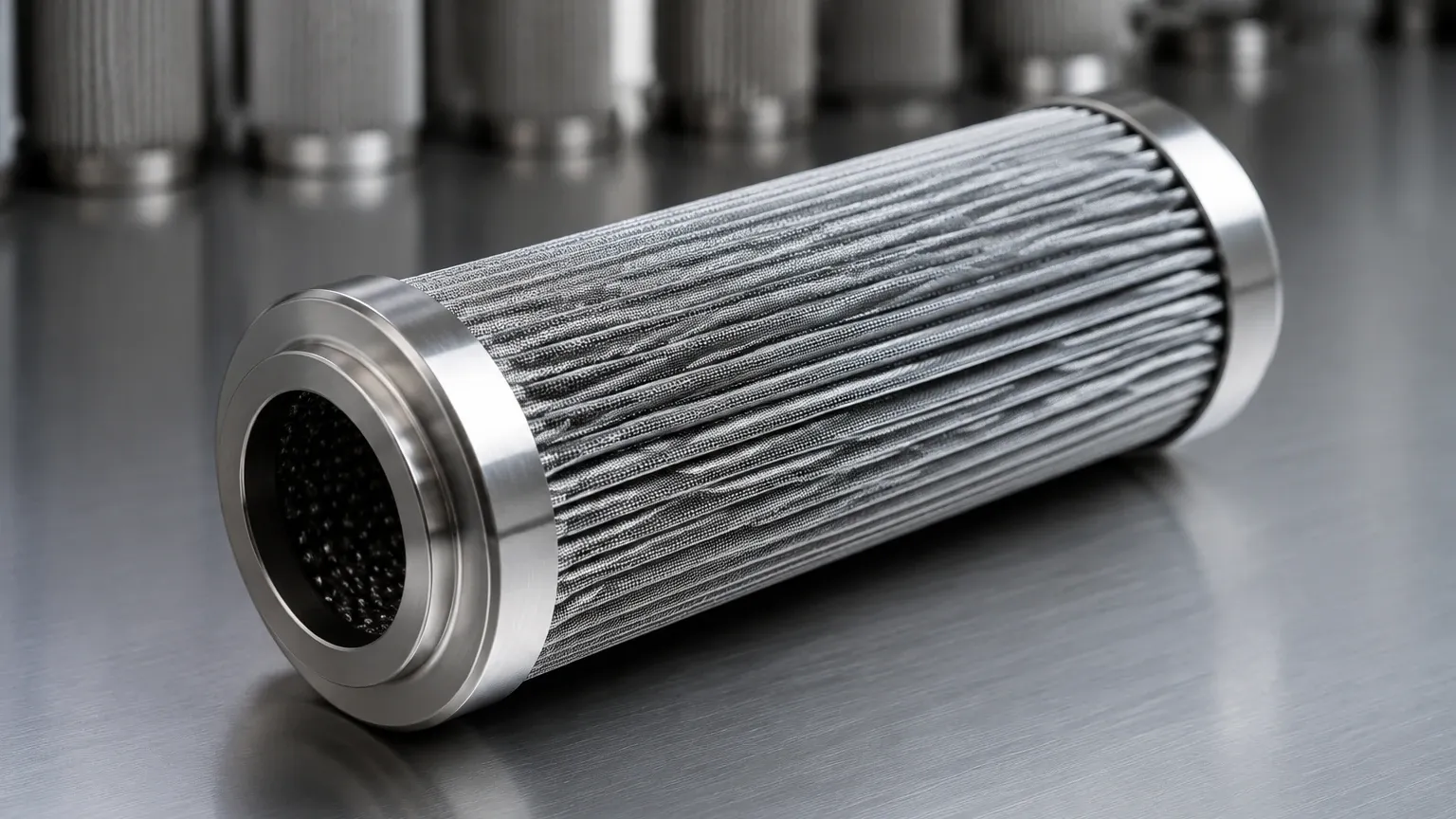
* Stainless Steel Mesh: Utilized when the filter must withstand high pressures, extreme temperatures, or corrosive cleaning agents.
Filtration Efficiency and Micron Ratings
The performance of a cartridge filter 90340 is measured by its ability to capture particles of a specific size. Standard units typically offer nominal filtration, meaning they capture a high percentage of particles at a certain micron level but allow some bypass of smaller or irregularly shaped contaminants. For critical industrial processes, moving to absolute-rated media or HEPA-grade materials is often necessary to protect downstream components or meet environmental safety standards.
Material Selection for Industrial Filtration Upgrades
When a standard cartridge filter 90340 fails to provide the necessary service life, the first point of evaluation is material compatibility. In B2B applications, the cost of frequent filter replacements and the associated labor often outweighs the initial investment in high-performance materials.
The Role of Stainless Steel in Cartridge Design
For applications involving high temperatures (exceeding 250°F) or aggressive chemical solvents, stainless steel is the preferred material. Stainless steel filter cartridges offer several advantages over disposable media:
1. Mechanical Strength: Unlike paper or plastic-caged filters, stainless steel cartridges do not collapse under high differential pressure (Delta P).
2. Cleanability: These filters can be backwashed, ultrasonically cleaned, or chemically sanitized, allowing them to be reused multiple times.
3. Corrosion Resistance: Using 304 or 316L stainless steel ensures that the filter does not introduce metallic contamination into the process stream through oxidation.
Gasket and Seal Integrity
A common failure point in the 90340 format is the seal between the filter and the housing. Standard foam gaskets may degrade when exposed to oils or chemicals. Engineering teams must specify seal materials based on the fluid or gas being filtered. Options such as Viton (FKM) for high-temperature chemical resistance, EPDM for steam and water applications, or Silicone for food-grade environments are essential considerations for a reliable seal.
Engineering Considerations for High-Performance Filter Cartridges
Designing or selecting a high-performance cartridge filter requires a balance between filtration efficiency and flow dynamics. An overly restrictive filter will increase energy consumption and strain pumps or motors, while an insufficiently restrictive one will fail to protect the system.
Pressure Drop (Delta P) Management
The initial pressure drop across a clean cartridge filter 90340 is a key metric. As the filter accumulates contaminants, the pressure drop increases. In industrial systems, it is vital to calculate the maximum allowable Delta P before the filter must be cleaned or replaced. Pleated designs are used to maximize the surface area within the 90340's compact footprint, which helps maintain a lower initial pressure drop and extends the time between maintenance cycles.
Flow Rate and Velocity
The velocity at which the fluid or gas passes through the filter media (face velocity) affects the efficiency of particle capture. If the velocity is too high, particles may be forced through the media or cause premature erosion of the filter material. Custom-engineered cartridges allow for the adjustment of pleat count and depth to optimize the effective filtration area (EFA) for specific flow requirements.
Structural Support and Core Design
In high-pressure applications, the internal core of the cartridge must provide sufficient support to prevent the media from collapsing inward. Perforated stainless steel cores or expanded metal cages are used in industrial-grade 90340 replacements to ensure structural integrity under fluctuating flow conditions.
Evaluating the Total Cost of Ownership (TCO)
For purchasing departments and plant managers, the unit price of a cartridge filter 90340 is only one component of the total cost. A comprehensive TCO analysis often reveals that cheaper, disposable filters are more expensive in the long run.
Disposable vs. Reusable Filters
A standard disposable 90340 filter may need replacement every few weeks in a high-load environment. In contrast, a custom stainless steel filter might last for years with proper maintenance. The TCO calculation should include:
* Purchase Price: The initial cost of the filter.
* Replacement Frequency: How many units are consumed per year.
* Labor Costs: The time required for maintenance staff to change filters.
* Disposal Costs: Fees associated with hauling away contaminated filter waste, which can be significant for hazardous materials.
* Downtime: The lost production value when the system is offline for filter changes.
Energy Efficiency
A filter that maintains a lower pressure drop for a longer period reduces the energy load on the system's prime mover (fan or pump). Over the lifespan of a high-performance filter, the energy savings can be substantial, particularly in continuous 24/7 operations.
Customization Options for Specialized Industrial Applications
Many OEM systems use the 90340 dimensions but require specific performance characteristics that standard retailers cannot provide. This is where custom manufacturing becomes essential.
Custom Micron Ratings and Weave Types
Industrial wire mesh filters can be manufactured with precise micron ratings, ranging from coarse straining (100+ microns) to fine filtration (under 5 microns). Different weave types, such as Plain Dutch Weave or Twill Dutch Weave, offer varying levels of flow capacity and particle retention, allowing engineers to tune the filter to the specific contaminant profile of their process.
Specialized End Caps and Fittings
While the standard 90340 uses a simple friction fit or a plastic nut, industrial versions can be designed with threaded connections, bayonet mounts, or reinforced end caps to ensure a secure fit in high-vibration environments. These modifications prevent bypass, which occurs when unfiltered air or liquid leaks around the edges of the filter.
Key Risks and Common Pitfalls in Filter Selection
Failure to properly vet a cartridge filter 90340 for industrial use can lead to significant operational risks. Understanding these pitfalls is the first step toward a successful filtration strategy.
The Risk of Media Migration
In lower-quality filters, the fibers of the filter media itself can break loose and enter the downstream flow. This is known as media migration. In pharmaceutical or food and beverage production, this is a critical failure. Specifying bonded media or metal mesh filters eliminates this risk, ensuring that the filter does not become a source of contamination.
Inaccurate Performance Claims
Not all filters labeled as "90340 compatible" are created equal. Some manufacturers use nominal ratings that can be misleading. Engineers should request technical data sheets that specify the Beta Ratio or provide results from standardized testing (such as ISO 16890 or ASHRAE 52.2) to verify performance claims.
Chemical Incompatibility
A filter's housing, adhesive, and gaskets must all be compatible with the process fluid. For example, certain adhesives used to bond filter pleats to end caps may dissolve when exposed to specific industrial solvents. Verification of all component materials is a prerequisite for any B2B procurement process.
Conclusion: Technical Checklist for Procurement
Before finalizing a purchase or specifying a cartridge filter 90340 for a new project, technical professionals should confirm the following details with their supplier:
1. Exact Dimensions: Confirm the height, outer diameter, and inner diameter to ensure compatibility with existing housings.
2. Operating Environment: Define the maximum temperature, pressure, and chemical exposure the filter will encounter.
3. Filtration Goal: Determine the target micron rating and whether an absolute or nominal rating is required.
4. Cleaning Protocol: If choosing a reusable filter, ensure the cleaning method (e.g., backpulsing or chemical bath) is compatible with the filter material.
5. Certification Requirements: Check if the application requires FDA compliance, 3-A Sanitary Standards, or other industry-specific certifications.
By focusing on these engineering fundamentals, organizations can move beyond simple part-number matching and implement filtration solutions that enhance system reliability and process efficiency. Whether you are replacing a standard unit or designing a new system, selecting high-quality Filter Cartridges is a vital investment in industrial performance.
