


Cartridge Filter 90350
In industrial maintenance and facility management, selecting the correct filtration component is essential for protecting equipment and maintaining air quality. The cartridge filter 90350 is a widely recognized specification in the field of dry and wet/dry vacuum systems. While often associated with standard utility applications, the engineering principles behind this filter—and the potential for higher-performance industrial alternatives—are critical for procurement teams and plant engineers to understand.
This guide examines the technical specifications of the 90350 model, evaluates its performance limits, and discusses when industrial operations should consider transitioning to more durable Filter Cartridges manufactured from stainless steel or specialized alloys.
Technical Specifications of the Cartridge Filter 90350
The 90350 designation typically refers to a pleated cartridge filter designed for high-volume airflow and the capture of fine particulate matter. In its standard configuration, this filter is engineered to fit a variety of industrial and commercial vacuum housings. Understanding the physical and mechanical properties of this component is the first step in determining its suitability for a specific application.
Dimensions and Fitment
Standard 90350 filters generally feature a height of approximately 6.5 to 7.5 inches and an outer diameter of roughly 6.5 inches. The internal diameter is designed to slide over a filter cage, secured by a friction fit or a specialized nut and plate assembly. For engineers, verifying these dimensions is crucial to prevent "bypass," where unfiltered air escapes around the edges of the filter, potentially damaging the vacuum motor or re-introducing contaminants into the environment.
Media Composition
The most common media used in the 90350 format is pleated paper or a polyester blend. Pleating is a critical design choice because it significantly increases the total surface area of the filter without increasing its footprint. A higher surface area allows for a lower face velocity (the speed at which air passes through the media), which improves filtration efficiency and extends the time between cleaning cycles.
Filtration Efficiency and Micron Ratings
Standard versions of this filter are typically rated for "General Purpose" use, capable of capturing particles down to 5 microns. This is sufficient for sawdust, wood chips, and general warehouse debris. However, for applications involving drywall dust, cement dust, or fine powders, HEPA-rated versions or specialized coatings are often required to achieve 99.97% efficiency at 0.3 microns.
Engineering Considerations for Industrial Applications
When evaluating the cartridge filter 90350 for an industrial environment, engineers must look beyond the basic dimensions. The operating environment dictates whether a standard disposable filter is sufficient or if a custom-engineered solution is necessary.
Air-to-Cloth Ratio
The air-to-cloth ratio is the volume of air (CFM) passing through a square foot of filter media. If the ratio is too high, particles are forced deep into the media fibers, leading to "blinding" or permanent clogging. In heavy-duty industrial settings, the standard 90350 may reach its capacity quickly, necessitating frequent downtime for maintenance. Engineers often calculate the required surface area based on the specific dust loading of their process to ensure the filter can handle the volume.
Pressure Drop (Delta P)
As a filter accumulates dust, the resistance to airflow increases, measured as pressure drop or Delta P. A high pressure drop strains the motor and reduces suction power. Monitoring Delta P is standard practice in industrial filtration systems to determine the optimal replacement or cleaning interval. If a 90350 filter shows a rapid increase in pressure drop shortly after installation, it may indicate that the media type is mismatched with the particle size or moisture content of the waste stream.
Limitations of Standard Media in Harsh Environments
While the standard 90350 filter is effective for dry, ambient-temperature applications, it faces significant challenges in demanding industrial sectors such as chemical processing or metalworking.
1. Moisture and Humidity: Paper-based filters lose structural integrity when exposed to moisture. Even "washable" polyester filters can suffer from mold growth or media swelling if not dried completely, leading to reduced airflow.
2. Chemical Incompatibility: Many industrial processes involve volatile organic compounds (VOCs) or corrosive vapors. Standard filter media may degrade, tear, or lose its filtration properties when exposed to these substances.
3. Temperature Extremes: Standard adhesives and gaskets used in utility-grade filters are often rated only for temperatures up to 140°F (60°C). High-temperature exhaust or hot ash can melt the filter structure, causing catastrophic failure.
The Case for Stainless Steel Filter Cartridges
For facilities dealing with high temperatures, corrosive chemicals, or the need for repeated sterilization, standard disposable filters like the 90350 may not be cost-effective in the long term. This is where custom-manufactured Filter Cartridges from Kaifil provide a superior ROI.
Durability and Reusability
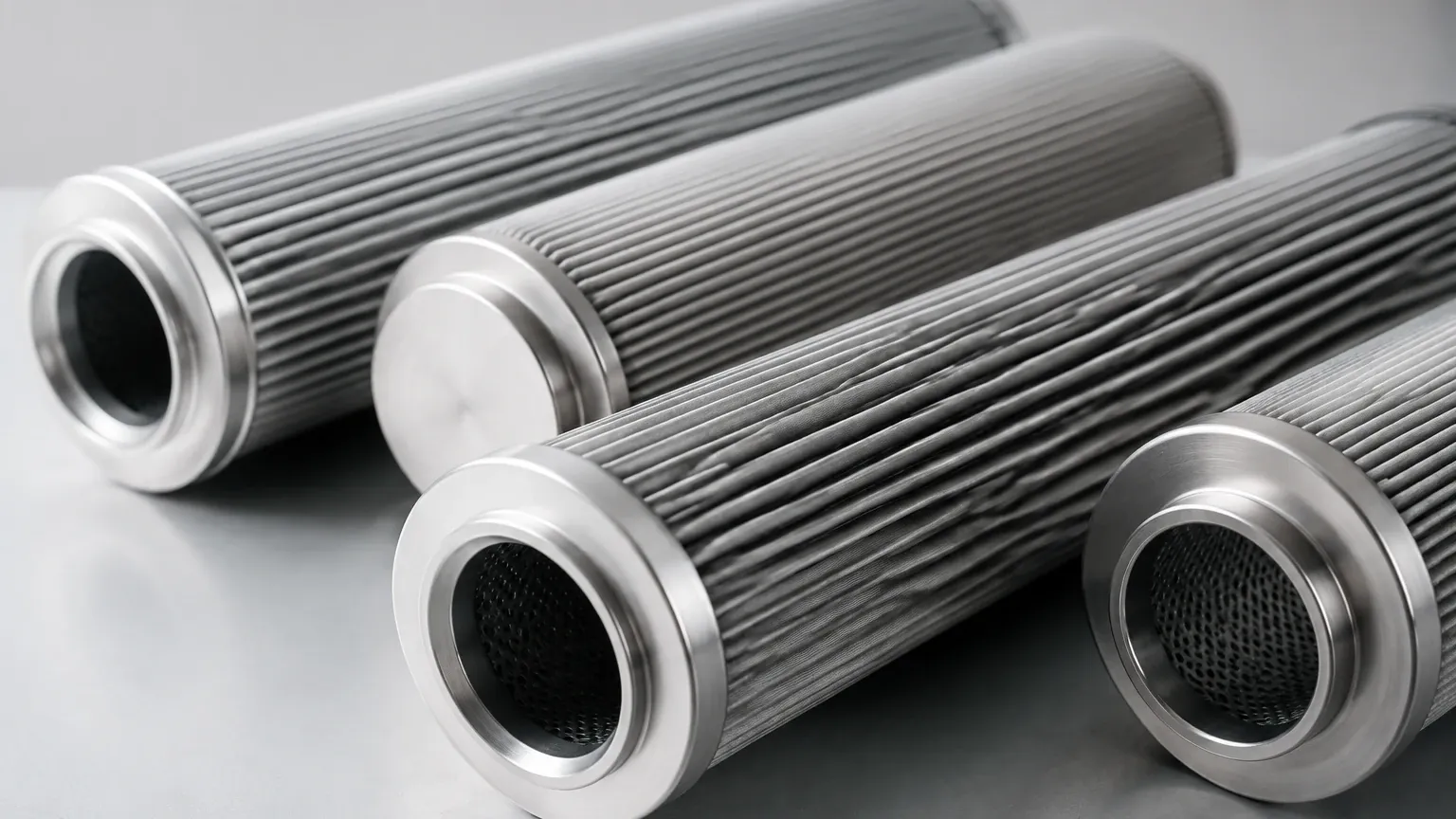
Stainless steel wire mesh filters are designed for longevity. Unlike paper or polyester, a stainless steel cartridge can be cleaned via backwashing, ultrasonic cleaning, or chemical baths and returned to service. This eliminates the recurring cost of replacement filters and reduces the environmental impact of industrial waste.
Precision Filtration
Kaifil specializes in precision metal filtration components. By utilizing multi-layer sintered wire cloth or wedge wire, these filters can be engineered to specific micron ratings with absolute precision. This is particularly important in hydraulic systems or pharmaceutical processing where even minor deviations in filtration accuracy can compromise product quality.
Structural Integrity
In high-pressure applications, a standard cartridge filter 90350 might collapse under the force of the vacuum or fluid flow. Stainless steel cartridges are reinforced with internal cores and outer shrouds, allowing them to withstand significant differential pressures without deforming.
Selecting the Right Filter: A Checklist for Purchasing Teams
Before ordering a replacement cartridge filter 90350 or seeking a custom alternative, procurement teams should confirm the following technical details with their engineering department:
* Particle Characteristics: Is the dust abrasive, sticky, or explosive? This determines the need for anti-static coatings or specialized metallurgy.
* Operating Temperature: What is the maximum temperature the filter will encounter? This dictates the choice of gaskets (e.g., Viton, Silicone, or PTFE).
* Flow Rate Requirements: What is the CFM or GPM required for the system to operate at peak efficiency?
* Chemical Exposure: Will the filter come into contact with acids, bases, or solvents? This will determine if 304 or 316L stainless steel is required.
* Regulatory Compliance: Does the filter need to meet FDA, 3-A, or other industry-specific hygiene standards?
Maintenance and Replacement Cycles
Even the best-engineered filter requires a maintenance strategy. For the cartridge filter 90350, maintenance usually involves shaking off loose dust or using compressed air to blow out the pleats. However, this can often damage the media if the air pressure is too high (exceeding 30 PSI).
In contrast, industrial metal filters are designed for rigorous cleaning protocols. Establishing a regular cleaning schedule based on Delta P readings can extend the life of a stainless steel filter for years. When the pressure drop no longer returns to the "clean" baseline after a wash cycle, it is an indication that the filter has reached the end of its functional life and requires professional cleaning or replacement.
Why Customization Matters
Every industrial process has unique variables. A standard off-the-shelf 90350 might be "good enough" for a small workshop, but in a 24/7 manufacturing environment, "good enough" often leads to increased maintenance costs and unplanned downtime.
Kaifil works closely with global customers to develop customized filtration solutions that address these specific challenges. Whether it is modifying the dimensions of a standard cartridge to fit a legacy housing or engineering a completely new multi-stage filtration system, custom manufacturing ensures that the filter is the strongest link in the production chain, not the weakest.
Conclusion
The cartridge filter 90350 is a versatile component found in many industrial settings, but it is not a universal solution. By understanding the mechanical limits of standard media and the advantages of advanced materials, engineers can make informed decisions that optimize performance and reduce total cost of ownership. For those requiring higher durability, chemical resistance, or precision performance, exploring professional Filter Cartridges is the logical next step in optimizing industrial filtration infrastructure.
