


Merv 17 Filter
In industrial filtration and air quality management, the Minimum Efficiency Reporting Value (MERV) scale serves as the primary benchmark for evaluating filter performance. While standard commercial buildings typically utilize filters ranging from MERV 8 to MERV 13, high-precision industrial environments require significantly higher levels of particulate capture. The merv 17 filter represents the transition from high-efficiency air filtration to the realm of HEPA (High-Efficiency Particulate Air) performance. For engineers and facility managers, understanding the technical specifications, application limits, and material considerations of MERV 17 filtration is essential for maintaining sterile environments and protecting sensitive equipment.
At this level of efficiency, filtration is no longer just about removing dust; it is about controlling sub-micron particles, including bacteria, combustion smoke, and carbon dust. This guide examines the engineering principles behind MERV 17 performance and how industrial operators can optimize their filtration systems using advanced materials and custom designs.
Understanding the MERV 17 Efficiency Threshold
The MERV rating system, defined by ASHRAE Standard 52.2, categorizes filters based on their ability to capture particles of varying sizes, ranging from 0.3 to 10 microns. Most standard MERV ratings stop at 16. However, in industrial contexts, a MERV 17 rating is frequently used to describe filters that meet or exceed HEPA standards.
A MERV 17 filter is engineered to capture at least 99.97% of particles in the 0.3-micron range. This specific size is critical because it represents the Most Penetrating Particle Size (MPPS). Particles larger than 0.3 microns are easily trapped by mechanical straining or impaction, while much smaller particles are captured through Brownian motion (diffusion). The 0.3-micron particle sits at the intersection of these physical forces, making it the most difficult to stop. Achieving MERV 17 efficiency requires a sophisticated filter media structure that balances high capture rates with manageable airflow resistance.
Technical Mechanisms of High-Efficiency Filtration
To achieve the performance required for a merv 17 filter, the media must utilize multiple physical mechanisms simultaneously. Unlike lower-rated filters that rely primarily on a simple sieve effect, high-efficiency industrial filters employ the following:
1. Interception: This occurs when a particle follows an air stream but comes within one particle-radius of a filter fiber and adheres to it. This is effective for medium-sized particles.
2. Inertial Impaction: Larger, heavier particles possess enough inertia that they cannot adjust to the rapid changes in airflow direction around a fiber. Instead, they continue on a straight path and collide directly with the filter media.
3. Diffusion: For the smallest particles (typically below 0.1 microns), erratic movement caused by collisions with gas molecules (Brownian motion) increases the likelihood that they will wander into a fiber and become trapped.
In industrial applications where high temperatures or corrosive gases are present, traditional fiberglass or synthetic media may degrade. In these scenarios, precision-engineered metal mesh or sintered metal fiber felt is often utilized to maintain MERV 17-equivalent performance under extreme conditions. For more information on specialized material selection, you can Review product options and application support on our main page.
Industrial Applications for MERV 17 Filtration
The implementation of MERV 17 filtration is rarely a standard requirement for general office ventilation. Instead, it is a necessity for specialized B2B sectors where contamination can lead to catastrophic product failure or safety risks.
Pharmaceutical and Biotech Manufacturing
In pharmaceutical production, maintaining a sterile environment is a regulatory requirement. MERV 17 filters are used in cleanrooms and terminal housings to ensure that airborne microbes and fine particulates do not contaminate drug formulations or medical devices.
Electronics and Semiconductor Fabrication
The manufacturing of microchips and high-precision electronics requires environments virtually free of dust. Even a single sub-micron particle can bridge a circuit or cause a defect in a silicon wafer. MERV 17 and higher-rated ULPA filters are the standard for these facilities.
Chemical Processing and Venting
In chemical plants, exhaust gases often contain hazardous fine particulates or catalysts that must be recovered. Standard filters would either fail due to chemical incompatibility or allow dangerous particles to escape. Custom-designed stainless steel filters with high-efficiency ratings provide the durability needed for these aggressive environments.
Food and Beverage Aseptic Packaging
To extend the shelf life of food products without heavy preservatives, packaging must occur in a sterile air environment. High-efficiency filtration ensures that yeast, mold spores, and bacteria are removed from the air supply during the filling and sealing process.
Engineering Considerations: Pressure Drop and System Load
One of the most significant challenges in deploying a merv 17 filter is the associated pressure drop. Because the media is extremely dense to facilitate high capture rates, it creates significant resistance to airflow. This resistance is measured as "static pressure."
Engineers must account for both the initial clean pressure drop and the final (dirty) pressure drop. If a system is not designed with a powerful enough blower, the installation of a MERV 17 filter can lead to reduced air exchange rates, increased energy consumption, and potential motor failure.
To mitigate these issues, industrial systems often utilize a multi-stage filtration approach:
* Pre-filtration (MERV 8-11): Captures large dust and debris to prevent premature loading of the high-efficiency filter.
* Secondary Filtration (MERV 13-14): Removes mid-sized particles, significantly extending the life of the final stage.
* Final Stage (MERV 17/HEPA): Only deals with the finest sub-micron particles, ensuring maximum longevity and efficiency.
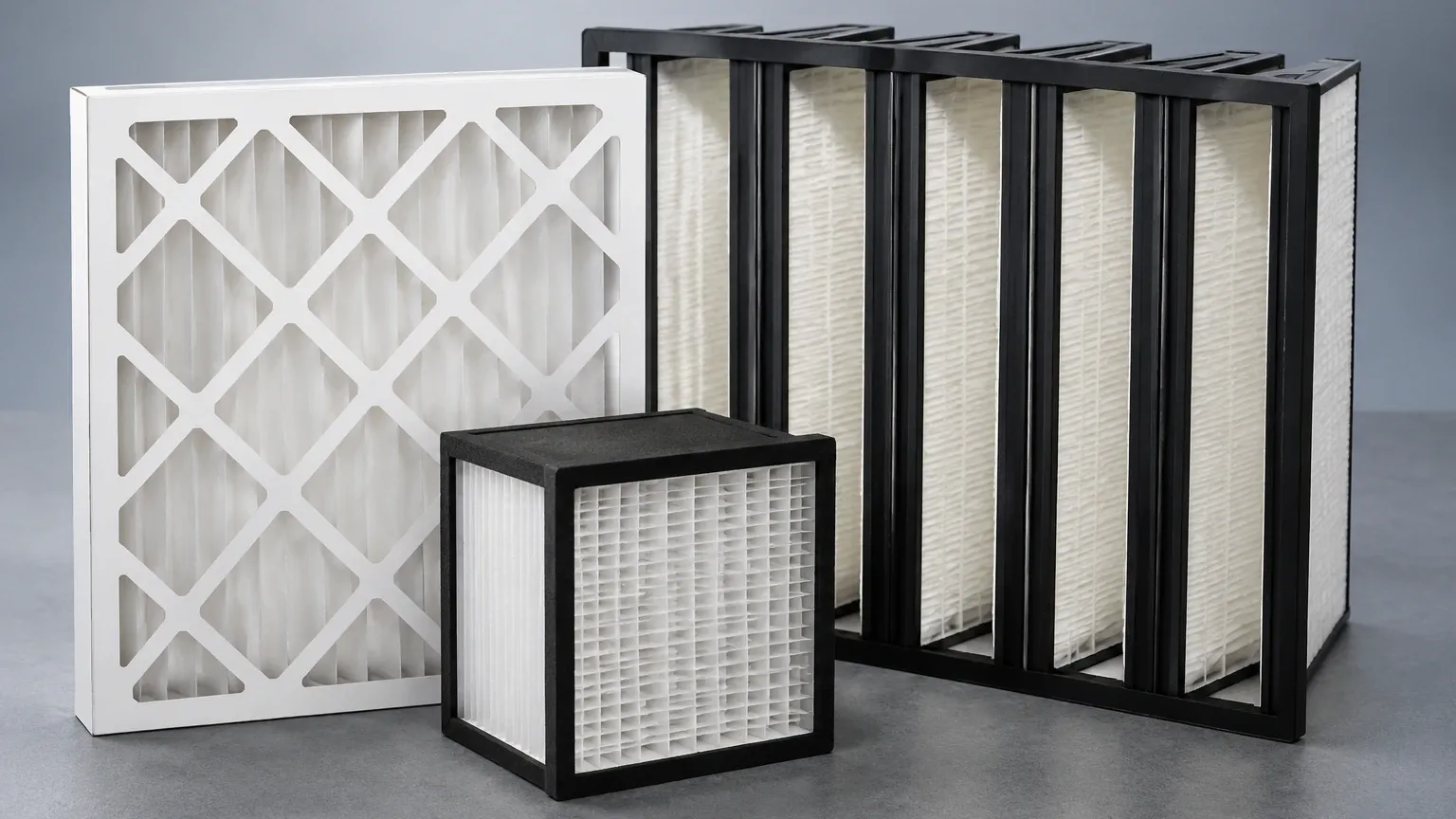
Material Selection for Demanding Environments
While many MERV 17 filters are constructed from pleated glass microfibers, industrial environments often demand more robust materials. Kaifil specializes in providing custom stainless steel filtration solutions that bridge the gap between high efficiency and extreme durability.
Stainless Steel Wire Mesh and Fiber Felt
In applications involving high pressures, high temperatures (exceeding 250°C), or frequent cleaning cycles, stainless steel is the preferred material. Sintered metal fiber felt can be engineered to provide filtration efficiencies comparable to MERV 17 while offering the structural integrity of metal. These components are resistant to corrosion and can be integrated into custom filter cartridges designed for specific industrial housings.
Customization and OEM Solutions
Every industrial facility has unique spatial and performance constraints. Off-the-shelf filters may not fit existing housings or may lack the necessary reinforcement for high-pressure hydraulic or pneumatic systems. Custom manufacturing allows for the optimization of pleat density, support mesh thickness, and gasket materials to ensure a leak-proof seal—which is vital, as even a minor bypass can negate the benefits of a high-efficiency filter.
Total Cost of Ownership (TCO) vs. Initial Purchase Price
When evaluating a merv 17 filter, purchasing teams must look beyond the initial unit cost. High-efficiency filters are an investment in process stability. The TCO includes:
* Energy Costs: A filter with a lower initial pressure drop will save thousands of dollars in electricity over its lifespan.
* Replacement Frequency: Using high-quality media and proper pre-filtration reduces the frequency of filter changes, lowering labor costs and downtime.
* Waste Management: In some industries, metal filters that can be cleaned and reused offer a significant environmental and cost advantage over disposable fiberglass units.
* Product Yield: In sectors like semiconductor or pharma, the cost of a single contamination event far outweighs the price of the highest-quality filtration system.
Verification and Quality Control
For a filter to be legitimately classified at the MERV 17 level, it must undergo rigorous testing. In a B2B procurement process, engineers should request test reports that confirm the capture efficiency at the 0.3-micron level. For critical applications, "leak testing" or "scan testing" of the individual filter unit is recommended after installation to ensure that no damage occurred during shipping or handling.
At Kaifil, we understand that precision is non-negotiable. Our focus on custom stainless steel filtration ensures that your high-efficiency requirements are met with components built for the rigors of industrial use. Whether you are managing a chemical processing plant or a high-pressure hydraulic system, selecting the right filtration partner is the first step in achieving reliable performance.
For technical specifications, material compatibility charts, or to discuss a custom filtration project, visit our Main Page to explore how our engineering team can support your specific application needs. Choosing the right merv 17 filter solution is not just about meeting a standard; it is about ensuring the long-term integrity of your industrial process.
