


Filtre À Lamelles Frittées
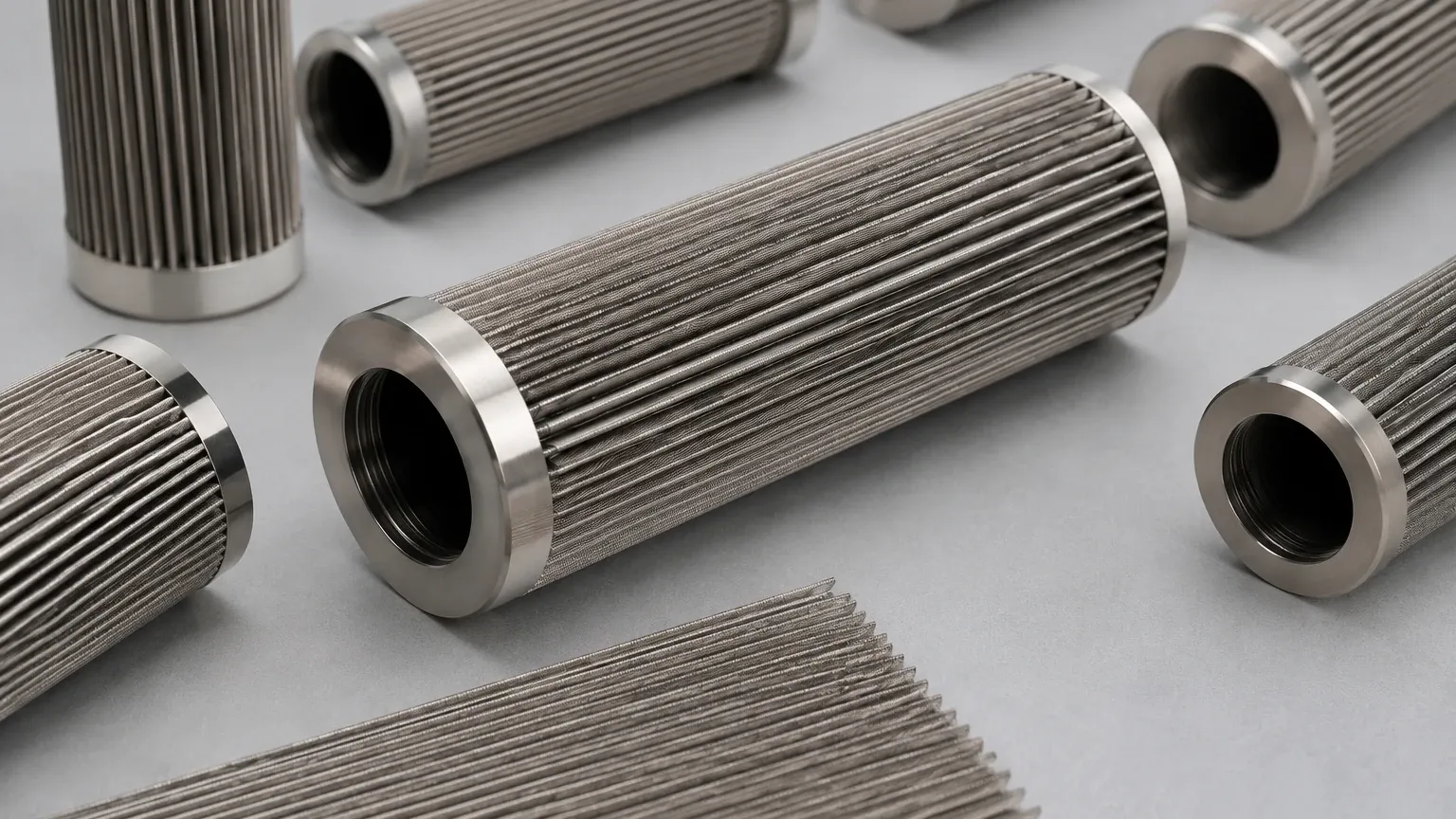
In high-precision industrial filtration, the selection of filter media is a critical decision that impacts operational efficiency, product purity, and long-term maintenance costs. Among the most robust solutions available for demanding environments is the filtre à lamelles frittées (sintered leaf or disc filter). These components are engineered by fusing multiple layers of stainless steel wire mesh through a specialized thermal process known as sintering. The result is a porous metal structure that combines the filtration accuracy of fine mesh with the mechanical strength of heavy plate.
At Kaifil, we specialize in the manufacturing of custom stainless steel filtration solutions, providing technical expertise to engineers and procurement teams who require reliable performance in chemical, pharmaceutical, and food processing applications. Understanding the technical nuances of sintered leaf filters is essential for optimizing system design and achieving consistent filtration results.
Technical Fundamentals of Sintered Leaf Filters
The production of a filtre à lamelles frittées involves a diffusion-bonding process. Unlike standard wire mesh, which can shift under high pressure, sintered mesh is structurally stable. Multiple layers—typically ranging from two to seven—are stacked and placed in a high-temperature vacuum furnace. Under controlled heat and pressure, the contact points of the wires fuse together at a molecular level without the need for binders or filler metals.
Layer Configuration and Functionality
A typical multi-layer sintered leaf filter is composed of three functional zones:
1. The Filtration Layer: This is the finest mesh layer, determining the absolute filtration rating. It is protected on both sides to prevent mechanical damage.
2. The Distribution/Support Layers: These layers provide mechanical rigidity and ensure that the fluid or gas is distributed evenly across the filtration surface. They prevent the fine mesh from collapsing under differential pressure.
3. The Reinforcement Layers: Usually made of coarse mesh or perforated metal, these layers provide the structural integrity required for the filter to withstand high-pressure backwashing and physical handling.
By integrating these layers into a single monolithic structure, the filtre à lamelles frittées offers a level of durability that single-layer meshes cannot match. For more information on specific configurations, you can visit our Main Page to review product options and application support.
Engineering Considerations for Selection
When specifying a filtre à lamelles frittées for an industrial process, engineers must evaluate several variables to ensure the component meets the application's specific demands. The following factors are critical in the selection process:
1. Filtration Rating: Absolute vs. Nominal
In critical B2B applications, such as pharmaceutical manufacturing or fine chemical processing, the distinction between absolute and nominal ratings is paramount. Sintered filters provide an absolute rating, meaning the pore structure is fixed and will not enlarge under pressure. This ensures that 100% of particles above the specified micron size are retained.
2. Material Compatibility
Stainless steel 316L is the industry standard for sintered filters due to its excellent corrosion resistance and ability to withstand high temperatures. However, for highly aggressive environments involving specific acids or chlorides, other alloys may be considered. Kaifil works closely with clients to select materials that prevent premature failure due to chemical degradation or oxidation.
3. Effective Filtration Area (EFA)
The geometry of the "lamelle" (leaf or disc) is designed to maximize the filtration surface area within a compact housing. A higher EFA reduces the flux rate (velocity of the fluid through the media), which in turn lowers the pressure drop and extends the time between cleaning cycles.
Performance Advantages in Industrial Environments
The adoption of filtre à lamelles frittées technology offers several distinct advantages over disposable or non-sintered alternatives:
* Mechanical Stability: The diffusion-bonded structure ensures that pore sizes remain constant even under high-pressure surges or mechanical vibration. This prevents "media migration," where particles of the filter itself break off and contaminate the filtrate.
* Thermal Resistance: Sintered stainless steel filters can operate in environments exceeding 500°C (932°F) in oxidizing atmospheres and even higher in reducing environments. This makes them ideal for hot gas filtration and high-temperature polymer processing.
* Cleanability and Reusability: Unlike polymer-based filters, a filtre à lamelles frittées is fully cleanable. It can be serviced via backpulsing, ultrasonic cleaning, or chemical steeping. This reusability significantly reduces the total cost of ownership (TCO) by eliminating the recurring expense of disposable cartridges.
* High Permeability: Despite their strength, these filters maintain high porosity, allowing for high flow rates with minimal initial pressure drop.
Applications Across Key Industries
Chemical and Petrochemical Processing
In the chemical industry, filters must withstand aggressive solvents and high-pressure differentials. The filtre à lamelles frittées is frequently used for catalyst recovery, where the ability to backwash the filter in-situ is a major operational advantage. The fixed pore structure ensures that valuable catalysts are captured with nearly 100% efficiency.
Food and Beverage Production
For food-grade applications, hygiene and material safety are the top priorities. Sintered stainless steel is inherently non-toxic and does not shed fibers. These filters are used in the clarification of syrups, beverages, and edible oils, where they must withstand frequent Clean-in-Place (CIP) cycles involving caustic chemicals and high-pressure steam sterilization.
Pharmaceutical and Biotechnology
In the pharmaceutical sector, filtration components must meet stringent regulatory standards. The smooth surface finish of sintered leaf filters prevents bacterial growth and allows for easy validation of cleaning protocols. They are often used in the filtration of active pharmaceutical ingredients (APIs) and in sterile gas venting.
Hydraulic and Aerospace Systems
High-pressure hydraulic systems require filters that can handle intense pressure fluctuations without deforming. The mechanical strength of the filtre à lamelles frittées makes it a preferred choice for protecting sensitive valves and actuators from particulate contamination.
Maintenance and Life Cycle Management
One of the primary questions engineers ask before purchasing industrial filters concerns the replacement cycle. While the initial investment in a filtre à lamelles frittées is higher than that of a disposable filter, its lifespan is significantly longer.
Cleaning Protocols
To maintain optimal performance, a structured cleaning regimen should be established. When the differential pressure (ΔP) reaches a pre-determined limit, the filter should be cleaned. Common methods include:
* Backwashing: Reversing the flow of the fluid to dislodge particles trapped on the surface.
* Ultrasonic Cleaning: Using high-frequency sound waves in a cleaning solvent to remove fine particulates from deep within the pore structure.
* Chemical Cleaning: Using acids, alkalis, or surfactants to dissolve organic or inorganic fouling.
Monitoring Performance
Continuous monitoring of the pressure drop across the filter is the most effective way to determine the health of the media. A sudden drop in ΔP may indicate a breach in the filter media, while a rapid increase suggests severe fouling or a change in the upstream process conditions.
Customization and OEM Capabilities
Every industrial process has unique requirements regarding flow rate, pressure, and space constraints. Kaifil provides comprehensive OEM services to develop customized filtre à lamelles frittées solutions. This includes:
* Custom Micron Ratings: Tailoring the pore size to the specific particle distribution of your process.
* Bespoke Geometries: Designing leaf filters in various diameters, thicknesses, and mounting configurations to fit existing housings.
* Structural Reinforcement: Adding internal supports or outer shrouds for applications involving extreme mechanical stress.
By collaborating with a manufacturer that understands the engineering behind the sintering process, purchasing teams can ensure they receive a product that is not only a component but a solution to their filtration challenges. For a deeper look at our manufacturing capabilities and to discuss your specific project needs, visit our Main Page.
Conclusion
The filtre à lamelles frittées represents the pinnacle of durable, high-precision filtration. Its ability to operate in extreme temperatures, resist corrosive chemicals, and provide absolute particle retention makes it an indispensable tool for modern industrial processes. By focusing on technical specifications such as layer configuration, material grade, and EFA, engineers can select a filtration solution that maximizes uptime and ensures the highest quality of the end product. As a dedicated manufacturer, Kaifil remains committed to delivering these high-performance components to meet the evolving needs of the global industrial market.
