


Porous Stainless Steel Tube
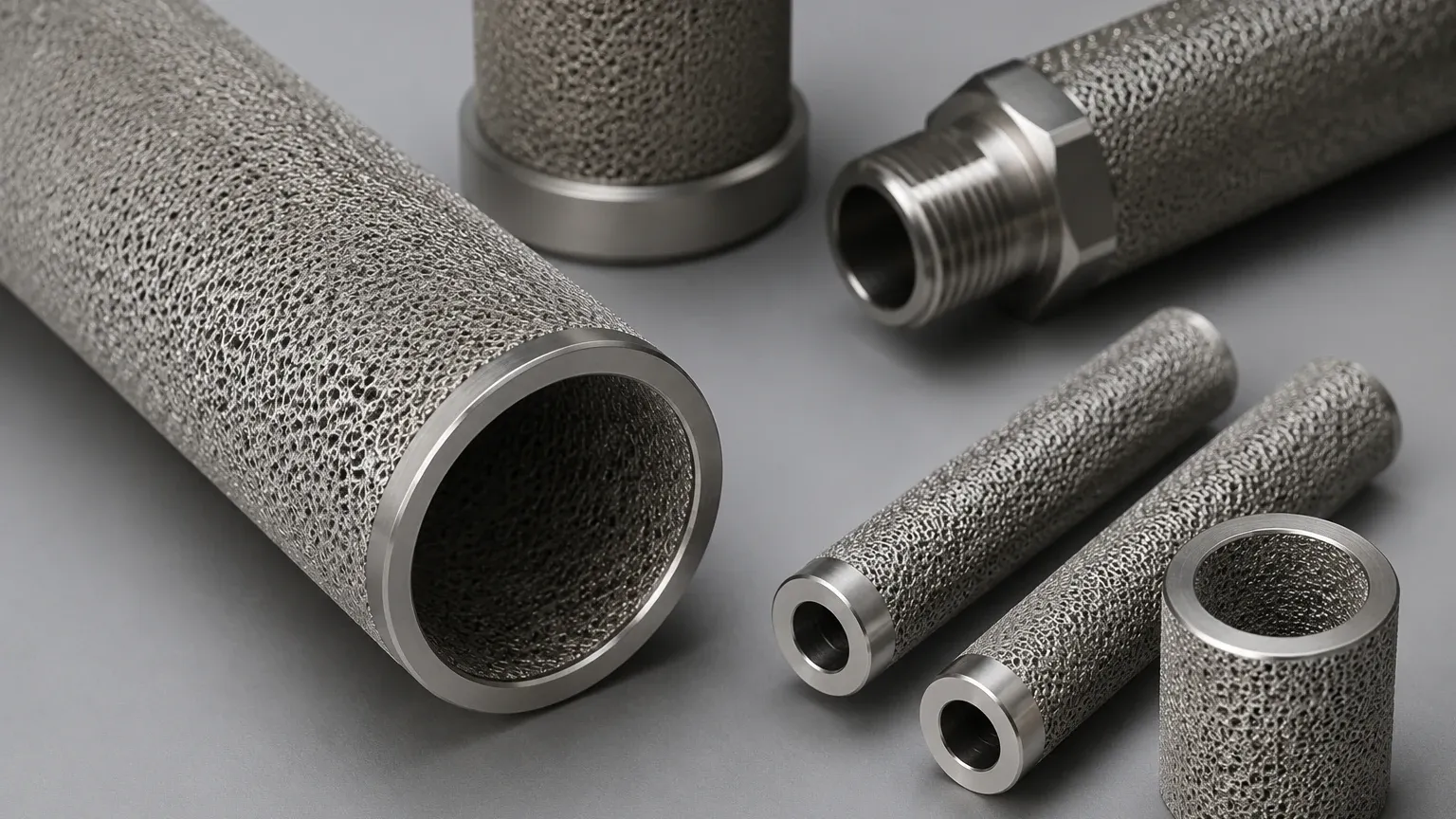
In the landscape of industrial filtration and fluid handling, the porous stainless steel tube represents a critical component for high-performance applications. Engineered through the process of powder metallurgy and sintering, these components offer a unique combination of structural rigidity, thermal stability, and precise filtration control. Unlike traditional fabric or polymer-based filters, a porous stainless steel tube provides the mechanical strength necessary to withstand significant pressure differentials and the chemical resistance required for corrosive environments. For engineers and procurement professionals, understanding the technical nuances of these tubes is essential for optimizing system efficiency and ensuring long-term reliability.
The Fundamentals of Sintered Porous Metal Technology
The manufacturing of a porous stainless steel tube begins with high-purity metal powders. These powders are carefully graded by size and shape to determine the final porosity and micron rating of the component. The production process typically involves cold isostatic pressing or gravity molding, followed by sintering in a controlled-atmosphere furnace. During sintering, the metal particles bond at their contact points without reaching the melting point of the material. This creates a robust, interconnected pore structure that allows for fluid flow while trapping particulate matter.
This interconnected network of pores is what defines the performance of the filter. Because the structure is metallic, it possesses a high degree of uniformity and repeatability compared to fibrous media. Manufacturers like Kaifil utilize advanced sintering techniques to ensure that the pore size distribution remains tight, which is a critical factor for applications requiring absolute filtration ratings. The resulting tube is a self-supporting structure that does not require internal or external cages in many standard operating conditions, simplifying the overall design of the filtration housing.
Material Science: 304 vs. 316L Stainless Steel
Selecting the correct alloy for a porous stainless steel tube is a fundamental engineering decision that impacts the lifespan and performance of the filtration system. While various alloys can be sintered, 304 and 316L stainless steel are the most common choices in industrial settings.
* 304 Stainless Steel: This alloy is suitable for general-purpose applications where basic corrosion resistance and high-temperature strength are required. It is often used in air filtration, hydraulic systems, and less aggressive chemical environments. It offers excellent mechanical properties and is a cost-effective solution for many standard industrial processes.
* 316L Stainless Steel: The "L" denotes low carbon content, which minimizes carbide precipitation during welding or high-temperature operations, thereby enhancing corrosion resistance. 316L contains molybdenum, which significantly improves resistance to pitting and crevice corrosion in chloride-rich environments. This makes it the preferred material for pharmaceutical, food and beverage, and marine applications where hygiene and chemical stability are paramount.
Beyond these standard grades, specialized applications may require exotic alloys such as Monel, Inconel, or Hastelloy. However, for the majority of industrial filtration needs, 316L provides the optimal balance of performance and cost. For more information on material selection and technical specifications, engineers can refer to the Main Page of the Kaifil website.
Key Performance Indicators: Filtration Accuracy and Flow Rates
When evaluating a porous stainless steel tube, two primary metrics dictate its suitability: the micron rating and the permeability. These factors are inversely related; a finer micron rating typically results in higher flow resistance (pressure drop).
Micron Rating: Absolute vs. Nominal
In industrial filtration, it is vital to distinguish between nominal and absolute ratings. A nominal rating indicates the ability of the filter to retain a certain percentage (often 60% to 90%) of particles of a specific size. An absolute rating, however, refers to the pore size where 99.9% of particles above that size are captured. Porous stainless steel tubes are highly valued for their ability to provide consistent absolute filtration, which is necessary for protecting sensitive downstream equipment like high-pressure nozzles or analytical instruments.
Permeability and Pressure Drop
Permeability refers to the ease with which a fluid passes through the porous media. Engineers must calculate the expected pressure drop (ΔP) across the filter at a given flow rate. A high initial pressure drop may indicate that the filter is too fine for the application or that the surface area is insufficient. Because sintered metal tubes can be cleaned and reused, the "clean pressure drop" is a baseline measurement used to monitor the state of the filter during its service life. As contaminants build up, the pressure drop increases, eventually signaling the need for a cleaning cycle.
Structural Advantages in Demanding Environments
The physical robustness of a porous stainless steel tube allows it to function in environments where other media would fail. Several structural advantages make these tubes the standard for heavy-duty industrial use:
1. High Temperature Resistance: Sintered stainless steel can operate at temperatures exceeding 450°C (842°F) in oxidizing environments and even higher in reducing atmospheres. This is essential for steam filtration and hot gas processing.
2. Pressure Differential Strength: The rigid nature of the sintered powder allows the tubes to withstand high collapse pressures. This is particularly important in hydraulic systems and high-pressure gas injection where sudden pressure spikes can occur.
3. Shape Stability: Unlike pleated paper or fabric, the porous metal structure does not deform under flow. This ensures that the pore geometry remains constant, providing reliable filtration performance throughout the entire operating cycle.
4. Vibration and Shock Resistance: The metallic bond created during sintering provides excellent resistance to mechanical vibration and thermal shock, which are common in industrial machinery and chemical plants.
Primary Industrial Applications and Use Cases
The versatility of the porous stainless steel tube leads to its adoption across a wide spectrum of industries. Each application leverages specific properties of the sintered metal.
Gas Sparging and Carbonation
In the food and beverage industry, porous tubes are used as spargers to introduce gases into liquids. By forcing gas through the fine pores of the stainless steel tube, thousands of tiny bubbles are created. This maximizes the surface area for gas-liquid interaction, leading to efficient carbonation of beverages or oxygenation in bioreactors. The uniform pore distribution ensures consistent bubble size, which is critical for process control.
Steam Filtration
Steam used in the pharmaceutical and food industries must be free of pipe scale and other particulates. Sintered metal tubes are ideal for "culinary steam" applications because they can withstand the high temperatures of steam while providing the fine filtration required to meet health and safety standards. Their ability to be sterilized in place (SIP) is a significant advantage in these sectors.
Catalyst Recovery
In chemical processing, expensive catalysts are often used in slurry reactors. Porous stainless steel tubes serve as high-efficiency filters to recover these catalysts from the product stream. The durability of the material allows for the use of aggressive backwashing techniques to dislodge the catalyst cake, enabling continuous or semi-continuous operation without frequent manual intervention.
Engineering Challenges: Fouling, Pressure Drop, and Compatibility
While the porous stainless steel tube is a highly durable solution, it is not immune to engineering challenges. Proper system design must account for potential issues to maximize the return on investment.
Fouling and Blinding: Fouling occurs when particles become deeply embedded in the pore structure or form a hard cake on the surface. If the contaminant is sticky or deformable, it can "blind" the filter, leading to a rapid increase in pressure drop. Understanding the nature of the solids—whether they are hard, soft, fibrous, or granular—is essential for selecting the correct pore size and cleaning protocol.
Chemical Compatibility: Although 316L is highly resistant to many chemicals, it can be compromised by specific acids or high concentrations of halides at elevated temperatures. Engineers must verify the compatibility of the stainless steel grade with the entire range of fluids it will encounter, including cleaning agents. In some cases, passivation or specialized coatings may be required to enhance the tube's longevity.
Sizing and Velocity: Over-sizing a filter leads to unnecessary costs, while under-sizing leads to excessive pressure drops and frequent cleaning. The face velocity—the speed at which the fluid approaches the filter surface—must be carefully managed. High velocities can drive particles deep into the pores, making cleaning more difficult, whereas low velocities may not provide enough force for effective backwashing.
Selection and Customization: Defining Technical Requirements
When sourcing a porous stainless steel tube, providing precise technical requirements to the manufacturer ensures the component will perform as expected. Because Kaifil specializes in custom filtration solutions, engineers have the flexibility to define specific parameters:
* Dimensions: Specify the outer diameter (OD), inner diameter (ID), and overall length. Custom lengths and wall thicknesses are often required to fit existing housings or to meet specific flow requirements.
* End Fittings: Tubes can be supplied with various end configurations, such as open ends, closed ends (threaded or flat), or specialized flanges and NPT/BSP fittings. Proper sealing is vital to prevent bypass, which would compromise the filtration integrity.
* Pore Size and Grade: Define the required micron rating based on the smallest particle that must be captured. It is often helpful to provide data on the particle size distribution of the contaminants.
* Operating Conditions: Clearly state the maximum operating temperature, normal and peak flow rates, and the chemical composition of the fluid.
By collaborating with a manufacturer that understands both the material science and the application environment, purchasing teams can reduce the total cost of ownership. While the initial cost of a sintered metal filter may be higher than disposable alternatives, the ability to clean and reuse the component, combined with its operational reliability, often results in significant long-term savings.
Maintenance and Cleaning Procedures
One of the primary advantages of the porous stainless steel tube is its cleanability. Depending on the application and the nature of the contaminants, several methods can be employed to restore the filter's performance:
* Backwashing/Backpulsing: This is the most common method for liquid and gas applications. By reversing the flow through the filter, the accumulated cake is dislodged from the surface. This can often be done without removing the filter from the system.
* Ultrasonic Cleaning: For deep-seated particles that backwashing cannot remove, ultrasonic cleaning is highly effective. The tube is immersed in a cleaning solvent, and high-frequency sound waves create cavitation bubbles that scrub the internal pore surfaces.
* Chemical Cleaning: Soaking the tubes in caustic or acidic solutions can dissolve organic or inorganic deposits. This is common in the food and chemical industries. It is imperative to ensure the cleaning chemicals do not degrade the stainless steel or the seals.
* Furnace Cleaning: In cases where the contaminants are organic polymers, the tubes can be heated in a controlled furnace to burn off the residue (pyrolysis), leaving the metallic structure intact.
In conclusion, the porous stainless steel tube is an indispensable tool for modern industrial filtration. Its structural integrity, precise pore control, and ability to withstand extreme conditions make it a superior choice for critical processes. By carefully evaluating material grades, micron ratings, and maintenance requirements, engineers can implement filtration solutions that enhance product quality and protect valuable equipment. For those seeking specialized guidance or custom-engineered components, the Main Page serves as a comprehensive resource for exploring the full range of stainless steel filtration capabilities provided by Kaifil.
