


Merv 17 Filters
In the landscape of industrial air and fluid processing, the classification of filtration efficiency is paramount for maintaining system integrity, ensuring product purity, and meeting stringent regulatory standards. Among the various ratings established by the American Society of Heating, Refrigerating and Air-Conditioning Engineers (ASHRAE), the Minimum Efficiency Reporting Value (MERV) scale is a critical benchmark. Specifically, merv 17 filters represent a transition into the high-efficiency particulate air (HEPA) category. While the MERV scale is frequently associated with HVAC systems and synthetic media, the engineering principles behind MERV 17 efficiency are increasingly applied to specialized industrial filtration components, including those manufactured from stainless steel and precision metal mesh.
For engineers and procurement specialists, understanding the technical nuances of merv 17 filters is essential when selecting components for environments that demand near-absolute particle retention. This guide explores the performance characteristics, material considerations, and industrial applications of high-efficiency filtration solutions.
Understanding MERV 17 Efficiency in Industrial Contexts
The MERV rating system, defined under ASHRAE Standard 52.2, measures a filter's ability to capture particles between 0.3 and 10 microns. A filter rated at MERV 17 is technically classified at the beginning of the HEPA range. To achieve this rating, a filter must demonstrate a capture efficiency of at least 99.97% for particles in the 0.3-micron size range.
In industrial settings, achieving this level of efficiency requires more than just dense media. It involves a sophisticated balance of several filtration mechanisms:
1. Interception: Occurs when a particle follows a gas or fluid streamline but comes within one particle radius of a filter fiber or mesh strand, causing it to adhere.
2. Inertial Impaction: Larger particles, due to their inertia, cannot adjust to the rapid changes in flow direction around the filter media and instead strike the fibers directly.
3. Diffusion: For the smallest particles (typically below 0.1 microns), Brownian motion causes them to move erratically, increasing the likelihood of contact with the filter media.
While traditional merv 17 filters often utilize glass fiber or synthetic membranes, industrial applications involving high temperatures, corrosive chemicals, or high-pressure differentials require more robust materials. This is where stainless steel filtration solutions, such as those found on the Kaifil Main Page, provide a durable alternative that matches the efficiency requirements of high-level MERV ratings through precision-engineered metal structures.
Comparing MERV 17 Filters with Other Filtration Standards
Engineers often encounter different terminology depending on the industry or region. Understanding how merv 17 filters align with other standards is crucial for global compliance and technical accuracy.
* HEPA vs. MERV 17: In the United States, the term HEPA is often used interchangeably with MERV 17, 18, and 19. A standard HEPA filter is equivalent to a MERV 17 rating. However, HEPA is a performance standard (99.97% at 0.3 microns), whereas MERV is a reporting scale.
* ISO 29463 and EN 1822: In European and international markets, filters are often classified under ISO 29463 or EN 1822. A MERV 17 filter generally corresponds to an H13 or H14 classification under the EN 1822 standard, which is used extensively in pharmaceutical and cleanroom engineering.
* Micron Ratings in Liquid Filtration: While MERV is primarily an air filtration standard, the 0.3-micron threshold is a common cross-over point for liquid filtration. When transitioning from air to liquid processing, engineers must account for viscosity and surface tension, often requiring custom-designed stainless steel cartridges to maintain high-efficiency throughput.
Material Selection and Engineering for High-Efficiency Metal Filters
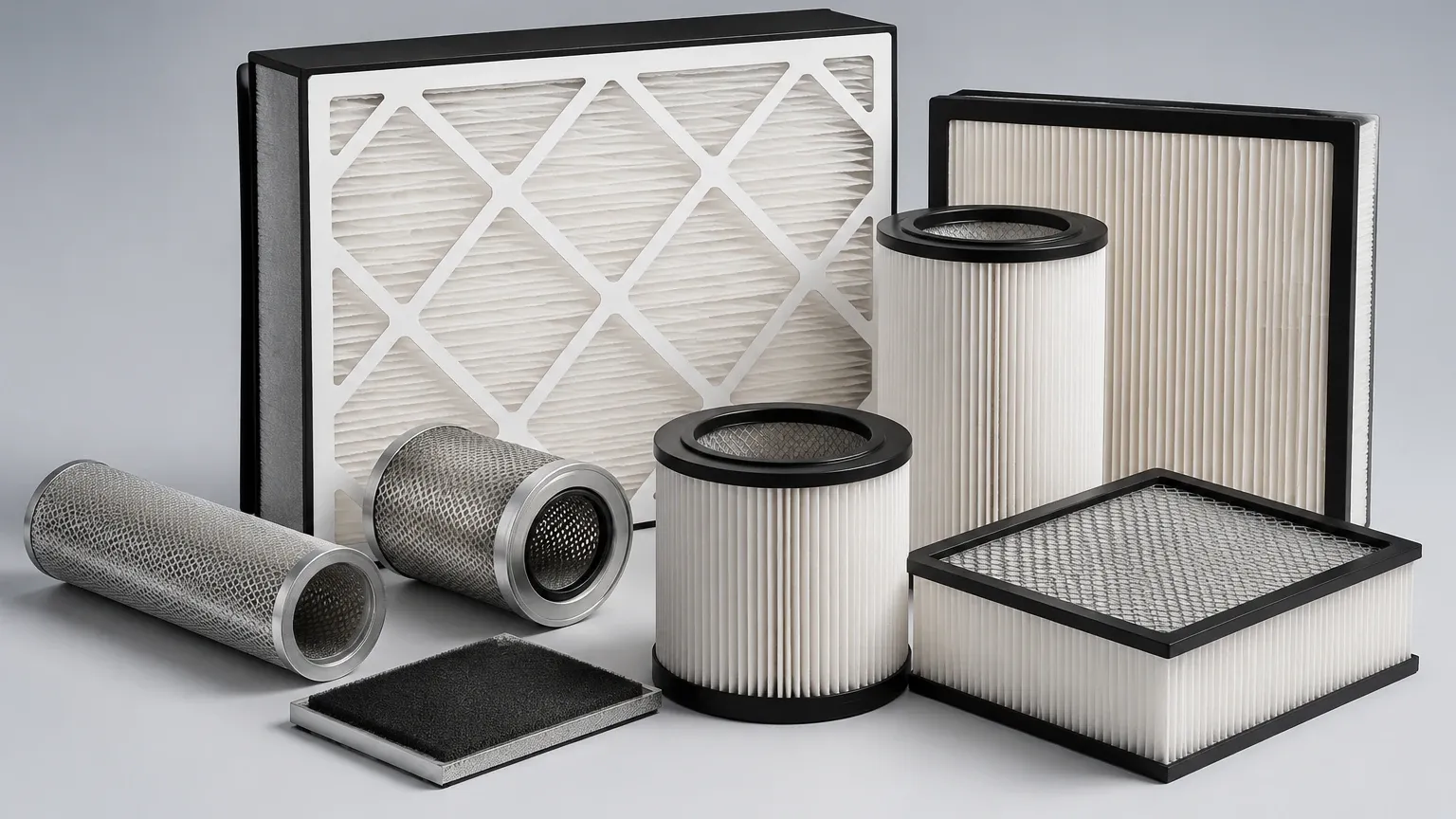
Standard merv 17 filters are typically disposable, utilizing pleated paper or synthetic fibers. However, in heavy industrial sectors like chemical processing or steam filtration, these materials are often insufficient. Stainless steel is the material of choice for high-efficiency filtration in demanding environments due to its mechanical strength and thermal stability.
Sintered Wire Mesh
To achieve the equivalent of merv 17 filters in a metal format, manufacturers utilize sintered wire mesh. This process involves layering multiple sheets of stainless steel wire cloth and bonding them through a high-temperature vacuum sintering process. The result is a porous metal plate with a highly controlled pore size and distribution. Sintered mesh can be engineered to provide the sub-micron retention required for sterile air or precision gas filtration.
316L Stainless Steel
For applications involving corrosive fluids or high-purity requirements (such as in the pharmaceutical industry), 316L stainless steel is preferred. Its low carbon content and addition of molybdenum enhance its resistance to pitting and crevice corrosion, ensuring that the filter media does not degrade and introduce contaminants into the process stream.
Pleated Metal Designs
To mimic the high surface area of traditional pleated merv 17 filters, stainless steel filter cartridges can also be pleated. This design maximizes the effective filtration area within a compact footprint, reducing the pressure drop across the filter and extending the service life between cleaning cycles.
Applications for MERV 17 Equivalent Stainless Steel Filtration
The need for merv 17 filters or their metal equivalents spans several high-stakes industries where even minor contamination can lead to catastrophic system failure or product loss.
Pharmaceutical and Biotechnology
In sterile manufacturing, air and process gases must be free of microbial contaminants. Stainless steel filters capable of HEPA-level retention are used for tank venting, sterile air supply, and the filtration of solvents. Unlike disposable filters, these metal components can withstand repeated In-Situ Sterilization (SIP) cycles using high-pressure steam.
Food and Beverage Processing
High-efficiency filtration is critical for preventing the entry of bacteria and mold into sensitive production areas. In carbonation processes or nitrogen blanketing, using a high-efficiency metal filter ensures that the gas coming into contact with the product is of the highest purity.
Aerospace and Defense
Hydraulic and fuel systems in aerospace applications require extreme reliability. Metal filters engineered to MERV 17-equivalent standards protect sensitive valves and actuators from microscopic debris that could cause mechanical seizing at high altitudes or extreme temperatures.
Chemical and Petrochemical
In catalyst recovery and high-temperature gas filtration, the durability of the filter is as important as its efficiency. Stainless steel merv 17 filters can operate in environments exceeding 500°F (260°C), where synthetic media would melt or lose structural integrity.
Key Selection Criteria for Industrial High-Efficiency Filters
When evaluating merv 17 filters for an industrial project, engineers should confirm several technical parameters to ensure the chosen solution is fit for purpose:
* Pressure Drop (Delta P): High-efficiency filters naturally offer higher resistance to flow. It is essential to calculate the initial pressure drop and the maximum allowable pressure drop before the filter requires cleaning or replacement. Over-specifying efficiency can lead to excessive energy consumption in fans and pumps.
* Flow Velocity: The efficiency of a filter is often dependent on the velocity of the fluid or gas passing through it. For merv 17 filters, maintaining the design flow rate is critical to ensuring that the diffusion and interception mechanisms function correctly.
* Chemical Compatibility: Ensure that the filter housing, seals (O-rings), and the media itself are compatible with the process fluid. For instance, while 304 stainless steel is suitable for many applications, 316L or Hastelloy may be required for acidic environments.
* Total Cost of Ownership (TCO): While a stainless steel filter has a higher upfront cost than a disposable synthetic MERV 17 filter, its ability to be cleaned and reused hundreds of times often results in a lower TCO over the life of the equipment.
Maintenance and Lifecycle Considerations
One of the primary advantages of utilizing stainless steel filtration solutions for high-efficiency requirements is the ability to restore the media. Unlike synthetic merv 17 filters, which must be discarded once they reach their terminal pressure drop, metal filters can be cleaned using several methods:
* Ultrasonic Cleaning: Uses high-frequency sound waves in a cleaning solution to dislodge particles trapped deep within the mesh pores.
* Backwashing/Backpulsing: Involves reversing the flow of the fluid to push contaminants off the surface of the filter media.
* Chemical Cleaning: The use of specific solvents or acids to dissolve accumulated organic or inorganic deposits without damaging the stainless steel structure.
Regular maintenance schedules should be established based on the specific particulate load of the application. Monitoring pressure gauges is the most effective way to determine when a cleaning cycle is necessary.
Customization and Engineering Support
Every industrial process has unique constraints, from space limitations to specific flow dynamics. Standard off-the-shelf merv 17 filters may not always meet these requirements. Working with a specialized manufacturer like Kaifil allows for the development of custom filtration components. Whether it is a specific micron rating, a unique housing interface, or a reinforced structure for high-pressure applications, customized engineering ensures that the filtration system performs reliably under real-world conditions.
For technical professionals seeking to optimize their filtration processes, reviewing the available configurations and material options is the first step toward achieving superior performance. Detailed information on custom metal filter cartridges and wire mesh solutions can be found by visiting the Main Page of our technical resource center.
In conclusion, while merv 17 filters represent the pinnacle of particulate capture efficiency, the choice of filter must be driven by the specific demands of the industrial environment. By selecting high-quality stainless steel media and considering the long-term operational costs and maintenance requirements, engineers can ensure their systems remain clean, efficient, and compliant with the highest industry standards.
