


Slotted Hdpe Pipe
In the realm of industrial drainage, groundwater management, and environmental engineering, the slotted hdpe pipe serves as a critical component for fluid collection and transport. High-Density Polyethylene (HDPE) is favored for its exceptional chemical resistance, flexibility, and durability. When precision-slotted, these pipes transform from simple conduits into sophisticated primary filtration and collection tools. While high-precision applications often require the specialized stainless steel filtration solutions found on our Main Page, understanding the role of slotted HDPE is essential for engineers designing integrated fluid management systems.
This guide examines the technical specifications, engineering considerations, and application-specific selection criteria for slotted HDPE pipes, providing a factual foundation for technical professionals and procurement teams.
Understanding the Role of Slotted HDPE Pipe in Industrial Filtration and Drainage
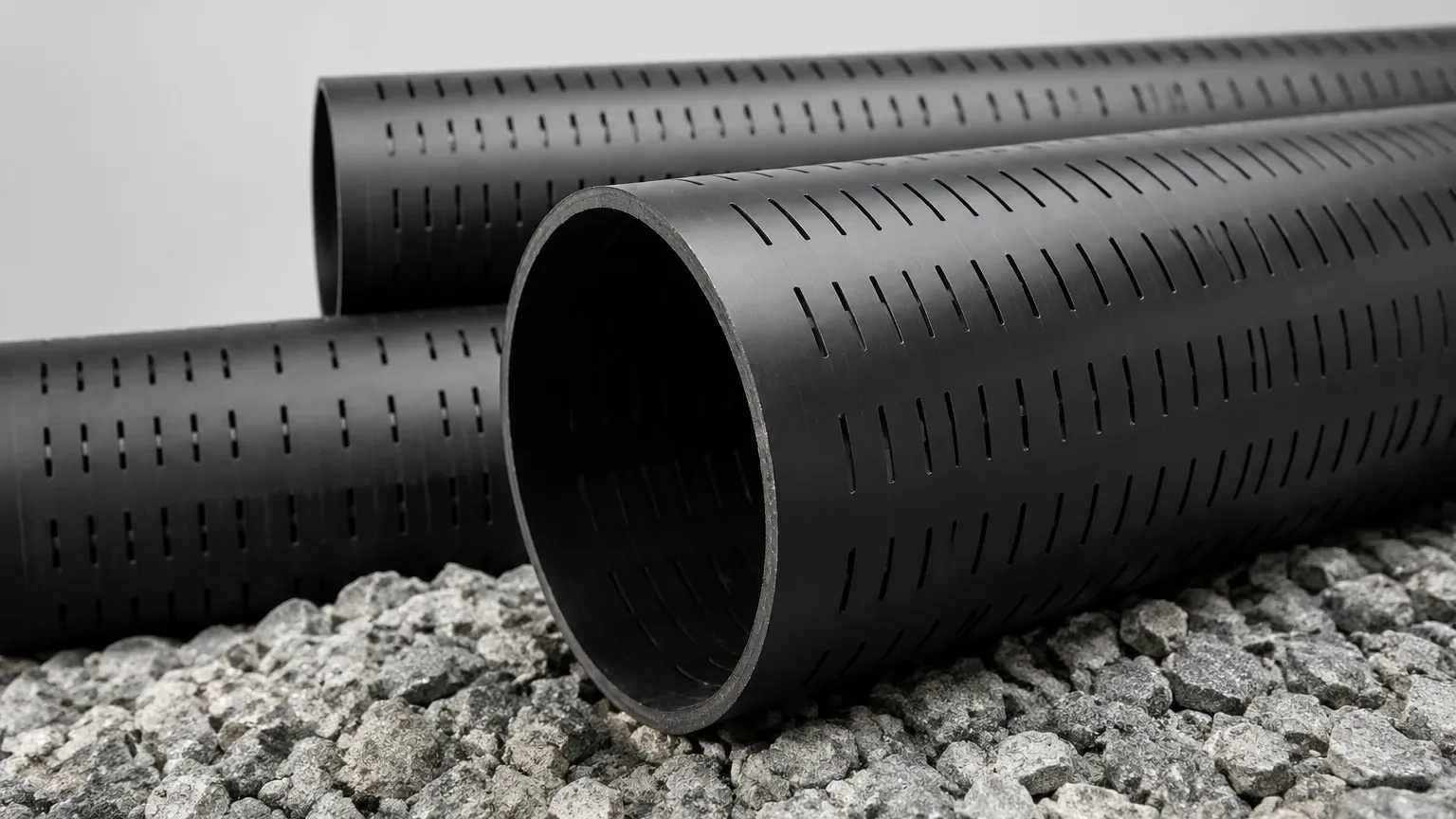
Slotted HDPE pipe is specifically engineered to allow the controlled entry of liquids into a piping system while excluding larger solid particles. Unlike perforated pipes, which utilize circular holes, slotted pipes feature narrow, elongated openings. These slots provide a more consistent filtration barrier and are less prone to structural weakening compared to large-bore perforations.
In industrial contexts, these pipes are often the first point of contact in a multi-stage filtration process. For instance, in a landfill leachate collection system or a mining heap leach pad, the slotted pipe must withstand immense soil pressure while maintaining a steady flow of chemical-laden fluids. The choice of HDPE as the base material is strategic; its molecular structure provides a high strength-to-density ratio and a near-total immunity to the corrosive effects of many industrial chemicals and biological agents.
Technical Specifications and Material Properties
The performance of a slotted hdpe pipe is dictated by the grade of the resin and the precision of the slotting process. Most industrial-grade pipes utilize PE100 or PE80 resins, which offer superior environmental stress crack resistance (ESCR).
Chemical and Corrosion Resistance
HDPE is non-conductive and chemically inert, making it resistant to galvanic corrosion and acidic or alkaline environments (pH ranges from 1 to 14). This is a primary advantage over metallic piping in sub-surface applications where soil chemistry can be unpredictable. However, for high-temperature applications exceeding 60°C (140°F) or processes involving concentrated oxidizing acids, engineers may need to evaluate whether stainless steel components are required to maintain structural integrity.
Flexibility and Impact Strength
Unlike rigid PVC or clay pipes, HDPE is flexible. It can follow the contours of a trench and withstand ground movement or seismic activity without fracturing. This flexibility also allows for longer continuous runs with fewer joints, reducing the potential for leaks at connection points.
Engineering Considerations for Slot Design and Open Area
The "open area" of a slotted hdpe pipe refers to the total surface area of the slots relative to the total surface area of the pipe. This is a critical metric for hydraulic calculations. If the open area is too small, the entrance velocity of the fluid increases, which can lead to turbulence and the transport of unwanted fines. If it is too large, the pipe’s structural stiffness may be compromised.
Slot Geometry
Slots are typically cut in one of two orientations:
1. Longitudinal Slots: Parallel to the length of the pipe. These are common in smaller diameter pipes and offer ease of manufacturing.
2. Transverse (Circumferential) Slots: Cut perpendicular to the pipe axis. These are often preferred for larger diameters as they maintain higher hoop strength, allowing the pipe to resist external crushing forces more effectively.
Slot Width and Spacing
Slot widths typically range from 0.5mm to 3.0mm, depending on the grain size of the surrounding filter media (such as gravel or sand). Engineers use the D85/D15 rules of soil mechanics to determine the appropriate slot size. The goal is to ensure that the surrounding aggregate forms a "bridge" over the slot, preventing the migration of fines into the pipe while allowing fluid to pass freely.
Structural Integrity: SDR and Load-Bearing Capacity
One of the most common questions engineers face is the selection of the correct Standard Dimension Ratio (SDR). The SDR is the ratio of the pipe's outside diameter to its minimum wall thickness. A lower SDR number indicates a thicker pipe wall and, consequently, a higher pressure rating and greater crush resistance.
Calculating Load Requirements
In deep-burial applications, such as mining or municipal waste management, the pipe must support the weight of the overburden as well as any live loads (vehicles or equipment). For depths exceeding 10 meters, an SDR of 11 or 9 is frequently specified. For shallower drainage applications, SDR 17 or 21 may be sufficient. It is vital to note that the act of slotting removes material, which reduces the pipe's Pipe Stiffness (PS). Engineers must factor in a reduction coefficient—often between 10% and 30%—when calculating the load-bearing capacity of a slotted pipe compared to a solid-wall pipe of the same SDR.
Industrial Applications: From Landfills to Mining
The versatility of slotted hdpe pipe makes it indispensable across several heavy industries. Each application demands specific slot configurations and material grades.
Landfill Leachate Collection
In modern landfill engineering, leachate (the liquid that drains from a landfill) must be collected and treated to prevent groundwater contamination. Slotted HDPE pipes are laid at the base of the landfill within a gravel drainage layer. The pipes must resist the chemical complexity of the leachate and the massive vertical pressure of tons of waste.
Mining and Heap Leaching
In gold and copper mining, ore is piled onto pads and sprayed with a leaching solution. Slotted HDPE pipes are used to collect the pregnant solution at the base of the heap. The chemical resistance of HDPE is paramount here, as the solutions often contain high concentrations of cyanide or sulfuric acid.
Dewatering and Groundwater Control
Construction sites and mines often require the lowering of the water table to ensure a stable working environment. Slotted pipes are used in horizontal and vertical wells to extract groundwater efficiently. In these scenarios, the precision of the slotting ensures that the pump systems are not damaged by excessive silt intake.
Comparing Slotted HDPE with Stainless Steel Filtration Solutions
While slotted HDPE is excellent for bulk fluid collection and drainage, it has limitations in high-precision industrial processes. Engineers must often decide between HDPE and stainless steel filtration components, such as those manufactured by Kaifil.
| Feature | Slotted HDPE Pipe | Stainless Steel Filter Cartridges |
| :— | :— | :— |
| Filtration Accuracy | Typically >500 microns | Down to 1 micron |
| Temperature Limit | ~60°C | Up to 800°C (depending on alloy) |
| Pressure Resistance | Moderate (External load) | High (Internal and External) |
| Chemical Resistance | Excellent for most acids/alkalis | Superior for organics and high-temp chemicals |
| Cost | Low to Moderate | Higher Initial Investment |
In many systems, these two materials work in tandem. A slotted hdpe pipe may serve as the primary intake in a river water filtration system, while a Kaifil stainless steel wire mesh filter provides the final stage of precision filtration to protect sensitive downstream membranes or high-pressure nozzles.
Selection Criteria for Engineers and Procurement
When specifying slotted HDPE for a project, the following data points must be confirmed to ensure long-term performance and cost-effectiveness:
1. Fluid Composition: Identify the presence of hydrocarbons, oxidizing agents, or extreme pH levels. While HDPE is robust, certain chemicals can cause swelling or environmental stress cracking.
2. Installation Depth and Soil Type: Determine the burial depth and the density of the backfill material. This dictates the required SDR and pipe stiffness.
3. Required Flow Rate: Calculate the total volume of fluid to be collected per linear meter. This determines the necessary open area and, consequently, the slot density.
4. Media Compatibility: Match the slot width to the surrounding aggregate. If the slot is too wide, the system will silt up; if too narrow, it will clog prematurely.
5. Connection Methods: Decide between butt fusion, electrofusion, or mechanical couplings. Butt fusion is generally preferred for slotted pipes as it creates a leak-proof, monolithic joint that is as strong as the pipe itself.
Maintenance and Longevity in Demanding Environments
The service life of a slotted hdpe pipe can exceed 50 years if correctly specified and installed. However, maintenance is required to prevent "blinding" (the accumulation of fines on the exterior) or "clogging" (the buildup of material within the slots).
High-Pressure Jetting
HDPE pipes are resilient enough to withstand high-pressure water jetting for cleaning. This is a common maintenance practice in municipal drainage and leachate systems. The smooth internal bore of HDPE (low Manning’s n-value) helps prevent the adhesion of biofilms and mineral scales, making cleaning more effective than in concrete or corrugated metal pipes.
Monitoring and Inspection
In critical industrial applications, borescope inspections are recommended every 2 to 5 years to check for slot occlusion or structural deformation. If a pipe shows signs of excessive deflection (typically defined as >5% of the diameter), it may indicate that the initial SDR selection was insufficient for the actual load conditions.
Conclusion
Slotted hdpe pipe remains a cornerstone of industrial fluid management due to its balance of chemical inertness, structural flexibility, and cost-efficiency. By carefully considering slot geometry, SDR ratings, and the specific demands of the industrial environment, engineers can design collection systems that provide decades of reliable service. For applications requiring higher precision, extreme temperatures, or specialized metal components, integrating these HDPE systems with advanced filtration technology is the key to optimized performance. For more information on precision filtration components, please refer to our Main Page.
