


Cuno Filtration
In the landscape of industrial liquid processing, the term cuno filtration is often synonymous with high-capacity depth filtration and specialized cartridge systems designed to handle complex contaminant loads. Originally developed by Cuno Inc. (now a part of 3M), these technologies established benchmarks for consistency in sectors ranging from chemical processing to food and beverage production. For engineers and procurement professionals, understanding the underlying principles of these systems is essential when evaluating whether to maintain existing consumable-based setups or transition toward more durable, customized stainless steel filtration solutions.
Selecting the right filtration technology requires a deep dive into fluid dynamics, particle size distribution, and the chemical environment of the application. While depth filters are excellent for capturing deformable particles, many modern industrial processes demand the precision and longevity of metal-based media. As a specialist in custom stainless steel filtration, Kaifil provides the technical expertise necessary to navigate these choices, ensuring that filtration performance aligns with operational efficiency and long-term cost targets.
The Mechanics of Depth Filtration vs. Surface Filtration
To understand the context of cuno filtration, one must first distinguish between depth filtration and surface filtration. Most traditional Cuno products utilize a depth-loading mechanism. In this process, the filter media possesses a thick, porous structure—often resin-bonded fibers or cellulose—where particles are trapped throughout the entire thickness of the material. This "tortuous path" allows for high dirt-holding capacity, making it ideal for fluids with a wide range of particle sizes.
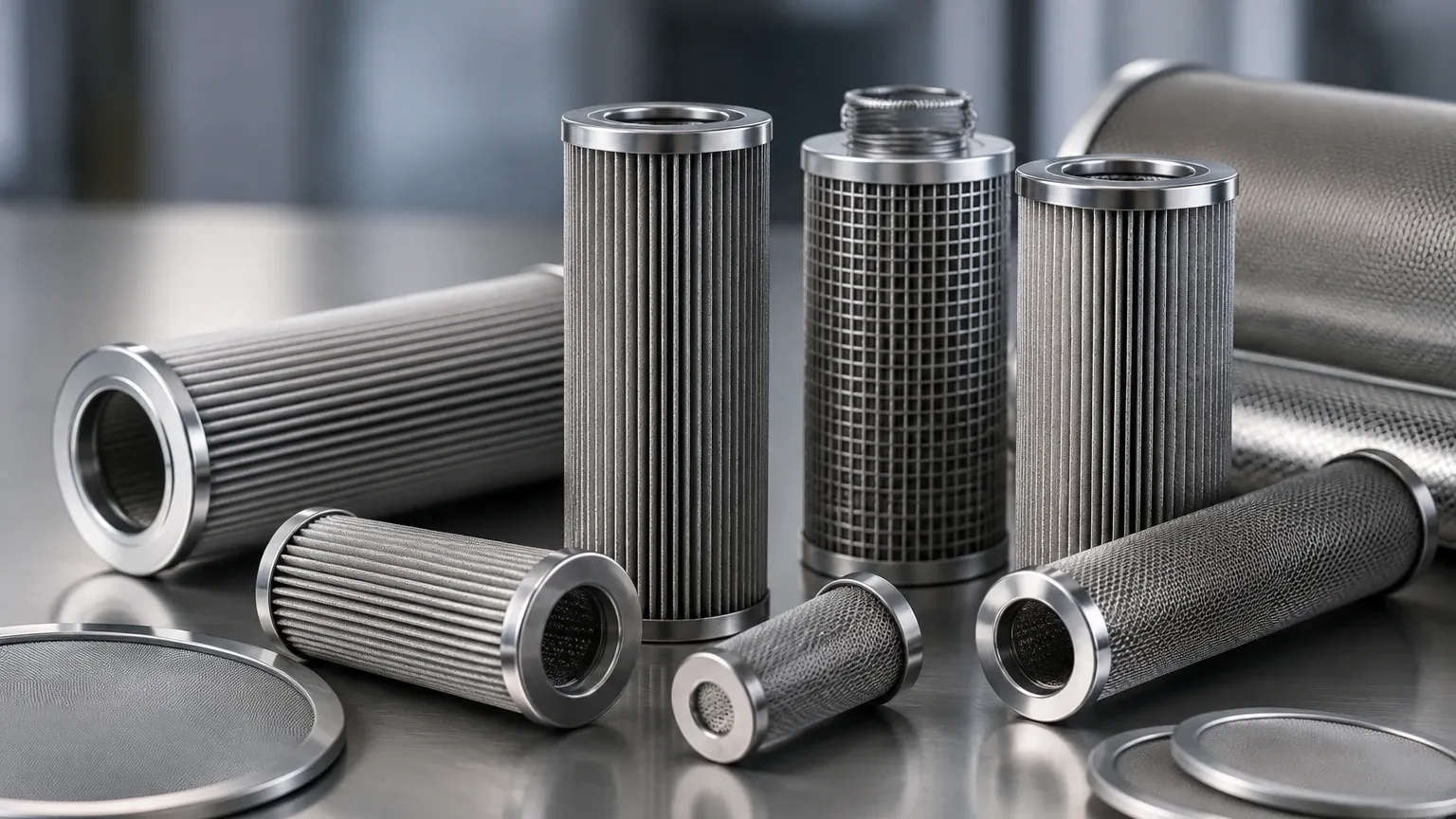
In contrast, surface filtration, which is the hallmark of Kaifil’s stainless steel wire mesh filters, captures particles on a single plane. While this might seem less efficient for high-solids loading, surface filtration offers a critical advantage: absolute precision. When an application requires a strict cutoff point (absolute rating) to protect downstream equipment or ensure product purity, a precision-engineered metal mesh provides a level of consistency that depth filters, which are often nominally rated, cannot always guarantee.
For engineers managing high-temperature or high-pressure systems, the choice often shifts toward metal. Stainless steel components can withstand mechanical stresses and thermal fluctuations that would cause polymer-based depth filters to bypass or collapse. Understanding these mechanical boundaries is the first step in optimizing a filtration sequence.
Engineering Considerations for Industrial Filter Selection
When evaluating cuno filtration systems or seeking alternatives, technical professionals must confirm several key parameters to ensure the chosen solution meets the process requirements. These considerations go beyond simple micron ratings and delve into the physics of the fluid being processed.
1. Micron Rating and Efficiency
It is vital to distinguish between nominal and absolute micron ratings. A nominal rating indicates the filter's ability to trap a major percentage of solids of a specific size, whereas an absolute rating (often defined by a Beta Ratio of 5000 or higher) implies that 99.9% of particles at that size are retained. Many depth-style cartridges provide excellent nominal filtration but may allow larger particles to "slug" through if pressure spikes occur. Stainless steel mesh filters from Kaifil are typically designed for applications where absolute retention and structural integrity are non-negotiable.
2. Viscosity and Flow Rate
The relationship between fluid viscosity and pressure drop (ΔP) is a primary factor in sizing a filter housing. High-viscosity fluids require larger surface areas to maintain a manageable clean pressure drop. If the ΔP is too high at the start of a cycle, the effective life of the filter is significantly shortened. Engineers must calculate the flux—the flow rate per unit area—to determine the optimal number of cartridges or the required dimensions of a custom filter element.
3. Chemical and Thermal Compatibility
While many depth filters are compatible with water and general solvents, aggressive chemicals or extreme temperatures (exceeding 100°C) require specialized materials. Stainless steel (304, 316L, or exotic alloys) offers a broad spectrum of compatibility, resisting corrosion in acidic or alkaline environments. This durability is a significant factor for facilities looking to reduce the frequency of filter changes and prevent media migration—a common risk where fibers from a depth filter might shed into the filtrate.
Addressing Common Risks in Consumable Filtration
One of the primary challenges with traditional cuno filtration setups is the reliance on disposable cartridges. While these systems are effective, they introduce several operational risks that must be managed:
* Media Migration: In high-flow or high-pressure applications, the fibers or resins in a depth filter can break down, contaminating the clean side of the process. This is particularly critical in pharmaceutical and food-grade applications.
* Disposal Costs and Environmental Impact: Constant replacement of used cartridges leads to significant waste streams. For hazardous chemical processes, the cost of disposing of saturated filter media can sometimes exceed the cost of the filter itself.
* Bypass and Sealing Issues: If a cartridge is not seated perfectly within the housing, or if the gaskets fail due to chemical incompatibility, unfiltered fluid can bypass the media entirely. Precision-machined metal filters offer more robust sealing interfaces, such as threaded connections or welded flanges, which mitigate this risk.
By moving toward customized metal filtration components, many industrial operators find they can achieve more reliable results with a lower environmental footprint. To explore how these engineering principles apply to specific hardware, you can Main Page to review product options and application support.
Customization and OEM Integration
Every industrial facility has unique spatial and performance constraints. While standard cuno filtration housings are widely available, they do not always accommodate the specific needs of a specialized OEM (Original Equipment Manufacturer) or a retrofitted processing line. This is where the value of a custom manufacturer like Kaifil becomes apparent.
Customization involves more than just changing the length of a filter cartridge. It encompasses:
* End-Cap Configuration: Adapting filters to fit existing housings (retrofitting) or designing new interfaces for proprietary equipment.
* Pleating Technology: Increasing the surface area of a stainless steel filter through pleating allows for higher flow rates within a compact footprint, mimicking the high-capacity benefits of depth filters while retaining the durability of metal.
* Reinforcement: In hydraulic or high-pressure gas applications, filter elements may require internal support cores or external shrouds to prevent deformation under extreme differential pressures.
Working with a manufacturer that understands these nuances allows engineering teams to develop filtration solutions that are "fit for purpose" rather than relying on off-the-shelf components that may underperform in demanding environments.
Total Cost of Ownership (TCO) Analysis
When procurement departments compare cuno filtration consumables to permanent stainless steel solutions, the initial price point often favors the disposable option. However, a technical Total Cost of Ownership (TCO) analysis frequently reveals a different story. The TCO includes the purchase price, labor for changes, downtime during maintenance, disposal fees, and the cost of potential product loss due to filtration failure.
Stainless steel filters are cleanable and reusable. Methods such as ultrasonic cleaning, backwashing, or chemical steeping can restore a metal filter to near-original differential pressure levels. Over a period of 24 to 36 months, the elimination of monthly consumable purchases and the associated labor often results in a significant return on investment (ROI). Furthermore, the structural stability of metal filters ensures that filtration performance remains constant throughout the life of the component, providing better protection for expensive downstream equipment like high-pressure pumps or spray nozzles.
Applications Across Critical Industries
The principles of high-performance filtration are applied across various sectors, each with its own set of regulatory and technical hurdles:
* Chemical Processing: Resistance to solvents and high-temperature catalysts is paramount. Stainless steel wire mesh provides the necessary chemical inertness.
* Food and Beverage: Compliance with hygiene standards requires materials that do not harbor bacteria and can withstand CIP (Clean-in-Place) sterilization cycles.
* Pharmaceuticals: Absolute retention and the absence of extractables are critical for maintaining the integrity of active pharmaceutical ingredients (APIs).
* Water Treatment: Protecting membranes from particulate fouling requires reliable pre-filtration that can handle variable solids loading.
In each of these cases, the transition from standard depth-loading cuno filtration to precision-engineered metal components can lead to more predictable process outcomes and enhanced product quality.
Conclusion: Making Informed Filtration Decisions
Whether an organization is currently utilizing cuno filtration or is in the design phase of a new project, the focus must remain on the technical requirements of the fluid and the long-term goals of the facility. Depth filtration remains a powerful tool for specific high-solids applications, but the limitations of disposable media—ranging from chemical vulnerability to environmental impact—often necessitate a more robust alternative.
Kaifil specializes in bridging the gap between standard filtration needs and high-performance engineering. By focusing on material quality, precise manufacturing, and customized design, Kaifil helps global customers achieve filtration excellence in the most demanding industrial environments. When the goal is to optimize flow, ensure purity, and reduce operational overhead, choosing a partner with deep expertise in stainless steel filtration is the most effective path forward.
