


Saringan Besi
In industrial processing, the term "saringan besi"—commonly referring to metal filters or strainers—encompasses a wide range of components designed to remove solid particles from liquids and gases. While the literal translation suggests iron, modern industrial applications almost exclusively utilize stainless steel and specialized alloys to ensure durability, corrosion resistance, and precision. For engineers and procurement specialists, selecting the right metal filtration solution is a critical decision that impacts equipment longevity, product purity, and overall operational efficiency.
As a professional manufacturer, Kaifil specializes in translating these general requirements into high-performance filtration components. Understanding the technical nuances of saringan besi allows technical teams to move beyond generic hardware and implement solutions tailored to specific hydraulic, chemical, or food-grade environments. You can explore a comprehensive range of these solutions on our Main Page.
Understanding Saringan Besi in Industrial Applications
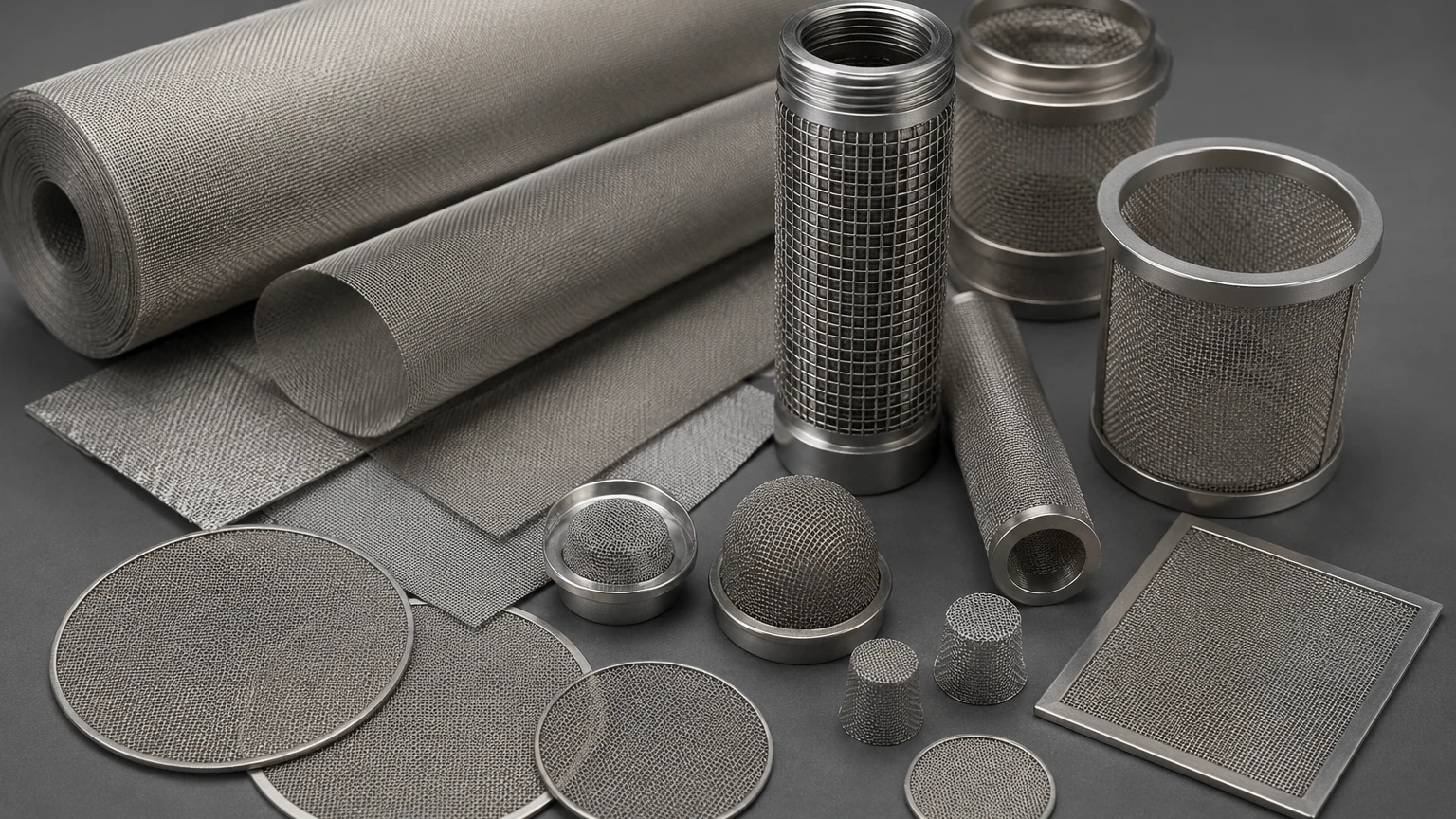
The fundamental purpose of a saringan besi is to act as a mechanical barrier. Unlike disposable polymer filters, metal filters are engineered for high-pressure environments and extreme temperature ranges. They are typically categorized by their construction method, which includes woven wire mesh, perforated metal, and sintered metal fibers.
In an industrial context, the choice of a metal filter is dictated by the nature of the fluid (viscosity, acidity, and temperature) and the characteristics of the contaminants (size, shape, and concentration). A well-designed saringan besi must balance three competing factors: filtration accuracy (micron rating), flow capacity (pressure drop), and mechanical strength (structural integrity). If the filter is too fine, it may clog prematurely; if it is too coarse, it fails to protect downstream components like pumps, valves, and spray nozzles.
Material Selection: Moving Beyond Basic Carbon Steel
While "besi" (iron) is the root term, raw iron or basic carbon steel is rarely suitable for industrial filtration due to its susceptibility to oxidation. When moisture or oxygen is present, carbon steel forms rust, which can contaminate the process fluid and compromise the filter's structural integrity. Consequently, high-grade stainless steel is the industry standard for most saringan besi applications.
Stainless Steel 304 vs. 316L
Stainless steel 304 is the most common material for general-purpose industrial filtration. It offers excellent mechanical properties and good corrosion resistance in non-aggressive environments. However, for applications involving chlorides, acids, or high-salinity fluids, stainless steel 316L is preferred. The addition of molybdenum in 316L provides superior resistance to pitting and crevice corrosion, making it the standard for pharmaceutical and marine applications.
Specialized Alloys
In extreme cases where even 316L may fail—such as in highly acidic chemical processing or high-temperature aerospace applications—specialized alloys like Monel, Hastelloy, or Inconel are utilized. These materials ensure that the saringan besi remains functional in environments that would cause standard metals to degrade rapidly.
Technical Specifications and Performance Metrics
When evaluating a saringan besi, engineers must look beyond physical dimensions and focus on performance metrics that define the filter’s efficiency.
Micron Rating: Absolute vs. Nominal
One of the most common points of confusion in filter procurement is the difference between nominal and absolute micron ratings. A nominal rating indicates the filter's ability to retain a majority of particles of a certain size (e.g., 90% of 10-micron particles). An absolute rating, however, signifies that 99.9% or more of particles above that size will be captured. For critical applications where even a few oversized particles can cause catastrophic pump failure, absolute-rated wire mesh filters are essential.
Effective Filtration Area (EFA)
The EFA determines the flow capacity and the dirt-holding capacity of the filter. A larger surface area allows for lower fluid velocity through the mesh, which reduces the pressure drop ($ΔP$) across the element. To maximize EFA without increasing the overall footprint of the filter, manufacturers often use pleating techniques. Pleated stainless steel cartridges can offer several times the surface area of a standard cylindrical filter, significantly extending the time between cleaning cycles.
Design Considerations for Custom Metal Filters
Standard off-the-shelf filters often fall short in specialized industrial machinery. Customization is frequently required to meet specific geometric constraints or performance targets. When designing a custom saringan besi, several engineering factors must be addressed:
1. Mesh Weave Types: The way the wires are woven affects both the strength and the filtration characteristics. Plain weave is standard for high-flow, low-pressure applications. Dutch weave (Plain or Twill) provides a much denser structure, allowing for finer filtration and higher mechanical strength, often used in high-pressure hydraulic systems.
2. Support Structures: Fine wire mesh is inherently delicate. In high-pressure applications, the mesh must be supported by a perforated metal core or an external cage. This prevents the mesh from collapsing or deforming under the force of the fluid flow.
3. End Cap Configurations: The method by which the filter is installed into the housing is vital for preventing bypass. Common configurations include Double Open End (DOE), Single Open End (SOE) with various O-ring seals (such as 222 or 226 fittings), and threaded connections.
For more detailed technical specifications on custom designs, visiting the Main Page provides a clear overview of available manufacturing capabilities.
Applications Across Critical Industries
The versatility of the saringan besi makes it indispensable across a variety of sectors, each with its own set of regulatory and performance standards.
Chemical and Petrochemical Processing
In these industries, filters must withstand aggressive solvents and high temperatures. Stainless steel filter elements are used to remove catalysts, protect heat exchangers, and ensure the purity of final chemical products. The ability to operate in temperatures exceeding 300°C is a primary reason metal filters are chosen over polymer alternatives.
Food and Beverage Production
Hygiene is the paramount concern in food processing. Saringan besi used in this sector must be made from food-grade materials (typically 316L) and designed with smooth surfaces to prevent bacterial growth. These filters are often used for "polishing" liquids, such as removing fine particulates from syrups, oils, or beverages before bottling.
Hydraulic and Lubrication Systems
Precision machinery relies on clean oil to function. Metal filters are used in hydraulic circuits to capture wear particles from pumps and cylinders. Because these systems often operate at high pressures, the structural integrity of the metal filter is essential to prevent the filter itself from becoming a source of contamination if it were to fail.
Maintenance, Cleaning, and Service Life
One of the primary economic advantages of a high-quality saringan besi is that it is often cleanable and reusable. Unlike disposable paper or melt-blown filters, stainless steel elements can be restored to near-original performance through various cleaning methods.
Cleaning Techniques
* Backwashing: Reversing the flow of the fluid to dislodge particles trapped on the surface of the mesh. This can often be automated within the filtration system.
* Ultrasonic Cleaning: Using high-frequency sound waves in a cleaning solvent to remove deeply embedded particles from complex weaves or sintered structures.
* Chemical Cleaning: Using specific acids or alkalis to dissolve organic or inorganic scaling without damaging the stainless steel substrate.
Determining Replacement Cycles
While metal filters are durable, they are not infinite. Over time, repeated cleaning and pressure cycles can lead to material fatigue or "blinding" (permanent clogging). Engineers should monitor the pressure drop across the filter. If the baseline pressure drop after cleaning begins to rise significantly, it indicates that the filter has reached the end of its effective service life and requires replacement.
Procurement and Quality Assurance for Saringan Besi
When sourcing saringan besi, purchasing teams must verify that the manufacturer adheres to strict quality control standards. Because these components are often hidden inside large machines, a failure can go unnoticed until it causes significant damage. Key verification points include:
* Material Certification: Ensuring the steel grade matches the specification (e.g., MTR – Material Test Reports).
* Dimensional Accuracy: Precise tolerances are required to ensure a proper seal within the filter housing.
* Bubble Point Testing: A non-destructive test used to verify the pore size and integrity of the filter element.
By focusing on these technical details, engineers can ensure they are receiving a product that meets the rigorous demands of their specific application. For those looking to integrate professional-grade filtration into their operations, reviewing the technical resources and product options on the Kaifil Main Page is an excellent starting point for informed decision-making.
In summary, whether referred to as a saringan besi or a precision stainless steel filter, the value of these components lies in their engineering. By selecting the correct materials, weave types, and structural designs, industrial operators can achieve reliable filtration that protects their equipment and optimizes their processes.
